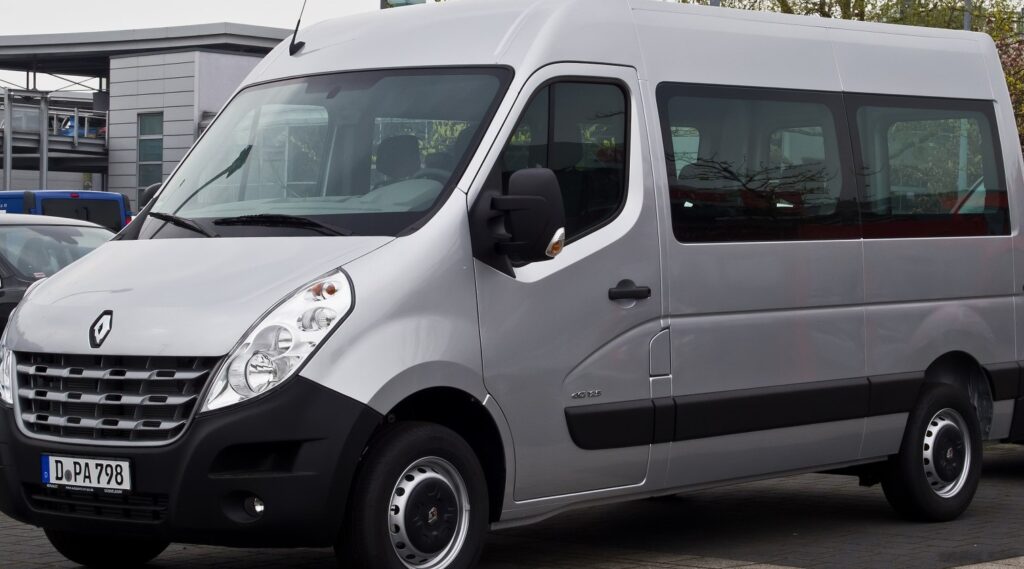
The Renault Master III Phase II, specifically the 2.3 dCi (125 hp) Crew Van L3H2 configuration produced between 2014 and 2017, represents a significant iteration of Renault’s large van offering. Positioned as a versatile workhorse, this variant catered to businesses and tradespeople requiring substantial cargo capacity combined with passenger seating. The L3H2 designation indicates a long wheelbase and high roof, maximizing interior volume. This generation of the Master, built upon the X62 platform, aimed to balance practicality, efficiency, and a reasonable level of comfort for its intended commercial users. It served as a key model in the European light commercial vehicle (LCV) segment, competing with offerings from Ford, Volkswagen, and Mercedes-Benz.
Technical Specifications
| Brand | Renault |
| Model | Master |
| Generation | Master III (Phase II, 2014) Crew Van |
| Type (Engine) | 2.3 dCi (125 Hp) L3H2 |
| Start of production | 2014 |
| End of production | 2017 |
| Powertrain Architecture | Internal Combustion engine |
| Body type | Minivan, MPV |
| Seats | 7 |
| Doors | 4 |
| Fuel Type | Diesel |
| Emission standard | Euro 5 |
| Power | 125 Hp @ 3500 rpm |
| Power per litre | 54.4 Hp/l |
| Torque | 310 Nm @ 1500 rpm / 228.64 lb.-ft. @ 1500 rpm |
| Engine Model/Code | M9T |
| Engine displacement | 2298 cm3 / 140.23 cu. in. |
| Number of cylinders | 4 |
| Engine configuration | Inline |
| Number of valves per cylinder | 4 |
| Fuel injection system | Diesel Commonrail |
| Engine aspiration | Turbocharger, Intercooler |
| Engine oil capacity | 8 l / 8.45 US qt | 7.04 UK qt |
| Coolant | 11 l / 11.62 US qt | 9.68 UK qt |
| Max. weight | 3500 kg / 7716.18 lbs |
| Trunk (boot) space – maximum | 9000 l / 317.83 cu. ft |
| Fuel tank capacity | 105 l / 27.74 US gal | 23.1 UK gal |
| Length | 6198 mm / 244.02 in |
| Width | 2070 mm / 81.5 in |
| Width including mirrors | 2470 mm / 97.24 in |
| Height | 2496 mm / 98.27 in |
| Wheelbase | 4332 mm / 170.55 in |
| Front track | 1750 mm / 68.9 in |
| Rear (Back) track | 1730 mm / 68.11 in |
| Front overhang | 842 mm / 33.15 in |
| Rear overhang | 1024 mm / 40.31 in |
| Ride height (ground clearance) | 172 mm / 6.77 in |
| Drivetrain Architecture | Front wheel drive |
| Number of gears and type of gearbox | 6 gears, manual transmission |
| Front suspension | Independent, type McPherson with coil spring and anti-roll bar |
| Rear suspension | Leaf spring |
| Front brakes | Ventilated discs, 302 mm |
| Rear brakes | Disc, 305 mm |
| Tires size | 225/65 R16 |
| Wheel rims size | 16 |
Powertrain & Engine Architecture
The heart of the Master III 2.3 dCi 125 is the M9T engine, a 2.3-liter inline four-cylinder diesel. This engine utilizes a common rail direct injection system, delivering fuel at extremely high pressure for optimized combustion. A turbocharger with an intercooler is employed to increase power output and improve efficiency. The 125 horsepower variant was deliberately tuned for a balance between fuel economy and usability, rather than outright performance. The engine features four valves per cylinder, contributing to improved breathing and power delivery. The 6-speed manual transmission was the standard offering for this trim level, providing a good spread of gears for both city driving and highway cruising. The transmission’s ratios were geared towards maximizing fuel efficiency and providing adequate torque for hauling loads.
Driving Characteristics
The 125 hp 2.3 dCi Master, paired with the 6-speed manual, offered a practical, if not exhilarating, driving experience. Acceleration was modest, particularly when fully loaded, but sufficient for typical commercial applications. The engine produced a usable amount of torque at relatively low RPMs (310 Nm at 1500 rpm), making it capable of handling moderate inclines and carrying substantial payloads. Compared to higher-output versions of the 2.3 dCi engine (150 hp and 170 hp), this variant prioritized fuel economy over outright speed. The manual transmission allowed for greater driver control and engagement, but required more effort in stop-and-go traffic compared to an automatic. The long wheelbase and high roof contributed to a noticeable amount of body roll in corners, but the suspension was generally compliant and absorbed bumps reasonably well.
Equipment & Trim Levels
The Crew Van L3H2 trim level of the Master III was designed to offer a blend of cargo space and passenger comfort. Standard equipment typically included air conditioning, a driver’s airbag, electric front windows, and a basic audio system. The “Crew Van” configuration featured seating for up to seven occupants, with a second row of seats behind the driver. Interior trim was functional and durable, prioritizing practicality over luxury. Optional extras included rear parking sensors, a navigation system, upgraded audio systems, and various cargo area enhancements such as shelving and load securing systems. The dashboard layout was straightforward and ergonomically designed for ease of use.
Chassis & Braking
The Master III utilized a front-wheel-drive layout, contributing to a lower load floor and improved space utilization. The front suspension employed an independent McPherson strut design with coil springs and an anti-roll bar, providing a reasonable level of ride comfort and handling. The rear suspension utilized a leaf spring setup, chosen for its durability and load-carrying capacity. Braking duties were handled by ventilated discs at the front and solid discs at the rear. The braking system was adequate for the vehicle’s weight and intended use, but lacked the sophistication of more advanced braking technologies found in passenger cars. The steering was hydraulic, providing a reasonable level of assistance and feedback.
Market Reception & Comparison
The Renault Master III 2.3 dCi 125 Crew Van L3H2 was generally well-received in the European LCV market. Critics praised its spacious interior, practical design, and reasonable fuel economy. However, some reviewers noted that the engine lacked the refinement and power of some of its competitors, particularly the Volkswagen Crafter and Mercedes-Benz Sprinter. The 125 hp variant was often seen as an entry-level option, appealing to businesses that prioritized cost-effectiveness over performance. Compared to the higher-output versions of the 2.3 dCi engine, the 125 hp model offered lower running costs but sacrificed some of its hauling and towing capabilities. Its Euro 5 emissions compliance was a key selling point during its production run.
Legacy
The Renault Master III 2.3 dCi 125 remains a common sight on European roads today. The M9T engine, while not without its quirks, has proven to be relatively reliable with proper maintenance. Common issues include turbocharger wear and potential problems with the fuel injection system. The availability of spare parts is generally good, and the relatively simple mechanical design makes it accessible to independent mechanics. On the used car market, these vans represent a cost-effective option for businesses and tradespeople seeking a spacious and practical work vehicle. The 6-speed manual transmission is generally preferred by those who prioritize driver control and reliability. The Master III, in this configuration, solidified Renault’s position as a major player in the competitive European LCV segment.