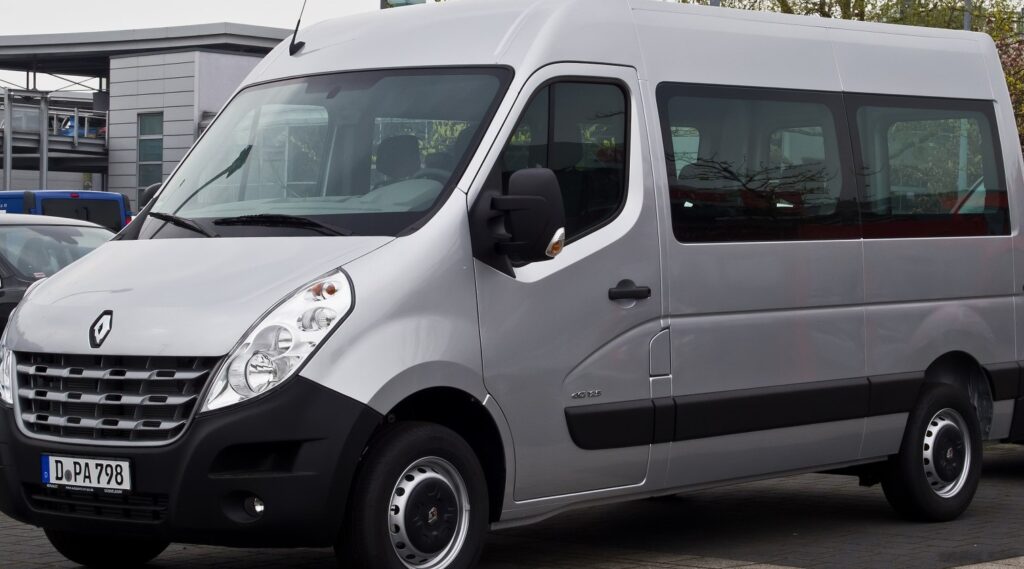
The Renault Master III (Phase II), specifically the 2.3 dCi 130 horsepower Crew Van in the L2H2 configuration, represents a significant iteration of Renault’s large van offering, produced from 2017 to 2018. Positioned as a versatile workhorse, this variant catered to businesses and tradespeople requiring both substantial cargo capacity and passenger seating. The Phase II update brought refinements to the engine, styling, and interior, enhancing its appeal in the competitive European commercial vehicle market. The L2H2 designation indicates a medium wheelbase and high roof, providing a balance between maneuverability and interior volume. This model falls within the third generation of the Master, which began production in 1997, and builds upon the foundations laid by its predecessors.
Technical Specifications
| Brand | Renault |
| Model | Master |
| Generation | Master III (Phase II, 2014) Crew Van |
| Type (Engine) | 2.3 dCi (130 Hp) L2H2 |
| Start of production | 2017 |
| End of production | 2018 |
| Powertrain Architecture | Internal Combustion engine |
| Body type | Minivan, MPV |
| Seats | 7 |
| Doors | 4 |
| Fuel consumption (combined) | 7.9 l/100 km (29.8 US mpg, 35.8 UK mpg, 12.7 km/l) |
| CO2 emissions | 207 g/km |
| Fuel Type | Diesel |
| Maximum speed | 148 km/h (91.96 mph) |
| Emission standard | Euro 6 |
| Weight-to-power ratio | 16.4 kg/Hp, 61 Hp/tonne |
| Weight-to-torque ratio | 6.9 kg/Nm, 145.5 Nm/tonne |
| Power | 130 Hp @ 3500 rpm |
| Power per litre | 56.6 Hp/l |
| Torque | 310 Nm @ 1500 rpm (228.64 lb.-ft. @ 1500 rpm) |
| Engine Model/Code | M9T |
| Engine displacement | 2298 cm3 (140.23 cu. in.) |
| Number of cylinders | 4 |
| Engine configuration | Inline |
| Cylinder Bore | 85 mm (3.35 in.) |
| Piston Stroke | 101.3 mm (3.99 in.) |
| Number of valves per cylinder | 4 |
| Fuel injection system | Diesel Commonrail |
| Engine aspiration | Turbocharger, Intercooler |
| Engine oil capacity | 8 l (8.45 US qt | 7.04 UK qt) |
| Coolant | 11 l (11.62 US qt | 9.68 UK qt) |
| Kerb Weight | 2130 kg (4695.85 lbs.) |
| Max. weight | 3500 kg (7716.18 lbs.) |
| Max load | 1370 kg (3020.33 lbs.) |
| Trunk (boot) space – maximum | 6900 l (243.67 cu. ft.) |
| Fuel tank capacity | 80 l (21.13 US gal | 17.6 UK gal) |
| Permitted trailer load with brakes (12%) | 2500 kg (5511.56 lbs.) |
| Permitted trailer load without brakes | 750 kg (1653.47 lbs.) |
| Length | 5548 mm (218.43 in.) |
| Width | 2070 mm (81.5 in.) |
| Width including mirrors | 2470 mm (97.24 in.) |
| Height | 2502 mm (98.5 in.) |
| Wheelbase | 3682 mm (144.96 in.) |
| Front track | 1750 mm (68.9 in.) |
| Rear (Back) track | 1730 mm (68.11 in.) |
| Front overhang | 842 mm (33.15 in.) |
| Rear overhang | 1024 mm (40.31 in.) |
| Ride height (ground clearance) | 174 mm (6.85 in.) |
| Minimum turning circle (turning diameter) | 14.1 m (46.26 ft.) |
| Drivetrain Architecture | Front wheel drive |
| Drive wheel | Front wheel drive |
| Number of gears and type of gearbox | 6 gears, manual transmission |
| Front suspension | Independent, type McPherson with coil spring and anti-roll bar |
| Rear suspension | Leaf spring |
| Front brakes | Ventilated discs, 302×28 mm |
| Rear brakes | Disc, 305×12 mm |
| Tires size | 225/65 R16 |
| Wheel rims size | 16 |
Powertrain & Engine Architecture
The heart of the Master III 2.3 dCi 130 is the M9T engine, a 2.3-liter inline four-cylinder diesel. This engine utilizes a common rail direct injection system, delivering fuel at extremely high pressure for optimized combustion. A turbocharger with an intercooler is employed to boost power and efficiency. The 130 horsepower output is achieved at 3500 rpm, while peak torque of 310 Nm (228.64 lb-ft) is available from just 1500 rpm, providing ample low-end grunt for hauling and towing. The engine features four valves per cylinder, contributing to improved breathing and overall performance. This particular variant was paired with a six-speed manual transmission, chosen for its durability and fuel efficiency. While an automated manual transmission (AMT) was available on some Master models, the six-speed manual was the more common pairing for the 130 hp engine.
Driving Characteristics
The 130 horsepower 2.3 dCi engine, coupled with the six-speed manual transmission, provides a practical and capable driving experience. While not designed for outright speed, the engine delivers sufficient power for everyday driving and hauling loads. The relatively high torque output at low rpm makes it easy to navigate urban environments and tackle inclines without frequent gear changes. The six-speed gearbox allows for comfortable cruising on highways, keeping engine speeds relatively low and improving fuel economy. Compared to the higher-output 150 hp and 170 hp versions of the 2.3 dCi, this variant offers a more economical driving experience, albeit with a noticeable reduction in acceleration. The manual transmission provides greater driver control compared to the optional AMT.
Equipment & Trim Levels
The Crew Van configuration of the Master III L2H2 typically included seating for up to seven passengers, making it suitable for transporting work crews. Standard equipment generally included features like air conditioning, a radio with USB connectivity, electric windows, and central locking. Safety features such as ABS brakes, Electronic Stability Program (ESP), and driver and passenger airbags were also standard. Optional extras included features like a navigation system, rear parking sensors, cruise control, and upgraded interior trim. The interior was designed with practicality in mind, featuring durable materials and ample storage compartments.
Chassis & Braking
The Master III utilizes a front-wheel-drive layout, contributing to a lower load floor and improved space utilization. The front suspension employs an independent McPherson strut design with coil springs and an anti-roll bar, providing a comfortable ride and stable handling. The rear suspension utilizes a robust leaf spring setup, designed to handle heavy loads. The braking system consists of ventilated discs on the front wheels and solid discs on the rear. The 225/65 R16 tires provide adequate grip for most driving conditions.
Market Reception & Comparison
The Renault Master III, including the 2.3 dCi 130 hp variant, was generally well-received in the European commercial vehicle market. Critics praised its spacious interior, comfortable ride, and fuel efficiency. The 130 hp engine was considered a good balance between performance and economy, making it a popular choice for businesses seeking a versatile and cost-effective van. Compared to competitors like the Fiat Ducato, Mercedes-Benz Sprinter, and Volkswagen Crafter, the Master offered a competitive package in terms of price, features, and reliability. The manual transmission was favored by many drivers for its simplicity and control.
Legacy
The Renault Master III 2.3 dCi 130 hp has proven to be a relatively reliable powertrain. The M9T engine, while not without its quirks, is generally considered durable and capable of high mileage with proper maintenance. In the used car market, these vans remain popular due to their practicality and affordability. Common maintenance issues include turbocharger wear, injector problems, and wear on the clutch and gearbox components. However, parts availability is generally good, and repair costs are reasonable. The Master III continues to be a workhorse for many businesses and tradespeople, demonstrating its enduring appeal and practicality.