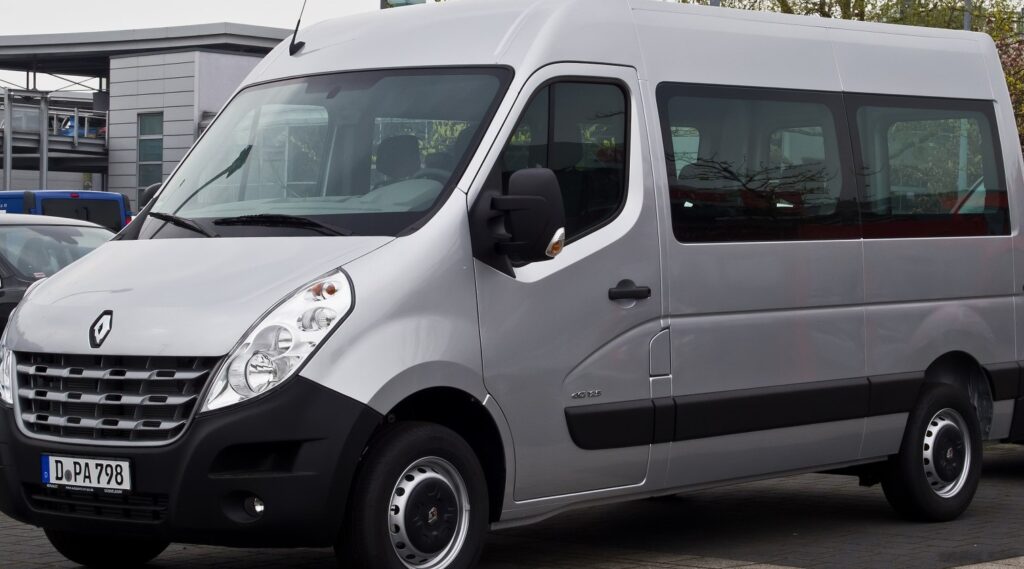
The Renault Master III Phase II, specifically the 2.3 Energy dCi (165 hp) L1H1 Stop&Start Crew Van produced between 2014 and 2018, represents a significant iteration in Renault’s large van lineup. Positioned as a versatile workhorse, this variant catered to businesses and tradespeople requiring both cargo space and passenger capacity. The “L1H1” designation refers to the van’s length and roof height – a shorter wheelbase and lower roof, making it more maneuverable in urban environments compared to its larger siblings. This particular configuration, with the 2.3-liter diesel engine and 165 horsepower output, aimed to balance fuel efficiency with adequate performance for a variety of commercial applications. It occupied a mid-range position within the Master III lineup, offering a step up in power and refinement from the lower-powered engine options while remaining more affordable than the highest-output versions.
Technical Specifications
| Brand | Renault |
| Model | Master |
| Generation | Master III (Phase II, 2014) |
| Type | 2.3 Energy dCi (165 Hp) L1H1 Stop&Start Crew Van |
| Start of production | 2014 |
| End of production | 2018 |
| Powertrain Architecture | Internal Combustion Engine |
| Body type | Minivan, MPV |
| Seats | 7 |
| Doors | 4 |
| Fuel consumption (urban) | 7.1-7.6 l/100 km (33.1 – 30.9 US mpg) |
| Fuel consumption (extra urban) | 6.5-7 l/100 km (36.2 – 33.6 US mpg) |
| Fuel consumption (combined) | 6.7-7.2 l/100 km (35.1 – 32.7 US mpg) |
| CO2 emissions | 176-190 g/km |
| Fuel Type | Diesel |
| Emission standard | Euro 5 |
| Power | 165 Hp @ 3500 rpm |
| Torque | 360 Nm @ 1500 rpm (265.52 lb.-ft. @ 1500 rpm) |
| Engine Model/Code | M9T |
| Engine displacement | 2298 cm3 (140.23 cu. in.) |
| Number of cylinders | 4 |
| Engine configuration | Inline |
| Number of valves per cylinder | 4 |
| Fuel injection system | Diesel Commonrail |
| Engine aspiration | Twin-Turbo, Intercooler |
| Engine oil capacity | 8 l (8.45 US qt | 7.04 UK qt) |
| Coolant capacity | 11 l (11.62 US qt | 9.68 UK qt) |
| Max. weight | 3300 kg (7275.25 lbs.) |
| Trunk (boot) space – maximum | 5000 l (176.57 cu. ft.) |
| Fuel tank capacity | 105 l (27.74 US gal | 23.1 UK gal) |
| Length | 5048 mm (198.74 in.) |
| Width | 2070 mm (81.5 in.) |
| Width including mirrors | 2470 mm (97.24 in.) |
| Height | 2303 mm (90.67 in.) |
| Wheelbase | 3182 mm (125.28 in.) |
| Front track | 1750 mm (68.9 in.) |
| Rear track | 1730 mm (68.11 in.) |
| Front overhang | 842 mm (33.15 in.) |
| Rear overhang | 1024 mm (40.31 in.) |
| Ride height (ground clearance) | 182 mm (7.17 in.) |
| Drivetrain Architecture | Front Wheel Drive, Internal Combustion Engine |
| Number of gears | 6 |
| Gearbox type | Manual Transmission |
| Front suspension | Independent, McPherson with coil spring and anti-roll bar |
| Rear suspension | Leaf spring |
| Front brakes | Ventilated discs, 302 mm |
| Rear brakes | Disc, 305 mm |
| Tires size | 225/65 R16 |
| Wheel rims size | 16 |
Powertrain & Engine Architecture
The heart of this Master III variant is the Renault M9T 2.3-liter four-cylinder diesel engine. This engine is characterized by its twin-turbocharger setup, which helps to mitigate turbo lag and deliver a broader torque curve. The common-rail direct fuel injection system, operating at high pressure, ensures efficient combustion and contributes to both power output and fuel economy. The engine produces 165 horsepower at 3500 rpm and a substantial 360 Nm (265.52 lb.-ft.) of torque at just 1500 rpm, making it well-suited for hauling and towing. The Stop&Start system, a standard feature, automatically shuts off the engine when the vehicle is stationary (at traffic lights, for example) to reduce fuel consumption and emissions. The engine is paired with a six-speed manual transmission, chosen for its durability and efficiency in commercial applications. While an automated manual transmission (AMT) was available on some Master III models, the six-speed manual was the more common pairing for this power output.
Driving Characteristics
The 165 hp 2.3 dCi engine, coupled with the six-speed manual transmission, provides a reasonable balance of performance and economy. Acceleration is adequate for most commercial tasks, though it won’t be described as sporty. The readily available torque at low engine speeds makes it easy to pull away from a standstill, even when heavily laden. The gear ratios are well-chosen for maximizing fuel efficiency during highway cruising, while still providing enough grunt for overtaking maneuvers. Compared to the lower-powered 125 hp version of the 2.3 dCi, the 165 hp variant offers noticeably more responsiveness, particularly when climbing hills or carrying a full load. However, it doesn’t match the outright performance of the higher-output 180 hp version. The front-wheel-drive configuration provides predictable handling, but traction can be limited on slippery surfaces when the van is unladen.
Equipment & Trim Levels
The Crew Van configuration of the Master III L1H1 typically included seating for seven occupants, making it ideal for transporting work crews and their tools. Standard equipment generally included features like air conditioning, a CD player with auxiliary input, power windows, and central locking. Safety features such as ABS brakes, Electronic Stability Program (ESP), and driver and passenger airbags were also standard. Higher trim levels offered options such as a touchscreen infotainment system with navigation, rear parking sensors, cruise control, and upgraded interior trim. The interior was generally functional and durable, designed to withstand the rigors of commercial use. Upholstery was typically hard-wearing cloth, and the dashboard layout was straightforward and easy to use.
Chassis & Braking
The Renault Master III utilizes a robust chassis designed to handle heavy payloads. The front suspension employs an independent McPherson strut setup with a coil spring and anti-roll bar, providing a comfortable ride and predictable handling. The rear suspension utilizes a leaf spring arrangement, which is well-suited for carrying heavy loads. Braking duties are handled by ventilated discs at the front and solid discs at the rear. The braking system is generally effective, but the van’s weight requires a firm pedal input. The 16-inch steel wheels were standard, and tire size was typically 225/65 R16.
Market Reception & Comparison
The Renault Master III, and specifically this 2.3 dCi 165 hp variant, was generally well-received by commercial vehicle operators. Critics praised its spacious interior, comfortable ride, and relatively fuel-efficient engine. Compared to rivals like the Fiat Ducato and Mercedes-Benz Sprinter, the Master offered a competitive package in terms of price and features. The 165 hp engine provided a good balance between performance and economy, making it a popular choice for businesses that didn’t require the ultimate in power. The manual transmission was favored by many drivers for its reliability and control. Fuel economy figures of around 35 mpg combined were considered respectable for a vehicle of this size and weight.
Legacy
The Renault Master III, including the 2.3 Energy dCi 165 hp variant, has proven to be a durable and reliable workhorse. While not without its occasional issues (such as turbocharger wear and injector problems, common to modern diesel engines), the M9T engine is generally considered robust when properly maintained. On the used market, these vans represent good value for money, offering a lot of space and capability for a relatively affordable price. However, potential buyers should be aware of the importance of regular servicing and maintenance to ensure long-term reliability. The Master III remains a common sight on European roads, testament to its enduring popularity and practicality.