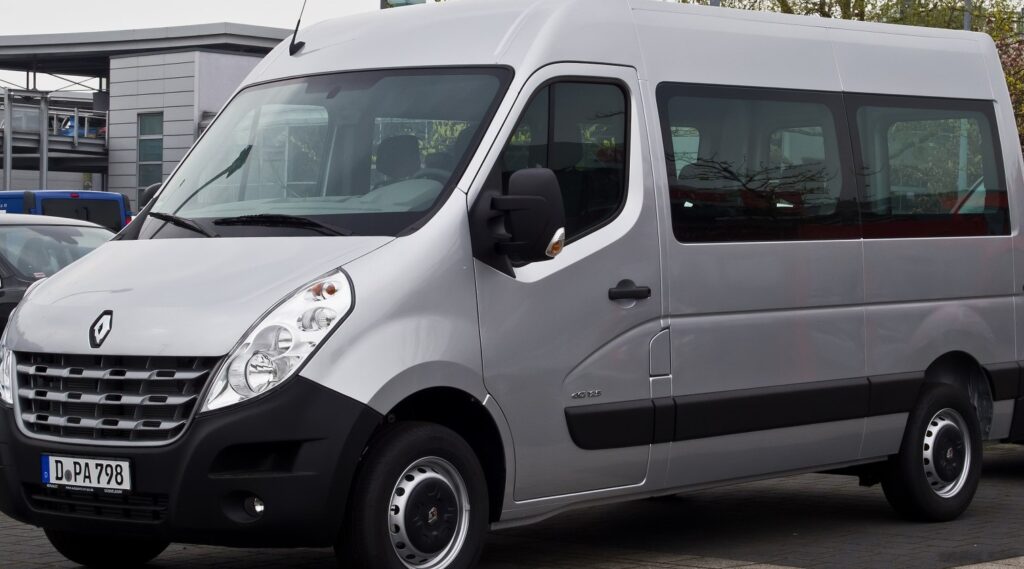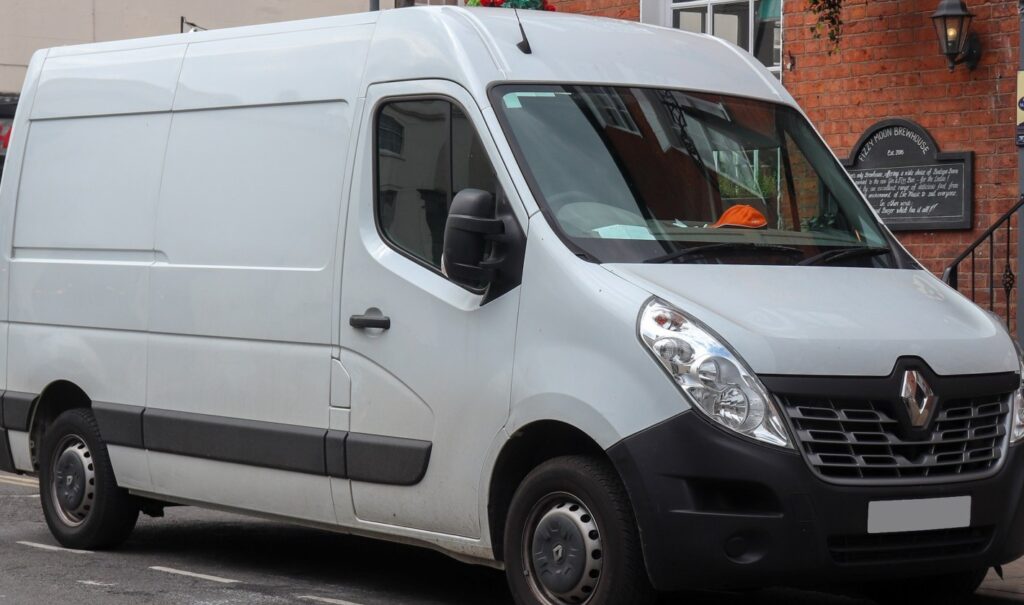
The Renault Master III (Phase II), specifically the 2.3 dCi 110 horsepower panel van in L3H3 LH35 configuration, represents a significant iteration of Renault’s large van offering, produced from 2014 to 2016. This variant occupied a crucial middle ground within the Master III lineup, balancing affordability with practicality for commercial operators. The L3H3 designation indicates a long wheelbase and high roof, maximizing cargo volume. It was primarily aimed at the European market, serving as a workhorse for businesses requiring substantial load capacity and reasonable running costs. This generation of the Master, built upon the X62 platform, saw improvements in refinement and efficiency compared to its predecessor.
Technical Specifications
| Brand | Renault |
| Model | Master |
| Generation | Master III (Phase II, 2014) Panel Van |
| Type (Engine) | 2.3 dCi (110 Hp) L3H3 LH35 |
| Start of production | 2014 |
| End of production | 2016 |
| Powertrain Architecture | Internal Combustion engine |
| Body type | Minivan, MPV |
| Seats | 3 |
| Doors | 4 |
| Fuel consumption (urban) | 8.9-9.2 l/100 km (26.4 – 25.6 US mpg) |
| Fuel consumption (extra urban) | 7-7.6 l/100 km (33.6 – 30.9 US mpg) |
| Fuel consumption (combined) | 7.7-8.2 l/100 km (30.5 – 28.7 US mpg) |
| CO2 emissions | 201-216 g/km |
| Fuel Type | Diesel |
| Emission standard | Euro 5 |
| Weight-to-power ratio | 18.3 kg/Hp, 54.7 Hp/tonne |
| Weight-to-torque ratio | 7.1 kg/Nm, 141.8 Nm/tonne |
| Power | 110 Hp @ 3500 rpm |
| Power per litre | 47.9 Hp/l |
| Torque | 285 Nm @ 1500 rpm (210.21 lb.-ft. @ 1500 rpm) |
| Engine Model/Code | M9T |
| Engine displacement | 2298 cm3 (140.23 cu. in.) |
| Number of cylinders | 4 |
| Engine configuration | Inline |
| Cylinder Bore | 85 mm (3.35 in.) |
| Piston Stroke | 101.5 mm (4 in.) |
| Number of valves per cylinder | 4 |
| Fuel injection system | Diesel Commonrail |
| Engine aspiration | Turbocharger, Intercooler |
| Engine oil capacity | 8 l (8.45 US qt | 7.04 UK qt) |
| Coolant | 11 l (11.62 US qt | 9.68 UK qt) |
| Kerb Weight | 2010 kg (4431.29 lbs.) |
| Max. weight | 3500 kg (7716.18 lbs.) |
| Max load | 1490 kg (3284.89 lbs.) |
| Trunk (boot) space – maximum | 14800 l (522.66 cu. ft.) |
| Fuel tank capacity | 105 l (27.74 US gal | 23.1 UK gal) |
| Permitted trailer load with brakes (12%) | 2500 kg (5511.56 lbs.) |
| Permitted trailer load without brakes | 750 kg (1653.47 lbs.) |
| Length | 6198 mm (244.02 in.) |
| Width | 2070 mm (81.5 in.) |
| Width including mirrors | 2470 mm (97.24 in.) |
| Height | 2744 mm (108.03 in.) |
| Wheelbase | 4332 mm (170.55 in.) |
| Front track | 1750 mm (68.9 in.) |
| Rear (Back) track | 1730 mm (68.11 in.) |
| Front overhang | 842 mm (33.15 in.) |
| Rear overhang | 1024 mm (40.31 in.) |
| Ride height (ground clearance) | 169 mm (6.65 in.) |
| Minimum turning circle (turning diameter) | 16.2 m (53.15 ft.) |
| Drivetrain Architecture | Front wheel drive |
| Number of gears and type of gearbox | 6 gears, manual transmission |
| Front suspension | Independent, type McPherson with coil spring and anti-roll bar |
| Rear suspension | Leaf spring |
| Front brakes | Ventilated discs, 302×28 mm |
| Rear brakes | Disc, 305×12 mm |
| Tires size | 225/65 R16 |
| Wheel rims size | 16 |
Powertrain & Engine Architecture
The heart of this Master variant is the Renault M9T 2.3-liter inline-four cylinder diesel engine. This engine, a staple in Renault’s commercial vehicle range, utilizes a common rail direct injection system, delivering fuel at extremely high pressure for optimized combustion. The M9T benefits from a turbocharger with an intercooler, boosting power output and improving torque delivery. The 110 horsepower output is achieved at 3500 rpm, while the peak torque of 285 Nm (210.21 lb-ft) is available from just 1500 rpm, providing ample pulling power for heavy loads. The engine features four valves per cylinder, enhancing breathing and contributing to its efficiency. This particular version was paired with a six-speed manual transmission, chosen for its durability and cost-effectiveness in commercial applications. While an automated manual transmission (AMT) was available on some Master models, the six-speed manual was the most common pairing for the 110hp engine.
Driving Characteristics
The 2.3 dCi 110 hp Master, with its manual transmission, offers a pragmatic driving experience. It’s not designed for speed, but rather for hauling and covering long distances efficiently. The low-end torque makes it capable of carrying heavy loads without excessive gear changes. The six-speed gearbox is well-matched to the engine’s characteristics, providing a reasonable spread of ratios for both urban and highway driving. Compared to higher-output versions of the Master (like the 145 hp variant), this model feels noticeably slower, especially when fully loaded. However, the trade-off is improved fuel economy. The leaf spring rear suspension, while robust, can result in a somewhat firm ride when unladen, but it excels at maintaining stability under heavy loads. Steering is generally light and predictable, prioritizing ease of use over sporty feel.
Equipment & Trim Levels
The Master III Phase II in this configuration was typically offered with a functional, rather than luxurious, level of equipment. Standard features generally included a driver’s airbag, ABS brakes, power steering, and a basic audio system. The cabin is designed for durability and practicality, with hard-wearing plastics and easily cleanable surfaces. Trim levels were relatively limited, focusing on providing essential features for commercial use. Optional extras could include air conditioning, electric windows, a passenger airbag, and upgraded audio systems. The interior layout prioritizes space and functionality, with ample storage compartments and a driver-focused dashboard.
Chassis & Braking
The Master III utilizes a robust ladder-frame chassis, providing a solid foundation for heavy-duty applications. The front suspension employs an independent McPherson strut setup with coil springs and an anti-roll bar, offering a reasonable balance of comfort and handling. The rear suspension utilizes a leaf spring design, chosen for its load-carrying capacity and durability. Braking is handled by ventilated discs at the front and solid discs at the rear. ABS (Anti-lock Braking System) is standard, enhancing safety during emergency braking. The steering system is a hydraulic power-assisted rack and pinion, providing a light and responsive feel.
Market Reception & Comparison
The Renault Master III 2.3 dCi 110 hp was generally well-received in the commercial vehicle market. Critics praised its practicality, load capacity, and relatively low running costs. Compared to the more powerful 145 hp version, the 110 hp model offered a more affordable entry point, appealing to businesses prioritizing economy over outright performance. The 1.9 dCi engine, available in earlier Master III models, was less refined and offered lower power output. The 110 hp version represented a significant improvement in both areas. Fuel economy was a strong point, consistently achieving around 30 mpg in mixed driving conditions. Reliability was generally good, although some owners reported issues with the diesel particulate filter (DPF) on Euro 5 compliant models.
Legacy
The Renault Master III 2.3 dCi 110 hp remains a common sight on European roads today. Its robust construction and relatively simple mechanicals contribute to its longevity. The M9T engine, while not without its quirks, is generally considered reliable when properly maintained. On the used market, these vans represent good value for money, offering a large load capacity at an affordable price. However, potential buyers should be aware of the potential for DPF issues and ensure that the vehicle has been regularly serviced. The Master III, in this configuration, solidified Renault’s position as a major player in the large van segment, providing a practical and dependable workhorse for businesses of all sizes.