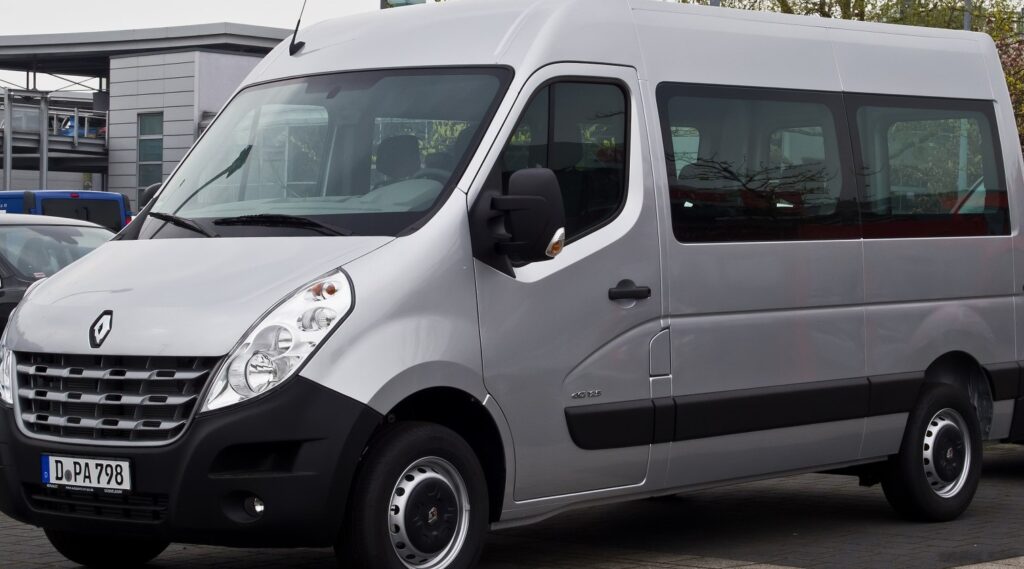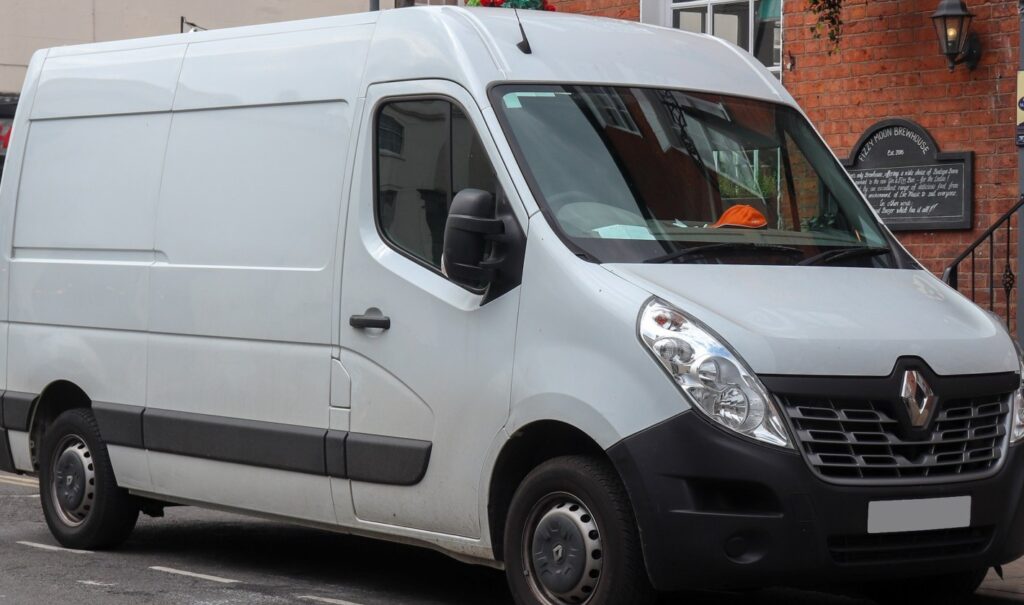
The Renault Master III (Phase II), specifically the 2.3 dCi 170 horsepower variant introduced in 2017 and produced through 2018, represents a significant iteration of Renault’s large van offering. Positioned as a mid-range option within the Master III lineup, this L2H3 MH35 configuration – denoting body length, roof height, and maximum authorized mass – catered to businesses and tradespeople requiring substantial cargo capacity and reasonable running costs. This version aimed to balance performance with fuel efficiency, making it a popular choice in the European commercial vehicle market. The Phase II updates brought refinements to the engine, styling, and interior compared to earlier Master III models.
Technical Specifications
| Brand | Renault |
| Model | Master |
| Generation | Master III (Phase II, 2014) Panel Van |
| Type (Engine) | 2.3 dCi (170 Hp) L2H3 MH35 Automatic |
| Start of production | 2017 |
| End of production | 2018 |
| Powertrain Architecture | Internal Combustion engine |
| Body type | Minivan, MPV |
| Seats | 3 |
| Doors | 4 |
| Fuel consumption (urban) | 7.8-7.9 l/100 km (30.2 – 29.8 US mpg, 36.2 – 35.8 UK mpg, 12.8 – 12.7 km/l) |
| Fuel consumption (extra urban) | 6.9-7.0 l/100 km (34.1 – 33.6 US mpg, 40.9 – 40.4 UK mpg, 14.5 – 14.3 km/l) |
| Fuel consumption (combined) | 7.2-7.3 l/100 km (32.7 – 32.2 US mpg, 39.2 – 38.7 UK mpg, 13.9 – 13.7 km/l) |
| CO2 emissions | 187 – 189 g/km |
| Fuel Type | Diesel |
| Emission standard | Euro 6 |
| Weight-to-power ratio | 11.7 kg/Hp, 85.7 Hp/tonne |
| Weight-to-torque ratio | 5.2 kg/Nm, 191.5 Nm/tonne |
| Power | 170 Hp @ 3500 rpm |
| Power per litre | 74 Hp/l |
| Torque | 380 Nm @ 1500 rpm (280.27 lb.-ft. @ 1500 rpm) |
| Engine Model/Code | M9T |
| Engine displacement | 2298 cm3 (140.23 cu. in.) |
| Number of cylinders | 4 |
| Engine configuration | Inline |
| Cylinder Bore | 85 mm (3.35 in.) |
| Piston Stroke | 101.5 mm (4 in.) |
| Number of valves per cylinder | 4 |
| Fuel injection system | Diesel Commonrail |
| Engine aspiration | Twin-Turbo, Intercooler |
| Engine oil capacity | 8 l (8.45 US qt | 7.04 UK qt) |
| Coolant | 11 l (11.62 US qt | 9.68 UK qt) |
| Kerb Weight | 1984 kg (4373.97 lbs.) |
| Max. weight | 3500 kg (7716.18 lbs.) |
| Max load | 1516 kg (3342.21 lbs.) |
| Trunk (boot) space – maximum | 12300 l (434.37 cu. ft.) |
| Fuel tank capacity | 105 l (27.74 US gal | 23.1 UK gal) |
| Permitted trailer load with brakes (12%) | 2500 kg (5511.56 lbs.) |
| Permitted trailer load without brakes | 750 kg (1653.47 lbs.) |
| Length | 5548 mm (218.43 in.) |
| Width | 2070 mm (81.5 in.) |
| Width including mirrors | 2470 mm (97.24 in.) |
| Height | 2749 mm (108.23 in.) |
| Wheelbase | 3682 mm (144.96 in.) |
| Front track | 1750 mm (68.9 in.) |
| Rear (Back) track | 1730 mm (68.11 in.) |
| Front overhang | 842 mm (33.15 in.) |
| Rear overhang | 1024 mm (40.31 in.) |
| Ride height (ground clearance) | 173 mm (6.81 in.) |
| Minimum turning circle (turning diameter) | 14.1 m (46.26 ft.) |
| Drivetrain Architecture | Front wheel drive |
| Number of gears and type of gearbox | 6 gears, automatic transmission |
| Front suspension | Independent, type McPherson with coil spring and anti-roll bar |
| Rear suspension | Leaf spring |
| Front brakes | Ventilated discs, 302×28 mm |
| Rear brakes | Disc, 305×12 mm |
| Tires size | 225/65 R16 |
| Wheel rims size | 16 |
INTRODUCTION
The Renault Master III Phase II 2.3 dCi 170 Automatic, launched in 2017, is a large panel van designed for commercial use. It falls within the third generation of the Master series, which began in 1980. The Phase II update, introduced in 2014 and continuing through this model year, brought improvements to the vehicle’s aesthetics, interior, and crucially, its engine technology. This particular variant, the L2H3 MH35, is characterized by its medium length body, high roof, and 3.5-tonne (7,716 lbs) maximum authorized mass. It was primarily sold in Europe, where large vans are a staple for businesses of all sizes, offering a practical and relatively efficient solution for transporting goods and personnel.
Powertrain & Engine Architecture
At the heart of this Master variant lies the Renault M9T 2.3-liter four-cylinder diesel engine. This engine is a turbocharged diesel, but more specifically, it employs a twin-turbocharger setup. This configuration utilizes two turbochargers of different sizes – a smaller one for quick response at low engine speeds and a larger one to deliver increased power at higher RPMs. An intercooler is also present, cooling the compressed intake air to increase its density and further improve combustion efficiency. The engine utilizes a Diesel Commonrail direct fuel injection system, delivering fuel directly into the cylinders at extremely high pressure for optimized combustion. The M9T engine produces 170 horsepower at 3500 rpm and 380 Nm (280 lb-ft) of torque at 1500 rpm. Paired with this engine is a six-speed automatic transmission, providing smooth gear changes and ease of operation, particularly beneficial for urban driving. The transmission is electronically controlled, adapting shift points based on driving conditions and load.
Driving Characteristics
The 170 horsepower and 380 Nm of torque provide adequate performance for a vehicle of this size and weight. While not a sports van, the 2.3 dCi engine delivers sufficient power for highway cruising and carrying substantial loads. The automatic transmission contributes to a relaxed driving experience, especially in stop-and-go traffic. Compared to the lower-powered 125 hp version, the 170 hp model offers noticeably improved acceleration and overtaking capability. However, it doesn’t match the outright performance of the higher-output versions, which were sometimes available with manual transmissions. The gear ratios in the six-speed automatic are well-chosen, providing a balance between fuel efficiency and responsiveness. Power delivery is relatively linear, with the peak torque available from a low 1500 rpm, making it easy to manage even when fully loaded. The front-wheel-drive configuration provides predictable handling, but traction can be limited on slippery surfaces when carrying heavy loads.
Equipment & Trim Levels
The Master III Phase II 2.3 dCi 170 Automatic typically came equipped with a reasonable level of standard features, geared towards practicality and driver comfort. These included air conditioning, a driver’s airbag, electric windows, and a basic audio system with USB connectivity. Higher trim levels, or optional packages, could add features such as a passenger airbag, cruise control, rear parking sensors, and a more advanced infotainment system with navigation. The interior is functional and durable, with hard-wearing plastics and comfortable seating. Upholstery was typically cloth, with options for more durable materials for high-wear areas. The dashboard layout is straightforward and easy to use, with clearly labeled controls.
Chassis & Braking
The Master III utilizes a robust chassis designed to withstand the demands of commercial use. The front suspension employs an independent McPherson strut setup with coil springs and an anti-roll bar, providing a comfortable ride and stable handling. The rear suspension utilizes a leaf spring design, chosen for its load-carrying capacity and durability. Braking is handled by ventilated discs at the front and solid discs at the rear. The braking system is assisted by ABS (Anti-lock Braking System) and EBD (Electronic Brakeforce Distribution) for enhanced safety. The 225/65 R16 tires provide adequate grip in most conditions. The steering is hydraulic power-assisted, offering a good balance between ease of use and road feel.
Market Reception & Comparison
The Renault Master III 2.3 dCi 170 Automatic was generally well-received by critics and operators alike. It was praised for its comfortable ride, spacious interior, and relatively fuel-efficient engine. Compared to the lower-powered 1.3-liter engine options, the 2.3 dCi offered a significant performance upgrade, making it suitable for longer journeys and heavier loads. Fuel economy figures of around 7.2-7.3 l/100 km (32.7-32.2 US mpg) were considered competitive for a vehicle of this size. However, some reviewers noted that the automatic transmission could occasionally feel hesitant, and the interior, while functional, lacked the refinement of some competitors. Compared to rivals like the Fiat Ducato and Mercedes-Benz Sprinter, the Master offered a good balance of price, performance, and practicality.
Legacy
The Renault Master III 2.3 dCi 170 Automatic has proven to be a relatively reliable workhorse in the used vehicle market. The M9T engine, while complex with its twin-turbo setup, is generally durable if properly maintained. Common issues include turbocharger wear and potential problems with the fuel injection system. The automatic transmission, if serviced regularly, is also generally reliable. Today, these vans are still commonly seen in operation, testament to their build quality and practicality. They represent a good value proposition for businesses seeking a large, capable van at a reasonable price point. The Phase II updates, including the improved engine and styling, have helped to maintain the Master’s popularity in the competitive commercial vehicle segment.