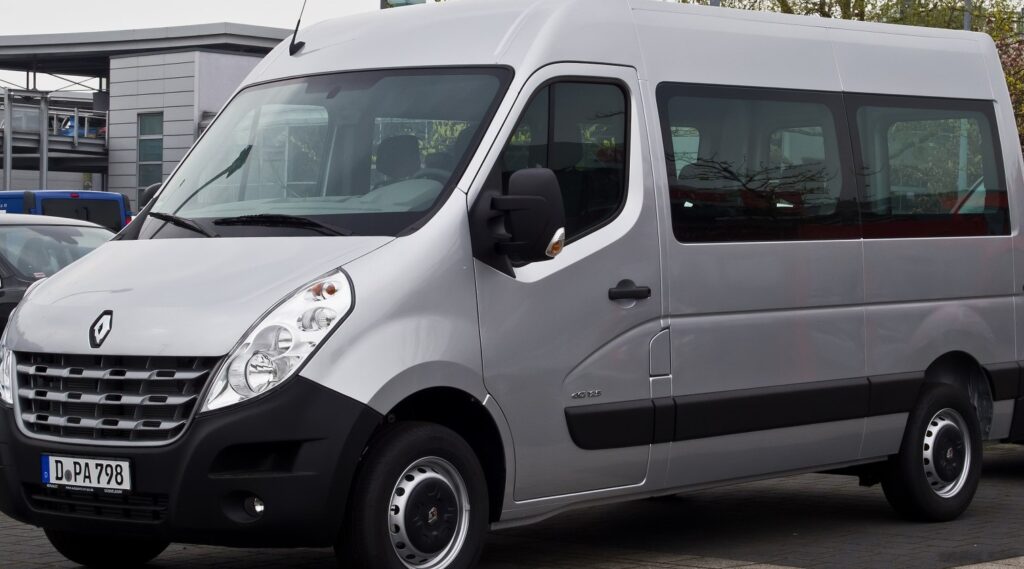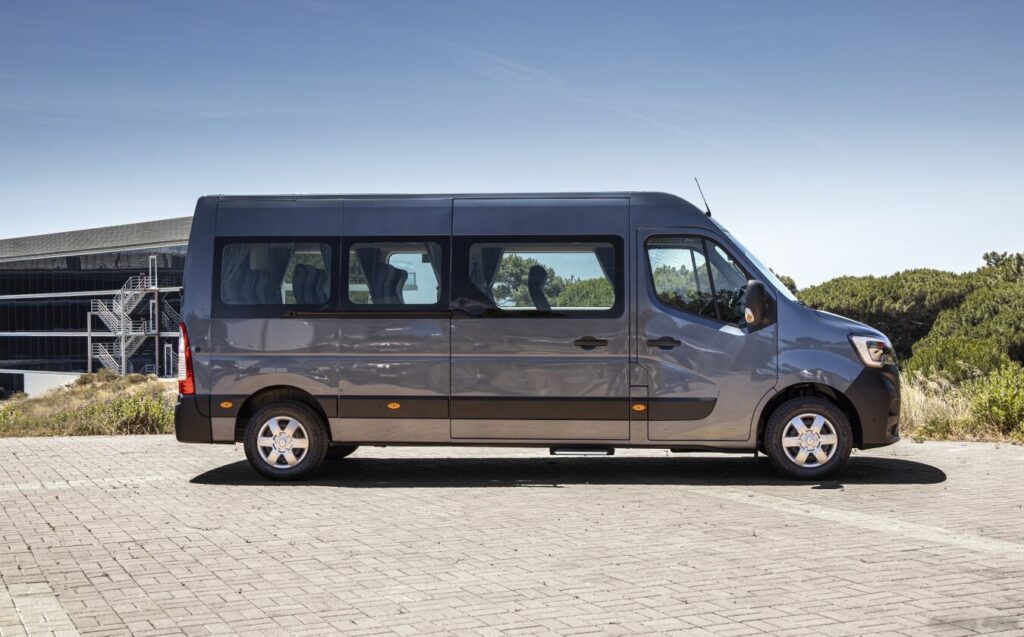
The Renault Master III Phase III, launched in 2019, represents a significant update to Renault’s large van and bus platform. This iteration of the Master, particularly the 2.3 Energy dCi variant producing 165 horsepower, was designed to meet the evolving demands of commercial operators and passenger transport services. Positioned as a mid-range offering within the Master lineup, this version balanced affordability with a respectable level of performance and practicality. It primarily served the European market, where large vans and buses are crucial for both business and personal use, offering a versatile solution for various applications from shuttle services to mobile workshops.
Technical Specifications
| Brand | Renault |
| Model | Master |
| Generation | Master III (Phase III, 2019) Bus |
| Type (Engine) | 2.3 Energy dCi (165 Hp) |
| Start of production | 2019 |
| Powertrain Architecture | Internal Combustion engine |
| Body type | MPV |
| Seats | 17 |
| Doors | 4 |
| Fuel Type | Diesel |
| Acceleration 0 – 100 km/h | 15.2 sec |
| Acceleration 0 – 62 mph | 15.2 sec |
| Acceleration 0 – 60 mph | 14.4 sec |
| Maximum speed | 100 km/h (62.14 mph) |
| Emission standard | EURO VI-D |
| Power | 165 Hp @ 3500 rpm |
| Power per litre | 71.8 Hp/l |
| Torque | 380 Nm @ 1500 rpm (280.27 lb.-ft. @ 1500 rpm) |
| Engine Model/Code | M9T |
| Engine displacement | 2298 cm3 (140.23 cu. in.) |
| Number of cylinders | 4 |
| Engine configuration | Inline |
| Number of valves per cylinder | 4 |
| Fuel injection system | Diesel Commonrail |
| Engine aspiration | Twin-Turbo, Intercooler |
| Max. weight | 3900 kg (8598.03 lbs) |
| Length | 6225 mm (245.08 in) |
| Width | 2070 mm (81.5 in) |
| Width including mirrors | 2470 mm (97.24 in) |
| Height | 2496 mm (98.27 in) |
| Wheelbase | 4332 mm (170.55 in) |
| Front track | 1750 mm (68.9 in) |
| Rear (Back) track | 1730 mm (68.11 in) |
| Front overhang | 869 mm (34.21 in) |
| Rear overhang | 1024 mm (40.31 in) |
| Drivetrain Architecture | The Internal combustion engine (ICE) drives the front wheels of the vehicle. |
| Drive wheel | Front wheel drive |
| Number of gears and type of gearbox | 6 gears, manual transmission |
| Tires size | 225/65 R16 |
| Wheel rims size | 16 |
Powertrain & Engine Architecture
The heart of the Renault Master III 2.3 Energy dCi (165 Hp) is the M9T engine, a 2.3-liter inline four-cylinder diesel. This engine benefits from a twin-turbocharger setup coupled with an intercooler, designed to enhance both power and torque delivery. The common-rail direct fuel injection system ensures precise fuel metering, contributing to improved combustion efficiency and reduced emissions. The engine produces 165 horsepower at 3500 rpm and a substantial 380 Nm (280.27 lb.-ft.) of torque at just 1500 rpm. This torque characteristic is particularly beneficial for a vehicle of this size and weight, providing strong pulling power and effortless acceleration, even when fully loaded. The engine meets the stringent EURO VI-D emission standards, incorporating technologies like diesel particulate filters (DPF) and selective catalytic reduction (SCR) systems to minimize harmful emissions.
Driving Characteristics
The 165 hp output, paired with a 6-speed manual transmission, delivers a driving experience geared towards practicality rather than outright performance. Acceleration from 0-60 mph takes approximately 14.4 seconds, and top speed is limited to around 100 km/h (62 mph). While not particularly quick, the engine’s strong low-end torque makes it well-suited for navigating urban environments and carrying heavy loads. The 6-speed gearbox allows for efficient cruising at highway speeds, while the relatively long gear ratios prioritize fuel economy over rapid acceleration. Compared to higher-output versions of the Master, this variant offers a more relaxed and economical driving experience, sacrificing some performance for improved fuel efficiency.
Equipment & Trim Levels
The 2.3 Energy dCi (165 Hp) Master III typically came equipped with a range of standard features designed for commercial and passenger transport. These included power steering, ABS brakes, driver and passenger airbags, and a basic audio system. The bus configuration, seating up to 17 passengers, featured durable and easy-to-clean interior materials. Optional extras included air conditioning, cruise control, a more advanced infotainment system with navigation, and parking sensors. Trim levels varied depending on the specific market and customer requirements, but generally focused on providing a functional and reliable vehicle rather than luxurious appointments.
Chassis & Braking
The Renault Master III utilizes a front-wheel-drive layout, contributing to a lower load floor and improved space utilization. The suspension system consists of independent coil springs at the front and leaf springs at the rear, providing a balance between ride comfort and load-carrying capacity. Braking duties are handled by disc brakes on the front wheels and drum brakes on the rear, a common configuration for vehicles in this weight class. The braking system is assisted by ABS (Anti-lock Braking System) to enhance stability and control during emergency braking situations. Stabilizer bars are fitted to both the front and rear axles to reduce body roll during cornering.
Market Reception & Comparison
The Renault Master III 2.3 Energy dCi (165 Hp) was generally well-received by critics and operators alike. It was praised for its fuel efficiency, reliability, and practicality. Compared to other vans and buses in its class, such as the Mercedes-Benz Sprinter and the Volkswagen Crafter, the Master offered a competitive price point and a comfortable driving experience. However, some critics noted that the interior design was somewhat utilitarian and lacked the refinement of some of its rivals. Fuel economy was a strong point, with real-world figures typically ranging from 25 to 30 mpg, depending on driving conditions and load.
Legacy
The Renault Master III, including the 2.3 Energy dCi (165 Hp) variant, has proven to be a durable and reliable workhorse. These vehicles continue to be widely used in commercial fleets and passenger transport services across Europe. The M9T engine, while not without its occasional issues, has generally demonstrated good longevity when properly maintained. On the used car market, these Masters represent a relatively affordable option for businesses and individuals seeking a spacious and practical van or bus. Regular maintenance, including timely servicing of the turbocharger and fuel injection system, is crucial for ensuring the long-term reliability of this powertrain.