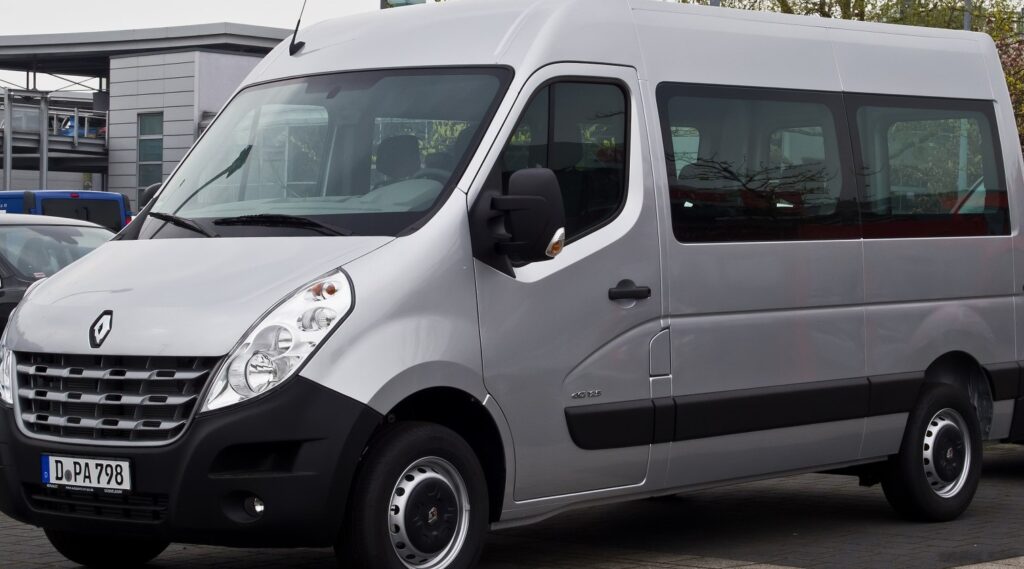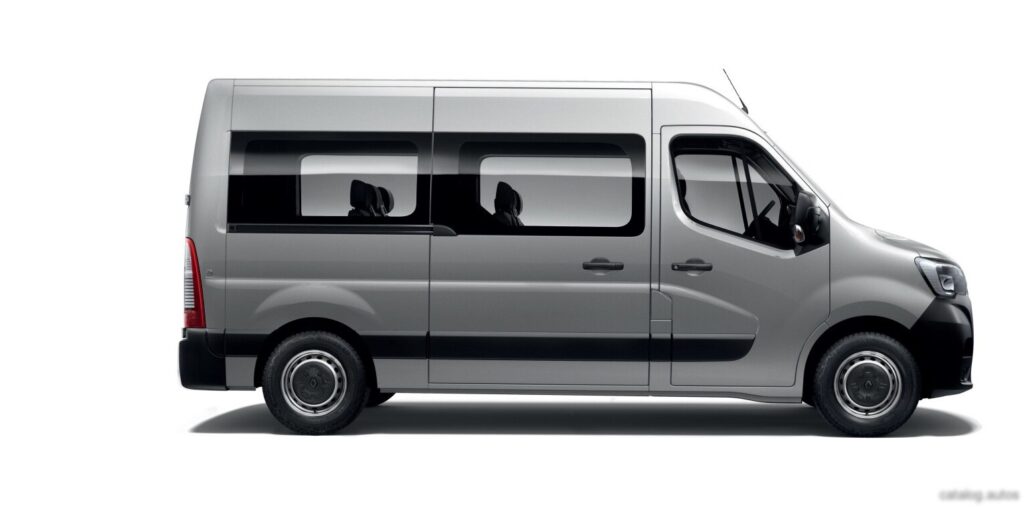
The Renault Master III Phase III (2019) Combi 2.3 Energy dCi 135 Hp L2H2 represents a mid-cycle refresh of the third-generation Renault Master, a large van produced by the French manufacturer. Introduced in 2019, this variant caters to the commercial and passenger transport segments, offering a balance between practicality, efficiency, and carrying capacity. The “Combi” designation indicates a passenger-oriented configuration, typically featuring multiple rows of seating and enhanced interior trim compared to the standard cargo van. The L2H2 signifies the body length and roof height – a medium length and medium roof – providing a versatile space for both passengers and their belongings. This model is primarily aimed at the European market, where large vans are commonly used for shuttle services, family transport, and small business operations.
Technical Specifications
| Brand | Renault |
| Model | Master |
| Generation | Master III (Phase III, 2019) Combi |
| Type (Engine) | 2.3 Energy dCi (135 Hp) L2H2 |
| Start of production | 2019 |
| Powertrain Architecture | Internal Combustion engine |
| Body type | Minivan, MPV |
| Seats | 6 |
| Doors | 4 |
| Fuel Type | Diesel |
| Emission standard | Euro 6d-Temp |
| Weight-to-power ratio | 16 kg/Hp, 62.4 Hp/tonne |
| Weight-to-torque ratio | 6 kg/Nm, 166.4 Nm/tonne |
| Power | 135 Hp @ 3500 rpm |
| Power per litre | 58.7 Hp/l |
| Torque | 360 Nm @ 1500 rpm (265.52 lb.-ft. @ 1500 rpm) |
| Engine Model/Code | M9T |
| Engine displacement | 2298 cm3 (140.23 cu. in.) |
| Number of cylinders | 4 |
| Engine configuration | Inline |
| Number of valves per cylinder | 4 |
| Fuel injection system | Diesel Commonrail |
| Engine aspiration | Twin-Turbo, Intercooler |
| Kerb Weight | 2163 kg (4768.6 lbs) |
| Max. weight | 3500 kg (7716.18 lbs) |
| Max load | 1337 kg (2947.58 lbs) |
| Trunk (boot) space – maximum | 6000 l (211.89 cu. ft) |
| Fuel tank capacity | 105 l (27.74 US gal | 23.1 UK gal) |
| AdBlue tank | 28 l (7.4 US gal | 6.16 UK gal) |
| Length | 5575 mm (219.49 in) |
| Width | 2070 mm (81.5 in) |
| Width including mirrors | 2470 mm (97.24 in) |
| Height | 2499 mm (98.39 in) |
| Wheelbase | 3682 mm (144.96 in) |
| Front track | 1750 mm (68.9 in) |
| Rear (Back) track | 1730 mm (68.11 in) |
| Front overhang | 869 mm (34.21 in) |
| Rear overhang | 1024 mm (40.31 in) |
| Ride height (ground clearance) | 182 mm (7.17 in) |
| Minimum turning circle (turning diameter) | 13.6 m (44.62 ft) |
| Drivetrain Architecture | Front wheel drive |
| Number of gears and type of gearbox | 6 gears, manual transmission |
| Front suspension | Independent, type McPherson with coil spring and anti-roll bar |
| Rear suspension | Leaf spring |
| Front brakes | Ventilated discs, 302 mm |
| Rear brakes | Disc, 305 mm |
| Tires size | 225/65 R16 |
| Wheel rims size | 16 |
Powertrain & Engine Architecture
The 2.3 Energy dCi engine, designated with the code M9T, is a four-cylinder, inline diesel engine. It utilizes a common rail direct injection system, delivering fuel directly into the combustion chamber at extremely high pressure for optimized combustion. The engine is equipped with a twin-turbocharger setup, incorporating a small, low-inertia turbo for rapid response and a larger turbo for sustained power delivery. An intercooler is also present, cooling the intake air to increase its density and further enhance performance. This configuration allows the engine to produce 135 horsepower at 3500 rpm and 360 Nm (265.52 lb-ft) of torque at 1500 rpm. The six-speed manual transmission is the standard offering for this variant, providing a balance between fuel efficiency and driver control. The transmission’s gear ratios are tuned to maximize the engine’s torque output, making it suitable for carrying heavy loads and navigating varied terrain.
Driving Characteristics
The 135 hp 2.3 dCi engine paired with the six-speed manual transmission delivers adequate performance for the Master Combi. While not designed for outright speed, it provides sufficient power for highway cruising and city driving, even when fully loaded. The engine’s peak torque, available from a low 1500 rpm, ensures strong acceleration from a standstill and effortless overtaking. The manual transmission allows for precise control over gear selection, enabling drivers to optimize fuel efficiency or maintain momentum on inclines. Compared to higher-output versions of the 2.3 dCi engine, this variant offers a more economical driving experience, but at the expense of some performance. The gear ratios are spaced to prioritize fuel economy and drivability over rapid acceleration.
Equipment & Trim Levels
The Master III Phase III Combi 2.3 Energy dCi 135 Hp L2H2 typically comes with a reasonable level of standard equipment. This includes features such as air conditioning, a basic audio system with USB connectivity, electric front windows, and central locking. Safety features generally include ABS brakes, Electronic Stability Program (ESP), and driver and passenger airbags. The “Combi” trim level adds features geared towards passenger comfort, such as multiple rows of seating, often configurable with different layouts. Optional extras could include navigation systems, rear parking sensors, cruise control, and upgraded interior trim materials. The dashboard layout is functional and designed for ease of use, with clearly labeled controls and a straightforward instrument cluster.
Chassis & Braking
The Master III utilizes a front-wheel-drive layout, contributing to a lower load floor and improved space utilization. The front suspension employs an independent McPherson strut design with coil springs and an anti-roll bar, providing a comfortable ride and predictable handling. The rear suspension utilizes a leaf spring setup, chosen for its durability and load-carrying capacity. The braking system consists of ventilated discs on the front wheels and solid discs on the rear, providing adequate stopping power for the vehicle’s weight. The 16-inch wheels are fitted with 225/65 R16 tires, offering a balance between comfort and grip.
Market Reception & Comparison
The Renault Master III Combi 2.3 Energy dCi 135 Hp L2H2 was generally well-received in the European market as a practical and versatile van. Critics praised its spacious interior, comfortable ride, and relatively fuel-efficient engine. Compared to other vans in its class, such as the Fiat Ducato and Volkswagen Crafter, the Master offered a competitive combination of features and price. The 135 hp engine was considered adequate for most applications, but some reviewers noted that higher-output versions offered a more refined driving experience. Fuel economy was a strong point, with the 2.3 dCi engine achieving respectable figures in real-world driving conditions. Reliability was generally good, although some owners reported minor issues with the electronic systems.
Legacy
The Renault Master III, and specifically the 2.3 Energy dCi engine, has proven to be a relatively reliable powertrain. The M9T engine, while complex with its twin-turbo setup, has demonstrated good longevity when properly maintained. In the used car market, these vans remain popular due to their practicality and affordability. Regular maintenance, including oil changes and filter replacements, is crucial for ensuring the long-term health of the engine and transmission. The availability of spare parts is generally good, and the relatively simple mechanical design makes it accessible for independent mechanics to service. The Master III Combi continues to be a viable option for those seeking a spacious and versatile van for commercial or personal use.