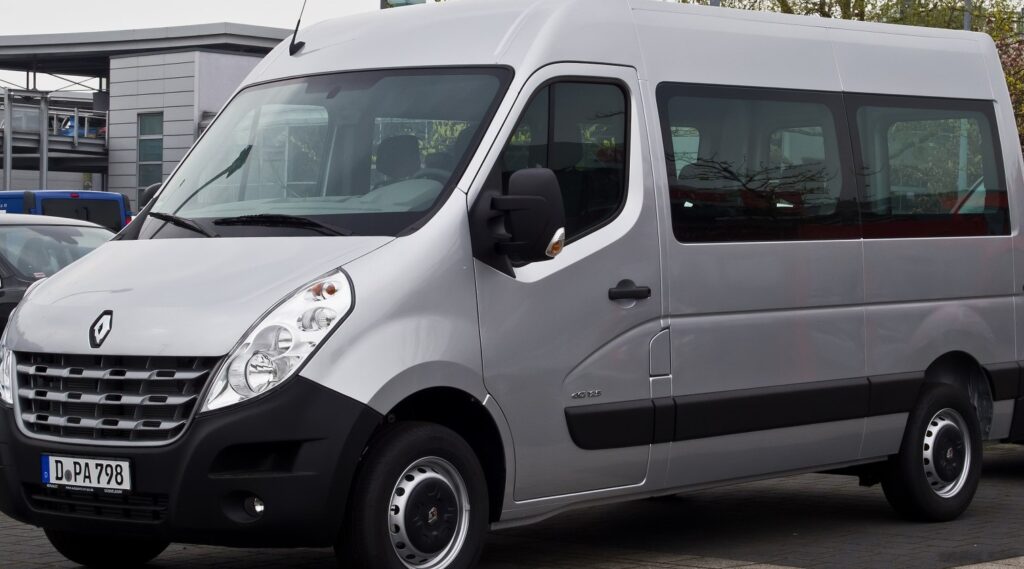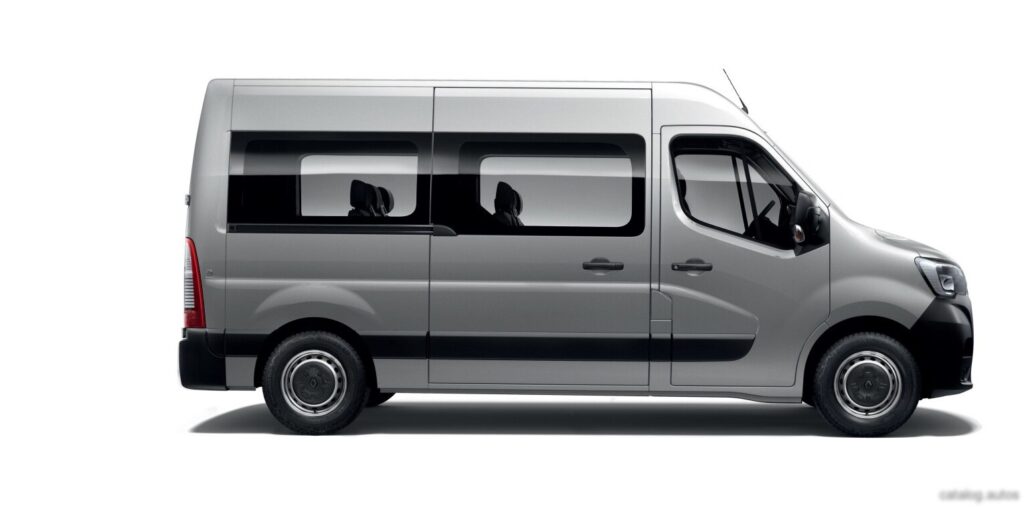
The Renault Master III Phase III (2019) Combi 2.3 Energy dCi 180 hp Automatic 9-Seat represents a significant iteration of Renault’s large van platform, designed primarily for the European commercial vehicle market, but increasingly seen in other regions. Introduced as part of the Phase III refresh of the third-generation Master (launched originally in 2010), this variant caters to passenger transport and shuttle services, offering a balance between practicality, comfort, and efficiency. Production began in 2019 and continues, with this specific configuration positioned as a mid-to-high range offering within the broader Master Combi lineup. It builds upon the established reputation of the Master series for robust construction and adaptability.
Technical Specifications
| Brand | Renault |
| Model | Master |
| Generation | Master III (Phase III, 2019) Combi |
| Type | 2.3 Energy dCi (180 Hp) L1H1 Automatic 9 Seat |
| Start of production | 2019 |
| Powertrain Architecture | Internal Combustion engine |
| Body type | Minivan, MPV |
| Seats | 9 |
| Doors | 4 |
| Combined fuel consumption (WLTP) | 6.9 l/100 km (34.1 US mpg, 40.9 UK mpg, 14.5 km/l) |
| CO2 emissions (WLTP) | 182 g/km |
| Fuel Type | Diesel |
| Emission standard | Euro 6d-Temp |
| Weight-to-power ratio | 13 kg/Hp, 77.2 Hp/tonne |
| Weight-to-torque ratio | 5.8 kg/Nm, 171.6 Nm/tonne |
| Power | 180 Hp @ 3500 rpm |
| Power per litre | 78.3 Hp/l |
| Torque | 400 Nm @ 1500 rpm (295.02 lb.-ft. @ 1500 rpm) |
| Engine Model/Code | M9T |
| Engine displacement | 2298 cm3 (140.23 cu. in.) |
| Number of cylinders | 4 |
| Engine configuration | Inline |
| Number of valves per cylinder | 4 |
| Fuel injection system | Diesel Commonrail |
| Engine aspiration | Twin-Turbo, Intercooler |
| Coolant | 11 l (11.62 US qt | 9.68 UK qt) |
| Kerb Weight | 2331 kg (5138.98 lbs.) |
| Max. weight | 3300 kg (7275.25 lbs.) |
| Max load | 969 kg (2136.28 lbs.) |
| Trunk (boot) space – maximum | 2800 l (98.88 cu. ft.) |
| Fuel tank capacity | 105 l (27.74 US gal | 23.1 UK gal) |
| AdBlue tank | 28 l (7.4 US gal | 6.16 UK gal) |
| Permitted trailer load with brakes (12%) | 2500 kg (5511.56 lbs.) |
| Permitted trailer load without brakes | 750 kg (1653.47 lbs.) |
| Permitted towbar download | 100 kg (220.46 lbs.) |
| Length | 5075 mm (199.8 in.) |
| Width | 2070 mm (81.5 in.) |
| Width including mirrors | 2470 mm (97.24 in.) |
| Height | 2303 mm (90.67 in.) |
| Wheelbase | 3182 mm (125.28 in.) |
| Front track | 1750 mm (68.9 in.) |
| Rear (Back) track | 1730 mm (68.11 in.) |
| Front overhang | 869 mm (34.21 in.) |
| Rear overhang | 1024 mm (40.31 in.) |
| Ride height (ground clearance) | 182 mm (7.17 in.) |
| Minimum turning circle (turning diameter) | 12 m (39.37 ft.) |
| Drivetrain Architecture | Front wheel drive. Internal Combustion engine. |
| Number of gears and type of gearbox | 6 gears, automatic transmission |
| Front suspension | Independent, type McPherson with coil spring and anti-roll bar |
| Rear suspension | Leaf spring |
| Front brakes | Ventilated discs, 302 mm |
| Rear brakes | Disc, 305 mm |
| Tires size | 225/65 R16 |
| Wheel rims size | 16 |
Powertrain & Engine Architecture
The heart of this Master Combi is the Renault M9T 2.3-liter four-cylinder diesel engine. This engine utilizes a twin-turbocharger setup with an intercooler, a configuration designed to deliver both strong low-end torque and sustained power at higher RPMs. The engine employs a Diesel Commonrail direct fuel injection system, ensuring precise fuel delivery for optimized combustion and reduced emissions. The M9T engine is known for its robust construction and ability to handle the demands of commercial vehicle operation. The six-speed automatic transmission, sourced from a variety of suppliers over the Master III’s lifespan, is calibrated for smooth shifting and efficient operation, prioritizing drivability over outright performance. This transmission is electronically controlled, adapting to driving conditions and load to optimize gear selection.
Driving Characteristics
The 180 hp and 400 Nm (295 lb-ft) of torque provide adequate performance for a vehicle of this size and weight. While not a sports van, the M9T engine delivers sufficient power for highway cruising and carrying a full load of passengers. The automatic transmission contributes to a relaxed driving experience, particularly in urban environments. Compared to the lower-powered 130 hp or 150 hp versions, this variant offers noticeably improved acceleration and overtaking capability. However, it doesn’t match the responsiveness of the manual transmission options. The gear ratios are tuned for fuel efficiency and smooth operation, rather than aggressive acceleration. The leaf spring rear suspension, while durable, can result in a somewhat firm ride when unladen.
Equipment & Trim Levels
The 2.3 Energy dCi 180 hp Automatic 9-Seat trim typically includes features such as air conditioning, power windows, central locking, and an integrated infotainment system with Bluetooth connectivity. Standard safety equipment includes ABS, ESP (Electronic Stability Program), and driver/passenger airbags. Higher trim levels within the Master Combi range offered additional features like navigation, parking sensors, and upgraded interior trim. Interior upholstery is typically durable cloth, designed for frequent use. Optional extras included features like a rearview camera, heated seats, and upgraded audio systems.
Chassis & Braking
The Master III utilizes a front-wheel-drive layout, contributing to a lower load floor and improved space utilization. The front suspension employs an independent McPherson strut design with coil springs and an anti-roll bar, providing a reasonable level of comfort and handling. The rear suspension utilizes a leaf spring setup, chosen for its durability and load-carrying capacity. The braking system features ventilated discs on the front axle and solid discs on the rear, providing adequate stopping power for the vehicle’s weight. The 16-inch wheels are fitted with 225/65 R16 tires, offering a balance between comfort and grip.
Market Reception & Comparison
The Renault Master III, and specifically this 2.3 dCi 180 hp Automatic variant, received generally positive reviews for its practicality, spaciousness, and fuel efficiency. Critics noted the engine’s strong torque delivery and the convenience of the automatic transmission. Compared to competitors like the Fiat Ducato, Mercedes-Benz Sprinter, and Volkswagen Crafter, the Master offered a competitive price point and a good level of standard equipment. Fuel economy figures of around 6.9 l/100 km (34.1 US mpg) were considered respectable for a vehicle of this size. Reliability reports suggest that the M9T engine is generally durable, although regular maintenance is crucial.
Legacy
The Renault Master III, including the 2.3 Energy dCi 180 hp Automatic 9-Seat version, has established itself as a popular choice in the large van segment. On the used car market, these vehicles are sought after for their practicality and affordability. The M9T engine, while not without its quirks, has proven to be a reliable powerplant when properly maintained. Common issues include turbocharger wear and potential problems with the diesel particulate filter (DPF), particularly on vehicles used primarily for short journeys. Overall, the Master III remains a viable option for businesses and individuals requiring a spacious and versatile van for passenger transport or commercial use.