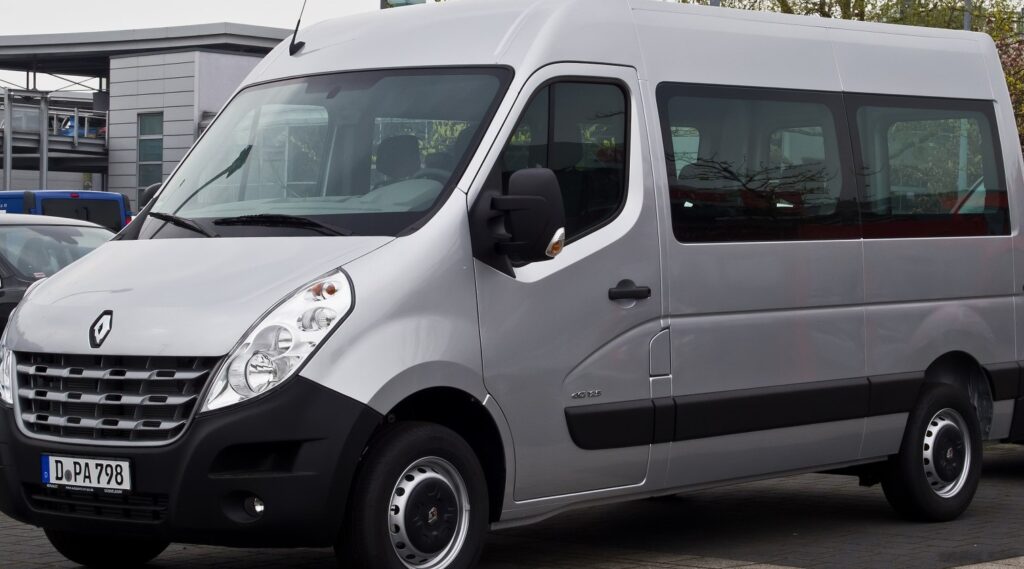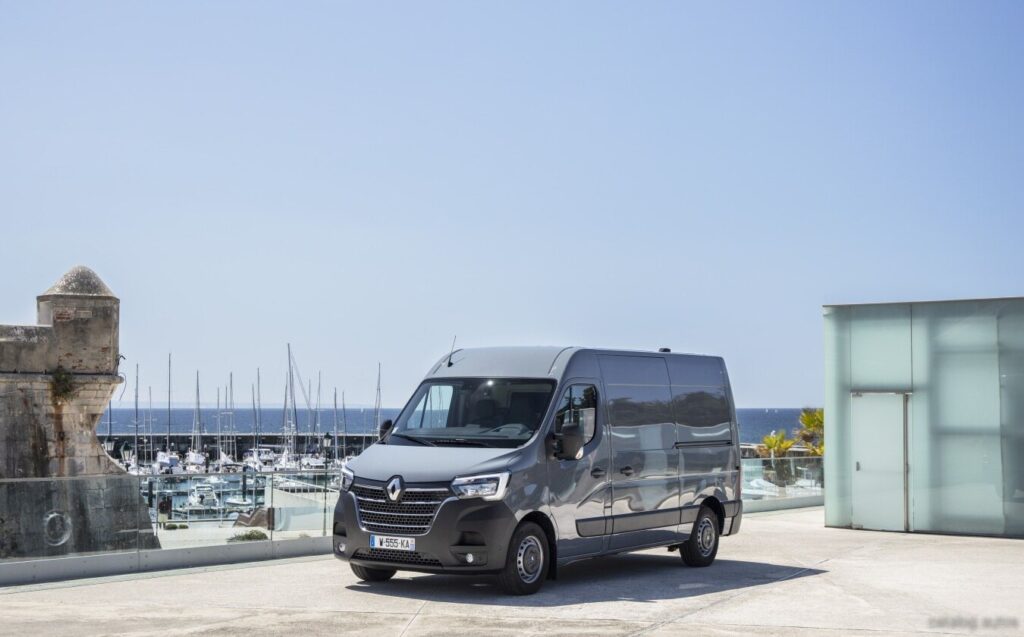
The Renault Master III Phase III, specifically the 2.3 Energy dCi 150 horsepower panel van in the L1H2 configuration, represents a significant iteration of Renault’s large van offering, introduced in 2019. This variant is positioned as a workhorse for commercial applications, balancing payload capacity with reasonable fuel efficiency and a manageable size within the Master lineup. The Phase III updates brought refinements to the engine, styling, and interior, aiming to improve the overall driving experience and appeal to fleet operators and tradespeople. It falls within the third generation of the Master (X62/X63 platform), which began production in 2010, with the Phase III representing a substantial mid-cycle refresh.
Technical Specifications
| Brand | Renault |
| Model | Master |
| Generation | Master III (Phase III, 2019) Panel Van |
| Type (Engine) | 2.3 Energy dCi (150 Hp) L1H2 |
| Start of production | 2019 |
| Powertrain Architecture | Internal Combustion engine |
| Body type | Minivan, MPV |
| Seats | 3 |
| Doors | 4 |
| Combined fuel consumption (WLTP) | 9.1 l/100 km (25.8 US mpg, 31 UK mpg, 11 km/l) |
| CO2 emissions (WLTP) | 240 g/km |
| Fuel consumption (urban) | 6.033 l/100 km (39 US mpg, 46.8 UK mpg, 16.6 km/l) |
| Fuel consumption (extra urban) | 5.488 l/100 km (42.9 US mpg, 51.5 UK mpg, 18.2 km/l) |
| Fuel consumption (combined) | 5.83 l/100 km (40.3 US mpg, 48.5 UK mpg, 17.2 km/l) |
| CO2 emissions (NEDC) | 154 g/km |
| Fuel Type | Diesel |
| Acceleration 0 – 100 km/h | 12.1 sec |
| Acceleration 0 – 62 mph | 12.1 sec |
| Acceleration 0 – 60 mph | 11.5 sec |
| Maximum speed | 152 km/h (94.45 mph) |
| Emission standard | Euro 6d-Temp |
| Weight-to-power ratio | 12.7 kg/Hp, 79 Hp/tonne |
| Weight-to-torque ratio | 4.9 kg/Nm, 202.7 Nm/tonne |
| Power | 150 Hp @ 3500 rpm |
| Power per litre | 65.3 Hp/l |
| Torque | 385 Nm @ 1500 rpm (283.96 lb.-ft. @ 1500 rpm) |
| Engine Model/Code | M9T |
| Engine displacement | 2298 cm3 (140.23 cu. in.) |
| Number of cylinders | 4 |
| Engine configuration | Inline |
| Number of valves per cylinder | 4 |
| Fuel injection system | Diesel Commonrail |
| Engine aspiration | Twin-Turbo, Intercooler |
| Kerb Weight | 1899 kg (4186.58 lbs.) |
| Max. weight | 3300 kg (7275.25 lbs.) |
| Max load | 1401 kg (3088.68 lbs.) |
| Trunk (boot) space – maximum | 9000 l (317.83 cu. ft.) |
| Fuel tank capacity | 105 l (27.74 US gal, 23.1 UK gal) |
| AdBlue tank | 28 l (7.4 US gal, 6.16 UK gal) |
| Permitted trailer load (braked) | 2500 kg (5511.56 lbs.) |
| Permitted trailer load (unbraked) | 750 kg (1653.47 lbs.) |
| Length | 5075 mm (199.8 in.) |
| Width | 2070 mm (81.5 in.) |
| Width (including mirrors) | 2470 mm (97.24 in.) |
| Height | 2503 mm (98.54 in.) |
| Wheelbase | 3182 mm (125.28 in.) |
| Front track | 1750 mm (68.9 in.) |
| Rear track | 1730 mm (68.11 in.) |
| Front overhang | 869 mm (34.21 in.) |
| Rear overhang | 1024 mm (40.31 in.) |
| Ride height (ground clearance) | 182 mm (7.17 in.) |
| Turning circle | 12.5 m (41.01 ft.) |
| Drivetrain | Front wheel drive |
| Number of gears | 6 |
| Gearbox type | Manual |
| Front suspension | Independent, McPherson with coil spring and anti-roll bar |
| Rear suspension | Leaf spring |
| Front brakes | Ventilated discs, 302 mm |
| Rear brakes | Disc, 305 mm |
| Tires size | 225/65 R16 |
| Wheel rims size | 16 |
INTRODUCTION
The Renault Master III Phase III 2.3 Energy dCi 150 is a front-wheel-drive, large panel van designed primarily for commercial use. Introduced in 2019 as part of the Phase III refresh of the third-generation Master, this variant offers a balance between performance, fuel economy, and payload capacity. The ‘L1H2’ designation indicates a medium wheelbase and medium roof height, making it a versatile option for a wide range of applications. This model is particularly popular in Europe, where it competes with vans like the Fiat Ducato, Mercedes-Benz Sprinter, and Ford Transit. The 150 horsepower output positions it as a mid-range offering within the Master lineup, appealing to businesses needing a capable van without the expense of the higher-powered engines.
Powertrain & Engine Architecture
At the heart of the Master III 2.3 dCi 150 lies the M9T engine, a 2.3-liter inline four-cylinder diesel. This engine utilizes a twin-turbocharger setup with an intercooler, contributing to its respectable power output and torque delivery. The engine employs a Diesel Commonrail direct fuel injection system, ensuring efficient combustion and reduced emissions. The 150 horsepower peak is achieved at 3500 rpm, while the substantial 385 Nm (283.96 lb.-ft.) of torque is available from just 1500 rpm, providing strong pulling power at lower engine speeds. The engine meets Euro 6d-Temp emission standards, incorporating a particulate filter and Start & Stop system to minimize environmental impact. Paired with this engine is a six-speed manual transmission, chosen for its durability and efficiency in commercial applications. While an automated manual transmission (AMT) was available on some Master variants, the 150 hp version was predominantly offered with the manual gearbox.
Driving Characteristics
The 150 horsepower 2.3 dCi engine, coupled with the six-speed manual transmission, provides adequate performance for most commercial tasks. Acceleration is not its strong suit, with a 0-100 km/h (0-62 mph) time of around 12.1 seconds. However, the engine’s strong low-end torque makes it well-suited for carrying heavy loads and navigating urban environments. The gear ratios are optimized for fuel efficiency and usability, allowing for comfortable cruising on highways. Compared to the higher-output 170 horsepower version, the 150 hp model offers slightly less outright performance but benefits from marginally improved fuel economy. The manual transmission provides drivers with greater control, particularly when fully loaded or tackling hilly terrain. The front-wheel-drive configuration contributes to a lower load floor height, simplifying loading and unloading.
Equipment & Trim Levels
The Renault Master III Phase III 2.3 dCi 150, being a commercial vehicle, typically features a functional and durable interior. Standard equipment generally includes a driver’s airbag, ABS brakes, electronic stability control, and a basic audio system with USB connectivity. The cabin is designed for practicality, with hard-wearing materials and a focus on ergonomics. Trim levels vary depending on the market, but common options include air conditioning, electric windows, a rearview camera, and a touchscreen infotainment system with navigation. The L1H2 configuration provides a generous cargo volume of 9000 liters (317.83 cu. ft.), making it suitable for a wide range of goods. Interior upholstery is typically vinyl or cloth, prioritizing durability over luxury.
Chassis & Braking
The Master III utilizes a robust chassis designed to withstand the demands of commercial use. The front suspension employs an independent McPherson strut setup with a coil spring and anti-roll bar, providing a comfortable ride and stable handling. The rear suspension utilizes a leaf spring design, chosen for its load-carrying capacity and durability. Braking is handled by ventilated discs at the front and solid discs at the rear, providing adequate stopping power even when fully loaded. The steering is hydraulic, offering a good balance between assistance and feedback. The L1H2 variant’s weight distribution contributes to predictable handling characteristics.
Market Reception & Comparison
The Renault Master III Phase III 2.3 dCi 150 was generally well-received by critics as a practical and reliable work van. Its fuel economy, averaging around 9.1 l/100 km (25.8 US mpg), was considered competitive within its segment. Compared to the higher-powered 170 hp version, the 150 hp model offered a more affordable entry point, making it attractive to budget-conscious buyers. However, some reviewers noted that the engine could feel strained when carrying maximum loads on steep inclines. Compared to rivals like the Ford Transit and Mercedes-Benz Sprinter, the Master offered a good balance of price, practicality, and reliability.
Legacy
The Renault Master III 2.3 dCi 150 has proven to be a durable and reliable powertrain in the used vehicle market. The M9T engine, while not without its complexities due to the twin-turbo setup, has generally demonstrated good longevity with proper maintenance. Common issues include turbocharger wear and potential problems with the diesel particulate filter (DPF), particularly on vehicles primarily used for short journeys. However, these issues are relatively well-understood and can be addressed with preventative maintenance. Today, the Master III 2.3 dCi 150 remains a popular choice for businesses and tradespeople seeking a dependable and affordable large van.