Technical Specifications
| Brand | Renault |
| Model | Master |
| Generation | Master III (Phase III, 2019) Panel Van |
| Type (Engine) | 2.3 Energy dCi (150 Hp) L2H2 Automatic |
| Start of production | 2019 |
| Powertrain Architecture | Internal Combustion engine |
| Body type | Minivan, MPV |
| Seats | 3 |
| Doors | 4 |
| Combined fuel consumption (WLTP) | 9.5 l/100 km (24.8 US mpg, 29.7 UK mpg, 10.5 km/l) |
| CO2 emissions (WLTP) | 250 g/km |
| Fuel consumption (urban) | 7.794 l/100 km (30.2 US mpg, 36.2 UK mpg, 12.8 km/l) |
| Fuel consumption (extra urban) | 6.321 l/100 km (37.2 US mpg, 44.7 UK mpg, 15.8 km/l) |
| Fuel consumption (combined) | 6.863 l/100 km (34.3 US mpg, 41.2 UK mpg, 14.6 km/l) |
| CO2 emissions (NEDC) | 181.0 g/km |
| Fuel Type | Diesel |
| Acceleration 0 – 100 km/h | 12.1 sec |
| Acceleration 0 – 62 mph | 12.1 sec |
| Acceleration 0 – 60 mph | 11.5 sec |
| Maximum speed | 155 km/h (96.31 mph) |
| Emission standard | Euro 6d-Temp |
| Weight-to-power ratio | 13.1 kg/Hp, 76.1 Hp/tonne |
| Weight-to-torque ratio | 5.1 kg/Nm, 195.3 Nm/tonne |
| Power | 150 Hp @ 3500 rpm |
| Torque | 385 Nm @ 1500 rpm (283.96 lb.-ft. @ 1500 rpm) |
| Engine Model/Code | M9T |
| Engine displacement | 2298 cm3 (140.23 cu. in.) |
| Number of cylinders | 4 |
| Engine configuration | Inline |
| Number of valves per cylinder | 4 |
| Fuel injection system | Diesel Commonrail |
| Engine aspiration | Twin-Turbo, Intercooler |
| Kerb Weight | 1971 kg (4345.31 lbs.) |
| Max. weight | 3500 kg (7716.18 lbs.) |
| Max load | 1529 kg (3370.87 lbs.) |
| Trunk (boot) space – maximum | 10800 l (381.4 cu. ft.) |
| Fuel tank capacity | 105 l (27.74 US gal, 23.1 UK gal) |
| AdBlue tank | 28 l (7.4 US gal, 6.16 UK gal) |
| Permitted trailer load (braked) | 2500 kg (5511.56 lbs.) |
| Permitted trailer load (unbraked) | 750 kg (1653.47 lbs.) |
| Length | 5575 mm (219.49 in.) |
| Width | 2070 mm (81.5 in.) |
| Width (including mirrors) | 2470 mm (97.24 in.) |
| Height | 2499 mm (98.39 in.) |
| Wheelbase | 3682 mm (144.96 in.) |
| Front track | 1750 mm (68.9 in.) |
| Rear track | 1730 mm (68.11 in.) |
| Drivetrain Architecture | Front wheel drive |
| Number of gears | 6 |
| Gearbox type | Automatic transmission |
| Front suspension | Independent, McPherson with coil spring and anti-roll bar |
| Rear suspension | Leaf spring |
| Front brakes | Ventilated discs, 302 mm |
| Rear brakes | Disc, 305 mm |
| Tires size | 225/65 R16 |
| Wheel rims size | 16 |
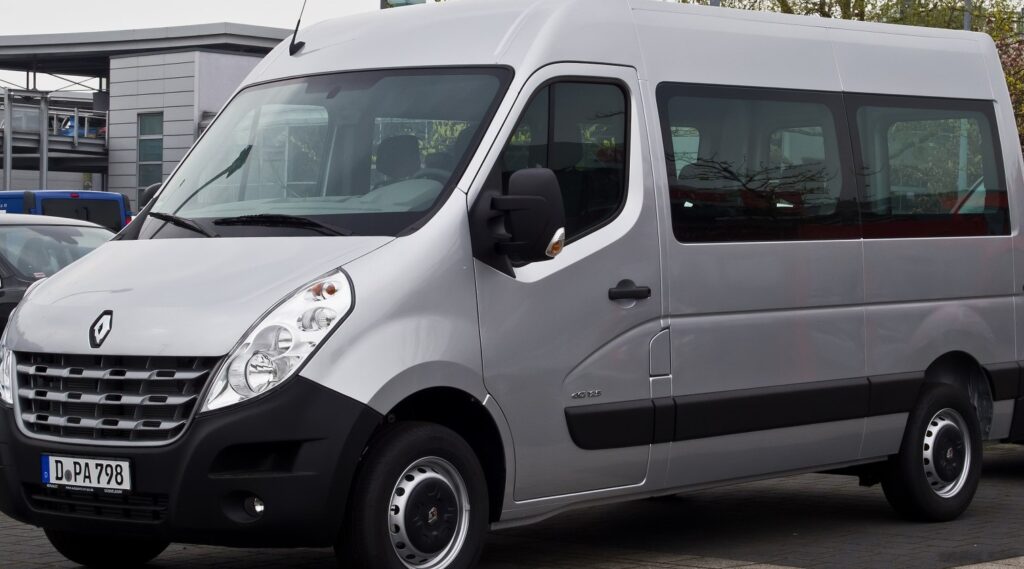
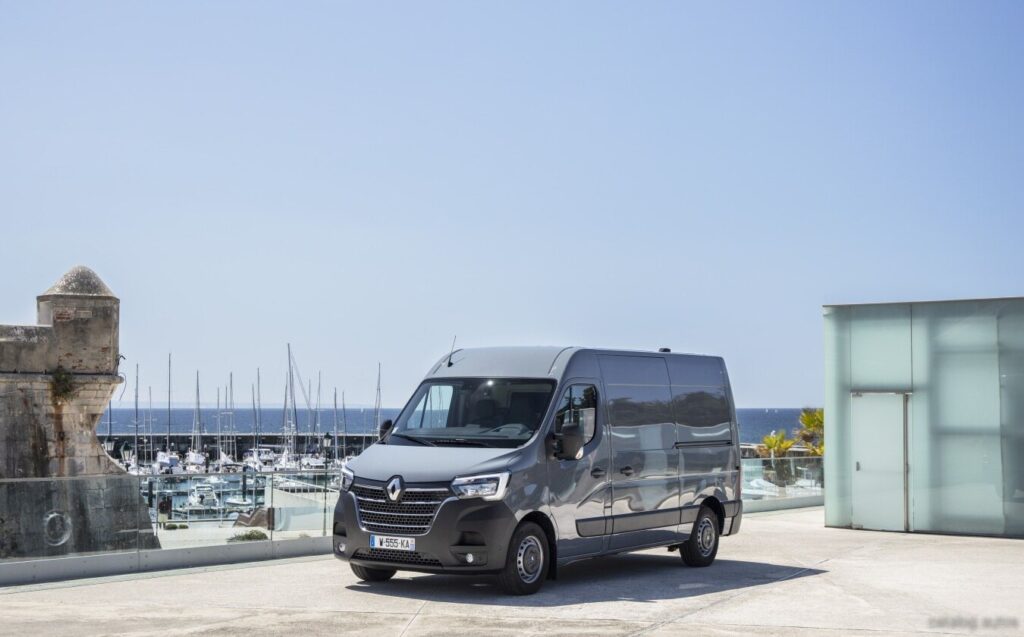
The Renault Master III Phase III, specifically the 2.3 Energy dCi (150 hp) L2H2 Automatic panel van introduced in 2019, represents a significant iteration of Renault’s large van offering. Positioned as a versatile workhorse, this variant caters to businesses and tradespeople requiring substantial cargo capacity and reasonable running costs. The “L2H2” designation refers to the van’s length and roof height – a medium length and a medium roof – offering a balance between interior space and maneuverability. This model falls within the third generation of the Master (launched in 2010), benefitting from updates to the engine range, safety features, and interior refinement introduced during the Phase III refresh. It primarily serves the European commercial vehicle market, competing with vans like the Fiat Ducato, Mercedes-Benz Sprinter, and Ford Transit.
Powertrain & Engine Architecture
The 2.3 Energy dCi engine, identified by the M9T code, is a four-cylinder, inline diesel engine. This engine utilizes a common rail direct injection system, delivering fuel at extremely high pressure for optimized combustion. A key feature is its twin-turbocharger setup. The first turbocharger is a smaller unit providing boost at low engine speeds, minimizing turbo lag and improving responsiveness during city driving. The second, larger turbocharger takes over at higher RPMs, delivering increased power for highway cruising and load-carrying. An intercooler is also incorporated to cool the compressed air, further enhancing performance and efficiency. The six-speed automatic transmission is a conventional torque converter type, chosen for its smoothness and reliability in commercial applications. While not the most technologically advanced automatic available, it provides adequate performance for the engine’s torque output and is generally well-suited to the demands of van operation.
Driving Characteristics
The 150 hp and 385 Nm (284 lb-ft) of torque offered by this powertrain configuration provides a reasonable balance of performance and economy. Acceleration is not brisk, with a 0-60 mph time around 11.5 seconds, but the engine delivers strong low-end torque, making it capable of carrying heavy loads without excessive strain. The automatic transmission shifts smoothly, although it can sometimes feel hesitant when downshifting for overtaking. Compared to the higher-output 170 hp version of the 2.3 dCi, this variant feels noticeably less powerful, particularly when fully loaded. However, it offers improved fuel economy and potentially lower maintenance costs. Compared to manual transmission versions, the automatic provides greater ease of driving in congested urban environments, but at the expense of some driver engagement and potentially slightly reduced fuel efficiency.
Equipment & Trim Levels
The Master III Phase III L2H2 Automatic typically came equipped with a functional, rather than luxurious, interior. Standard features generally included air conditioning, a basic audio system with Bluetooth connectivity, electric windows, and central locking. Safety equipment included ABS brakes, Electronic Stability Control (ESC), and driver and passenger airbags. Higher trim levels, often denoted by names like “Business” or “Sport,” added features such as cruise control, rear parking sensors, a touchscreen infotainment system with navigation, and upgraded interior trim. Options included a passenger double seat, various cargo area configurations, and additional safety features like lane departure warning and automatic emergency braking.
Chassis & Braking
The Master III utilizes a robust ladder-frame chassis, providing a solid foundation for carrying heavy loads. The front suspension consists of independent McPherson struts with a coil spring and anti-roll bar, while the rear suspension employs a leaf spring setup. This configuration prioritizes load-carrying capacity and durability over outright ride comfort. The braking system features ventilated discs on the front wheels and solid discs on the rear. The size of the front discs is 302mm and the rear discs are 305mm. The steering is hydraulic power-assisted, providing a reasonably direct feel. The van’s weight-to-power ratio of 13.1 kg/hp indicates that it is not a particularly nimble vehicle, but the braking system is generally adequate for stopping the van safely, even when fully loaded.
Market Reception & Comparison
The Renault Master III Phase III 2.3 dCi 150 Automatic was generally well-received by commercial vehicle operators. Critics praised its practicality, load-carrying capacity, and relatively low running costs. However, some reviewers noted that the interior was somewhat basic and that the automatic transmission could be slow to respond at times. Compared to competitors like the Ford Transit and Mercedes-Benz Sprinter, the Master offered a competitive price point and a good level of standard equipment. Fuel economy was generally considered to be respectable, although it varied depending on driving conditions and load weight. Reliability reports suggest that the 2.3 dCi engine is generally durable, but regular maintenance is essential to prevent issues with the turbocharger and fuel injection system.
Legacy
The Renault Master III, and specifically the 2.3 Energy dCi 150 hp Automatic variant, remains a common sight on European roads today. Its robust construction and relatively simple mechanicals contribute to its longevity. On the used market, these vans are generally affordable and represent a good value for businesses seeking a reliable workhorse. While newer vans offer more advanced technology and improved fuel efficiency, the Master III continues to be a popular choice for those prioritizing practicality and affordability. The M9T engine, while not without its potential issues, is generally well-regarded for its durability when properly maintained, ensuring that many of these vans will remain in service for years to come.