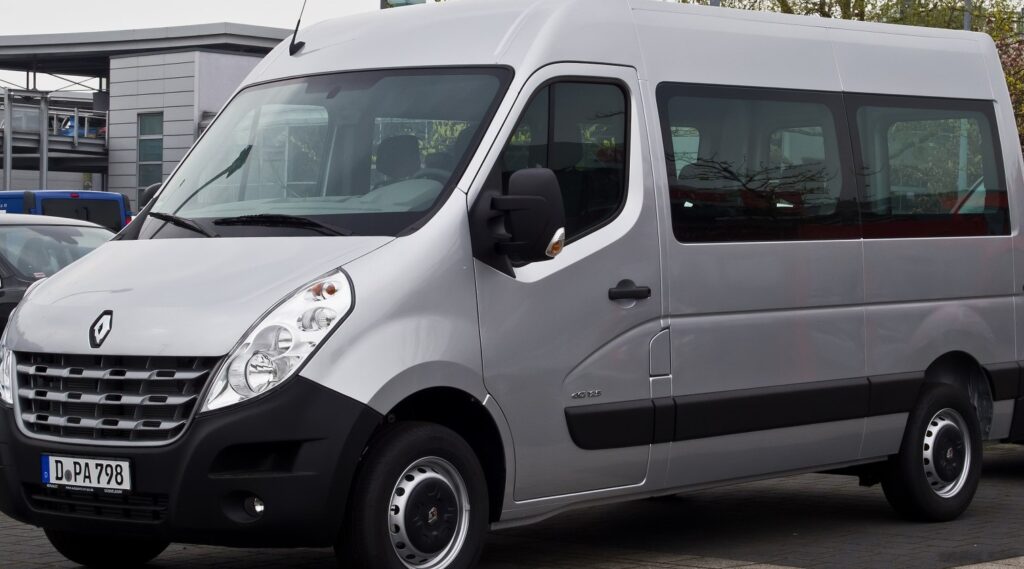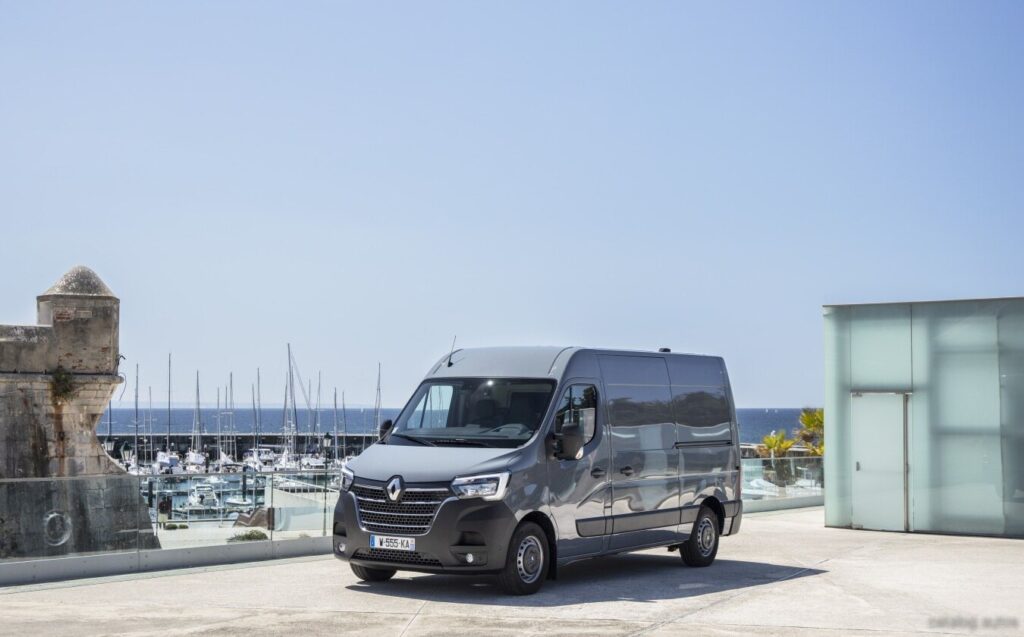
The Renault Master III Phase III (2019) Panel Van, specifically the 33 kWh (76 hp) L3H2 Direct Drive variant, represents Renault’s entry into the burgeoning electric commercial vehicle market. Introduced in 2019 as part of the broader Master III refresh, this model aimed to provide a zero-emission solution for last-mile delivery and urban transport. The L3H2 designation refers to the body length and roof height, indicating a medium-length wheelbase and high roof configuration, maximizing cargo space. This particular version occupied the base trim level of the electric Master range, prioritizing affordability and functionality over outright performance.
The powertrain of the 33 kWh Master is fundamentally different from its gasoline or diesel-powered siblings. It utilizes a fully electric drivetrain, centered around a 33 kWh lithium-ion battery pack. This battery powers a single electric motor producing 76 horsepower and 225 Nm (165.95 lb-ft) of torque. Unlike traditional internal combustion engines, the electric motor delivers instant torque, providing brisk acceleration at lower speeds. The “Direct Drive” transmission refers to a single-speed automatic gearbox, common in electric vehicles, simplifying the driving experience and eliminating the need for gear changes. The vehicle is front-wheel drive, a standard configuration for the Renault Master line.
Driving the 76 hp electric Master is characterized by smooth, quiet operation. While not designed for high-speed cruising, it performs adequately in urban environments and on shorter highway stretches, with a limited top speed of 100 km/h (62.14 mph). The single-speed transmission provides linear acceleration, and the instant torque makes it surprisingly capable when lightly loaded. Compared to the diesel-powered Masters, the electric version offers a significantly different driving experience, prioritizing refinement and ease of use over raw power. The range, however, is a key consideration, with a real-world range of approximately 124 km (77.05 miles) on a full charge.
The 33 kWh L3H2 variant typically came equipped with standard commercial vehicle features, focusing on practicality. The interior is functional and durable, with seating for two or three occupants depending on the configuration. Standard features generally included a driver’s airbag, basic infotainment system, and power steering. Optional extras could include air conditioning, parking sensors, and a more advanced infotainment system with navigation. The interior trim is typically utilitarian, reflecting the vehicle’s commercial purpose. The large cargo area, boasting a maximum volume of 13,000 liters (459.09 cu. ft.), is the primary selling point.
The chassis of the electric Master III retains the robust construction of the conventional models. It features a MacPherson strut front suspension and a leaf spring rear suspension, optimized for carrying heavy loads. Braking is handled by disc brakes on all four wheels (305x12mm front, 302x28mm rear). The tires are typically 215/65 R16C, designed for commercial vehicle applications. The suspension is tuned to prioritize ride comfort and stability when loaded, although it can feel somewhat firm when unladen. The vehicle’s weight-to-power ratio is 28.6 kg/hp, and it has a payload capacity of 925 kg (2039.28 lbs).
Initial reception to the 33 kWh Renault Master was generally positive, with critics praising its zero-emission capability and practicality. However, the limited range was a common concern, particularly for businesses requiring longer journeys. Compared to the diesel-powered Masters, the electric version offered lower running costs due to reduced fuel and maintenance expenses. The reliability of the electric powertrain has proven to be generally good, although the long-term durability of the battery pack remains a key consideration. Fuel economy, expressed as an equivalent, is significantly better than any internal combustion engine version.
| Brand | Renault |
| Model | Master |
| Generation | Master III (Phase III, 2019) Panel Van |
| Type | 33 kWh (76 Hp) L3H2 Direct Drive |
| Start of production | 2019 |
| Powertrain Architecture | BEV (Electric Vehicle) |
| Body type | Minivan, MPV |
| Seats | 2-3 |
| Doors | 4 |
| Fuel Type | Electricity |
| Maximum speed | 100 km/h (62.14 mph) |
| Emission standard | EURO 6 |
| Gross battery capacity | 33 kWh |
| All-electric range | 124 km (77.05 mi) |
| Electric motor power | 76 Hp |
| Electric motor Torque | 225 Nm (165.95 lb.-ft.) |
| Kerb Weight | 2175 kg (4795.05 lbs.) |
| Max. weight | 3100 kg (6834.33 lbs.) |
| Max load | 925 kg (2039.28 lbs.) |
| Trunk (boot) space – maximum | 13000 l (459.09 cu. ft.) |
| Length | 6225 mm (245.08 in.) |
| Width | 2070 mm (81.5 in.) |
| Height | 2500 mm (98.43 in.) |
| Wheelbase | 4332 mm (170.55 in.) |
| Drive wheel | Front wheel drive |
| Number of gears and type of gearbox | 1 gears, automatic transmission Direct Drive |
In the used car market, the 2019 Renault Master III 33 kWh remains a viable option for businesses seeking an affordable electric van. While the limited range may not suit all applications, it is well-suited for urban deliveries and short-haul operations. The durability of the electric powertrain and the availability of spare parts are key factors influencing its long-term value. As battery technology continues to improve and charging infrastructure expands, the appeal of this early electric Master variant is likely to grow.