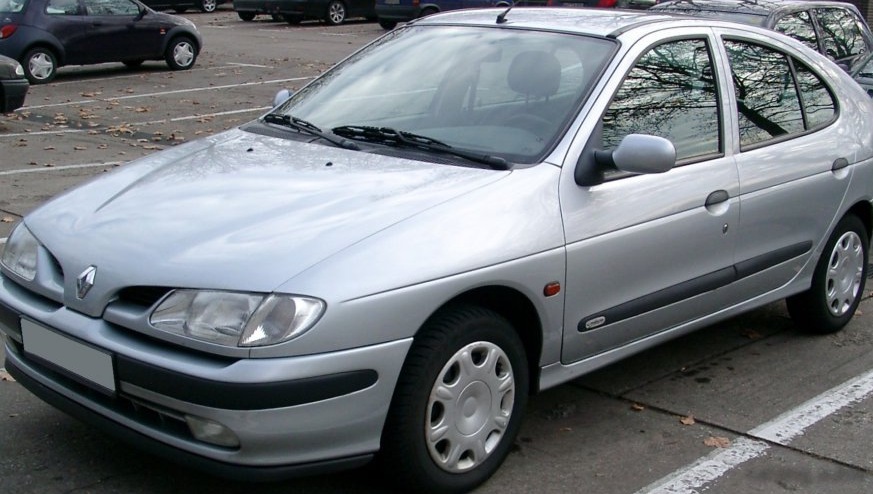
The Renault Megane I, produced between 1995 and 2003, represented a significant step forward for Renault in the compact family car segment. The first generation (BA) Megane replaced the Renault 19, offering a more modern design, improved safety features, and a wider range of engine options. Within the Megane I lineup, the 1.4 Eco variant, producing 69 horsepower, served as the entry-level model from 1996 to 1999. This trim was specifically targeted at buyers prioritizing affordability and fuel economy over outright performance, making it a popular choice for first-time car owners and those seeking a practical, economical hatchback.
The 1.4 Eco: Entry Point to the Megane I Range
The 1.4 Eco trim occupied the base position in the Megane I range. It was positioned below the more powerful 1.6L and 2.0L gasoline engines, as well as the diesel options. While offering less performance than its siblings, the 1.4 Eco provided a cost-effective entry point into the Megane family, appealing to a budget-conscious market. It was generally equipped with a more basic specification level compared to higher trims, focusing on essential features rather than luxury appointments. The target demographic included young drivers, families on a tight budget, and those primarily using the vehicle for short commutes and urban driving.
Powertrain & Engine Architecture
The heart of the 1.4 Eco Megane is the Renault E7J engine, a 1390cc (84.82 cubic inches) inline-four cylinder gasoline engine. This engine utilizes a single-point fuel injection system, a relatively simple and cost-effective technology for the time. The E7J engine features an overhead camshaft (OHC) valvetrain with two valves per cylinder. Its compression ratio is 9.5:1. The engine produces a maximum power output of 69 hp at 6000 rpm and 105 Nm (77.44 lb-ft) of torque at 4000 rpm. The engine is transversely mounted in the front of the vehicle.
The 1.4 Eco was exclusively offered with a five-speed manual transmission. This transmission was chosen to maximize fuel efficiency and keep costs down. The gear ratios were optimized for low-speed drivability and economy, rather than sporty acceleration. The transmission is a standard manual setup with synchromesh on all forward gears. The clutch is a single-plate dry clutch.
Driving Characteristics
The driving experience in the 1.4 Eco Megane is best described as practical and undemanding. Acceleration is modest, taking approximately 14.5 seconds to reach 100 km/h (62 mph) and 13.8 seconds to reach 60 mph. The engine feels strained at higher speeds, and overtaking maneuvers require careful planning. However, around town, the 1.4 Eco is perfectly adequate, offering sufficient power for everyday driving. The five-speed manual transmission allows drivers to keep the engine in its optimal power band, maximizing efficiency. The gear ratios are relatively long, contributing to the car’s fuel economy. Compared to the 1.6L and 2.0L versions, the 1.4 Eco feels noticeably slower, but it compensates with superior fuel efficiency.
Equipment & Trim Levels
The 1.4 Eco trim level typically included basic features such as power steering, central locking, and an adjustable steering column. Interior upholstery was typically cloth, and the dashboard featured a simple, functional design. Air conditioning, electric windows, and alloy wheels were generally offered as optional extras. Safety features included a driver’s airbag and ABS (Anti-lock Braking System) as standard equipment. The overall interior ambiance was functional and durable, prioritizing practicality over luxury. The exterior styling was consistent across the Megane I range, with the 1.4 Eco often featuring steel wheels with hubcaps and black plastic trim.
Chassis & Braking
The Megane I utilized an independent coil spring suspension at the front, providing a comfortable ride and reasonable handling. The rear suspension employed a torsion beam setup, which was a cost-effective solution for the rear axle. The front brakes were ventilated discs, offering good stopping power, while the rear brakes were drum brakes, a common feature on entry-level models to reduce costs. The steering system was a rack and pinion type with hydraulic power assistance, providing light and precise steering. The 1.4 Eco model typically featured 175/65 R14 tires mounted on 14-inch steel wheels.
Market Reception & Comparison
The 1.4 Eco Megane was generally well-received by critics as a sensible and affordable option in the compact hatchback segment. It was praised for its fuel efficiency, low running costs, and practicality. However, it was also criticized for its lack of performance and relatively basic equipment level. Compared to the 1.6L and 2.0L versions, the 1.4 Eco offered significantly lower fuel consumption – around 9 l/100km (26.1 US mpg) in urban conditions and 5.2 l/100km (45.2 US mpg) on the extra-urban cycle. Reliability was generally good, with the E7J engine proving to be a durable and dependable unit. However, the single-point fuel injection system could be prone to occasional issues, and regular maintenance was essential to ensure optimal performance.
Technical Specifications
| Brand | Renault |
| Model | Megane |
| Generation | Megane I (BA) |
| Type (Engine) | 1.4 Eco (69 Hp) |
| Start of production | 1996 |
| End of production | 1999 |
| Engine Displacement | 1390 cm3 (84.82 cu. in.) |
| Number of Cylinders | 4 |
| Engine Configuration | Inline |
| Power | 69 Hp @ 6000 rpm |
| Torque | 105 Nm @ 4000 rpm (77.44 lb.-ft. @ 4000 rpm) |
| Fuel Type | Petrol (Gasoline) |
| Fuel Consumption (Urban) | 9 l/100 km (26.1 US mpg) |
| Fuel Consumption (Extra Urban) | 5.2 l/100 km (45.2 US mpg) |
| Acceleration 0-100 km/h | 14.5 sec |
| Acceleration 0-60 mph | 13.8 sec |
| Maximum Speed | 168 km/h (104.39 mph) |
| Kerb Weight | 1015 kg (2237.69 lbs) |
| Fuel Tank Capacity | 60 l (15.85 US gal) |
| Transmission | 5-speed Manual |
| Drive Type | Front Wheel Drive |
Legacy
The 1.4 Eco Megane I remains a relatively common sight on European roads today, often found in the hands of budget-conscious drivers or as a classic car. The E7J engine is known for its durability, and many examples have exceeded 200,000 kilometers without major issues. However, age-related wear and tear is inevitable, and potential buyers should be aware of possible issues with the fuel injection system and suspension components. In the used car market, the 1.4 Eco commands a lower price than the more powerful versions, making it an attractive option for those seeking an affordable and reliable hatchback. Its simplicity and low running costs continue to appeal to a wide range of drivers, solidifying its place as a practical and economical choice in the compact car segment.