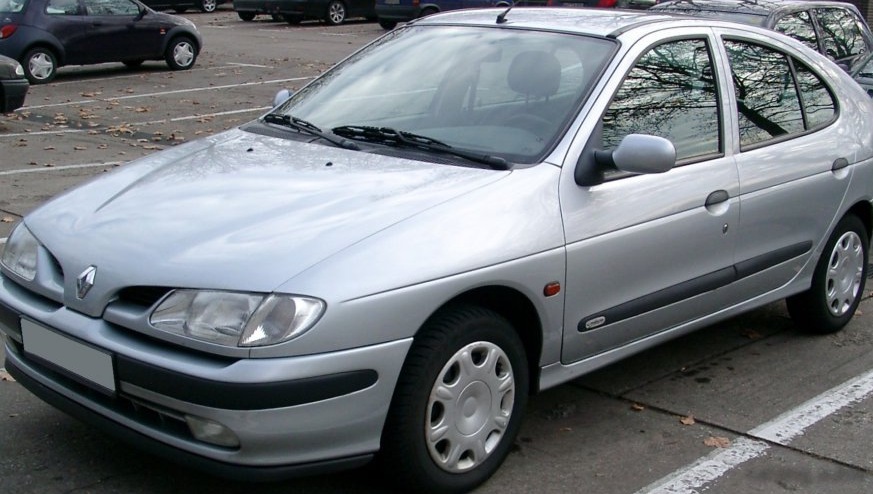
The Renault Megane I, produced between 1995 and 2003, represented a significant step forward for Renault in the compact family car segment. The first generation, designated BA, aimed to offer a more modern and refined alternative to its predecessor, the Renault 19. Within the Megane I range, the 1.6-liter (75 hp) variant, available from 1996 to 1999, served as a core model, positioned as an entry-level to mid-range offering. It provided a balance of affordability, practicality, and reasonable performance, targeting buyers seeking a dependable and economical hatchback.
Renault Megane I (BA) 1.6: An Overview
The 1.6L 75 hp Megane I (BA) was a mainstay of the lineup during its production run. It was primarily offered as a five-door hatchback, though some markets also saw limited production of a saloon (sedan) body style. This variant was designed to appeal to a broad customer base, including first-time car buyers, small families, and those prioritizing fuel efficiency. It occupied a space between the base 1.4-liter engine and the more powerful 1.8 and 2.0-liter options, offering a compromise between cost and performance. The Megane I (BA) was built on Renault’s 1HX0 platform, which it shared with other models like the Scenic MPV.
Powertrain & Engine Architecture
The heart of the Megane I (BA) 1.6 is the Renault K7M engine, a 1.6-liter inline-four cylinder gasoline engine. This engine, a workhorse for Renault during the 1990s and early 2000s, features a single-point fuel injection system – a relatively simple and cost-effective technology for the time. The K7M utilizes an overhead camshaft (OHC) valvetrain with two valves per cylinder. Its displacement is 1598 cm³ (97.52 cubic inches), and it produces a maximum power output of 75 horsepower (56 kW) at 5000 rpm and 130 Nm (95.88 lb-ft) of torque at 3400 rpm. The compression ratio is 9.1:1. The engine is transversely mounted in the front of the vehicle.
The 1.6L engine was typically paired with a five-speed manual transmission, which was the most common configuration. However, a four-speed automatic transmission was also available, albeit less frequently chosen. The automatic transmission, while offering convenience, impacted acceleration and fuel economy compared to the manual version. The automatic transmission was a conventional hydraulic automatic, known for its reliability but lacking the efficiency of more modern automatic gearboxes.
Driving Characteristics
The driving experience in the Megane I (BA) 1.6 75 hp is best described as adequate. Acceleration is not brisk, taking approximately 12.9 seconds to reach 62 mph (100 km/h). The engine feels strained when pushed hard, particularly when fully loaded or climbing hills. The five-speed manual transmission allows for better control and utilizes the engine’s power band more effectively. The automatic transmission, while smooth in operation, results in noticeable performance degradation due to its less efficient power transfer and wider gear ratios. The gear ratios in the manual transmission are fairly well-spaced, providing reasonable flexibility for both city and highway driving. The car’s weight of around 1030 kg (2270.76 lbs) contributes to its somewhat sluggish feel.
Handling is generally safe and predictable, but not particularly engaging. The suspension, consisting of independent coil springs at the front and a semi-independent coil spring setup at the rear, provides a comfortable ride on most road surfaces. However, body roll is noticeable during cornering. Steering is hydraulic power-assisted, offering reasonable feedback and ease of use.
Equipment & Trim Levels
The Megane I (BA) 1.6 typically came equipped with a basic level of standard features. These generally included power steering, central locking, front electric windows, and an adjustable steering column. Interior upholstery was typically cloth, with a relatively simple dashboard layout. Higher trim levels, such as the “RT” or “Equip” variants, added features like air conditioning, alloy wheels, a radio/cassette player, and upgraded interior trim. Optional extras included a sunroof, rear electric windows, and metallic paint. Safety features were relatively basic for the time, typically including a driver’s airbag and ABS (Anti-lock Braking System) on some models.
Chassis & Braking
The Megane I (BA) 1.6 utilizes a front-wheel-drive layout. The front suspension features independent coil springs, providing a degree of ride comfort and handling precision. The rear suspension employs a semi-independent coil spring setup, which is a cost-effective solution but less sophisticated than a fully independent system. Braking is handled by ventilated discs at the front and drum brakes at the rear. ABS was often included as standard or an optional extra, enhancing braking performance and stability, particularly in wet or slippery conditions. The tires were typically 175/65 R14, mounted on 14-inch steel or alloy wheels.
Market Reception & Comparison
The Renault Megane I (BA) 1.6 was generally well-received by automotive critics as a practical and affordable family car. It was praised for its comfortable ride, spacious interior, and reasonable fuel economy. However, it was also criticized for its somewhat uninspiring performance and basic interior trim. Compared to its siblings, the 1.6-liter version offered a more economical option than the 1.8 and 2.0-liter engines, but at the expense of performance. The 1.4-liter engine was even more affordable but lacked the power needed for comfortable highway driving. Fuel economy figures averaged around 32.7 US mpg (combined), making it a relatively efficient choice for its time. Reliability was generally good, although the single-point fuel injection system could require occasional maintenance.
Technical Specifications
| Engine Model/Code | K7M |
| Engine Displacement | 1598 cm³ (97.52 cu. in.) |
| Number of Cylinders | 4, Inline |
| Power | 75 Hp @ 5000 rpm |
| Torque | 130 Nm @ 3400 rpm (95.88 lb.-ft. @ 3400 rpm) |
| Fuel Injection System | Single-point injection |
| Compression Ratio | 9.1:1 |
| Valvetrain | OHC (2 valves per cylinder) |
| Kerb Weight | 1030 kg (2270.76 lbs.) |
| Maximum Speed | 175 km/h (108.74 mph) |
| 0-100 km/h | 12.9 sec |
| Fuel Consumption (Urban) | 9.6 l/100 km (24.5 US mpg) |
| Fuel Consumption (Extra Urban) | 5.8 l/100 km (40.6 US mpg) |
| Fuel Consumption (Combined) | 7.2 l/100 km (32.7 US mpg) |
| Fuel Tank Capacity | 60 l (15.85 US gal) |
Legacy
The Renault Megane I (BA) 1.6, while not a particularly exciting car, proved to be a reliable and affordable option for many buyers. The K7M engine, despite its relatively simple technology, is known for its durability and longevity. Today, these cars are relatively rare and often sought after by enthusiasts looking for a classic 1990s hatchback. The 1.6L engine, when properly maintained, can still provide years of service. However, age-related issues such as corrosion and wear and tear on suspension components are common. The availability of spare parts is generally good, but some specific trim pieces may be difficult to find. The Megane I (BA) 1.6 remains a testament to Renault’s ability to produce practical and dependable family cars.