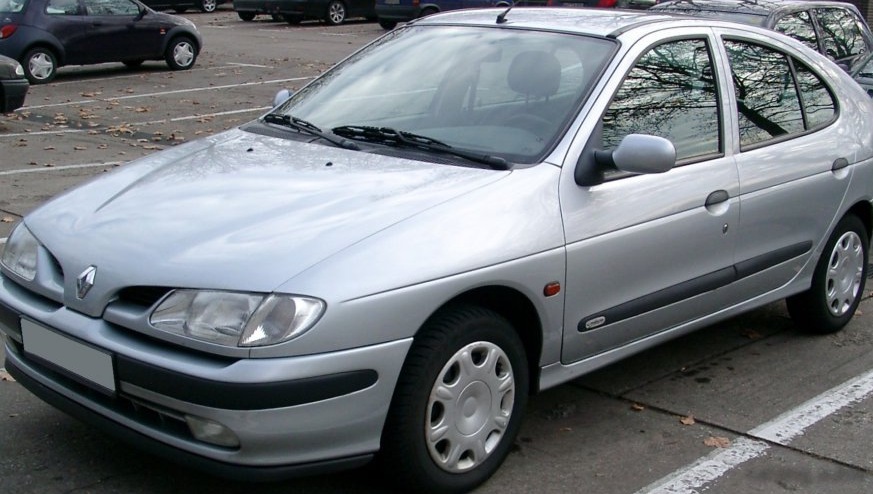
The Renault Megane I (BA) 2.0i, producing 114 horsepower, was a significant offering within the first generation Megane lineup, produced between 1996 and 1999. Positioned as a mid-range trim level, it bridged the gap between the more economical base models and the performance-oriented variants. The Megane I, launched in 1995, represented Renault’s entry into the competitive compact family car segment, built on the shared 1HX0/A3 platform also utilized by the Nissan Almera and Renault Scenic. The 2.0i model aimed to provide a balance of performance and practicality for buyers seeking a more engaging driving experience than the lower-displacement engines offered.
Powertrain & Engine Architecture
The heart of the Megane I 2.0i is the Renault F3R engine, a 1.998-liter (121.93 cubic inches) inline-four cylinder gasoline engine. This engine featured a naturally aspirated configuration and utilized a multi-port fuel injection system. The F3R engine was known for its relatively robust construction and straightforward design. It employed a single overhead camshaft (OHC) valvetrain with two valves per cylinder. Bore and stroke dimensions were 82.7 mm (3.26 inches) and 93 mm (3.66 inches) respectively, resulting in a compression ratio of 9.8:1.
The engine’s 114 hp peak power output was achieved at 5400 rpm, while its maximum torque of 168 Nm (123.91 lb-ft) was delivered at 4250 rpm. The engine oil capacity was 6 liters (6.34 US quarts / 5.28 UK quarts), and the cooling system required 7 liters (7.4 US quarts / 6.16 UK quarts) of coolant. The F3R engine was designed to run on unleaded gasoline, and specific oil specifications were recommended by Renault for optimal performance and longevity.
Transmission
The Renault Megane I 2.0i was primarily equipped with a five-speed manual transmission. This gearbox was chosen to complement the engine’s power output and provide a reasonably engaging driving experience. The transmission’s gear ratios were tuned to balance acceleration and fuel efficiency. While an automatic transmission option was available in some markets, it was less common and generally considered to detract from the driving experience compared to the manual version.
Driving Characteristics
The 2.0i Megane offered a noticeable step up in performance compared to the 1.4 and 1.6-liter variants. Acceleration from 0 to 100 km/h (0-62 mph) took approximately 9.7 seconds, and 0 to 60 mph was achieved in around 9.2 seconds. The engine provided adequate power for everyday driving, including highway overtaking and carrying a full load of passengers. The five-speed manual transmission allowed drivers to effectively utilize the engine’s powerband, while the automatic transmission, when equipped, offered smoother but less responsive shifts. The power delivery was linear, without significant torque peaks, making the car predictable and easy to control. Compared to the later 2.0 16V engines, the F3R felt less eager to rev, prioritizing mid-range torque over high-end horsepower.
Equipment & Trim Levels
The 2.0i trim level of the Megane I typically included features such as power steering, central locking, and electric front windows. Interior upholstery was generally cloth, with options for upgraded materials available. The dashboard layout was functional and straightforward, with clearly labeled controls. Optional extras included air conditioning, a sunroof, and an upgraded audio system. Higher-spec versions of the 2.0i could also be equipped with alloy wheels and fog lights. The overall interior ambiance was typical of a compact family car of the era – practical and durable, rather than luxurious.
Chassis & Braking
The Megane I 2.0i utilized an independent coil spring suspension at the front, providing a comfortable ride and reasonable handling. The rear suspension employed a semi-independent torsion beam setup, which was a cost-effective solution for compact cars. The front brakes were ventilated discs, offering good stopping power, while the rear brakes were drums. An Anti-lock Braking System (ABS) was often included as standard equipment, enhancing safety. The steering system was a rack and pinion type with hydraulic power assistance, providing precise and responsive steering feel. Tire size was typically 185/60 R14, mounted on 14-inch steel or alloy wheels.
Market Reception & Comparison
The Renault Megane I 2.0i was generally well-received by automotive critics as a competent and practical family car. It offered a good balance of performance, fuel economy, and comfort. Fuel consumption figures were approximately 11.6 l/100 km (20.3 US mpg / 24.4 UK mpg) in urban conditions, 6.5 l/100 km (36.2 US mpg / 43.5 UK mpg) on the extra-urban cycle, and 8.2 l/100 km (28.7 US mpg / 34.4 UK mpg) combined. Compared to the lower-displacement engines, the 2.0i offered significantly improved performance, but at the cost of slightly higher fuel consumption. Compared to the later 2.0 16V models, the 2.0i was considered less sporty but more refined and easier to drive in everyday situations. The 2.0i also offered a more affordable alternative to the diesel-powered Megane variants.
Technical Specifications
| Brand | Renault |
| Model | Megane |
| Generation | Megane I (BA) |
| Type (Engine) | 2.0i (114 Hp) |
| Start of production | 1996 |
| End of production | 1999 |
| Powertrain Architecture | Internal Combustion engine |
| Body type | Hatchback |
| Seats | 5 |
| Doors | 5 |
| Fuel consumption (urban) | 11.6 l/100 km (20.3 US mpg / 24.4 UK mpg) |
| Fuel consumption (extra urban) | 6.5 l/100 km (36.2 US mpg / 43.5 UK mpg) |
| Fuel consumption (combined) | 8.2 l/100 km (28.7 US mpg / 34.4 UK mpg) |
| Fuel Type | Petrol (Gasoline) |
| Acceleration 0 – 100 km/h | 9.7 sec |
| Acceleration 0 – 62 mph | 9.7 sec |
| Acceleration 0 – 60 mph | 9.2 sec |
| Maximum speed | 197 km/h (122.41 mph) |
| Weight-to-power ratio | 10.2 kg/Hp |
| Weight-to-torque ratio | 6.9 kg/Nm |
| Power | 114 Hp @ 5400 rpm |
| Torque | 168 Nm @ 4250 rpm (123.91 lb.-ft. @ 4250 rpm) |
| Engine layout | Front, Transverse |
| Engine Model/Code | F3R |
| Engine displacement | 1998 cm3 (121.93 cu. in.) |
| Number of cylinders | 4 |
| Engine configuration | Inline |
| Cylinder Bore | 82.7 mm (3.26 in.) |
| Piston Stroke | 93 mm (3.66 in.) |
| Compression ratio | 9.8:1 |
| Number of valves per cylinder | 2 |
| Fuel injection system | Multi-port manifold injection |
| Engine aspiration | Naturally aspirated |
| Valvetrain | OHC |
| Engine oil capacity | 6 l (6.34 US qt | 5.28 UK qt) |
| Coolant capacity | 7 l (7.4 US qt | 6.16 UK qt) |
| Kerb Weight | 1160 kg (2557.36 lbs.) |
| Max. weight | 1685 kg (3714.79 lbs.) |
| Max load | 525 kg (1157.43 lbs.) |
| Trunk (boot) space – minimum | 348 l (12.29 cu. ft.) |
| Trunk (boot) space – maximum | 1210 l (42.73 cu. ft.) |
| Fuel tank capacity | 60 l (15.85 US gal | 13.2 UK gal) |
| Length | 4129 mm (162.56 in.) |
| Width | 1699 mm (66.89 in.) |
| Height | 1420 mm (55.91 in.) |
| Wheelbase | 2580 mm (101.57 in.) |
| Front track | 1450 mm (57.09 in.) |
| Rear track | 1432 mm (56.38 in.) |
| Number of gears | 5 |
| Gearbox type | Manual transmission |
Legacy
The Renault Megane I 2.0i, while not the most sought-after variant today, remains a relatively reliable and affordable classic car. The F3R engine, when properly maintained, is known for its durability. Common issues include oil leaks and wear on the timing chain. Finding parts can be increasingly challenging, but many components are still available through specialist suppliers and online marketplaces. In the used car market, the 2.0i models tend to command a slightly higher price than the lower-displacement variants, reflecting their improved performance and desirability among enthusiasts. The Megane I 2.0i represents a solid and practical choice for those seeking a classic European hatchback with a reasonable level of performance and comfort.