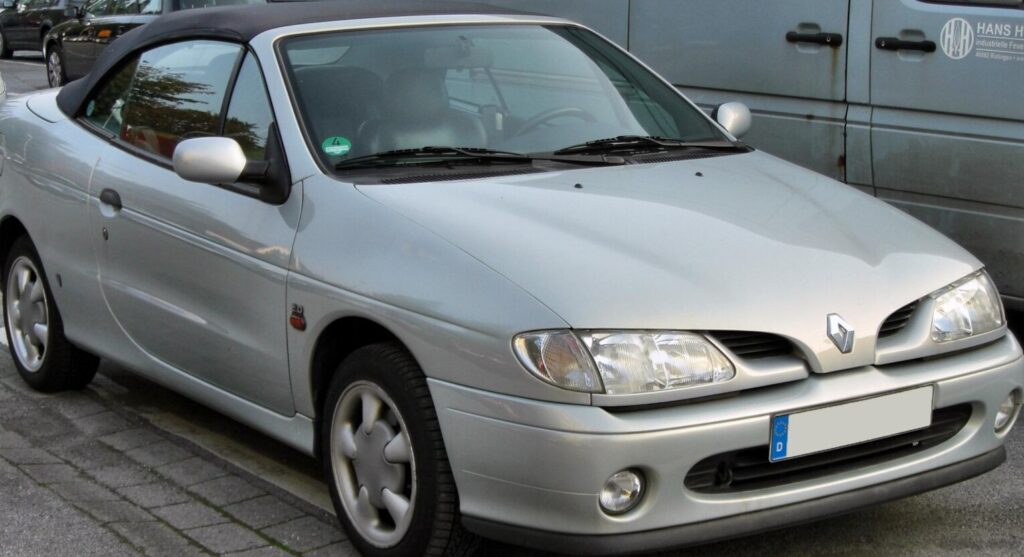
The Renault Megane I Cabriolet (EA) 2.0i, produced from 1998 to 1999, represented a stylish and accessible entry into the convertible market for Renault. This variant occupied a mid-range position within the broader Megane I Cabriolet lineup, offering a balance between performance and affordability. It was built upon the 1HX0 platform, shared with the first-generation Megane hatchback and saloon models. The 2.0i Cabriolet aimed to provide open-air motoring enjoyment with a relatively potent engine, appealing to buyers seeking a more spirited driving experience than the base models offered.
Powertrain & Engine Architecture
The heart of the Megane I Cabriolet 2.0i is the Renault F3R engine, a 1998 cc (121.93 cu. in.) inline four-cylinder gasoline engine. This engine, a mainstay in Renault’s lineup during the 1990s, featured a naturally aspirated configuration and a double overhead camshaft (DOHC) valvetrain with two valves per cylinder. The F3R utilized multi-port fuel injection, delivering fuel directly into the intake ports, optimizing combustion efficiency. The engine produced 114 horsepower (hp) at 5400 rpm and 168 Newton-meters (123.91 lb-ft) of torque at 4250 rpm. This output provided a noticeable step up in performance compared to the lower-displacement engines available in the Megane Cabriolet range.
The engine’s block was constructed from cast iron, providing durability, while the cylinder head was made of aluminum alloy, contributing to weight reduction. The compression ratio was typically around 9.8:1. Lubrication was handled by a conventional wet sump system with an engine oil capacity of 6 liters (6.34 US qt / 5.28 UK qt). Cooling was achieved through a liquid-cooled system with a coolant capacity of 7 liters (7.4 US qt / 6.16 UK qt). The F3R engine, while generally reliable, was known to benefit from regular maintenance, particularly regarding timing belt replacement.
Transmission
The Renault Megane I Cabriolet 2.0i was exclusively offered with a 5-speed manual transmission. This gearbox was chosen to complement the engine’s power output and provide drivers with greater control over the driving experience. The gear ratios were tuned to balance acceleration and fuel efficiency, with a relatively short first gear for quick starts and a taller fifth gear for comfortable cruising. The transmission was a conventional manual unit, known for its relatively smooth operation and durability.
Driving Characteristics
The 2.0i Cabriolet offered a more engaging driving experience than the lower-powered variants. Acceleration from 0 to 100 km/h (0-62 mph) took approximately 9.7 seconds, while 0 to 60 mph was achieved in around 9.2 seconds. The top speed was rated at 200 km/h (124.27 mph). While not a sports car, the 2.0i provided sufficient power for confident overtaking and enjoyable cruising. The engine delivered a linear power curve, with usable torque available across a broad range of revs. The manual transmission allowed drivers to fully exploit the engine’s capabilities, providing precise gear changes and a connected feel. The Cabriolet’s open-top design enhanced the driving experience, providing a sense of freedom and connection to the road.
Compared to the base 1.4L and 1.6L engines, the 2.0i offered a significant performance advantage. It felt noticeably quicker in everyday driving situations and was better suited for longer journeys. However, it didn’t possess the outright performance of the later Renaultsport models. The 2.0i’s handling was typical of front-wheel-drive cars of the era, with a tendency towards understeer when pushed hard.
Equipment & Trim Levels
The Renault Megane I Cabriolet 2.0i typically came equipped with a reasonable level of standard features. Interior appointments included cloth upholstery, a basic dashboard layout, and manual windows and door locks. Power steering was standard, providing ease of maneuverability. Air conditioning was often an optional extra, as were features like alloy wheels and a more sophisticated audio system. The Cabriolet’s soft top was manually operated, requiring physical effort to raise and lower. Safety features included ABS (Anti-lock Braking System), which was becoming increasingly common on European cars during this period. The interior trim was generally functional and durable, reflecting the car’s positioning as an affordable convertible.
Chassis & Braking
The Megane I Cabriolet 2.0i utilized an independent coil spring suspension at the front, providing a comfortable ride and reasonable handling. The rear suspension employed a torsion beam setup, which was a cost-effective solution for maintaining ride quality. The front brakes were ventilated discs, offering good stopping power, while the rear brakes were drums. This combination was adequate for the car’s weight and performance. The steering was a rack and pinion system with hydraulic power assistance, providing precise steering feel. The car rode on 185/60 R14 tires mounted on 14-inch steel wheels, although alloy wheels were available as an option. The chassis was reinforced to compensate for the lack of a fixed roof, ensuring structural rigidity.
Market Reception & Comparison
The Renault Megane I Cabriolet 2.0i was generally well-received by automotive critics as an affordable and stylish convertible. It offered a good balance between performance, comfort, and price. Critics praised the engine’s responsiveness and the car’s overall driving experience. However, some noted the relatively basic interior and the lack of certain features compared to more expensive convertibles. Fuel economy was reasonable for a 2.0-liter engine, with combined fuel consumption of around 8.2 l/100 km (28.7 US mpg / 34.4 UK mpg). Reliability was generally good, although regular maintenance was essential to prevent issues. Compared to other convertibles in its class, such as the Peugeot 306 Cabriolet and the Volkswagen Golf Cabriolet, the Megane offered a competitive package.
Technical Specifications
| Brand | Renault |
| Model | Megane I Cabriolet (EA) |
| Type (Engine) | 2.0i (114 Hp) |
| Start of production | 1998 |
| End of production | 1999 |
| Engine Model/Code | F3R |
| Engine displacement | 1998 cm3 (121.93 cu. in.) |
| Number of cylinders | 4 |
| Engine configuration | Inline |
| Power | 114 Hp @ 5400 rpm |
| Torque | 168 Nm @ 4250 rpm (123.91 lb.-ft. @ 4250 rpm) |
| Fuel Type | Petrol (Gasoline) |
| Acceleration 0 – 100 km/h | 9.7 sec |
| Acceleration 0 – 60 mph | 9.2 sec |
| Maximum speed | 200 km/h (124.27 mph) |
| Fuel consumption (urban) | 11.3 l/100 km (20.8 US mpg / 25 UK mpg) |
| Fuel consumption (extra urban) | 6.3 l/100 km (37.3 US mpg / 44.8 UK mpg) |
| Fuel consumption (combined) | 8.2 l/100 km (28.7 US mpg / 34.4 UK mpg) |
| Fuel tank capacity | 60 l (15.85 US gal / 13.2 UK gal) |
| Trunk (boot) space | 281 l (9.92 cu. ft.) |
| Length | 4028 mm (158.58 in.) |
| Width | 1698 mm (66.85 in.) |
| Height | 1368 mm (53.86 in.) |
| Wheelbase | 2468 mm (97.17 in.) |
Legacy
The Renault Megane I Cabriolet 2.0i remains a popular choice among enthusiasts seeking an affordable and enjoyable classic convertible. The F3R engine, while not particularly high-tech, is known for its durability and relatively straightforward maintenance. Parts availability is generally good, although some components may be becoming increasingly difficult to find. The car’s simple construction makes it relatively easy to work on for DIY mechanics. In the used car market, well-maintained examples of the 2.0i Cabriolet command a reasonable price, reflecting their desirability and rarity. The Megane I Cabriolet 2.0i represents a significant milestone in Renault’s history, offering a stylish and accessible entry into the world of open-top motoring.