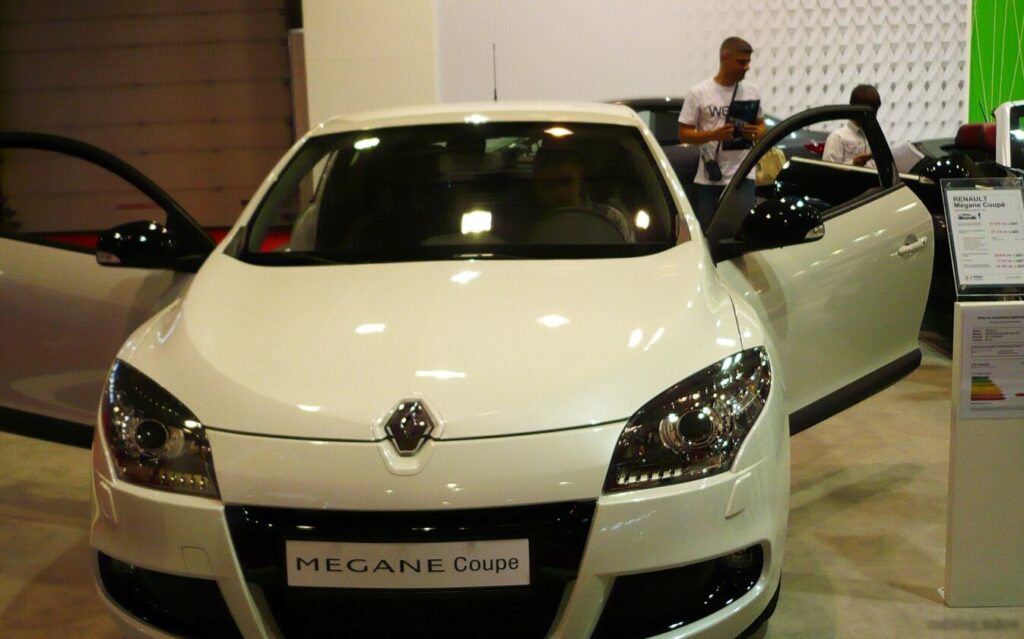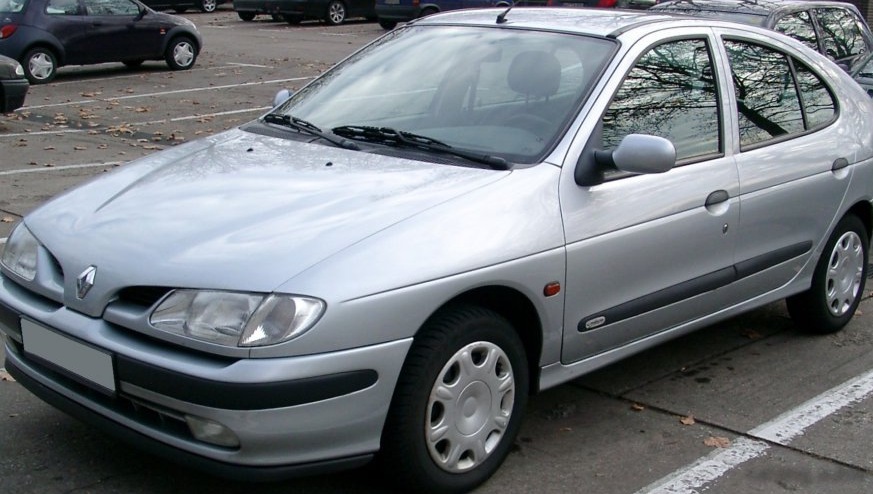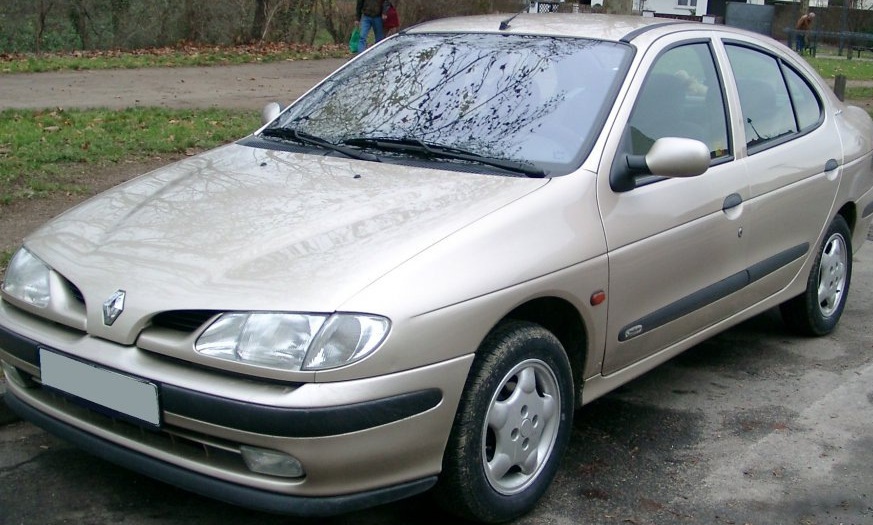
The Renault Megane I Classic (LA) 1.4 e, producing 75 horsepower, was a mainstay of the Megane range from 1996 to 1999. Positioned as the entry-level engine option in the Classic (sedan) body style, it offered a balance of affordability and practicality for buyers seeking a no-frills, economical family car. The Megane I, launched in 1995, represented Renault’s entry into the compact family car segment, built on the shared 1HX0/A3 platform with the Nissan Almera. The Classic sedan version, distinguished by its traditional three-box design, catered to markets where sedan body styles were preferred over hatchbacks.
Powertrain & Engine Architecture
The heart of the Megane 1.4 e was the Renault E7J engine, a 1390cc (84.82 cubic inches) inline-four cylinder gasoline engine. This engine utilized a single-point fuel injection system, a relatively common technology in the mid-1990s, where fuel was injected into the intake manifold rather than directly into the cylinders. The E7J featured an overhead camshaft (OHC) valvetrain with two valves per cylinder. Compression ratio was set at 9.5:1. The engine produced 75 hp at 5800 rpm and 107 Nm (78.92 lb-ft) of torque at 4250 rpm. Engine oil capacity was 4 liters (4.23 US quarts), and coolant capacity was 6 liters (6.34 US quarts).
Transmission
The 1.4 e engine was typically paired with a five-speed manual transmission. While an automatic transmission was offered in some markets, it was less common and generally resulted in slightly reduced performance and increased fuel consumption. The manual transmission provided a relatively direct driving experience, although the limited horsepower meant frequent gear changes were necessary, particularly when overtaking or climbing hills. The automatic transmission, when equipped, was a four-speed unit.
Driving Characteristics
The Megane 1.4 e was not known for its blistering performance. Acceleration from 0 to 100 km/h (0-62 mph) took approximately 14.3 seconds, and 0 to 60 mph was achieved in around 13.6 seconds. Top speed was limited to 170 km/h (105.63 mph). The engine’s power delivery was relatively linear, but the lack of low-end torque meant that the engine needed to be revved to access its full potential. Compared to the higher-output 1.6L and 2.0L versions of the Megane, the 1.4 e felt noticeably slower. The manual transmission allowed drivers to maintain optimal engine speed, but the automatic version often felt sluggish and hesitant. The weight-to-power ratio of 14.1 kg/hp underscored the engine’s modest output relative to the vehicle’s weight.
Equipment & Trim Levels
The 1.4 e trim level was generally considered the base model. Standard equipment typically included power steering, central locking, and basic instrumentation. Interior upholstery was usually cloth, and the dashboard featured a simple, functional design. Air conditioning, power windows, and alloy wheels were often optional extras. The trim level was designed to appeal to budget-conscious buyers who prioritized practicality and reliability over luxury features. Higher trim levels, such as the 1.6L and 2.0L variants, offered more comprehensive equipment lists, including features like upgraded audio systems, leather upholstery, and automatic climate control.
Chassis & Braking
The Megane I Classic featured an independent coil spring suspension at the front and a torsion beam suspension at the rear. This setup provided a reasonable balance of ride comfort and handling. The front brakes were ventilated discs, offering adequate stopping power, while the rear brakes were drums. ABS (Anti-lock Braking System) was available as an option, enhancing safety in emergency braking situations. The steering was a rack and pinion system with hydraulic power assistance, providing light and precise steering feel. Tire size was typically 175/65 R14, mounted on 14-inch steel wheels, although alloy wheels were available as an upgrade.
Market Reception & Comparison
The Renault Megane 1.4 e was generally well-received as an affordable and reliable family car. Critics praised its fuel economy – approximately 7.2 l/100 km (32.7 US mpg) combined – and its practicality. However, the engine’s lack of power was a common criticism. Compared to competitors like the Ford Escort and Opel Astra, the Megane 1.4 e offered a similar level of equipment and reliability, but its performance was often considered slightly inferior. Within the Megane lineup, the 1.4 e served as a gateway to the range, attracting buyers who were primarily concerned with cost and fuel efficiency. The 1.6L and 2.0L versions offered significantly more performance but came at a higher price point.
Technical Specifications
| Brand | Renault |
| Model | Megane |
| Generation | Megane I Classic (LA) |
| Type (Engine) | 1.4 e (75 Hp) |
| Start of production | 1996 |
| End of production | 1999 |
| Body type | Sedan |
| Seats | 5 |
| Doors | 4 |
| Fuel consumption (urban) | 9.6 l/100 km (24.5 US mpg) |
| Fuel consumption (extra urban) | 5.7 l/100 km (41.3 US mpg) |
| Fuel consumption (combined) | 7.2 l/100 km (32.7 US mpg) |
| CO2 emissions | 170 g/km |
| Fuel Type | Petrol (Gasoline) |
| Acceleration 0 – 100 km/h | 14.3 sec |
| Acceleration 0 – 62 mph | 14.3 sec |
| Acceleration 0 – 60 mph | 13.6 sec |
| Maximum speed | 170 km/h (105.63 mph) |
| Weight-to-power ratio | 14.1 kg/Hp |
| Weight-to-torque ratio | 9.9 kg/Nm |
| Power | 75 Hp @ 5800 rpm |
| Torque | 107 Nm @ 4250 rpm (78.92 lb.-ft. @ 4250 rpm) |
| Engine layout | Front, Transverse |
| Engine Model/Code | E7J |
| Engine displacement | 1390 cm3 (84.82 cu. in.) |
| Number of cylinders | 4 |
| Engine configuration | Inline |
| Cylinder Bore | 75.8 mm (2.98 in.) |
| Piston Stroke | 77 mm (3.03 in.) |
| Compression ratio | 9.5:1 |
| Number of valves per cylinder | 2 |
| Fuel injection system | Single-point injection |
| Engine aspiration | Naturally aspirated |
| Valvetrain | OHC |
| Engine oil capacity | 4 l (4.23 US qt | 3.52 UK qt) |
| Coolant | 6 l (6.34 US qt | 5.28 UK qt) |
| Kerb Weight | 1060 kg (2336.9 lbs.) |
| Max. weight | 1605 kg (3538.42 lbs.) |
| Max load | 545 kg (1201.52 lbs.) |
| Trunk (boot) space – minimum | 510 l (18.01 cu. ft.) |
| Fuel tank capacity | 60 l (15.85 US gal | 13.2 UK gal) |
| Length | 4440 mm (174.8 in.) |
| Width | 1699 mm (66.89 in.) |
| Height | 1420 mm (55.91 in.) |
| Wheelbase | 2580 mm (101.57 in.) |
Legacy
The Renault Megane I 1.4 e, while not a performance icon, proved to be a reliable and economical option for many drivers. The E7J engine, though simple in design, was generally durable and relatively easy to maintain. Today, examples of the Megane I 1.4 e are becoming increasingly rare, and those that remain are typically high-mileage vehicles. Common issues include wear and tear on the single-point injection system and potential corrosion, particularly in regions with harsh winters. However, the car’s simplicity and readily available parts make it a viable option for enthusiasts seeking a classic and affordable European car. The 1.4 e powertrain is not particularly sought after by collectors, but it represents a significant part of the Megane I’s history and appeal as a practical and accessible family vehicle.