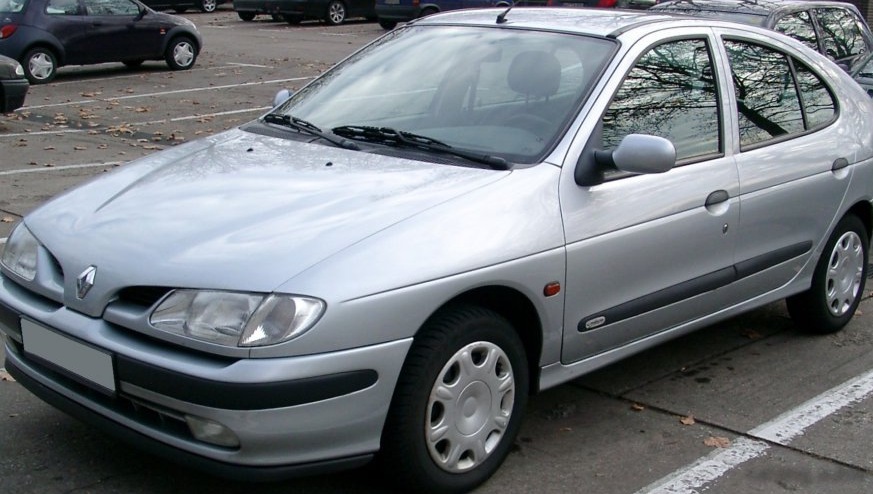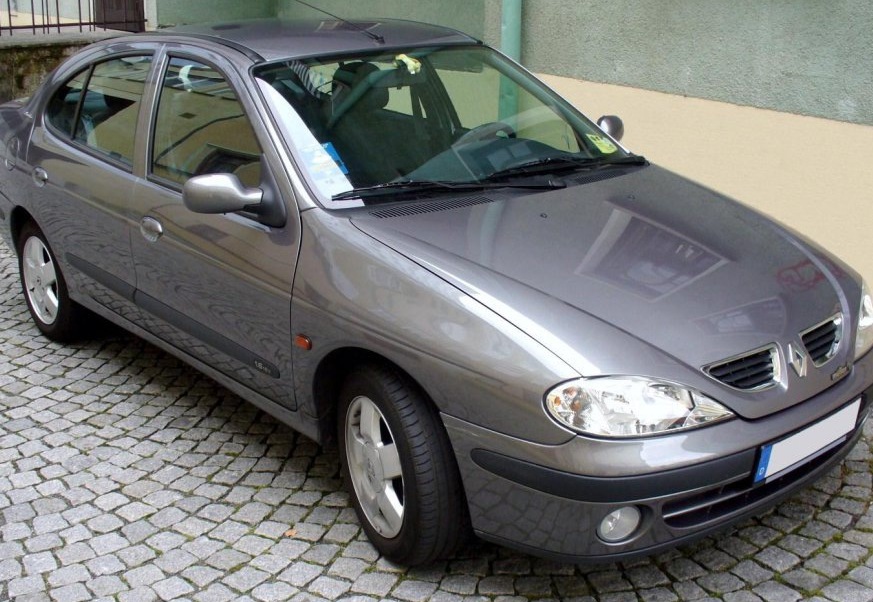
The Renault Megane I Classic Phase II, produced from 1999 to 2002, represented a significant evolution of Renault’s compact family car. Within the Classic (sedan) body style, the 1.6i 16V 107 hp variant with an automatic transmission occupied a middle-ground position in the lineup, aimed at buyers prioritizing comfort and ease of use over outright performance. This model sat below the more powerful 2.0 16V options and above the base 1.4-liter engine, offering a balance of features and affordability. It was built on the 1HX0/A3 platform, shared with other Renault and Nissan models of the era.
The 1.6i 16V Automatic: Positioning and Target Audience
The 1.6i 16V Automatic Megane Classic was designed to appeal to a broad demographic, particularly families and drivers who frequently commute in urban environments. The automatic transmission was a key selling point, offering a smoother and less demanding driving experience than the standard manual gearbox. While not the sportiest option, the 107 hp engine provided adequate power for everyday driving, and the sedan body style offered a practical level of interior space and trunk capacity. This trim level was intended to be a step up from the base models, offering more features and a more refined driving experience without the higher price tag of the top-of-the-line versions.
Powertrain & Engine Architecture
At the heart of the Megane I Classic 1.6i 16V Automatic lies the Renault K4M engine, a 1.6-liter (1598 cm3) inline four-cylinder gasoline engine. This engine featured a double overhead camshaft (DOHC) valvetrain with four valves per cylinder, contributing to its relatively high output for its displacement. The K4M engine utilized multi-port fuel injection, delivering fuel directly into the intake ports. This system, common for the time, provided good fuel efficiency and acceptable performance. The engine produced 107 hp at 5750 rpm and 148 Nm (109.16 lb-ft) of torque at 3750 rpm.
The engine was paired with a four-speed automatic transmission. This transmission, while providing convenience, was a relatively conventional design for the late 1990s. It lacked the sophistication of more modern automatic gearboxes, with fewer gears and a less refined shift quality. The gear ratios were optimized for fuel economy and comfortable cruising, rather than aggressive acceleration. The transmission’s control unit managed gear selection based on throttle position and vehicle speed.
Engine Specifications (K4M)
- Displacement: 1598 cm3 (97.52 cu. in.)
- Cylinder Bore: 79.5 mm (3.13 in.)
- Piston Stroke: 80.5 mm (3.17 in.)
- Compression Ratio: 10:1
- Valves per Cylinder: 4
- Fuel Injection: Multi-port
- Engine Oil Capacity: 4.4 liters (4.65 US qt | 3.87 UK qt)
- Coolant Capacity: 7.9 liters (8.35 US qt | 6.95 UK qt)
Driving Characteristics
The driving experience in the 1.6i 16V Automatic Megane Classic was characterized by smooth, predictable performance. Acceleration from a standstill to 62 mph (100 km/h) took approximately 12.4 seconds, and the car had a top speed of 191 km/h (118.68 mph). While not particularly quick, the engine provided sufficient power for overtaking and merging onto highways. The automatic transmission contributed to a relaxed driving style, particularly in city traffic. However, the limited number of gears meant that the engine could sometimes feel strained at higher speeds, and the transmission lacked the responsiveness of more modern units.
Compared to the manual transmission version of the same engine, the automatic variant experienced a slight performance penalty due to the transmission’s inherent inefficiencies. The higher-output 2.0 16V models offered significantly more power and a more engaging driving experience, but at a higher price point. The 1.4-liter engine, while more fuel-efficient, lacked the power and refinement of the 1.6-liter.
Equipment & Trim Levels
The 1.6i 16V Automatic Megane Classic typically came equipped with a reasonable level of standard features. These included power steering, central locking, electric front windows, and an AM/FM radio. Interior upholstery was typically cloth, with a relatively simple dashboard layout. Optional extras available for this trim level included air conditioning, alloy wheels, a sunroof, and upgraded audio systems. Safety features were relatively basic for the time, typically including ABS (Anti-lock Braking System) and driver and passenger airbags.
Trim levels varied slightly depending on the market, but generally, the 1.6i 16V Automatic represented a mid-range offering. It provided a good balance of comfort, convenience, and affordability, making it a popular choice for families and commuters.
Chassis & Braking
The Megane I Classic featured an independent coil spring suspension at the front and a torsion beam suspension at the rear. This setup provided a comfortable ride quality, although it wasn’t particularly sporty. The front brakes were ventilated discs, offering good stopping power, while the rear brakes were drums. This combination was typical for cars in this class at the time, balancing cost and performance. The steering was a rack and pinion system with hydraulic power assistance, providing light and easy steering.
The car rode on 185/65 R15 tires, mounted on 6J x 15 inch steel or alloy wheels. The suspension was tuned for comfort, prioritizing ride quality over handling precision. A stabilizer bar was fitted to the front suspension to reduce body roll during cornering.
Market Reception & Comparison
The Renault Megane I Classic 1.6i 16V Automatic received generally positive reviews from automotive critics. It was praised for its comfortable ride, spacious interior, and practical features. However, the automatic transmission was sometimes criticized for its lack of responsiveness and the limited number of gears. Fuel economy was considered reasonable for the time, with combined fuel consumption of 7.1 l/100 km (33.1 US mpg / 39.8 UK mpg).
Compared to its competitors, such as the Ford Focus, Opel Astra, and Peugeot 306, the Megane offered a competitive package in terms of price, features, and fuel economy. The 1.6i 16V Automatic variant provided a good balance of performance and convenience, making it a popular choice among buyers in this segment.
Technical Specifications
| Brand | Renault |
| Model | Megane |
| Generation | Megane I Classic (Phase II, 1999) |
| Type | 1.6i 16V (107 Hp) Automatic |
| Start of production | 1999 |
| End of production | 2002 |
| Body type | Sedan |
| Seats | 5 |
| Doors | 4 |
| Fuel consumption (urban) | 9.7 l/100 km (24.2 US mpg / 29.1 UK mpg) |
| Fuel consumption (extra urban) | 5.6 l/100 km (42 US mpg / 50.4 UK mpg) |
| Fuel consumption (combined) | 7.1 l/100 km (33.1 US mpg / 39.8 UK mpg) |
| CO2 emissions | 174 g/km |
| Fuel Type | Petrol (Gasoline) |
| Acceleration 0 – 100 km/h | 12.4 sec |
| Acceleration 0 – 62 mph | 12.4 sec |
| Acceleration 0 – 60 mph | 11.8 sec |
| Maximum speed | 191 km/h (118.68 mph) |
| Emission standard | Euro 3 |
| Weight-to-power ratio | 10.4 kg/Hp |
| Weight-to-torque ratio | 7.5 kg/Nm |
| Power | 107 Hp @ 5750 rpm |
| Torque | 148 Nm @ 3750 rpm (109.16 lb.-ft. @ 3750 rpm) |
| Engine layout | Front, Transverse |
| Engine Model/Code | K4M |
| Engine displacement | 1598 cm3 (97.52 cu. in.) |
| Number of cylinders | 4 |
| Cylinder Bore | 79.5 mm (3.13 in.) |
| Piston Stroke | 80.5 mm (3.17 in.) |
| Kerb Weight | 1115 kg (2458.15 lbs.) |
| Max. weight | 1630 kg (3593.53 lbs.) |
| Trunk (boot) space (minimum) | 510 l (18.01 cu. ft.) |
| Trunk (boot) space (maximum) | 1310 l (46.26 cu. ft.) |
| Fuel tank capacity | 60 l (15.85 US gal | 13.2 UK gal) |
| Number of gears | 4 |
| Gearbox type | Automatic transmission |
Legacy
The Renault Megane I Classic 1.6i 16V Automatic, while not a particularly rare or collectible model, remains a relatively reliable and affordable option in the used car market. The K4M engine is known for its durability, and the automatic transmission, while not the most sophisticated, is generally dependable if properly maintained. Common issues include wear and tear on suspension components and potential for oil leaks as the engine ages. Today, these cars are often sought after as inexpensive transportation or as a classic example of late 1990s/early 2000s French automotive design. Parts availability is generally good, and maintenance costs are relatively low, making it a practical choice for budget-conscious buyers.