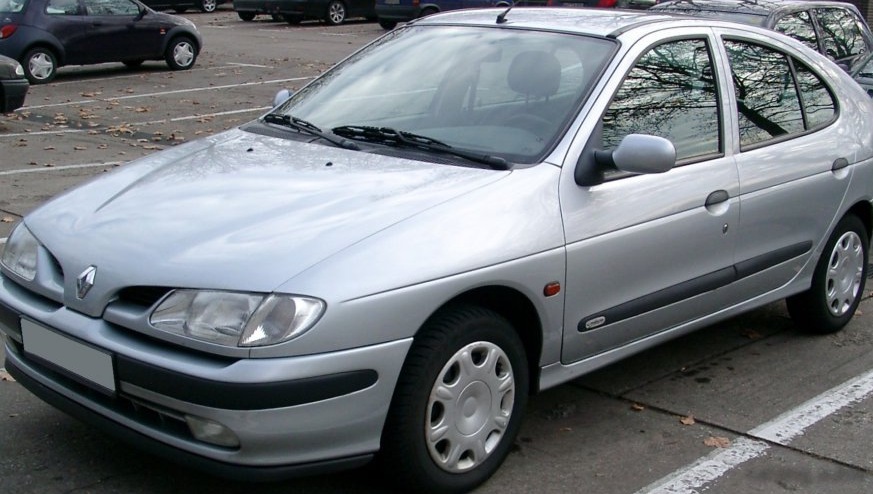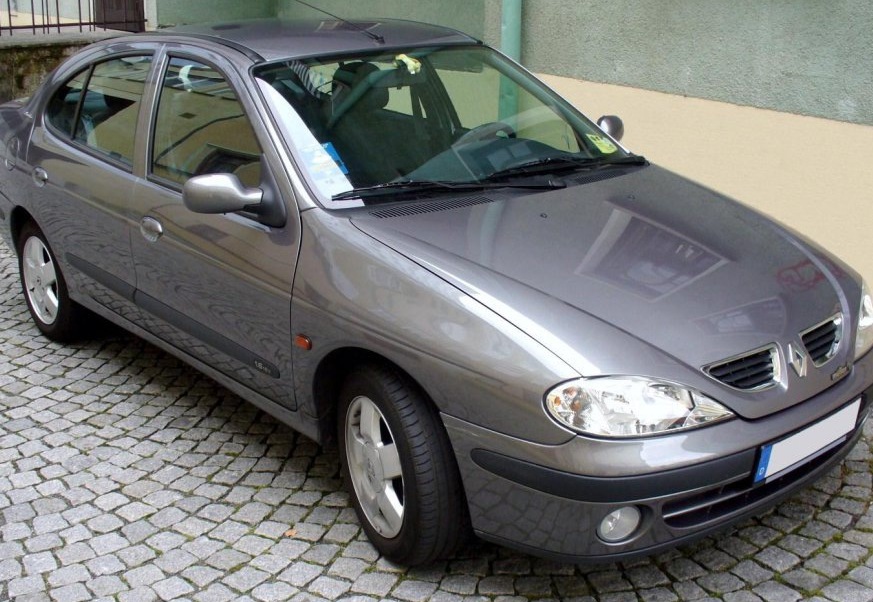
The Renault Megane I Classic Phase II, produced from 1999 to 2000, represented a significant update to Renault’s compact offering. Within the Megane I range, the 1.9 dTi (98 hp) variant occupied a middle ground, positioned as a fuel-efficient and practical option for buyers prioritizing economy over outright performance. This model was a four-door sedan, built on the 1HX0/A3 platform, and aimed at a broad customer base seeking a reliable and affordable family vehicle. The Phase II updates included cosmetic revisions and minor mechanical improvements over the earlier Phase I models.
Renault Megane I Classic 1.9 dTi (98 hp): Powertrain & Engine Architecture
The heart of the Megane I Classic 1.9 dTi was the F9Q engine, a 1.9-liter inline four-cylinder diesel. This engine was a mainstay in Renault’s lineup during the late 1990s and early 2000s, known for its robustness and relatively good fuel economy. The F9Q featured direct injection, a technology that improved combustion efficiency and reduced emissions compared to older indirect injection systems. The 98 horsepower output was achieved at 4000 rpm, while peak torque of 200 Nm (147.51 lb-ft) was delivered at 2000 rpm. This torque curve provided reasonable pulling power for everyday driving.
The engine utilized an overhead camshaft (OHC) valvetrain with two valves per cylinder. A turbocharger was employed to boost power and torque, enhancing the engine’s responsiveness. The compression ratio was relatively high at 18.3:1, typical for a direct injection diesel engine. The engine’s oil capacity was 5.5 liters (5.81 US qt / 4.84 UK qt), and it required a specific oil specification (details typically found in the owner’s manual). The 1.9 dTi was exclusively offered with a five-speed manual transmission in the Classic body style. While automatic transmissions were available on other Megane I variants, they were not paired with this specific engine.
Fuel Injection System
The F9Q engine’s direct injection system was a key component of its efficiency. Unlike indirect injection, where fuel is sprayed into the intake manifold, direct injection delivers fuel directly into the combustion chamber. This allows for more precise control over fuel delivery, resulting in more complete combustion and reduced emissions. The system utilized electronically controlled injectors and a high-pressure fuel pump to ensure optimal fuel atomization and distribution.
Driving Characteristics
The 1.9 dTi-equipped Megane I Classic offered a practical and economical driving experience. While not a performance-oriented model, the 98 hp and 200 Nm of torque provided sufficient power for everyday commuting and highway cruising. Acceleration from 0 to 100 km/h (0-62 mph) took approximately 12.3 seconds, and the top speed was around 183 km/h (113.71 mph). The five-speed manual transmission allowed drivers to effectively manage the engine’s power band.
Compared to the higher-output gasoline engines available in the Megane I range (such as the 1.6 16V or 2.0 16V), the 1.9 dTi offered significantly better fuel economy but lacked the same level of responsiveness. It also differed considerably from the 1.9 TDI variants, which offered similar power but with a different engine character and often a slightly higher price point. The 1.9 dTi’s turbocharger provided a noticeable boost in power at lower engine speeds, making it relatively easy to keep up with traffic. However, the engine could feel somewhat strained at higher speeds or when carrying a full load.
Equipment & Trim Levels
The Megane I Classic 1.9 dTi typically came with a reasonable level of standard equipment, reflecting its position as a mainstream family sedan. Standard features generally included power steering, central locking, electric front windows, and an adjustable steering column. Interior upholstery was typically cloth, and the dashboard featured a functional, if somewhat basic, design.
Optional extras varied depending on the market and could include air conditioning, alloy wheels, a radio/cassette player, and upgraded interior trim. Higher trim levels, such as the “Expression” or “Dynamique,” offered additional features as standard. Safety equipment typically included ABS (Anti-lock Braking System), although airbags were not always standard on all models.
Chassis & Braking
The Megane I Classic 1.9 dTi utilized a front-engine, front-wheel-drive layout. The front suspension consisted of independent coil springs, providing a comfortable ride and decent handling. The rear suspension employed a torsion beam setup, which was a cost-effective solution for compact cars. The front brakes were ventilated discs, offering good stopping power, while the rear brakes were drums. This combination was typical for vehicles in this weight class during the late 1990s. The steering system was a rack and pinion type with hydraulic power assistance, providing precise and responsive steering feel. The vehicle was equipped with 175/65 R14 tires mounted on 5.5J x 14 steel or alloy wheels.
Market Reception & Comparison
The Renault Megane I Classic 1.9 dTi was generally well-received by critics as a practical and economical family car. Its fuel efficiency was a major selling point, particularly in Europe where diesel fuel was often cheaper than gasoline. However, some reviewers noted that the engine could be somewhat noisy and lacked the refinement of some of its competitors. Compared to other trims in the Megane I lineup, the 1.9 dTi offered a compelling value proposition for buyers prioritizing fuel economy and practicality over performance. It was often seen as a more sensible choice than the higher-output gasoline engines, particularly for those who covered long distances regularly.
Reliability was generally considered to be good, although the F9Q engine was known to be susceptible to turbocharger failure in some cases. Regular maintenance, including oil changes and filter replacements, was crucial for ensuring long-term reliability.
Technical Specifications
| Brand | Renault |
| Model | Megane |
| Generation | Megane I Classic (Phase II, 1999) |
| Type (Engine) | 1.9 dTi (98 Hp) |
| Start of production | 1999 |
| End of production | 2000 |
| Body type | Sedan |
| Seats | 5 |
| Doors | 4 |
| Fuel consumption (urban) | 6.8 l/100 km (34.6 US mpg, 41.5 UK mpg, 14.7 km/l) |
| Fuel consumption (extra urban) | 4.4 l/100 km (53.5 US mpg, 64.2 UK mpg, 22.7 km/l) |
| Fuel consumption (combined) | 5.2 l/100 km (45.2 US mpg, 54.3 UK mpg, 19.2 km/l) |
| CO2 emissions | 139 g/km |
| Fuel Type | Diesel |
| Acceleration 0 – 100 km/h | 12.3 sec |
| Acceleration 0 – 62 mph | 12.3 sec |
| Acceleration 0 – 60 mph | 11.7 sec |
| Maximum speed | 183 km/h (113.71 mph) |
| Emission standard | Euro 2 |
| Weight-to-power ratio | 11.6 kg/Hp |
| Weight-to-torque ratio | 5.7 kg/Nm |
| Power | 98 Hp @ 4000 rpm |
| Torque | 200 Nm @ 2000 rpm (147.51 lb.-ft. @ 2000 rpm) |
| Engine layout | Front, Transverse |
| Engine Model/Code | F9Q |
| Engine displacement | 1870 cm3 (114.11 cu. in.) |
| Number of cylinders | 4 |
| Engine configuration | Inline |
| Cylinder Bore | 80 mm (3.15 in.) |
| Piston Stroke | 93 mm (3.66 in.) |
| Compression ratio | 18.3:1 |
| Number of valves per cylinder | 2 |
| Fuel injection system | Direct injection |
| Engine aspiration | Turbocharger |
| Valvetrain | OHC |
| Engine oil capacity | 5.5 l (5.81 US qt | 4.84 UK qt) |
| Coolant | 7.5 l (7.93 US qt | 6.6 UK qt) |
| Kerb Weight | 1140 kg (2513.27 lbs.) |
| Max. weight | 1650 kg (3637.63 lbs.) |
| Trunk (boot) space – minimum | 510 l (18.01 cu. ft.) |
| Trunk (boot) space – maximum | 1310 l (46.26 cu. ft.) |
| Fuel tank capacity | 60 l (15.85 US gal | 13.2 UK gal) |
| Drive wheel | Front wheel drive |
| Number of gears and type of gearbox | 5 gears, manual transmission |
| Front brakes | Ventilated discs |
| Rear brakes | Drum |
| Tires size | 175/65 R14 |
| Wheel rims size | 5.5J x 14 |
| Length | 4436 mm (174.65 in.) |
| Width | 1698 mm (66.85 in.) |
| Height | 1420 mm (55.91 in.) |
Legacy
The Renault Megane I Classic 1.9 dTi, while now an older vehicle, remains a relatively common sight on European roads. The F9Q engine, when properly maintained, is known for its durability and longevity. In the used car market, these models are typically affordable and represent a practical option for budget-conscious buyers. However, potential buyers should be aware of the possibility of turbocharger failure and the need for regular maintenance. The 1.9 dTi variant is remembered as a fuel-efficient and reliable workhorse, contributing to the Megane I’s overall success in the competitive compact car segment.