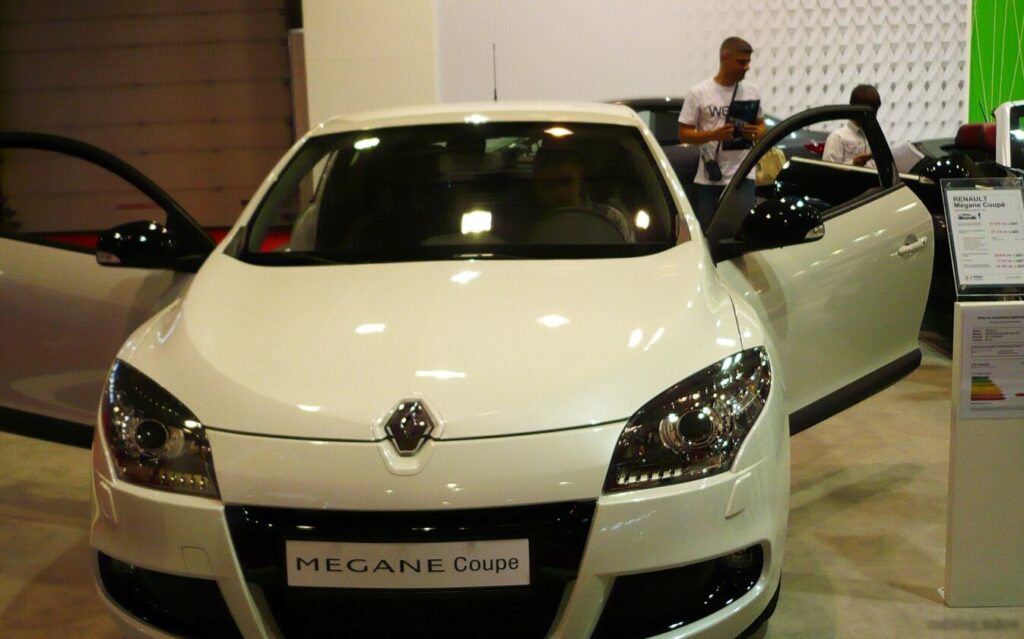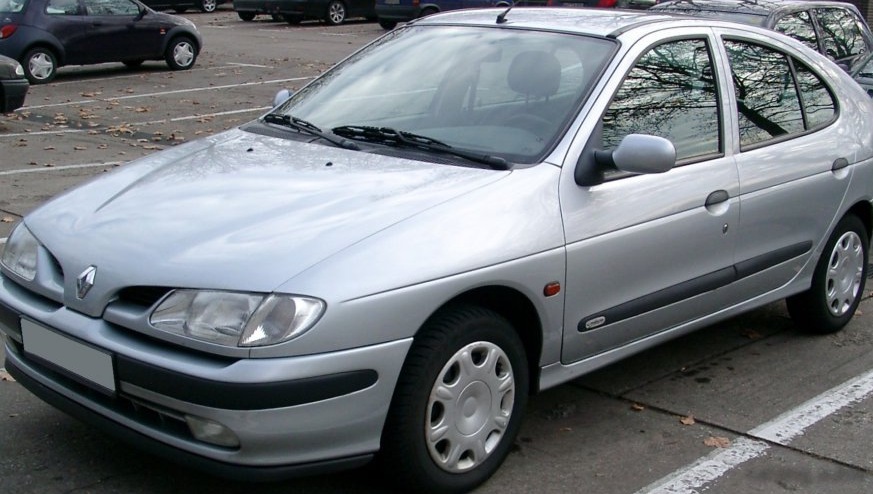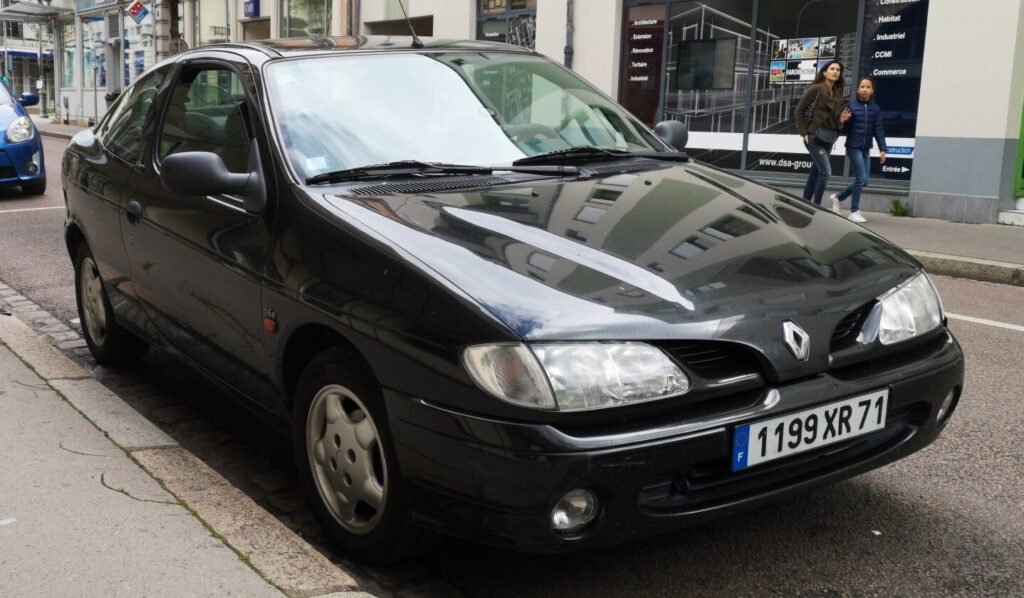
The Renault Megane I Coach (DA) 1.9 dTi, producing 98 horsepower, was a variant of the first-generation Megane, produced between 1998 and 1999. This model represented a diesel-powered, coupe body style option within the broader Megane I range, which spanned hatchback, saloon, and estate configurations. Positioned as a fuel-efficient and practical choice, the 1.9 dTi aimed to appeal to buyers seeking lower running costs without sacrificing everyday usability. It sat in the mid-range of the Megane I lineup, offering a balance between the base petrol engines and the more powerful, albeit more expensive, options.
Powertrain & Engine Architecture
The heart of the Megane I Coach 1.9 dTi is the F9Q engine, a 1.9-liter inline-four cylinder diesel engine. This engine is characterized by its direct injection system, a technology that improved fuel efficiency and reduced emissions compared to older indirect injection designs. The F9Q engine utilizes a single overhead camshaft (SOHC) valvetrain, operating two valves per cylinder. A turbocharger is integral to the engine’s design, boosting power output to 98 hp at 4000 rpm and generating 200 Nm (147.51 lb-ft) of torque at 2000 rpm. This torque delivery provided good low-end responsiveness, making it suitable for everyday driving conditions.
The 1.9 dTi was exclusively offered with a five-speed manual transmission during its production run. This transmission was chosen to maximize fuel economy and provide a direct connection between the engine and the front wheels. The gearbox ratios were geared towards efficiency, prioritizing fuel consumption over outright acceleration. The engine’s transverse mounting and front-wheel-drive configuration were standard for vehicles in this class during the late 1990s.
Fuel Injection and Turbocharging
The direct injection system employed in the F9Q engine is a key element of its efficiency. Unlike indirect injection, where fuel is sprayed into the intake manifold, direct injection delivers fuel directly into the combustion chamber. This allows for more precise fuel metering, improved combustion, and reduced emissions. The turbocharger forces more air into the engine, increasing power output without significantly increasing engine displacement. The turbocharger’s operation is carefully controlled to minimize turbo lag and provide a smooth power delivery.
Driving Characteristics
The Renault Megane I Coach 1.9 dTi offered a driving experience focused on practicality and fuel economy. While not a performance-oriented vehicle, the 98 hp and 200 Nm of torque provided adequate power for everyday driving situations. Acceleration from 0 to 100 km/h (0 to 62 mph) took approximately 11.2 seconds, and the car had a top speed of 187 km/h (116.2 mph). The engine’s strong low-end torque made it easy to navigate city streets and maintain comfortable cruising speeds on the highway.
Compared to the petrol-powered Megane variants, the 1.9 dTi offered significantly better fuel economy. The combined fuel consumption of 5.1 l/100 km (46.1 US mpg) made it an attractive option for drivers covering long distances. However, the diesel engine was noticeably louder and produced more vibration than the petrol engines. The five-speed manual transmission provided a satisfyingly direct driving experience, but the gear ratios were optimized for economy rather than sporty performance.
Equipment & Trim Levels
The Megane I Coach 1.9 dTi typically came with a moderate level of standard equipment. Basic features included power steering, central locking, and an adjustable steering column. Interior upholstery was typically cloth, and the dashboard featured a functional, if somewhat basic, design. Optional extras included air conditioning, electric windows, and an upgraded audio system. The trim level varied slightly depending on the market, but generally, the 1.9 dTi was positioned as a well-equipped, yet affordable, option.
Safety features were relatively basic by modern standards, but included an Anti-lock Braking System (ABS) as standard equipment. This was a significant safety feature for the time, helping to improve braking performance and stability. Other safety features included seatbelts for all occupants and a collapsible steering column.
Chassis & Braking
The Megane I Coach 1.9 dTi utilized an independent coil spring suspension at the front and a torsion beam suspension at the rear. This suspension setup provided a reasonable balance between ride comfort and handling. The front suspension was designed to absorb bumps and provide stable cornering, while the rear torsion beam offered a simple and cost-effective solution for maintaining rear wheel control. Ventilated disc brakes were fitted to the front wheels, providing strong stopping power, while drum brakes were used on the rear wheels to keep costs down.
The car’s curb weight of 1085 kg (2392.02 lbs) contributed to its relatively nimble handling. The steering was provided by a hydraulic power steering system, which made it easy to maneuver at low speeds and provided good feedback at higher speeds.
Market Reception & Comparison
The Renault Megane I Coach 1.9 dTi was generally well-received by critics as a practical and fuel-efficient option. It was praised for its strong low-end torque, good fuel economy, and reasonable price. However, some critics noted that the engine was noisy and produced noticeable vibrations. Compared to the petrol-powered Megane variants, the 1.9 dTi offered significantly better fuel economy, but at the expense of refinement and performance. Compared to other diesel-powered cars in its class, the Megane 1.9 dTi offered a competitive combination of fuel economy, performance, and price.
Reliability was generally good, although the direct injection system could be prone to issues if not properly maintained. Regular servicing and the use of high-quality fuel were essential to ensure the engine’s longevity.
Technical Specifications
| Brand | Renault |
| Model | Megane |
| Generation | Megane I Coach (DA) |
| Type (Engine) | 1.9 dTi (98 Hp) |
| Start of production | 1998 |
| End of production | 1999 |
| Powertrain Architecture | Internal Combustion engine |
| Body type | Coupe |
| Seats | 4 |
| Doors | 2 |
| Fuel consumption (urban) | 6.6 l/100 km (35.6 US mpg) |
| Fuel consumption (extra urban) | 4.3 l/100 km (54.7 US mpg) |
| Fuel consumption (combined) | 5.1 l/100 km (46.1 US mpg) |
| CO2 emissions | 139 g/km |
| Fuel Type | Diesel |
| Acceleration 0 – 100 km/h | 11.2 sec |
| Acceleration 0 – 62 mph | 11.2 sec |
| Acceleration 0 – 60 mph | 10.6 sec |
| Maximum speed | 187 km/h (116.2 mph) |
| Weight-to-power ratio | 11.1 kg/Hp |
| Power | 98 Hp @ 4000 rpm |
| Torque | 200 Nm @ 2000 rpm (147.51 lb.-ft. @ 2000 rpm) |
| Engine layout | Front, Transverse |
| Engine Model/Code | F9Q |
| Engine displacement | 1870 cm3 (114.11 cu. in.) |
| Number of cylinders | 4 |
| Engine configuration | Inline |
| Cylinder Bore | 80 mm (3.15 in.) |
| Piston Stroke | 93 mm (3.66 in.) |
| Compression ratio | 18.3:1 |
| Number of valves per cylinder | 2 |
| Fuel injection system | Direct injection |
| Engine aspiration | Turbocharger |
| Valvetrain | DOHC |
| Engine oil capacity | 5.5 l (5.81 US qt | 4.84 UK qt) |
| Coolant | 7.5 l (7.93 US qt | 6.6 UK qt) |
| Kerb Weight | 1085 kg (2392.02 lbs.) |
| Max. weight | 1580 kg (3483.3 lbs.) |
| Max load | 495 kg (1091.29 lbs.) |
| Trunk (boot) space – minimum | 288 l (10.17 cu. ft.) |
| Fuel tank capacity | 60 l (15.85 US gal | 13.2 UK gal) |
| Length | 3931 mm (154.76 in.) |
| Width | 1696 mm (66.77 in.) |
| Height | 1366 mm (53.78 in.) |
| Wheelbase | 2468 mm (97.17 in.) |
| Front track | 1450 mm (57.09 in.) |
| Rear (Back) track | 1432 mm (56.38 in.) |
| Ride height (ground clearance) | 120 mm (4.72 in.) |
| Drag coefficient (Cd) | 0.33 |
| Drivetrain Architecture | Front wheel drive |
| Number of gears and type of gearbox | 5 gears, manual transmission |
| Front suspension | Independent coil spring |
| Rear suspension | Torsion |
| Front brakes | Ventilated discs |
| Rear brakes | Drum |
| Assisting systems | ABS (Anti-lock braking system) |
| Steering type | Steering rack and pinion |
| Power steering | Hydraulic Steering |
| Tires size | 185/65 R14 |
| Wheel rims size | 14 |
Legacy
The Renault Megane I 1.9 dTi, while not a particularly rare or collectible model, remains a relatively common sight on European roads today. Its robust engine and simple mechanical design contribute to its longevity. The F9Q engine, in particular, is known for its durability when properly maintained. In the used car market, these models are typically affordable and represent a practical choice for buyers seeking a fuel-efficient and reliable vehicle. However, potential buyers should be aware of the age-related issues common to vehicles of this era, such as corrosion and wear and tear on suspension components. The 1.9 dTi powertrain, despite its age, continues to be regarded as a capable and economical option for everyday transportation.