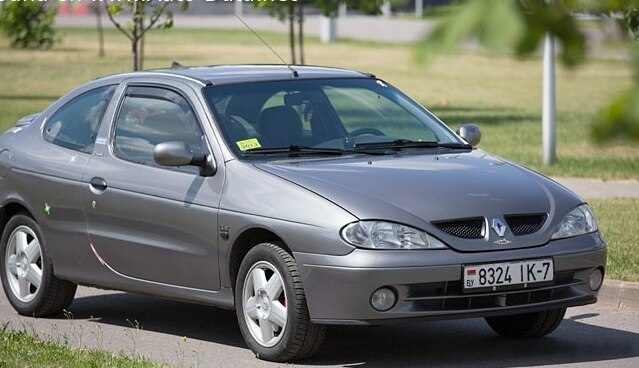
The Renault Megane I Coach (Phase II), produced from 1999 to 2000, represented a mid-cycle refresh of Renault’s popular compact offering. Within the Phase II range, the 1.4i 16V variant, producing 95 horsepower, served as a key entry point into the Megane lineup, particularly appealing to buyers prioritizing fuel efficiency and affordability. This three-door coupe version aimed at a younger demographic or those seeking a more sporty aesthetic than the five-door hatchback. It was positioned below the more powerful 1.6i and 2.0i 16V models, and significantly differentiated itself from the diesel options available, offering a gasoline-powered alternative with a focus on accessible performance.
1.4i 16V Powertrain & Engine Architecture
The heart of the 1.4i 16V Megane was the K4J engine, a 1390cc (84.82 cubic inches) inline-four cylinder gasoline engine. This engine was a mainstay in Renault’s lineup during the late 1990s and early 2000s, known for its relatively simple design and reasonable reliability. The ‘16V’ designation indicates the engine features four valves per cylinder, contributing to improved breathing and higher power output compared to older two-valve designs. The K4J utilized a multi-port fuel injection system, delivering fuel directly into the intake ports, optimizing the air-fuel mixture for efficient combustion.
The engine employed a double overhead camshaft (DOHC) valvetrain, further enhancing its volumetric efficiency. Compression ratio was set at 10:1. The engine produced 95 hp at 6000 rpm and 127 Nm (93.67 lb-ft) of torque at 3750 rpm. While not a powerhouse, the K4J provided adequate power for everyday driving. The engine’s oil capacity was 4.4 liters (4.65 US quarts / 3.87 UK quarts), and it required coolant totaling 7.9 liters (8.35 US quarts / 6.95 UK quarts).
The 1.4i 16V was typically paired with a five-speed manual transmission, however, an optional four-speed automatic transmission was available. The automatic transmission, while offering convenience, did impact performance and fuel economy compared to the manual version. This specific combination – the 1.4i 16V engine with the four-speed automatic – was a popular choice for drivers prioritizing ease of use over outright performance.
Transmission Details
The four-speed automatic transmission used in the 1.4i 16V Megane was a conventional hydraulic automatic, lacking the more advanced electronic controls found in later transmissions. Gear ratios were optimized for fuel efficiency and smooth operation, rather than aggressive acceleration. First gear was relatively short, providing good initial acceleration, while higher gears were geared for comfortable cruising. The automatic transmission’s shift points were calibrated to balance fuel economy and drivability, but could sometimes feel hesitant or sluggish, particularly during overtaking maneuvers.
Driving Characteristics
The 1.4i 16V automatic Megane offered a comfortable, if not particularly exciting, driving experience. Acceleration from 0-60 mph took approximately 10.8 seconds, and 0-100 km/h in 11.4 seconds, making it slower than the manual version and the higher-powered variants. The automatic transmission contributed to this slower acceleration, as it inherently loses some power through the torque converter. Top speed was rated at 187 km/h (116.2 mph).
The engine felt relatively responsive at lower speeds, providing sufficient power for city driving and everyday commuting. However, when fully loaded or attempting to climb steep hills, the engine could feel strained, requiring the transmission to downshift frequently. The steering was light and easy to use, making the Megane easy to maneuver in tight spaces. The suspension, while comfortable, was not particularly sporty, resulting in some body roll during cornering. Overall, the driving experience was geared towards practicality and ease of use, rather than performance.
Equipment & Trim Levels
The 1.4i 16V Megane Coach (Phase II) typically came with a reasonable level of standard equipment, reflecting its position as an entry-level model. Standard features generally included power steering, central locking, electric front windows, and an adjustable steering column. Interior upholstery was typically cloth, with a relatively simple dashboard layout. Air conditioning was often an optional extra, as were features like alloy wheels, a CD player, and upgraded interior trim. Safety features included ABS (Anti-lock Braking System) as standard, a notable inclusion for the time. The Phase II refresh brought minor cosmetic updates to the interior, including revised dashboard trim and seat fabrics.
Chassis & Braking
The Megane I Coach featured an independent coil spring suspension at the front, providing a comfortable ride and reasonable handling. The rear suspension utilized a torsion beam setup, which was simpler and more cost-effective than a fully independent rear suspension. The front brakes were ventilated discs, offering good stopping power, while the rear brakes were drums. This combination was typical for vehicles in this class at the time, balancing cost and performance. The car’s curb weight of 1045 kg (2303.83 lbs) contributed to its relatively nimble handling. The steering system was a rack and pinion setup with hydraulic power assistance, providing a light and responsive feel.
Market Reception & Comparison
The 1.4i 16V automatic Megane was generally well-received by critics as a practical and affordable compact car. It was praised for its fuel efficiency – achieving approximately 36.2 US mpg combined – and its comfortable ride. However, it was often criticized for its lack of power and the somewhat sluggish performance of the automatic transmission. Compared to the 1.6i and 2.0i 16V models, the 1.4i offered significantly less performance, but at a lower price point. Compared to the diesel variants, the 1.4i provided a smoother and quieter driving experience, but with lower fuel economy. The 1.4i 16V appealed to buyers who prioritized affordability and fuel efficiency over outright performance, making it a popular choice for first-time car buyers and those seeking a reliable and economical commuter vehicle.
Technical Specifications
| Brand | Renault |
| Model | Megane |
| Generation | Megane I Coach (Phase II, 1999) |
| Type (Engine) | 1.4i 16V (95 Hp) |
| Start of production | 1999 |
| End of production | 2000 |
| Powertrain Architecture | Internal Combustion engine |
| Body type | Coupe |
| Seats | 4 |
| Doors | 3 |
| Fuel consumption (urban) | 9.1 l/100 km (25.8 US mpg) |
| Fuel consumption (extra urban) | 5.1 l/100 km (46.1 US mpg) |
| Fuel consumption (combined) | 6.5 l/100 km (36.2 US mpg) |
| CO2 emissions | 153 g/km |
| Fuel Type | Petrol (Gasoline) |
| Acceleration 0 – 100 km/h | 11.4 sec |
| Acceleration 0 – 62 mph | 11.4 sec |
| Acceleration 0 – 60 mph | 10.8 sec |
| Maximum speed | 187 km/h (116.2 mph) |
| Weight-to-power ratio | 11 kg/Hp |
| Power | 95 Hp @ 6000 rpm |
| Torque | 127 Nm @ 3750 rpm (93.67 lb.-ft. @ 3750 rpm) |
| Engine layout | Front, Transverse |
| Engine Model/Code | K4J |
| Engine displacement | 1390 cm3 (84.82 cu. in.) |
| Number of cylinders | 4 |
| Engine configuration | Inline |
| Cylinder Bore | 79.5 mm (3.13 in.) |
| Piston Stroke | 70 mm (2.76 in.) |
| Compression ratio | 10:1 |
| Number of valves per cylinder | 4 |
| Fuel injection system | Multi-port manifold injection |
| Engine aspiration | Naturally aspirated |
| Valvetrain | DOHC |
| Engine oil capacity | 4.4 l (4.65 US qt | 3.87 UK qt) |
| Coolant | 7.9 l (8.35 US qt | 6.95 UK qt) |
| Kerb Weight | 1045 kg (2303.83 lbs.) |
| Max. weight | 1490 kg (3284.89 lbs.) |
| Trunk (boot) space – minimum | 288 l (10.17 cu. ft.) |
| Fuel tank capacity | 60 l (15.85 US gal | 13.2 UK gal) |
Legacy
The 1.4i 16V engine, particularly when paired with the automatic transmission, proved to be reasonably reliable, although regular maintenance was crucial. Common issues included occasional oil leaks and sensor failures. Today, these Megane I models are relatively affordable on the used car market, but finding well-maintained examples can be challenging. The K4J engine is known for its durability, but age and mileage can take their toll. Parts availability is generally good, as the engine was used in a variety of Renault and other European vehicles. While not a particularly sought-after variant, the 1.4i 16V automatic Megane remains a viable option for budget-conscious buyers seeking a simple and economical compact car.