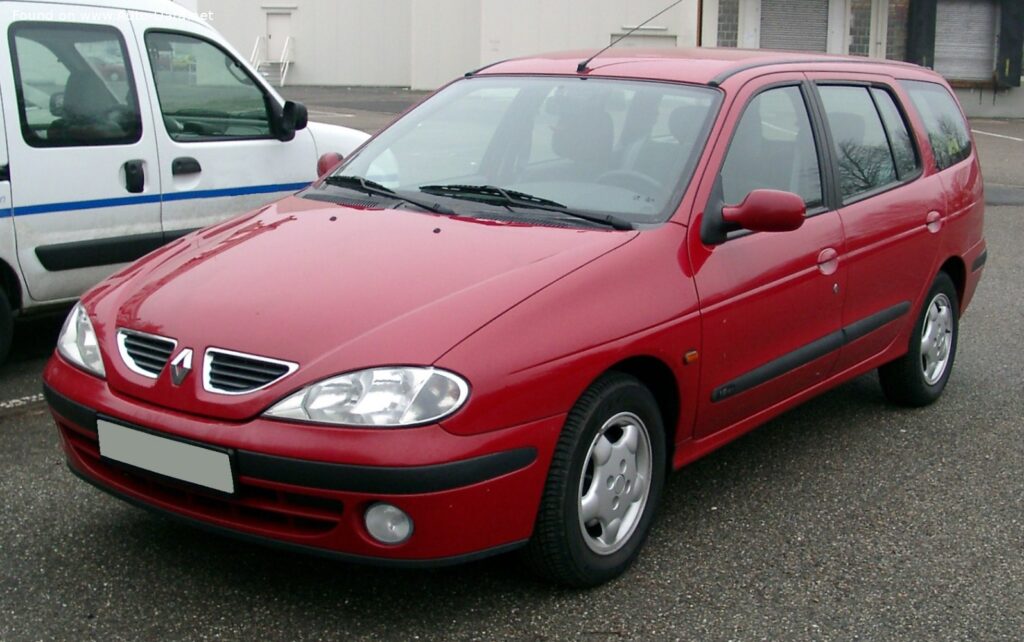
The Renault Megane I Grandtour Phase II, produced from 1999 to 2003, represented Renault’s entry into the competitive compact estate (station wagon) market. The 1.4i 16V variant, equipped with a 95 horsepower engine, served as a core model within the range, positioned as an affordable and practical option for families and individuals prioritizing fuel efficiency and cargo space over outright performance. This version occupied the lower-mid range of the Megane Grandtour lineup, sitting below the more powerful 1.6i and 2.0i 16V models, and above the base 1.4i 8V engine option. It was a key component of the Mk1 Megane series, built on the 1HX0/A3 platform.
The 1.4i 16V Engine and Powertrain
The heart of this Megane Grandtour variant is the Renault K4J engine, a 1.390-liter (84.82 cubic inches) inline-four cylinder gasoline engine. This engine is characterized by its sixteen valves (four valves per cylinder) operated by a double overhead camshaft (DOHC) valvetrain. The K4J engine utilizes a multi-port fuel injection system, delivering fuel directly into the intake ports, optimizing combustion efficiency. It produces a maximum power output of 95 hp (70.9 kW) at 6000 rpm and a torque of 127 Nm (93.67 lb-ft) at 3750 rpm. The engine’s compression ratio is 10:1, a common figure for engines of this era aiming for a balance between performance and fuel economy.
The 1.4i 16V engine was typically paired with a five-speed manual transmission, however, a four-speed automatic transmission was also offered, and is the focus of this article. This automatic gearbox, while providing ease of use, was not known for its sportiness or particularly quick shifts. It was geared towards smooth operation and convenience rather than maximizing performance. The automatic transmission’s gear ratios were optimized for fuel efficiency and everyday driving conditions, prioritizing comfortable cruising over rapid acceleration.
Engine Code Specifics & Maintenance
The K4J engine is generally considered a reliable unit, but like all engines, it has its potential weak points. Common maintenance items include regular oil changes (using a 4.4-liter/4.65 US qt capacity, specified to Renault standards), coolant flushes (requiring 7.9 liters/8.35 US qt), and periodic inspection of the timing belt, which is crucial for preventing catastrophic engine damage. The 16-valve design necessitates more frequent valve adjustments compared to engines with fewer valves. The engine’s relatively simple design makes it accessible for DIY mechanics, contributing to its continued popularity among enthusiasts.
Driving Characteristics
The 1.4i 16V automatic Megane Grandtour delivers a comfortable, if not particularly exhilarating, driving experience. Acceleration from 0 to 100 km/h (0-62 mph) takes approximately 12 seconds, and 0-60 mph is achieved in around 11.4 seconds. The top speed is rated at 182 km/h (113.09 mph). The automatic transmission contributes to a smoother, more relaxed driving style, especially in urban environments. However, the lack of manual control and the relatively slow shift times can be noticeable when attempting quicker maneuvers or overtaking. The engine feels most at home in the mid-range, providing adequate power for everyday driving situations. Compared to the manual transmission version, the automatic suffers a slight performance penalty due to the transmission’s inherent inefficiencies. Compared to the higher-output 1.6i and 2.0i models, the 1.4i feels noticeably less powerful, particularly when fully loaded with passengers and cargo.
Equipment & Trim Levels
The 1.4i 16V Grandtour typically came equipped with a reasonable level of standard features for its price point. These included power steering, central locking, electric front windows, and an adjustable steering column. Interior upholstery was typically cloth, with a relatively simple dashboard layout. Optional extras included air conditioning, alloy wheels, a sunroof, and a radio/cassette player (later upgraded to CD players). Higher trim levels, such as the “Expression” or “Dynamique” variants, added features like rear electric windows, upgraded interior trim, and anti-lock brakes (ABS). The Grandtour’s defining feature, of course, was its spacious estate body style, offering a generous 485 liters (17.13 cubic feet) of boot space with the rear seats up, expanding to 1600 liters (56.5 cubic feet) with the seats folded down.
Chassis & Braking
The Megane I Grandtour’s chassis features independent coil spring suspension at the front, providing a comfortable ride and decent handling. The rear suspension utilizes a torsion beam setup, which is a cost-effective solution that prioritizes space efficiency. The front brakes are ventilated discs, offering good stopping power, while the rear brakes are drums. ABS (Anti-lock Braking System) was often an optional extra, but became increasingly common on higher trim levels. The steering is a rack and pinion system with hydraulic power assistance, providing a light and responsive feel. Tire sizes typically ranged from 175/65 R14 to 175/70 R14, mounted on 5.5J x 14 inch steel or alloy wheels.
Market Reception & Comparison
The Renault Megane I Grandtour 1.4i 16V was generally well-received by critics as a practical and affordable estate car. It was praised for its spacious interior, fuel efficiency (achieving around 7 l/100 km or 33.6 US mpg combined), and comfortable ride. However, it was often criticized for its lack of outright performance and the somewhat dated design of the interior. Compared to rivals like the Ford Focus Estate and the Vauxhall/Opel Astra Estate, the Megane offered a competitive package, particularly in terms of value for money. The automatic transmission version, while convenient, was often seen as detracting from the driving experience compared to the more engaging manual gearbox. Reliability was generally good, although some owners reported issues with the electrical system and the automatic transmission.
Technical Specifications
| Brand | Renault |
| Model | Megane I Grandtour |
| Generation | Megane I Grandtour (Phase II, 1999) |
| Type (Engine) | 1.4i 16V (95 Hp) |
| Start of production | 1999 |
| End of production | 2003 |
| Powertrain Architecture | Internal Combustion engine |
| Body type | Station wagon (estate) |
| Seats | 5 |
| Doors | 5 |
| Fuel consumption (urban) | 9.6 l/100 km (24.5 US mpg) |
| Fuel consumption (extra urban) | 5.6 l/100 km (42 US mpg) |
| Fuel consumption (combined) | 7 l/100 km (33.6 US mpg) |
| CO2 emissions | 165 g/km |
| Fuel Type | Petrol (Gasoline) |
| Acceleration 0 – 100 km/h | 12 sec |
| Acceleration 0 – 62 mph | 12 sec |
| Acceleration 0 – 60 mph | 11.4 sec |
| Maximum speed | 182 km/h (113.09 mph) |
| Power | 95 Hp @ 6000 rpm |
| Torque | 127 Nm @ 3750 rpm (93.67 lb.-ft. @ 3750 rpm) |
| Engine layout | Front, Transverse |
| Engine Model/Code | K4J |
| Engine displacement | 1390 cm3 (84.82 cu. in.) |
| Number of cylinders | 4 |
| Cylinder Bore | 75.8 mm (2.98 in.) |
| Piston Stroke | 77 mm (3.03 in.) |
| Compression ratio | 10:1 |
| Engine oil capacity | 4.4 l (4.65 US qt | 3.87 UK qt) |
| Coolant | 7.9 l (8.35 US qt | 6.95 UK qt) |
| Kerb Weight | 1135 kg (2502.25 lbs.) |
| Max. weight | 1685 kg (3714.79 lbs.) |
| Trunk (boot) space – minimum | 485 l (17.13 cu. ft.) |
| Trunk (boot) space – maximum | 1600 l (56.5 cu. ft.) |
| Fuel tank capacity | 60 l (15.85 US gal | 13.2 UK gal) |
Legacy
The Renault Megane I Grandtour 1.4i 16V automatic, while not a performance icon, remains a popular choice in the used car market due to its affordability, practicality, and relatively good reliability. The K4J engine is known for its durability, and with regular maintenance, can continue to provide years of service. Parts availability is generally good, and the engine’s simple design makes it relatively easy to repair. However, potential buyers should be aware of the limitations of the four-speed automatic transmission and the potential for age-related issues with the electrical system. Today, these cars represent a budget-friendly option for those seeking a spacious and economical estate car, offering a nostalgic glimpse into the early days of the modern Megane range.