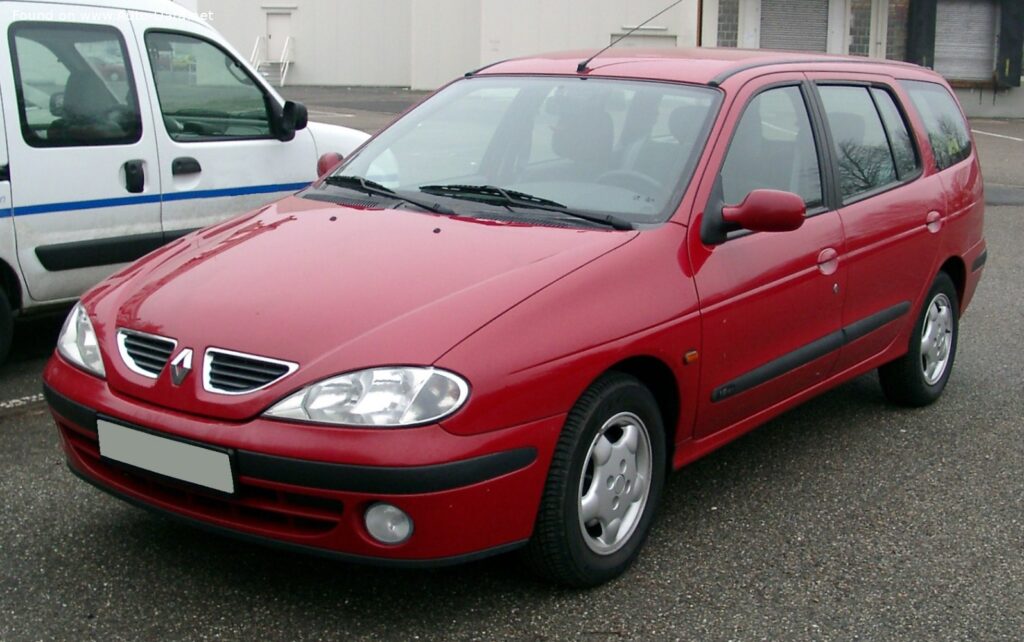
The Renault Megane I Grandtour 1.6i 16V, produced between 1999 and 2003, represented a practical and accessible entry point into the Megane estate (station wagon) range during the Phase II refresh of the first-generation Megane. Positioned as a mid-range offering, it catered to buyers seeking a balance between fuel efficiency, reasonable performance, and the increased cargo capacity of a wagon body style. This variant was part of the broader Megane I family, built on the 1HX0/A3 platform, and aimed at families and individuals needing a versatile vehicle for everyday use. The 1.6i 16V engine, paired with a manual transmission, was a popular choice for those prioritizing affordability and practicality over outright speed.
Powertrain & Engine Architecture
The heart of the Megane I Grandtour 1.6i 16V is the Renault K4M engine, a 1.6-liter (1598 cm3 or 97.52 cu. in.) inline four-cylinder gasoline engine. This engine is characterized by its all-aluminum construction, contributing to a relatively lightweight design. The ‘16V’ designation indicates a dual overhead camshaft (DOHC) valvetrain, with four valves per cylinder, enhancing volumetric efficiency and contributing to improved power output compared to earlier 8-valve designs. Fuel delivery is managed by a multi-port fuel injection system, providing precise fuel metering for optimal combustion.
The K4M engine produces 107 horsepower (Hp) at 5750 rpm and 148 Newton-meters (109.16 lb.-ft.) of torque at 3750 rpm. The engine’s power-to-weight ratio is 92.2 Hp/tonne, and its torque-to-weight ratio is 127.6 Nm/tonne. The engine features a compression ratio of 10:1. Engine oil capacity is 4.4 liters (4.65 US qt | 3.87 UK qt), and the recommended coolant capacity is 7.9 liters (8.35 US qt | 6.95 UK qt). The engine is transversely mounted in the front of the vehicle, driving the front wheels.
Transmission
The 1.6i 16V Grandtour was primarily equipped with a five-speed manual transmission. This gearbox was chosen for its durability and efficiency, complementing the engine’s characteristics. The gear ratios were tuned to provide a balance between acceleration and fuel economy, with a relatively long fifth gear for comfortable highway cruising. While an automatic transmission was available on some Megane I models, it was less common with the 1.6i engine due to the potential for reduced fuel efficiency and performance.
Driving Characteristics
The Megane I Grandtour 1.6i 16V offered a comfortable and predictable driving experience. Acceleration from 0 to 100 km/h (0-62 mph) took approximately 10.3 seconds, and 0 to 60 mph was achieved in around 9.8 seconds. The top speed was rated at 193 km/h (119.92 mph). While not a particularly sporty vehicle, the 1.6i engine provided sufficient power for everyday driving situations, including highway merging and overtaking. The manual transmission allowed for greater driver control and engagement compared to an automatic. The suspension, tuned for comfort, absorbed bumps and irregularities in the road surface effectively, providing a relatively smooth ride. Compared to the higher-performance Megane variants, such as those equipped with the 2.0 16V engine, the 1.6i offered a more relaxed and fuel-efficient driving experience.
Equipment & Trim Levels
The Megane I Grandtour 1.6i 16V typically came with a reasonable level of standard equipment. This included power steering, central locking, electric front windows, and an adjustable steering column. Interior upholstery was typically cloth, with a functional and durable design. Depending on the specific market and optional packages selected, features such as air conditioning, a radio/cassette player, alloy wheels, and a sunroof could be added. The dashboard layout was straightforward and user-friendly, with clearly labeled controls. Higher trim levels offered additional features such as upgraded upholstery, a trip computer, and more sophisticated audio systems.
Chassis & Braking
The Megane I Grandtour featured an independent coil spring suspension at the front, providing good handling and ride comfort. The rear suspension utilized a torsion beam setup, which was cost-effective and provided adequate stability for a family vehicle. The front brakes were ventilated discs, offering good stopping power, while the rear brakes were drums. Anti-lock Braking System (ABS) was standard equipment, enhancing safety by preventing wheel lockup during hard braking. The steering system was a rack and pinion type with hydraulic power assistance, providing precise and responsive steering feel. The vehicle rode on 185/60 R15 tires mounted on 6.0J x 15 inch wheel rims.
Market Reception & Comparison
The Renault Megane I Grandtour 1.6i 16V was generally well-received by automotive critics as a practical and affordable estate car. It was praised for its spacious interior, generous cargo capacity, and fuel efficiency. Fuel consumption figures were approximately 9.6 l/100 km (24.5 US mpg / 29.4 UK mpg) in urban conditions, 5.9 l/100 km (39.9 US mpg / 47.9 UK mpg) on the extra-urban cycle, and 7.2 l/100 km (32.7 US mpg / 39.2 UK mpg) combined. CO2 emissions were rated at 170 g/km. Compared to other trims in the Megane lineup, the 1.6i 16V offered a more economical option, albeit with slightly less performance. It competed with other compact estate cars such as the Ford Focus Estate and the Opel/Vauxhall Astra Estate.
Technical Specifications
| Brand | Renault |
| Model | Megane |
| Generation | Megane I Grandtour (Phase II, 1999) |
| Type (Engine) | 1.6i 16V (107 Hp) |
| Start of production | 1999 |
| End of production | 2003 |
| Powertrain Architecture | Internal Combustion engine |
| Body type | Station wagon (estate) |
| Seats | 5 |
| Doors | 5 |
| Fuel consumption (urban) | 9.6 l/100 km (24.5 US mpg) |
| Fuel consumption (extra urban) | 5.9 l/100 km (39.9 US mpg) |
| Fuel consumption (combined) | 7.2 l/100 km (32.7 US mpg) |
| CO2 emissions | 170 g/km |
| Fuel Type | Petrol (Gasoline) |
| Acceleration 0 – 100 km/h | 10.3 sec |
| Acceleration 0 – 62 mph | 10.3 sec |
| Acceleration 0 – 60 mph | 9.8 sec |
| Maximum speed | 193 km/h (119.92 mph) |
| Weight-to-power ratio | 10.8 kg/Hp |
| Power | 107 Hp @ 5750 rpm |
| Torque | 148 Nm @ 3750 rpm (109.16 lb.-ft. @ 3750 rpm) |
| Engine layout | Front, Transverse |
| Engine Model/Code | K4M |
| Engine displacement | 1598 cm3 (97.52 cu. in.) |
| Number of cylinders | 4 |
| Engine configuration | Inline |
| Cylinder Bore | 79.5 mm (3.13 in.) |
| Piston Stroke | 80.5 mm (3.17 in.) |
| Compression ratio | 10:1 |
| Number of valves per cylinder | 4 |
| Fuel injection system | Multi-port manifold injection |
| Engine oil capacity | 4.4 l (4.65 US qt | 3.87 UK qt) |
| Coolant capacity | 7.9 l (8.35 US qt | 6.95 UK qt) |
| Kerb Weight | 1160 kg (2557.36 lbs.) |
| Max. weight | 1695 kg (3736.84 lbs.) |
| Trunk (boot) space – minimum | 485 l (17.13 cu. ft.) |
| Trunk (boot) space – maximum | 1600 l (56.5 cu. ft.) |
| Fuel tank capacity | 60 l (15.85 US gal | 13.2 UK gal) |
Legacy
The Renault Megane I Grandtour 1.6i 16V, while not a particularly rare or collectible vehicle, remains a relatively reliable and affordable option in the used car market. The K4M engine is known for its durability and relatively simple maintenance requirements. Common issues include occasional oil leaks and wear on the timing belt, which should be replaced at recommended intervals. The availability of spare parts is generally good, and the vehicle’s straightforward design makes it relatively easy to repair. Today, these vehicles are often sought after by those looking for a practical and economical estate car for everyday use, or as a classic example of late 1990s/early 2000s French automotive design.