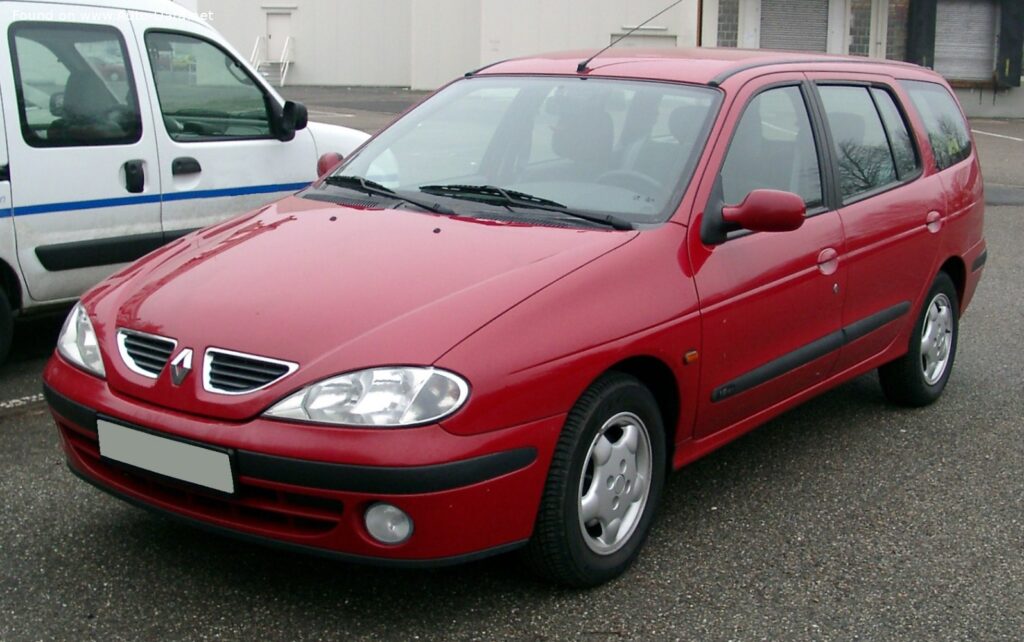
The Renault Megane I Grandtour Phase II 1.9 d (64 hp), produced from 1999 to 2000, was a diesel-powered station wagon variant of the first-generation Renault Megane. Positioned as the entry-level engine option within the Grandtour (estate) body style, it catered to buyers prioritizing fuel economy and practicality over outright performance. This model occupied a specific niche, offering a more affordable and economical alternative to the gasoline-powered Megane variants and the higher-output diesel options.
Powertrain & Engine Architecture
The heart of the Megane I Grandtour 1.9 d was the Renault F8Q engine, a 1.9-liter inline-four cylinder diesel. This engine was a mainstay in Renault’s lineup during the 1990s and early 2000s, known for its robustness and relatively simple design. The F8Q utilized precombustion chamber injection, a system where fuel is injected into a small precombustion chamber connected to the main cylinder, promoting more complete combustion. This design was common in diesel engines of the era. The engine produced 64 horsepower (47.7 kW) at 4500 rpm and 120 Nm (88.51 lb-ft) of torque at 2250 rpm. The engine featured an Overhead Camshaft (OHC) valvetrain with two valves per cylinder.
The 1.9 d was exclusively paired with a five-speed manual transmission. Renault did not offer an automatic transmission option for this specific engine and trim level. The transmission was a standard, fully synchronized unit, designed for durability and ease of maintenance. The gear ratios were optimized for fuel efficiency and low-speed torque, reflecting the engine’s characteristics and the intended use of the vehicle.
Engine Details: F8Q
The F8Q engine featured a cast iron block and an aluminum cylinder head. Bore and stroke dimensions were 80mm x 93mm, resulting in a displacement of 1870 cm³ (114.11 cubic inches). The compression ratio was relatively high at 21.5:1, typical for diesel engines, contributing to its fuel efficiency. Engine oil capacity was 5.5 liters (5.81 US quarts / 4.84 UK quarts), and the recommended coolant capacity was 7.5 liters (7.93 US quarts / 6.6 UK quarts).
Driving Characteristics
The driving experience in the Megane I Grandtour 1.9 d was characterized by its modest performance and focus on fuel economy. Acceleration from 0 to 100 km/h (0-62 mph) took approximately 17.9 seconds, and the top speed was limited to 158 km/h (98.18 mph). Compared to the gasoline-powered Megane variants, particularly the 1.6L and 2.0L engines, the 1.9 d offered significantly less power and acceleration. However, it provided considerably better fuel economy. Compared to the higher-output 1.9 TDI diesel options available in other markets, the 64 hp version felt noticeably underpowered, especially when fully loaded or climbing hills.
The five-speed manual transmission allowed drivers to keep the engine in its optimal torque band, maximizing efficiency. The gear ratios were relatively long, prioritizing fuel economy over rapid acceleration. The steering was hydraulic, providing reasonable assistance at low speeds, and the suspension offered a comfortable, if somewhat soft, ride quality. The front disc brakes and rear drum brakes provided adequate stopping power for the vehicle’s weight and performance.
Equipment & Trim Levels
The Megane I Grandtour 1.9 d typically represented the base trim level within the Grandtour range. Standard equipment generally included power steering, central locking, and basic instrumentation. Interior upholstery was typically cloth, and the dashboard featured a functional, if somewhat basic, design. Options available for this trim level often included air conditioning, electric front windows, and an upgraded audio system. However, features like alloy wheels, leather upholstery, and advanced safety systems were generally reserved for higher-spec Megane models.
The focus of this trim was on providing a practical and affordable family vehicle. The interior space was generous for a compact estate car, with a trunk capacity ranging from 485 liters (17.13 cubic feet) with the rear seats up to 1600 liters (56.5 cubic feet) with the rear seats folded down.
Chassis & Braking
The Megane I Grandtour 1.9 d utilized an independent coil spring suspension at the front and a torsion beam suspension at the rear. This setup provided a reasonable balance between ride comfort and handling. The front brakes were ventilated discs, offering better heat dissipation than solid discs, while the rear brakes were drums. The car’s kerb weight of 1185 kg (2612.48 lbs) contributed to its relatively modest performance. Anti-lock Braking System (ABS) was often included as standard equipment, enhancing safety by preventing wheel lockup during braking.
Tire sizes typically ranged from 175/65 R14 to 175/70 R14, mounted on 5.5J x 14 inch steel wheels. The steering system was a rack and pinion type, providing precise and responsive steering feel.
Market Reception & Comparison
The Renault Megane I Grandtour 1.9 d was generally well-received by critics as a practical and economical family vehicle. Its fuel economy was a major selling point, particularly in Europe where diesel fuel was often cheaper than gasoline. However, its modest performance was often criticized, especially compared to the more powerful gasoline and diesel alternatives. The 1.9 d was seen as a sensible choice for buyers who prioritized fuel efficiency and practicality over driving excitement.
Compared to other vehicles in its class, such as the Ford Focus Estate and the Peugeot 306 Break, the Megane Grandtour 1.9 d offered a competitive level of space, fuel economy, and affordability. However, some competitors offered more refined interiors or more powerful engine options.
Technical Specifications
| Brand | Renault |
| Model | Megane |
| Generation | Megane I Grandtour (Phase II, 1999) |
| Type (Engine) | 1.9 d (64 Hp) |
| Start of production | 1999 year |
| End of production | 2000 year |
| Body type | Station wagon (estate) |
| Seats | 5 |
| Doors | 5 |
| Fuel consumption (urban) | 8.4 l/100 km (28 US mpg, 33.6 UK mpg, 11.9 km/l) |
| Fuel consumption (extra urban) | 5.3 l/100 km (44.4 US mpg, 53.3 UK mpg, 18.9 km/l) |
| Fuel consumption (combined) | 6.1 l/100 km (38.6 US mpg, 46.3 UK mpg, 16.4 km/l) |
| Fuel Type | Diesel |
| Acceleration 0 – 100 km/h | 17.9 sec |
| Acceleration 0 – 62 mph | 17.9 sec |
| Acceleration 0 – 60 mph | 17 sec |
| Maximum speed | 158 km/h (98.18 mph) |
| Power | 64 Hp @ 4500 rpm |
| Torque | 120 Nm @ 2250 rpm (88.51 lb.-ft. @ 2250 rpm) |
| Engine layout | Front, Transverse |
| Engine Model/Code | F8Q |
| Engine displacement | 1870 cm3 (114.11 cu. in.) |
| Number of cylinders | 4 |
| Cylinder Bore | 80 mm (3.15 in.) |
| Piston Stroke | 93 mm (3.66 in.) |
| Compression ratio | 21.5:1 |
| Kerb Weight | 1185 kg (2612.48 lbs.) |
| Max. weight | 1745 kg (3847.07 lbs.) |
| Trunk (boot) space – minimum | 485 l (17.13 cu. ft.) |
| Trunk (boot) space – maximum | 1600 l (56.5 cu. ft.) |
| Fuel tank capacity | 60 l (15.85 US gal, 13.2 UK gal) |
Legacy
The Renault Megane I Grandtour 1.9 d, while not a performance icon, has proven to be a durable and reliable vehicle. The F8Q engine is known for its longevity, and many examples are still on the road today. In the used car market, these models are typically valued for their affordability and fuel efficiency. However, potential buyers should be aware of the age-related issues common to vehicles of this era, such as corrosion and wear and tear on suspension components. The 1.9 d powertrain, while simple, requires regular maintenance to ensure continued reliability. Its enduring presence in the used car market is a testament to its robust design and practicality.