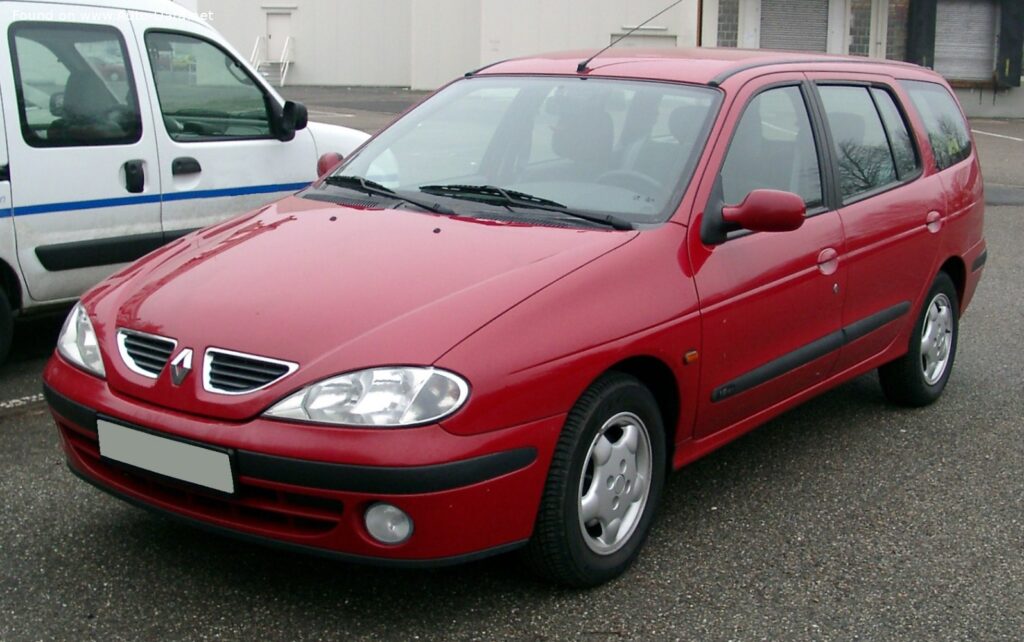
The Renault Megane I Grandtour Phase II, produced from 2000 to 2003, represented a significant evolution of Renault’s compact family car. The 1.9 dCi 102 hp variant, equipped with a manual transmission, was a popular choice within the Grandtour (estate) body style, offering a balance of fuel efficiency, practicality, and reasonable performance. This model sat within the broader Megane I range (the 1HX0/A3 platform) as a mid-range offering, positioned above the base gasoline engines and below the more powerful, and typically better-equipped, versions.
The 1.9 dCi Engine and its Role in the Megane I Grandtour Lineup
The 1.9 dCi engine was a key component in Renault’s strategy to offer competitive diesel options in the European market. It provided a compelling alternative to the gasoline engines, particularly for drivers covering high mileages. The 102 hp output positioned this variant as a practical and economical choice, appealing to families and individuals seeking a versatile vehicle for everyday use and longer journeys. Compared to the lower-powered gasoline engines, the 1.9 dCi offered superior torque and fuel economy. Conversely, it didn’t match the outright performance of the higher-output gasoline or later, more powerful dCi variants.
Powertrain & Engine Architecture
The heart of this Megane Grandtour is the Renault F9Q engine, a 1.9-liter inline four-cylinder diesel. This engine utilizes a common rail direct injection system, a significant advancement over earlier diesel technologies. The common rail system, supplied by Bosch, allowed for more precise fuel delivery, resulting in improved combustion efficiency, reduced noise, and lower emissions. The F9Q engine features an overhead camshaft (OHC) valvetrain with two valves per cylinder. A turbocharger with an intercooler is employed to increase power output and improve engine responsiveness. The intercooler cools the compressed air from the turbocharger, increasing its density and further enhancing performance.
The engine produces 102 horsepower at 4000 rpm and 200 Nm (147.51 lb-ft) of torque at 1500 rpm. This torque curve provides strong pulling power from low engine speeds, making it well-suited for hauling loads or navigating hilly terrain. The engine’s displacement is 1870 cm³ (114.11 cubic inches), with a bore of 80 mm (3.15 inches) and a stroke of 93 mm (3.66 inches). The compression ratio is relatively high at 19:1, typical for a diesel engine. The engine oil capacity is 5.5 liters (5.81 US quarts / 4.84 UK quarts), and the coolant capacity is 7.5 liters (7.93 US quarts / 6.6 UK quarts).
Driving Characteristics
The 1.9 dCi engine, paired with a five-speed manual transmission, delivers a driving experience focused on efficiency and usability. Acceleration from 0 to 100 km/h (0-62 mph) takes approximately 12 seconds, and 0 to 60 mph is achieved in around 11.4 seconds. While not particularly sporty, the engine provides sufficient power for everyday driving situations. The strong low-end torque makes overtaking at highway speeds relatively easy. The five-speed gearbox is well-matched to the engine’s characteristics, offering smooth and precise shifts. Compared to the gasoline-powered Megane Grandtours, the 1.9 dCi offers a more relaxed driving experience, with less need for frequent gear changes. The manual transmission provides more driver engagement than the optional automatic transmission available on other Megane variants.
Equipment & Trim Levels
The 1.9 dCi Grandtour typically came equipped with a reasonable level of standard features. These generally included power steering, central locking, electric front windows, and an adjustable steering column. Interior upholstery was typically cloth, with a functional and durable design. Higher trim levels, such as the Expression or Privilege, added features like air conditioning, alloy wheels, a CD player, and rear electric windows. Optional extras included a sunroof, metallic paint, and upgraded audio systems. The dashboard layout was typical of the era, with a clear and straightforward instrument cluster. Safety features included ABS (Anti-lock Braking System) as standard.
Chassis & Braking
The Megane I Grandtour utilized an independent coil spring suspension at the front and a torsion beam suspension at the rear. This setup provided a comfortable ride quality, suitable for both urban and highway driving. The front brakes were ventilated discs, offering good stopping power, while the rear brakes were typically solid discs. The steering system was a rack and pinion type with hydraulic power assistance, providing precise and responsive steering feel. Tire sizes commonly fitted were 185/55 R15 or 185/60 R16, mounted on 6J x 15 inch wheel rims.
Market Reception & Comparison
The Renault Megane I Grandtour 1.9 dCi was generally well-received by automotive critics. It was praised for its fuel efficiency, practicality, and comfortable ride. The diesel engine was considered a strong performer, offering a good balance of power and economy. However, some critics noted that the interior trim quality was not as refined as some of its competitors. Compared to other trims in the Megane lineup, the 1.9 dCi offered the best fuel economy and torque. It was a popular choice for fleet operators and private buyers alike. Fuel consumption figures were approximately 7.2 l/100 km (32.7 US mpg / 39.2 UK mpg) in urban conditions, 4.4 l/100 km (53.5 US mpg / 64.2 UK mpg) on the extra-urban cycle, and 5.4 l/100 km (43.6 US mpg / 52.3 UK mpg) combined. CO2 emissions were rated at 143 g/km, meeting Euro 3 emission standards.
Technical Specifications
| Brand | Renault |
| Model | Megane I Grandtour |
| Type (Engine) | 1.9 dCi (102 Hp) |
| Start of production | 2000 |
| End of production | 2003 |
| Body type | Station wagon (estate) |
| Seats | 5 |
| Doors | 5 |
| Fuel consumption (urban) | 7.2 l/100 km (32.7 US mpg) |
| Fuel consumption (extra urban) | 4.4 l/100 km (53.5 US mpg) |
| Fuel consumption (combined) | 5.4 l/100 km (43.6 US mpg) |
| CO2 emissions | 143 g/km |
| Fuel Type | Diesel |
| Acceleration 0-100 km/h | 12 sec |
| Acceleration 0-62 mph | 12 sec |
| Acceleration 0-60 mph | 11.4 sec |
| Maximum speed | 185 km/h (114.95 mph) |
| Engine layout | Front, Transverse |
| Engine Model/Code | F9Q |
| Engine displacement | 1870 cm3 (114.11 cu. in.) |
| Number of cylinders | 4 |
| Engine configuration | Inline |
| Cylinder Bore | 80 mm (3.15 in.) |
| Piston Stroke | 93 mm (3.66 in.) |
| Compression ratio | 19:1 |
| Power | 102 Hp @ 4000 rpm |
| Torque | 200 Nm @ 1500 rpm (147.51 lb.-ft. @ 1500 rpm) |
| Kerb Weight | 1210 kg (2667.59 lbs.) |
| Max. weight | 1745 kg (3847.07 lbs.) |
| Trunk (boot) space – minimum | 485 l (17.13 cu. ft.) |
| Trunk (boot) space – maximum | 1285 l (45.38 cu. ft.) |
Legacy
The Renault Megane I Grandtour 1.9 dCi, while now an older vehicle, remains a relatively reliable and affordable option in the used car market. The F9Q engine is known for its durability, although regular maintenance is crucial to prevent issues such as turbocharger failure or injector problems. Parts availability is generally good, and the engine is relatively straightforward to work on for experienced mechanics. The 1.9 dCi Grandtour continues to appeal to buyers seeking a practical and economical estate car, particularly those who prioritize fuel efficiency and low running costs. Its enduring popularity is a testament to the well-engineered design and the overall value it offered when new.