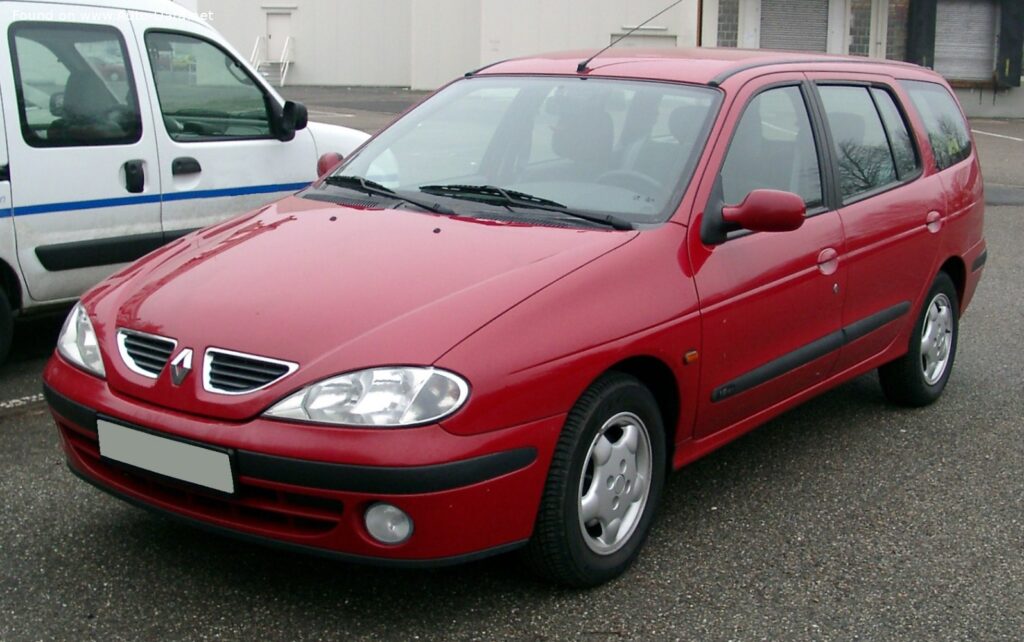
The Renault Megane I Grandtour 1.9 dTi Automatic, produced between 1999 and 2001, represented a practical and fuel-efficient option within the first generation (Mk1) Megane range. This variant, part of the Phase II facelift of the Megane I, combined a diesel engine with an automatic transmission, targeting buyers seeking comfort and economy in a compact estate car. The Megane I series, built on the 1HX0/A3 platform, aimed to modernize Renault’s offerings in the competitive small family car segment, and the Grandtour body style specifically addressed the growing demand for versatile, wagon-bodied vehicles.
The 1.9 dTi Automatic: Positioning and Target Audience
The 1.9 dTi Automatic occupied a middle ground within the Megane I Grandtour lineup. It wasn’t the entry-level model – that distinction belonged to the 1.4 and 1.6 petrol variants – nor was it the performance-oriented option like the 2.0 16V. Instead, it catered to drivers prioritizing fuel efficiency and ease of driving, particularly those covering long distances or frequently encountering urban traffic. The automatic transmission, while not common in European diesel cars at the time, broadened the Megane’s appeal to buyers accustomed to the convenience of two-pedal operation. Compared to the manual 1.9 dTi, the automatic version offered a more relaxed driving experience, albeit with a slight compromise in fuel economy and responsiveness.
Powertrain & Engine Architecture
The heart of the Megane I Grandtour 1.9 dTi Automatic is the F9Q engine, a 1.9-liter inline-four cylinder diesel. This engine is characterized by its direct injection system, a technology that significantly improved fuel efficiency and reduced emissions compared to older indirect injection diesels. The F9Q utilizes a turbocharger to boost power output to 98 horsepower (hp) at 4000 rpm and 200 Newton-meters (147.51 lb-ft) of torque at 2000 rpm. The engine features an overhead camshaft (OHC) valvetrain with two valves per cylinder. The compression ratio is relatively high at 18.3:1, typical for a direct injection diesel.
The automatic transmission paired with the F9Q engine is a four-speed unit. While not known for its particularly quick shifts or advanced features, it provided a smooth and convenient driving experience. The transmission’s gear ratios were optimized for fuel efficiency and relaxed cruising, rather than outright performance. The transmission is electronically controlled, offering a ‘Drive’, ‘Reverse’, ‘Neutral’ and ‘Park’ selection.
Driving Characteristics
The 1.9 dTi Automatic’s driving experience is best described as comfortable and undemanding. Acceleration from 0 to 100 km/h (0-62 mph) takes approximately 12.2 seconds, and 0 to 60 mph is achieved in around 11.6 seconds. While these figures aren’t particularly impressive, they are adequate for everyday driving. The engine delivers strong low-end torque, making it easy to pull away from a standstill and maintain speed on inclines. The automatic transmission contributes to a relaxed driving style, eliminating the need for constant gear changes. However, the transmission can feel somewhat sluggish when attempting quick overtaking maneuvers. Compared to the manual version of the same engine, the automatic suffers a slight performance penalty due to the transmission’s inherent inefficiencies. The overall driving experience is geared towards practicality and fuel economy rather than sporty handling.
Equipment & Trim Levels
The standard equipment level of the 1.9 dTi Automatic varied depending on the specific market and optional packages selected. Generally, it included central locking, power steering, electric front windows, and an adjustable steering column. Interior upholstery was typically cloth, with a relatively simple dashboard layout. Air conditioning was often an optional extra, as were alloy wheels and a radio/cassette player. Higher trim levels, such as the ‘Expression’ or ‘Privilege’ variants, added features like rear electric windows, a sunroof, and upgraded interior trim. Safety features included ABS (Anti-lock Braking System) as standard, but airbags were often optional depending on the year and market.
Chassis & Braking
The Megane I Grandtour 1.9 dTi Automatic utilized a front-wheel-drive layout with independent coil spring suspension at the front and a torsion beam suspension at the rear. This suspension setup provided a comfortable ride quality, although it wasn’t particularly sporty. The front brakes were ventilated discs, offering good stopping power, while the rear brakes were drums. This combination was typical for cars in this class at the time, balancing cost and performance. The steering was a hydraulic power-assisted rack and pinion system, providing light and easy steering feel. Tire sizes typically ranged from 185/55 R15 to 185/60 R15, mounted on 6J x 15 inch steel or alloy wheels.
Market Reception & Comparison
The Renault Megane I Grandtour 1.9 dTi Automatic received generally positive reviews from automotive critics. It was praised for its fuel efficiency, comfortable ride, and spacious interior. However, the automatic transmission was sometimes criticized for its lack of responsiveness and occasional sluggishness. Compared to other diesel estate cars of the time, such as the Ford Focus Estate TDCi and the Volkswagen Golf Estate TDI, the Megane offered a competitive package in terms of price, fuel economy, and practicality. The 1.9 dTi engine was considered reliable, although regular maintenance was essential to ensure long-term durability. Fuel economy figures were impressive for the time, averaging around 37.3 US mpg (combined cycle).
Technical Specifications
| Brand | Renault |
| Model | Megane |
| Generation | Megane I Grandtour (Phase II, 1999) |
| Type (Engine) | 1.9 dTi (98 Hp) Automatic |
| Start of production | 1999 |
| End of production | 2001 |
| Body type | Station wagon (estate) |
| Seats | 5 |
| Doors | 5 |
| Fuel consumption (urban) | 8.7 l/100 km (27 US mpg) |
| Fuel consumption (extra urban) | 5 l/100 km (47 US mpg) |
| Fuel consumption (combined) | 6.3 l/100 km (37.3 US mpg) |
| CO2 emissions | 167 g/km |
| Fuel Type | Diesel |
| Acceleration 0 – 100 km/h | 12.2 sec |
| Acceleration 0 – 62 mph | 12.2 sec |
| Acceleration 0 – 60 mph | 11.6 sec |
| Maximum speed | 182 km/h (113.09 mph) |
| Emission standard | Euro 2 |
| Power | 98 Hp @ 4000 rpm |
| Torque | 200 Nm @ 2000 rpm (147.51 lb.-ft. @ 2000 rpm) |
| Engine layout | Front, Transverse |
| Engine Model/Code | F9Q |
| Engine displacement | 1870 cm3 (114.11 cu. in.) |
| Number of cylinders | 4 |
| Engine configuration | Inline |
| Cylinder Bore | 80 mm (3.15 in.) |
| Piston Stroke | 93 mm (3.66 in.) |
| Compression ratio | 18.3:1 |
| Number of valves per cylinder | 2 |
| Fuel injection system | Direct injection |
| Engine aspiration | Turbocharger |
| Valvetrain | OHC |
| Engine oil capacity | 5.5 l (5.81 US qt | 4.84 UK qt) |
| Coolant | 7.5 l (7.93 US qt | 6.6 UK qt) |
| Kerb Weight | 1240 kg (2733.73 lbs.) |
| Max. weight | 1775 kg (3913.21 lbs.) |
| Trunk (boot) space – minimum | 485 l (17.13 cu. ft.) |
| Trunk (boot) space – maximum | 1600 l (56.5 cu. ft.) |
| Fuel tank capacity | 60 l (15.85 US gal | 13.2 UK gal) |
| Drive wheel | Front wheel drive |
| Number of gears and type of gearbox | 4 gears, automatic transmission |
Legacy
The Renault Megane I Grandtour 1.9 dTi Automatic, while now an older vehicle, retains a reputation for reliability and fuel efficiency. The F9Q engine, when properly maintained, is known to be durable and capable of high mileage. In the used car market, these models are often sought after by buyers looking for an affordable and practical estate car. However, potential buyers should be aware of the age-related issues common to older vehicles, such as corrosion and wear and tear on suspension components. The automatic transmission, while convenient, may require more frequent servicing than the manual counterpart. Overall, the 1.9 dTi Automatic remains a viable option for those seeking a classic, economical, and spacious estate car.