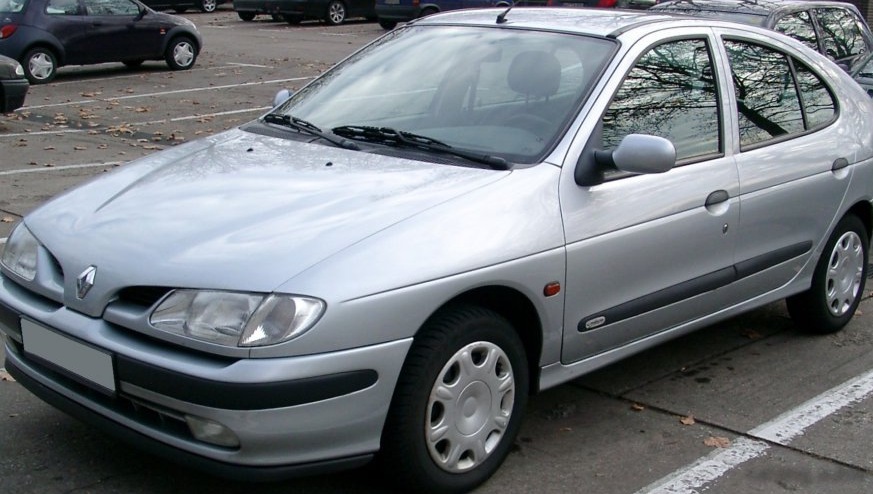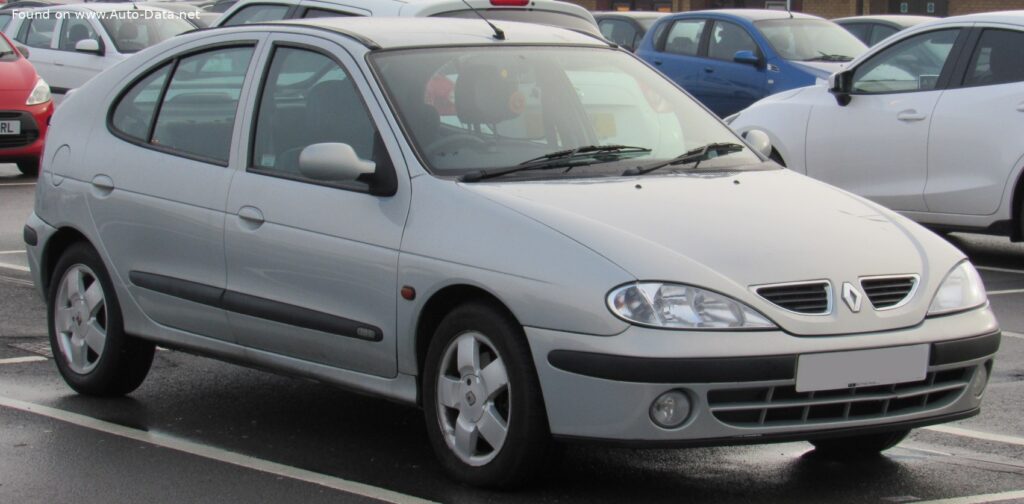
The Renault Megane I (Phase II), produced from 1999 to 2001, represented a mid-cycle refresh of Renault’s popular compact family car. Within the Phase II range, the 1.4 e variant, equipped with a 75 horsepower engine and typically paired with a manual transmission, served as the entry point into the Megane lineup. This model aimed to provide affordable and economical transportation for budget-conscious buyers, prioritizing fuel efficiency and practicality over outright performance. It was built on the 1HX0/B56 platform, shared with other Renault and Nissan models of the era.
The 1.4 e Megane: Positioning and Target Audience
The 1.4 e trim occupied the base level of the Megane Phase II range. Above it sat models with larger engines, such as the 1.6 16V and the 2.0 16V, offering increased power and performance. Compared to these higher trims, the 1.4 e was geared towards drivers who prioritized fuel economy and lower running costs. It was a common choice for first-time car buyers, city commuters, and families seeking a reliable and inexpensive vehicle. While a five-speed manual transmission was standard, an optional four-speed automatic transmission was available, though less common, impacting both performance and fuel consumption.
Powertrain & Engine Architecture
The heart of the 1.4 e Megane was the Renault E7J engine, a 1390cc (84.82 cubic inches) inline-four cylinder gasoline engine. This engine featured a single overhead camshaft (OHC) valvetrain with four valves per cylinder. It utilized a multi-port fuel injection system, delivering fuel directly into the intake ports. The E7J engine was known for its relative simplicity and durability, though it wasn’t a powerhouse in terms of output. The engine produced 75 hp (54 hp/liter) at 5500 rpm and 114 Nm (84.08 lb-ft) of torque at 4000 rpm. Compression ratio was set at 9.5:1. Engine oil capacity was 4 liters (4.23 US quarts), and coolant capacity was 6 liters (6.34 US quarts). The engine was transversely mounted in the front of the vehicle.
The optional automatic transmission was a four-speed unit. While offering convenience, it significantly impacted the car’s acceleration and fuel economy compared to the manual version. The automatic transmission’s gear ratios were optimized for fuel efficiency rather than sporty driving, resulting in a more relaxed, but less engaging, driving experience.
Driving Characteristics
The 1.4 e Megane, particularly in its manual form, offered adequate performance for everyday driving. Acceleration from 0-100 km/h (0-62 mph) took approximately 13.8 seconds, while 0-60 mph was achieved in around 13.1 seconds. Top speed was limited to 170 km/h (105.63 mph). The automatic transmission version experienced noticeably slower acceleration due to the transmission’s inherent inefficiencies. The engine felt somewhat strained at higher speeds or when carrying a full load. The car’s handling was generally safe and predictable, but not particularly sporty. The suspension was tuned for comfort, absorbing bumps and imperfections in the road reasonably well. The steering, utilizing a hydraulic power steering rack and pinion system, was light and easy to use, making it well-suited for urban driving.
Equipment & Trim Levels
The 1.4 e Megane typically came with a basic level of equipment. Standard features generally included power steering, central locking, front electric windows, and an adjustable steering column. Interior upholstery was typically cloth, with a relatively simple dashboard layout. Air conditioning, alloy wheels, and a radio/cassette player were often offered as optional extras. Higher-spec trims within the Phase II range offered features like rear electric windows, a sunroof, and upgraded interior trim. The 1.4 e trim was often seen as a blank canvas for buyers to add options based on their budget and preferences.
Chassis & Braking
The Megane I Phase II utilized an independent coil spring suspension system at the front, providing a comfortable ride and decent handling. The rear suspension employed a torsion beam setup, which was a cost-effective solution for compact cars. The front brakes were ventilated discs, offering good stopping power, while the rear brakes were drums. Anti-lock Braking System (ABS) was available as an option, enhancing safety by preventing wheel lockup during hard braking. The car’s weight-to-power ratio was 14.2 kg/hp, and the weight-to-torque ratio was 9.3 kg/Nm. Tire sizes varied, with common options including 175/65 R14, 175/70 R14, 185/55 R15, and 185/60 R15, mounted on 5.5J x 14 or 6J x 15 inch wheel rims.
Market Reception & Comparison
The 1.4 e Megane was generally well-received as an affordable and practical family car. Critics acknowledged its fuel efficiency and low running costs, but often noted its lack of performance. Compared to the higher-output engines in the Megane range, the 1.4 e felt underpowered, particularly when fully loaded or driving on inclines. Fuel economy figures were respectable, with combined consumption averaging around 6.6 l/100 km (35.6 US mpg, 42.8 UK mpg). Reliability was generally good, with the E7J engine proving to be a durable unit. However, the optional automatic transmission was sometimes criticized for its sluggishness and potential for long-term issues. Compared to competitors like the Volkswagen Golf and Ford Focus, the Megane 1.4 e offered a competitive price point and a comfortable ride, but lacked the refinement and driving dynamics of some rivals.
Technical Specifications
| Brand | Renault |
| Model | Megane |
| Generation | Megane I (Phase II, 1999) |
| Type (Engine) | 1.4 e (75 Hp) |
| Start of production | 1999 |
| End of production | 2001 |
| Powertrain Architecture | Internal Combustion engine |
| Body type | Hatchback |
| Seats | 5 |
| Doors | 5 |
| Fuel consumption (urban) | 9 l/100 km (26.1 US mpg, 31.4 UK mpg) |
| Fuel consumption (extra urban) | 5.2 l/100 km (45.2 US mpg, 54.3 UK mpg) |
| Fuel consumption (combined) | 6.6 l/100 km (35.6 US mpg, 42.8 UK mpg) |
| CO2 emissions | 156 g/km |
| Fuel Type | Petrol (Gasoline) |
| Acceleration 0 – 100 km/h | 13.8 sec |
| Acceleration 0 – 62 mph | 13.8 sec |
| Acceleration 0 – 60 mph | 13.1 sec |
| Maximum speed | 170 km/h (105.63 mph) |
| Weight-to-power ratio | 14.2 kg/Hp |
| Weight-to-torque ratio | 9.3 kg/Nm |
| Power | 75 Hp @ 5500 rpm |
| Torque | 114 Nm @ 4000 rpm (84.08 lb.-ft. @ 4000 rpm) |
| Engine layout | Front, Transverse |
| Engine Model/Code | E7J |
| Engine displacement | 1390 cm3 (84.82 cu. in.) |
| Number of cylinders | 4 |
| Engine configuration | Inline |
| Cylinder Bore | 75.8 mm (2.98 in.) |
| Piston Stroke | 77 mm (3.03 in.) |
| Compression ratio | 9.5:1 |
| Number of valves per cylinder | 4 |
| Fuel injection system | Multi-port manifold injection |
| Engine aspiration | Naturally aspirated |
| Valvetrain | OHC |
| Engine oil capacity | 4 l (4.23 US qt | 3.52 UK qt) |
| Coolant | 6 l (6.34 US qt | 5.28 UK qt) |
| Kerb Weight | 1065 kg (2347.92 lbs.) |
| Max. weight | 1580 kg (3483.3 lbs.) |
| Max load | 515 kg (1135.38 lbs.) |
| Trunk (boot) space – minimum | 348 l (12.29 cu. ft.) |
| Trunk (boot) space – maximum | 1210 l (42.73 cu. ft.) |
| Fuel tank capacity | 60 l (15.85 US gal | 13.2 UK gal) |
| Max. roof load | 80 kg (176.37 lbs.) |
| Permitted trailer load with brakes (12%) | 1250 kg (2755.78 lbs.) |
| Permitted trailer load without brakes | 570 kg (1256.63 lbs.) |
| Permitted towbar download | 55 kg (121.25 lbs.) |
| Length | 4164 mm (163.94 in.) |
| Width | 1698 mm (66.85 in.) |
| Height | 1420 mm (55.91 in.) |
| Wheelbase | 2580 mm (101.57 in.) |
Legacy
The Renault Megane I 1.4 e, while not a performance icon, remains a relatively common sight on European roads today. Its simple engine design and robust construction contribute to its longevity. Parts availability is generally good, making maintenance relatively affordable. In the used car market, these models are typically very inexpensive, appealing to buyers seeking a basic and reliable mode of transportation. The automatic transmission versions, however, tend to command lower prices due to concerns about long-term reliability. While not a collector’s item, the 1.4 e Megane represents a significant part of Renault’s history and a practical choice for those seeking an economical and dependable used car.