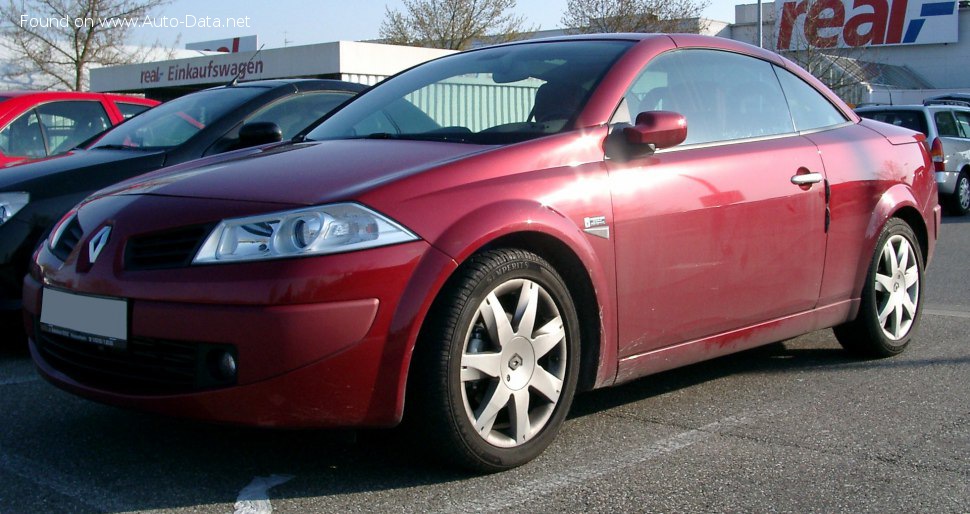
The Renault Megane II Coupe-Cabriolet (CC) Phase II, produced from 2006 to 2009, represented a significant evolution of Renault’s popular compact offering. Within the Phase II range, the 1.6 16V variant, producing 112 horsepower, served as a key entry point into the CC lineup, offering an accessible and stylish convertible experience. This model occupied a middle ground, positioned below the more powerful 2.0 16V engine options but offering a more economical alternative. It was designed to appeal to buyers prioritizing fuel efficiency and affordability without sacrificing the open-air enjoyment of a coupe-cabriolet.
Renault Megane II CC (Phase II) 1.6 16V: An Overview
The Megane II CC Phase II, built on the Renault-Nissan C platform, was a two-door, four-seater convertible featuring a folding hardtop. The Phase II update brought cosmetic revisions, including redesigned headlights and bumpers, as well as improvements to interior trim and equipment levels. The 1.6 16V engine was a mainstay of the Renault range, known for its reliability and reasonable performance. This particular configuration aimed to balance affordability with the desirability of the CC body style.
Powertrain & Engine Architecture
The heart of the Megane II CC 1.6 16V is the K4M engine, a 1.6-liter (1598 cm3) inline-four cylinder gasoline engine. This engine utilizes a multi-point fuel injection system, delivering fuel directly into the intake ports. The engine boasts a 10:1 compression ratio and a double overhead camshaft (DOHC) valvetrain with four valves per cylinder, contributing to its relatively efficient power output. The K4M engine is known for its robust design and relatively simple maintenance requirements.
While a five-speed manual transmission was standard, the 1.6 16V was also offered with a four-speed automatic transmission. This automatic gearbox, while providing convenience, was a point of criticism (discussed later) due to its relatively slow shift speeds and impact on fuel economy. The engine produces 112 hp at 6000 rpm and 152 Nm (112.11 lb-ft) of torque at 4200 rpm. The engine’s transverse mounting and front-wheel-drive configuration are typical for vehicles in this class.
Driving Characteristics
The 1.6 16V-equipped Megane II CC offered a comfortable, rather than sporty, driving experience. Acceleration from 0 to 100 km/h (0-62 mph) took approximately 11.8 seconds, and top speed was rated at 195 km/h (121.17 mph). Compared to the more powerful 2.0-liter variants, the 1.6 felt noticeably less responsive, particularly when fully loaded or tackling inclines. The four-speed automatic transmission further impacted performance, with noticeable delays during gear changes. However, for everyday driving and cruising with the top down, the 1.6 16V provided adequate power. The gear ratios were optimized for fuel efficiency rather than outright acceleration. The automatic transmission’s shift points were programmed to prioritize smooth operation and economy, sometimes at the expense of responsiveness.
Equipment & Trim Levels
The standard equipment level for the Megane II CC 1.6 16V was reasonably comprehensive for its price point. Standard features typically included air conditioning, power windows, central locking, and an audio system with CD player. Safety features such as ABS (Anti-lock Braking System) and front airbags were also standard. Interior upholstery was typically cloth, with options for leather upgrades. Higher trim levels offered additional features such as automatic climate control, rain-sensing wipers, and alloy wheels. Optional extras included a panoramic sunroof, upgraded audio systems, and parking sensors. The dashboard layout was typical of Renault designs of the period, with a focus on ergonomics and ease of use.
Chassis & Braking
The Megane II CC featured an independent McPherson strut suspension at the front and a torsion beam suspension at the rear. This setup provided a good balance between ride comfort and handling. The front brakes were ventilated discs, while the rear brakes were solid discs. The steering was electrically assisted, providing light and precise control. The 1.6 16V models typically rode on 205/55 R16 tires mounted on 6.5J x 16 alloy wheels. The suspension was tuned for comfort, prioritizing a smooth ride over sharp handling. Stabilizer bars were fitted to both the front and rear axles to reduce body roll during cornering.
Market Reception & Comparison
The Renault Megane II CC 1.6 16V was generally well-received by automotive critics as an affordable and stylish convertible. However, the four-speed automatic transmission was a common point of criticism, with reviewers noting its sluggishness and impact on fuel economy. Compared to the 2.0-liter models, the 1.6 16V offered lower performance but significantly better fuel economy. Fuel consumption figures were rated at 9.3 l/100 km (25.3 US mpg) in urban conditions, 5.7 l/100 km (41.3 US mpg) on the extra-urban cycle, and 7.0 l/100 km (33.6 US mpg) combined. CO2 emissions were 166 g/km, placing it within the Euro 4 emission standard. The 1.6 16V appealed to buyers seeking a fashionable and economical convertible, while the 2.0-liter models targeted those prioritizing performance.
Technical Specifications
| Brand | Renault |
| Model | Megane II CC (Phase II) |
| Engine Type | 1.6 16V Gasoline |
| Engine Code | K4M |
| Displacement | 1598 cm3 (97.52 cu. in.) |
| Power | 112 hp @ 6000 rpm |
| Torque | 152 Nm (112.11 lb-ft) @ 4200 rpm |
| Compression Ratio | 10:1 |
| Fuel Injection | Multi-point |
| Transmission | 5-speed Manual or 4-speed Automatic |
| Drive Type | Front-Wheel Drive |
| 0-100 km/h | 11.8 sec |
| Top Speed | 195 km/h (121.17 mph) |
| Fuel Consumption (Combined) | 7.0 l/100 km (33.6 US mpg) |
| CO2 Emissions | 166 g/km |
| Kerb Weight | 1320 kg (2910.1 lbs) |
| Fuel Tank Capacity | 60 l (15.85 US gal) |
Legacy
The Renault Megane II CC 1.6 16V remains a relatively affordable and accessible entry point into the coupe-cabriolet market on the used car market. The K4M engine is known for its durability and relatively low maintenance costs, although regular servicing is essential. The four-speed automatic transmission can be a potential weak point, and prospective buyers should carefully inspect its operation. Overall, the 1.6 16V variant offers a good balance of style, affordability, and reliability, making it a popular choice for those seeking a fun and practical convertible.
While not a performance icon, the Megane II CC 1.6 16V successfully captured a segment of the market seeking an accessible and stylish convertible experience. Its enduring presence on the used car market is a testament to its overall build quality and the inherent appeal of the coupe-cabriolet body style.