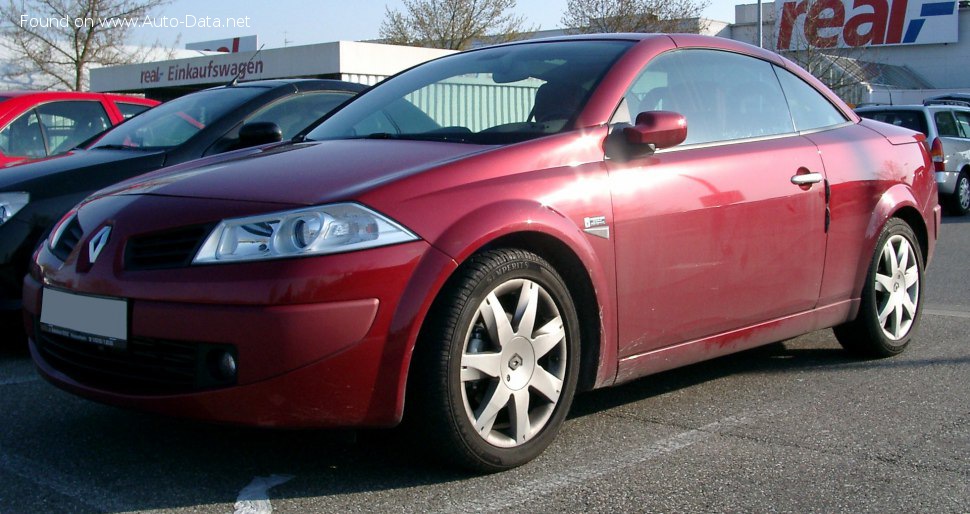
The Renault Megane II Coupe-Cabriolet (CC) Phase II, produced from 2006 to 2009, represented a significant evolution of Renault’s popular compact offering. Within the Phase II range, the 1.6 16V (112 hp) Automatic variant occupied a crucial position as the entry-level engine and transmission combination for the CC model. This version aimed to provide accessible open-top motoring, balancing affordability with the convenience of an automatic gearbox. It was designed to appeal to buyers prioritizing comfort and ease of use over outright performance, and served as a stepping stone to the more powerful engine options available in the Megane CC lineup.
The 1.6 16V Automatic: Positioning and Overview
The 1.6 16V Automatic trim was positioned as the base model for the Megane II CC Phase II. It was intended to be the most affordable route into Renault’s folding-hardtop convertible, attracting customers who might otherwise consider a traditional hatchback. Compared to the higher-spec engines – notably the 2.0 16V – the 1.6 offered a more economical driving experience, albeit with reduced acceleration and overall performance. The automatic transmission further emphasized the car’s comfort-oriented nature, making it a suitable choice for urban driving and leisurely cruising. This variant was particularly popular in markets where automatic transmissions were highly preferred.
Powertrain & Engine Architecture
At the heart of the Megane II CC 1.6 16V Automatic lies the Renault K4M engine. This 1,598 cc (97.52 cu. in.) inline-four cylinder engine is a naturally aspirated unit, meaning it doesn’t employ forced induction like a turbocharger or supercharger. The ‘16V’ designation indicates the engine features four valves per cylinder, contributing to improved breathing and power output. The K4M engine utilizes a multi-port fuel injection system, delivering fuel directly into the intake ports. This system, common for its time, provides a balance between efficiency and performance. The engine’s valvetrain is a Double Overhead Camshaft (DOHC) design, further enhancing valve control and engine responsiveness.
The engine produces a maximum power output of 112 hp (83.5 kW) at 6,000 rpm and a peak torque of 152 Nm (112.11 lb-ft) at 4,200 rpm. This power is delivered to the front wheels through a four-speed automatic transmission. While not the most modern transmission by today’s standards, it provided smooth and convenient gear changes, aligning with the car’s intended character. The transmission’s gear ratios were optimized for fuel efficiency and comfortable cruising, rather than aggressive acceleration. The engine oil capacity is 4.8 liters (5.07 US qt / 4.22 UK qt) and requires a specification adhering to Renault’s standards. The cooling system holds 6.5 liters (6.87 US qt / 5.72 UK qt) of coolant.
Driving Characteristics
The driving experience in the Megane II CC 1.6 16V Automatic is best described as relaxed and comfortable. Acceleration from 0 to 100 km/h (0-62 mph) takes approximately 13.6 seconds, and 0 to 60 mph is achieved in around 12.9 seconds. The top speed is rated at 186 km/h (115.58 mph). These figures are noticeably slower than the more powerful 2.0-liter variants. The four-speed automatic transmission, while smooth, lacks the responsiveness and efficiency of more modern gearboxes. Gear changes are generally well-timed, but can feel somewhat sluggish during quick acceleration. The engine delivers adequate power for everyday driving, but struggles when faced with steep inclines or when fully loaded. The weight-to-power ratio of 12.2 kg/hp reflects the car’s modest performance capabilities. The focus is on providing a refined and enjoyable driving experience, particularly with the roof down, rather than outright speed.
Equipment & Trim Levels
The standard equipment level for the 1.6 16V Automatic trim was reasonably comprehensive for its price point. Typically, it included features such as air conditioning, electric front windows, central locking, a CD player, and alloy wheels. Safety features included ABS (Anti-lock Braking System) and front airbags. Interior upholstery was generally cloth, with a functional and durable design. Optional extras available for this trim included leather upholstery, a sunroof (in addition to the folding hardtop), upgraded audio systems, and parking sensors. The dashboard configuration was typical of the Megane II, with a clear and straightforward layout. The overall interior ambiance was geared towards practicality and comfort, rather than luxury.
Chassis & Braking
The Megane II CC 1.6 16V Automatic utilizes an independent McPherson strut suspension system at the front, providing a comfortable ride and decent handling. The rear suspension employs a torsion beam setup, which is a cost-effective solution that offers a good balance between ride quality and handling. The front brakes are ventilated discs, providing adequate stopping power, while the rear brakes are solid discs. The steering is electrically assisted, offering light and precise control. The car rides on 205/55 R16 tires, mounted on 6.5J x 16 alloy wheels. The curb weight of 1,365 kg (3,009.31 lbs) contributes to the car’s overall handling characteristics. The ride height (ground clearance) is 120 mm (4.72 in).
Market Reception & Comparison
The Renault Megane II CC 1.6 16V Automatic received generally positive reviews, particularly for its affordability and the convenience of the folding hardtop. Critics praised the car’s comfortable ride and ease of use, but noted its relatively modest performance. Fuel economy was considered reasonable, with combined fuel consumption figures of around 7.8 l/100 km (30.2 US mpg / 36.2 UK mpg). Compared to the 2.0-liter variants, the 1.6 offered significantly better fuel economy, but at the expense of performance. Reliability was generally good, although some owners reported minor issues with the automatic transmission over time. The car’s CO2 emissions of 187 g/km placed it within the average range for vehicles of its class at the time.
Technical Specifications
| Brand | Renault |
| Model | Megane |
| Generation | Megane II CC (Phase II, 2006) |
| Type | 1.6 16V (112 Hp) Automatic |
| Start of production | 2006 |
| End of production | 2009 |
| Engine Code | K4M |
| Engine Displacement | 1598 cm3 (97.52 cu. in.) |
| Number of Cylinders | 4 |
| Power | 112 Hp @ 6000 rpm |
| Torque | 152 Nm @ 4200 rpm (112.11 lb.-ft. @ 4200 rpm) |
| Fuel Consumption (Urban) | 10.8 l/100 km (21.8 US mpg / 26.2 UK mpg) |
| Fuel Consumption (Extra Urban) | 6.1 l/100 km (38.6 US mpg / 46.3 UK mpg) |
| Fuel Consumption (Combined) | 7.8 l/100 km (30.2 US mpg / 36.2 UK mpg) |
| CO2 Emissions | 187 g/km |
| Acceleration 0-100 km/h | 13.6 sec |
| Maximum Speed | 186 km/h (115.58 mph) |
| Kerb Weight | 1365 kg (3009.31 lbs) |
| Fuel Tank Capacity | 60 l (15.85 US gal / 13.2 UK gal) |
Legacy
The Renault Megane II CC 1.6 16V Automatic remains a relatively affordable and accessible entry point into the world of open-top motoring. While the four-speed automatic transmission is dated by modern standards, the K4M engine is known for its durability and relatively low maintenance costs. In the used car market, these models are generally well-regarded for their practicality and comfort. However, potential buyers should be aware of the possibility of age-related issues, such as wear and tear on the suspension components and potential problems with the folding hardtop mechanism. Overall, the 1.6 16V Automatic variant of the Megane II CC Phase II represents a solid and reliable choice for those seeking a stylish and comfortable convertible at a reasonable price.