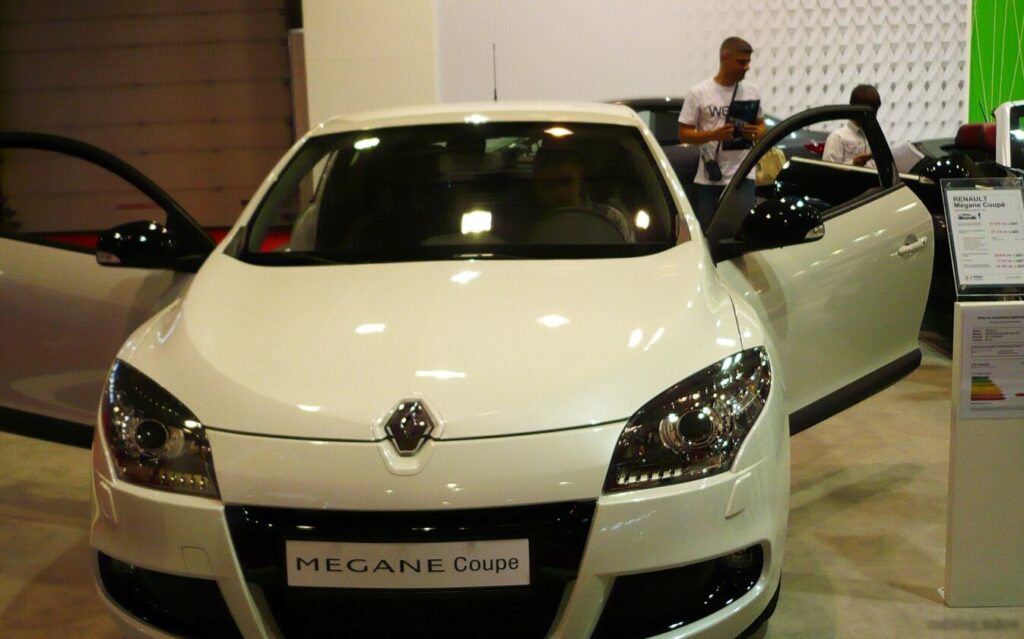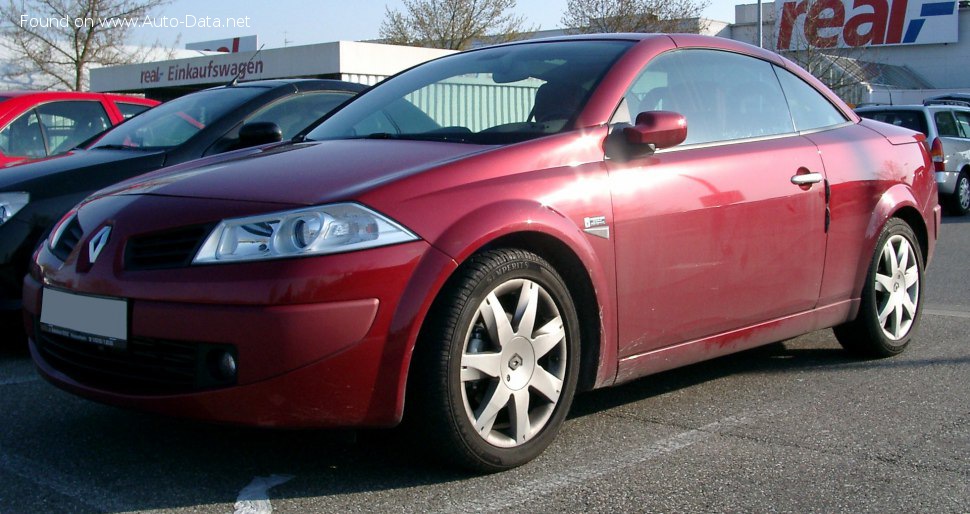
The Renault Megane II Coupe-Cabriolet (CC) Phase II, produced from 2006 to 2010, represented a significant evolution of Renault’s popular compact offering. This variant, specifically the 2.0 16V (135 hp) model, occupied a mid-range position within the Megane CC lineup, offering a balance between performance, comfort, and style. It was built on the Renault-Nissan C platform (also known as the 1HX0 platform), shared with the Renault Scenic and Nissan Tiida, among others. The Phase II update brought cosmetic and technological improvements over the initial Megane II CC, solidifying its appeal in the competitive convertible market.
Powertrain & Engine Architecture
The heart of the Megane II CC 2.0 16V is the Renault F4R engine, a 1.998-liter (121.93 cubic inches) inline-four cylinder gasoline engine. This engine is a naturally aspirated design, meaning it does not utilize forced induction like a turbocharger or supercharger. The ‘16V’ designation indicates the engine features four valves per cylinder, contributing to improved breathing and power output. The F4R engine utilizes a multi-port fuel injection system, delivering fuel directly into the intake ports just before the intake valves. This system, common for its time, provides a good balance of efficiency and performance.
The valvetrain is a Double Overhead Camshaft (DOHC) configuration, further enhancing the engine’s ability to efficiently manage airflow. The engine produces 135 horsepower at 5500 rpm and 191 Nm (140.87 lb-ft) of torque at 3750 rpm. The engine’s compression ratio is 9.8:1. Oil capacity is 5.4 liters (5.71 US quarts / 4.75 UK quarts) and requires a specification adhering to Renault standards. Coolant capacity is 6.5 liters (6.87 US quarts / 5.72 UK quarts).
Transmission
While a six-speed manual transmission was available, this specific variant was frequently paired with a six-speed automatic transmission. This automatic gearbox was designed to provide smooth shifts and enhance the driving experience, particularly in urban environments. The automatic transmission’s gear ratios were tuned to balance acceleration with fuel efficiency, though it generally prioritized comfort over outright performance compared to the manual option.
Driving Characteristics
The 2.0 16V engine, coupled with the automatic transmission, delivered a respectable, though not particularly sporty, driving experience. Acceleration from 0 to 100 km/h (0-62 mph) took approximately 9.9 seconds, while 0-60 mph was achieved in around 9.4 seconds. The maximum speed was rated at 205 km/h (127.38 mph). The automatic transmission, while convenient, did result in some power loss compared to the manual version. The power delivery was relatively linear, with peak torque available at a reasonably low 3750 rpm, making it suitable for everyday driving. However, drivers seeking a more engaging experience often preferred the manual transmission for its more direct connection to the engine.
The Megane CC’s convertible top mechanism, while adding to the vehicle’s appeal, also contributed to its weight. This weight, combined with the engine’s output, meant that the car wasn’t particularly nimble or quick, but it offered a comfortable and enjoyable cruising experience.
Equipment & Trim Levels
The Megane II CC 2.0 16V typically came equipped with a reasonable level of standard features. These included air conditioning, power windows, power door locks, and an audio system. Higher trim levels offered options such as leather upholstery, automatic climate control, rain-sensing wipers, and a more advanced audio system with navigation. Safety features included ABS (Anti-lock Braking System) and front airbags. The interior design was generally modern for its time, with a focus on ergonomics and comfort. The dashboard layout was straightforward and easy to use, and the seats provided adequate support for long journeys.
Chassis & Braking
The Megane II CC utilized an independent McPherson strut suspension system at the front, providing a comfortable ride and decent handling. The rear suspension employed a torsion beam setup, which was a cost-effective solution that offered a good balance of ride quality and stability. The front brakes were ventilated discs, providing ample stopping power, while the rear brakes were solid discs. The steering system was an electric power steering rack and pinion, offering light and precise steering feel. The car rode on 205/55 R16 tires mounted on 6.5J x 16 inch wheel rims.
Market Reception & Comparison
The Renault Megane II CC 2.0 16V was generally well-received by automotive critics. It was praised for its stylish design, comfortable ride, and practical convertible top mechanism. However, some critics noted that the engine lacked the punch of some of its competitors, and the automatic transmission could feel sluggish at times. Fuel economy was rated at 8.2 l/100 km (28.7 US mpg / 34.4 UK mpg) combined, which was reasonable for a convertible of its size and class. Compared to the base 1.6L engine, the 2.0L offered a significant performance upgrade, making it a more appealing option for drivers who prioritized power and responsiveness. Compared to diesel variants, the 2.0L petrol engine offered a different driving character, with a more immediate throttle response but lower fuel economy.
Technical Specifications
| Brand | Renault |
| Model | Megane |
| Generation | Megane II CC (Phase II, 2006) |
| Type (Engine) | 2.0 16V (135 Hp) |
| Start of production | 2006 |
| End of production | 2010 |
| Body type | Coupe – Cabriolet |
| Seats | 4 |
| Doors | 2 |
| Fuel consumption (urban) | 11.2 l/100 km (21 US mpg) |
| Fuel consumption (extra urban) | 6.5 l/100 km (36.2 US mpg) |
| Fuel consumption (combined) | 8.2 l/100 km (28.7 US mpg) |
| CO2 emissions | 196 g/km |
| Fuel Type | Petrol (Gasoline) |
| Acceleration 0 – 100 km/h | 9.9 sec |
| Acceleration 0 – 62 mph | 9.9 sec |
| Acceleration 0 – 60 mph | 9.4 sec |
| Maximum speed | 205 km/h (127.38 mph) |
| Emission standard | Euro 4 |
| Weight-to-power ratio | 10.3 kg/Hp |
| Power | 135 Hp @ 5500 rpm |
| Torque | 191 Nm @ 3750 rpm (140.87 lb.-ft. @ 3750 rpm) |
| Engine layout | Front, Transverse |
| Engine Model/Code | F4R |
| Engine displacement | 1998 cm3 (121.93 cu. in.) |
| Number of cylinders | 4 |
| Cylinder Bore | 82.7 mm (3.26 in.) |
| Piston Stroke | 93 mm (3.66 in.) |
| Compression ratio | 9.8:1 |
| Engine oil capacity | 5.4 l (5.71 US qt | 4.75 UK qt) |
| Coolant capacity | 6.5 l (6.87 US qt | 5.72 UK qt) |
| Kerb Weight | 1390 kg (3064.43 lbs.) |
| Max. weight | 1845 kg (4067.53 lbs.) |
| Trunk (boot) space – minimum | 190 l (6.71 cu. ft.) |
| Trunk (boot) space – maximum | 490 l (17.3 cu. ft.) |
| Fuel tank capacity | 60 l (15.85 US gal | 13.2 UK gal) |
| Length | 4355 mm (171.46 in.) |
| Width | 1777 mm (69.96 in.) |
| Height | 1404 mm (55.28 in.) |
| Wheelbase | 2522 mm (99.29 in.) |
Legacy
The Renault Megane II CC 2.0 16V, while not without its flaws, remains a popular choice in the used car market. The F4R engine is generally considered reliable, although regular maintenance is crucial to prevent issues such as oil leaks and timing belt failure. The automatic transmission, if properly maintained, can provide years of trouble-free service. The convertible top mechanism is a potential source of problems, so it’s important to inspect it carefully before purchasing a used example. Overall, the Megane II CC 2.0 16V offers a stylish and comfortable way to enjoy open-top motoring, and its relatively affordable price makes it an attractive option for budget-conscious buyers.