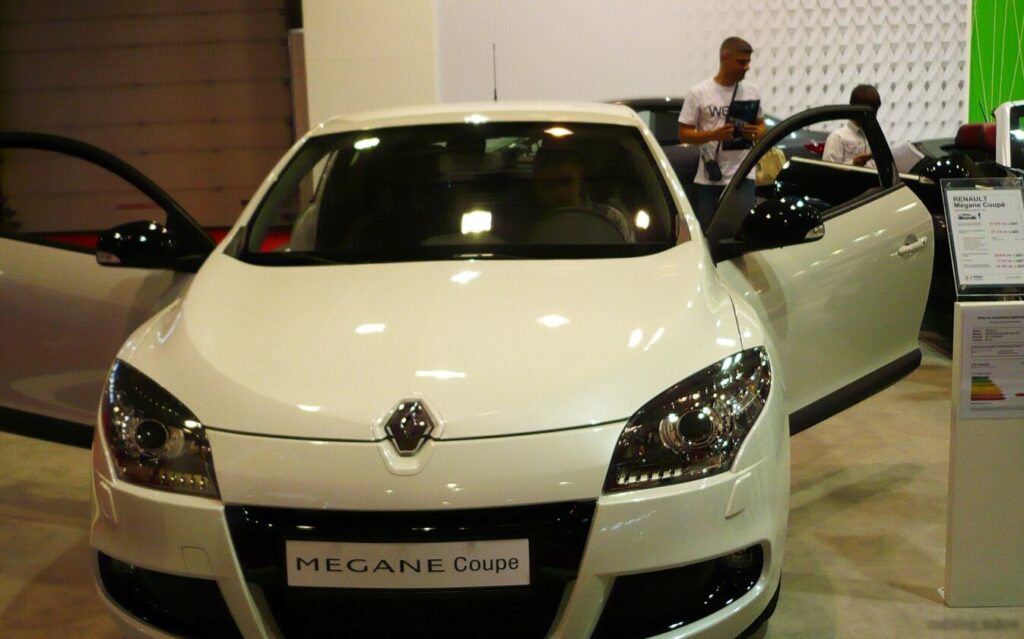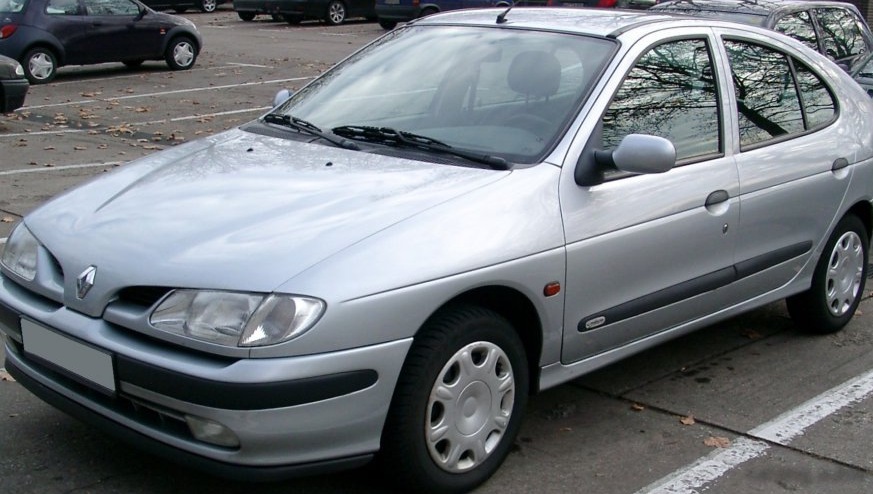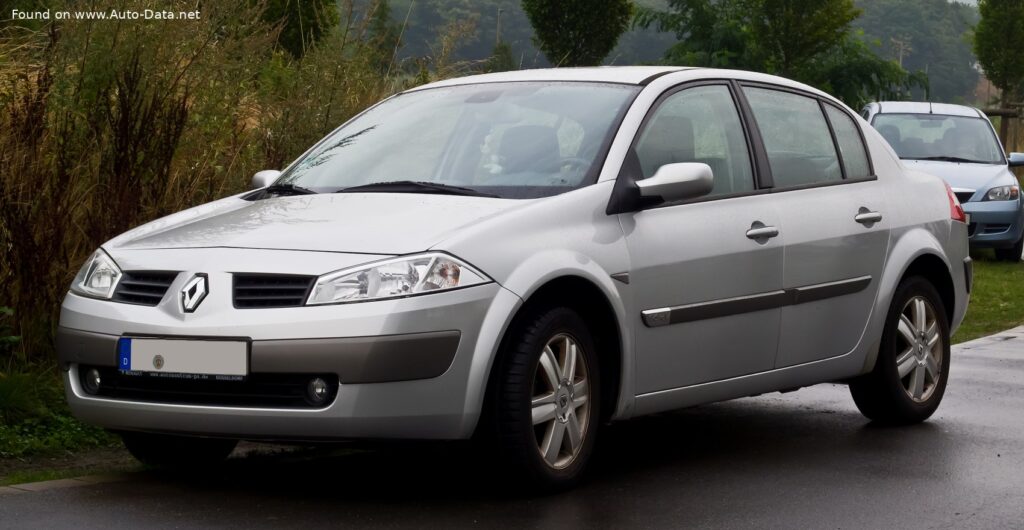
The Renault Megane II Classic 1.6 16V (113 Hp) Automatic represents a significant chapter in Renault’s strategy to cater to diverse global markets with its highly successful Megane II platform. Launched in 2004 and produced through 2005 for this specific variant, the Megane II Classic sedan was the four-door iteration of the second-generation Megane, a compact family car renowned for its distinctive styling, safety innovations, and comfortable ride. While the radical “bustle-back” design of the Megane II hatchback garnered considerable attention in Western European markets, the Classic sedan offered a more conventional, yet still stylish, alternative, particularly appealing to regions where traditional three-box sedans held greater market preference, such as Eastern Europe, parts of Asia, and Latin America. This model, equipped with a 1.6-liter 16-valve engine and an automatic transmission, aimed to provide a blend of practicality, efficiency, and ease of driving in the competitive C-segment.
Powertrain & Engine Architecture
Powering the Renault Megane II Classic 1.6 16V (113 Hp) Automatic is Renault’s widely utilized K4M engine. This 1.6-liter (1598 cm³ or 97.52 cubic inches) inline-four, naturally aspirated petrol engine, featuring a Double Overhead Camshaft (DOHC) and 16 valves, was a staple across Renault’s compact and subcompact lineup for its balance of performance and fuel economy. It generates a respectable 113 horsepower at 6000 rpm, translating to a power output of 70.7 horsepower per liter. Torque peaks at 112.11 lb.-ft. (152 Nm) at 4200 rpm, providing adequate pulling power for city driving and highway cruising.
The engine is configured in a front, transverse layout, driving the front wheels, a common and efficient setup for this class of vehicle. Fuel is delivered via a multi-port manifold injection system, contributing to its Euro 4 emission standard compliance, which was a significant environmental benchmark for vehicles of its era. The engine’s compression ratio stands at 10:1, indicative of its design for efficiency and standard petrol fuels.
Mated to this engine is a 4-speed automatic transmission. While modern vehicles often feature more gears, this 4-speed unit was a common offering in the early 2000s, prioritizing smooth shifts and ease of use, particularly in congested urban environments. This powertrain combination allows the Megane II Classic to accelerate from 0 to 60 mph in a calculated 12.4 seconds (0-100 km/h in 13.1 seconds) and reach a maximum speed of 114.33 mph (184 km/h).
In terms of fuel efficiency, the Renault Megane II Classic 1.6 16V (113 Hp) Automatic delivered competitive figures for its time. It achieved an estimated 22 US mpg (10.7 l/100 km) in urban driving, improving significantly to 39.2 US mpg (6 l/100 km) on the extra-urban cycle. The combined fuel economy was rated at 30.5 US mpg (7.7 l/100 km), with CO2 emissions of 184 g/km. These figures made it an economical choice for families and commuters in its target markets.
Driving Characteristics
The 1.6L engine paired with the 4-speed automatic transmission in the Megane II Classic offered a driving experience geared towards comfort and ease of use rather than outright performance. Compared to the higher-output engines available in the Megane II range, such as the 2.0L 16V, this variant felt noticeably less responsive. Acceleration was adequate for everyday driving, but overtaking maneuvers required planning. The automatic transmission, while smooth, lacked the responsiveness of more modern gearboxes and didn’t offer manual shift control. The gear ratios were optimized for fuel efficiency and relaxed cruising, resulting in a somewhat leisurely feel. Compared to a manual transmission equipped version of the same engine, the automatic resulted in a slight performance decrease due to drivetrain losses and the transmission’s inherent inefficiencies. However, the convenience of the automatic was a significant draw for many buyers, particularly in urban environments.
Equipment & Trim Levels
The Renault Megane II Classic 1.6 16V Automatic typically came equipped with a reasonable level of standard features for its price point and era. These generally included power windows, central locking, power steering, an air conditioning system, and an audio system (usually a radio/CD player). Interior upholstery was typically cloth, with a focus on durability and practicality. Dashboard configuration was relatively straightforward, prioritizing functionality over elaborate design. Optional extras available for this trim could include alloy wheels, a sunroof, upgraded audio systems, and rear parking sensors. Higher trim levels, if available in specific markets, might have added features like automatic headlights, rain-sensing wipers, and cruise control. Safety features, such as ABS and driver/passenger airbags, were generally standard, reflecting Renault’s commitment to safety.
Chassis & Braking
The Megane II Classic featured an independent McPherson strut front suspension, known for its balance of comfort and handling, coupled with a torsion beam rear suspension. This setup provided a compliant ride quality suitable for varied road conditions. Braking performance was handled by ventilated discs at the front and solid discs at the rear, augmented by an Anti-lock Braking System (ABS), which was becoming a standard safety feature across the industry. The steering system utilized a rack and pinion setup with electric power steering, offering light and precise control, particularly beneficial for urban maneuvering with a minimum turning circle of 35.1 feet (10.7 meters). The suspension was tuned for comfort, prioritizing a smooth ride over sporty handling. Stabilizer bars were present on both axles, helping to reduce body roll during cornering, but were relatively modest in size compared to those found on higher-performance Megane II variants.
Market Reception & Comparison
Critics generally viewed the Renault Megane II Classic 1.6 16V Automatic as a sensible and practical choice in the C-segment. It was praised for its comfortable ride, spacious interior, and reasonable fuel economy. However, it was often criticized for its lack of outright performance compared to some of its rivals, and the 4-speed automatic transmission was seen as somewhat dated. Compared to other trims in the Megane II lineup, the 1.6L Automatic was positioned as the entry-level or mid-range option. The higher-output engines (e.g., 2.0L) offered more performance but came at a higher price. The diesel variants (e.g., 1.5 dCi) provided superior fuel economy but were often more expensive to purchase and maintain. In terms of reliability, the K4M engine was generally considered to be robust and dependable, although regular maintenance was essential. The automatic transmission, while generally reliable, could be prone to wear and tear over time, particularly if not serviced properly.
Technical Specifications
| Category | Specification |
| General Information | Brand: Renault |
| Model: Megane | |
| Generation: Megane II Classic | |
| Type (Engine): 1.6 16V (113 Hp) Automatic | |
| Start of Production: 2004 year | |
| End of Production: 2005 year | |
| Powertrain Architecture: Internal Combustion Engine | |
| Body type: Sedan | |
| Seats: 5 | |
| Doors: 4 | |
| Performance Specs | Fuel consumption (economy) – urban: 10.7 l/100 km (22 US mpg) |
| Fuel consumption (economy) – extra urban: 6 l/100 km (39.2 US mpg) | |
| Fuel consumption (economy) – combined: 7.7 l/100 km (30.5 US mpg) | |
| CO2 emissions: 184 g/km | |
| Fuel Type: Petrol (Gasoline) | |
| Acceleration 0 – 60 mph: 12.4 sec | |
| Acceleration 0 – 100 km/h: 13.1 sec | |
| Maximum speed: 114.33 mph (184 km/h) | |
| Emission standard: Euro 4 | |
| Weight-to-power ratio: 11.1 kg/Hp, 90.4 Hp/tonne | |
| Weight-to-torque ratio: 8.2 kg/Nm, 121.6 Nm/tonne | |
| Engine Specs | Power: 113 Hp @ 6000 rpm |
| Power per liter: 70.7 Hp/l | |
| Torque: 112.11 lb.-ft. (152 Nm) @ 4200 rpm | |
| Engine layout: Front, Transverse | |
| Engine Model/Code: K4M | |
| Engine displacement: 1598 cm³ (97.52 cu. in.) | |
| Number of cylinders: 4 | |
| Engine configuration: Inline | |
| Cylinder Bore: 3.13 in. (79.5 mm) | |
| Piston Stroke: 3.17 in. (80.5 mm) | |
| Compression ratio: 10:1 | |
| Number of valves per cylinder: 4 | |
| Fuel injection system: Multi-port manifold injection | |
| Engine aspiration: Naturally aspirated engine | |
| Valvetrain: DOHC | |
| Engine oil capacity: 5.07 US qt (4.8 l) | |
| Coolant: 6.87 US qt (6.5 l) | |
| Space, Volume and Weights | Kerb Weight: 2755.78 lbs. (1250 kg) |
| Max. weight: 3968.32 lbs. (1800 kg) | |
| Max load: 1212.54 lbs. (550 kg) | |
| Trunk (boot) space – minimum: 18.36 cu. ft. (520 l) | |
| Fuel tank capacity: 15.85 US gal (60 l) | |
| Max. roof load: 176.37 lbs. (80 kg) | |
| Permitted trailer load with brakes (12%): 2755.78 lbs. (1250 kg) | |
| Permitted trailer load without brakes: 1433 lbs. (650 kg) | |
| Permitted towbar download: 165.35 lbs. (75 kg) | |
| Dimensions | Length: 177.09 in. (4498 mm) |
| Width: 69.96 in. (1777 mm) | |
| Width including mirrors: 79.76 in. (2026 mm) | |
| Height: 57.48 in. (1460 mm) | |
| Wheelbase: 105.75 in. (2686 mm) | |
| Front track: 59.76 in. (1518 mm) | |
| Rear (Back) track: 59.61 in. (1514 mm) | |
| Front overhang: 33.15 in. (842 mm) | |
| Rear overhang: 38.19 in. (970 mm) | |
| Minimum turning circle (turning diameter): 35.1 ft. (10.7 m) | |
| Drivetrain, Brakes and Suspension Specs | Drivetrain Architecture: The Internal combustion engine (ICE) drives the front wheels of the vehicle. |
| Drive wheel: Front wheel drive | |
| Number of gears and type of gearbox: 4 gears, automatic transmission | |
| Front suspension: Independent type McPherson | |
| Rear suspension: Torsion | |
| Front brakes: Ventilated discs | |
| Rear brakes: Disc | |
| Assisting systems: ABS (Anti-lock braking system) | |
| Steering type: Steering rack and pinion | |
| Power steering: Electric Steering | |
| Tires size: 195/65 R15; 195/55 R16; 205/50 R17 | |
| Wheel rims size: 6.5J x 15; 6.5J x 16; 6.5J x 17 |
Legacy
The Renault Megane II Classic, particularly the 1.6 16V Automatic variant, is remembered as a testament to Renault’s commitment to innovation in design and safety, adapted to meet the practical demands of a global audience. It embodied the brand’s philosophy of offering well-engineered, comfortable, and safe vehicles that stood out from the crowd, even in its more conservative sedan guise. Its enduring presence in many countries, years after its production ceased, speaks to its fundamental soundness and the value it offered as a reliable and spacious family car. On the used car market, these models are generally affordable and represent a good value proposition for buyers seeking a dependable and economical sedan. However, potential buyers should be aware of the age-related wear and tear on components such as the automatic transmission and suspension. Regular maintenance records are crucial when considering a purchase, and a thorough inspection by a qualified mechanic is highly recommended.