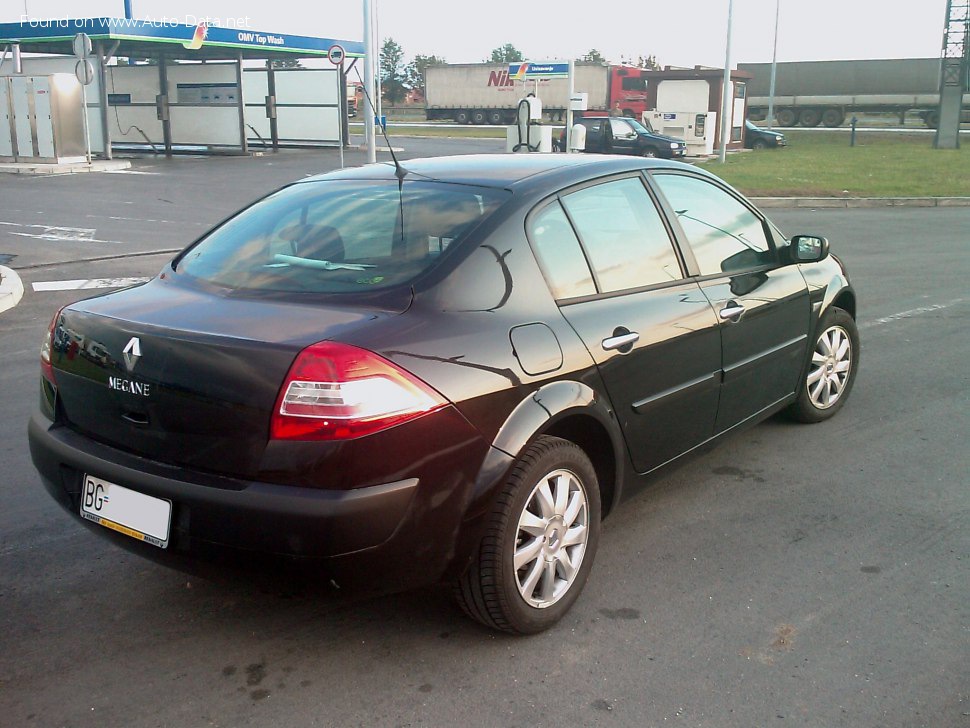
The Renault Megane II Classic (Phase II, 2006) 1.6 16V (112 Hp) represents a significant iteration of Renault’s popular C-segment vehicle, designed primarily for markets outside of North America. While the hatchback and coupe versions of the Megane II were known for their distinctive styling, the Classic variant – a traditional four-door sedan – offered a more conventional and practical alternative, appealing to a broader customer base, particularly in Eastern Europe, Asia, and other international markets where sedans were favored. This specific model, part of the Phase II refresh introduced in 2006, benefited from subtle design and technological updates to maintain competitiveness in a crowded segment. Production ran from 2006 to 2008, positioning it as a reliable and economical family car focused on comfort and utility, embodying Renault’s engineering and design philosophy of the period.
Powertrain & Engine Architecture
The Renault Megane II Classic (Phase II, 2006) 1.6 16V (112 Hp) is powered by the well-regarded K4M engine, a 1.6-liter (1598 cm³ or 97.52 cu. in.) naturally aspirated inline-four cylinder unit. This engine is known for its robustness and widespread use across various Renault and Dacia models. It features a Double Overhead Camshaft (DOHC) valvetrain with four valves per cylinder, totaling 16 valves. The engine produces 112 horsepower at 6000 rpm, resulting in a power-per-liter output of 70.1 hp/liter. Torque peaks at 152 Nm (112.11 lb.-ft.) at 4200 rpm, providing sufficient pulling power for everyday driving.
The K4M engine utilizes a multi-port fuel injection system, a common setup for engines of this era, providing reliable fuel delivery. The engine’s design prioritizes durability and ease of maintenance. Power is transmitted to the front wheels through a five-speed manual transmission, a standard and efficient configuration for this class of vehicle. The transmission is known for its smooth operation and relatively low maintenance requirements. While an automatic transmission was offered in some markets, the five-speed manual was the most common pairing with the 1.6 16V engine.
Driving Characteristics
The 1.6 16V engine, paired with the five-speed manual transmission, delivers a driving experience focused on practicality and fuel efficiency rather than outright performance. Acceleration from 0 to 60 mph is approximately 10.5 seconds (0-100 km/h in 11.1 seconds), with a maximum speed of 119.3 mph (192 km/h). Compared to higher-output versions of the Megane II, such as those equipped with the 2.0 16V engine, the 1.6 16V feels less responsive, particularly during overtaking maneuvers. However, the engine provides adequate power for typical urban and highway driving conditions.
The gear ratios in the five-speed manual transmission are well-spaced, allowing the engine to operate efficiently across a wide range of speeds. First gear is geared for quick acceleration from a standstill, while fifth gear is optimized for fuel economy during highway cruising. The clutch is relatively light and easy to modulate, making it suitable for both novice and experienced drivers. Compared to the automatic transmission option (where available), the manual transmission provides greater driver control and slightly improved fuel economy.
Equipment & Trim Levels
The Renault Megane II Classic (Phase II, 2006) 1.6 16V (112 Hp) was typically offered in several trim levels, varying by market. Base models generally included air conditioning, power front windows, a basic audio system (often a CD player with AM/FM radio), and central locking. Higher trim levels added features such as alloy wheels, rear power windows, a more sophisticated audio system with steering wheel-mounted controls, and optional features like a sunroof and cruise control. Interior upholstery typically consisted of cloth seats, with higher trims offering upgraded fabric or partial leather options.
The dashboard layout was functional and ergonomically designed, with clearly labeled controls and a straightforward instrument cluster. Safety features included a driver’s airbag, front passenger airbag (depending on trim level), and Anti-lock Braking System (ABS). Optional extras often included side airbags, rear parking sensors, and a trip computer. The overall interior ambiance was designed to be comfortable and practical, rather than luxurious.
Chassis & Braking
The Megane II Classic utilized an independent McPherson strut suspension at the front, providing a comfortable ride and responsive handling. The rear suspension employed a torsion beam setup, a cost-effective solution that offered a good balance between ride comfort and handling stability. Stabilizer bars were fitted to both the front and rear axles to reduce body roll during cornering. The chassis was designed to provide a stable and predictable driving experience, prioritizing comfort over sporty handling.
The braking system consisted of ventilated disc brakes at the front and disc brakes at the rear, providing adequate stopping power for a vehicle of this weight class. ABS was standard equipment, enhancing braking performance and stability, particularly on slippery surfaces. The steering system was an electric power steering (EPS) setup, offering light and responsive steering feel, making it easy to maneuver in urban environments. Tire sizes typically ranged from 195/65 R15 to 205/55 R16, depending on the trim level.
Market Reception & Comparison
The Renault Megane II Classic (Phase II, 2006) 1.6 16V (112 Hp) received generally positive reviews from automotive critics, who praised its comfortable ride, spacious interior, and fuel efficiency. However, some critics noted that the 1.6 16V engine lacked the power and refinement of some of its competitors, particularly those with larger displacement engines. Fuel economy was rated at a combined 6.9 liters per 100 kilometers (approximately 34.1 US mpg), which was competitive for its class.
Compared to other trims in the Megane II lineup, such as the 2.0 16V, the 1.6 16V offered a more affordable entry point, appealing to budget-conscious buyers. It was also more economical to run, with lower fuel consumption and insurance costs. Compared to diesel variants, such as the 1.5 dCi, the 1.6 16V offered a smoother and quieter driving experience, but lacked the diesel’s superior fuel economy and low-end torque. The 1.6 16V was often seen as a sensible and practical choice for families and commuters.
Technical Specifications
| Brand | Renault |
| Model | Megane |
| Generation | Megane II Classic (Phase II, 2006) |
| Type (Engine) | 1.6 16V (112 Hp) |
| Start of production | 2006 year |
| End of production | 2008 year |
| Powertrain Architecture | Internal Combustion engine |
| Body type | Sedan |
| Seats | 5 |
| Doors | 4 |
| Fuel consumption (urban) | 9.1 l/100 km (25.8 US mpg) |
| Fuel consumption (extra urban) | 5.6 l/100 km (42 US mpg) |
| Fuel consumption (combined) | 6.9 l/100 km (34.1 US mpg) |
| CO2 emissions | 164 g/km |
| Fuel Type | Petrol (Gasoline) |
| Acceleration 0 – 60 mph | 10.5 sec |
| Acceleration 0 – 100 km/h | 11.1 sec |
| Maximum speed | 192 km/h (119.3 mph) |
| Emission standard | Euro 4 |
| Weight-to-power ratio | 10.7 kg/Hp (93.3 Hp/tonne) |
| Weight-to-torque ratio | 7.9 kg/Nm (126.7 Nm/tonne) |
| Power | 112 Hp @ 6000 rpm |
| Power per liter | 70.1 Hp/l |
| Torque | 152 Nm @ 4200 rpm (112.11 lb.-ft.) |
| Engine layout | Front, Transverse |
| Engine Model/Code | K4M |
| Engine displacement | 1598 cm³ (97.52 cu. in.) |
| Number of cylinders | 4 |
| Engine configuration | Inline |
| Cylinder Bore | 79.5 mm (3.13 in.) |
| Piston Stroke | 80.5 mm (3.17 in.) |
| Compression ratio | 10:1 |
| Number of valves per cylinder | 4 |
| Fuel injection system | Multi-port manifold injection |
| Engine aspiration | Naturally aspirated engine |
| Valvetrain | DOHC |
| Kerb Weight | 1200 kg (2645.55 lbs.) |
Legacy
The Renault Megane II Classic (Phase II, 2006) 1.6 16V (112 Hp) has proven to be a relatively reliable powertrain combination. The K4M engine is known for its durability and relatively low maintenance costs, provided it is regularly serviced. Common issues include occasional oil leaks and wear on the timing belt, which requires periodic replacement. In the used car market today, these vehicles are typically available at affordable prices, making them attractive to budget-conscious buyers.
While not a particularly sought-after model by enthusiasts, the Megane II Classic 1.6 16V remains a practical and dependable choice for everyday transportation. Its simplicity and robust construction contribute to its longevity, and parts availability is generally good. The car’s legacy is one of providing affordable and reliable transportation to a wide range of customers, particularly in markets where sedans remain popular. It represents a solid example of Renault’s commitment to building practical and well-engineered vehicles.