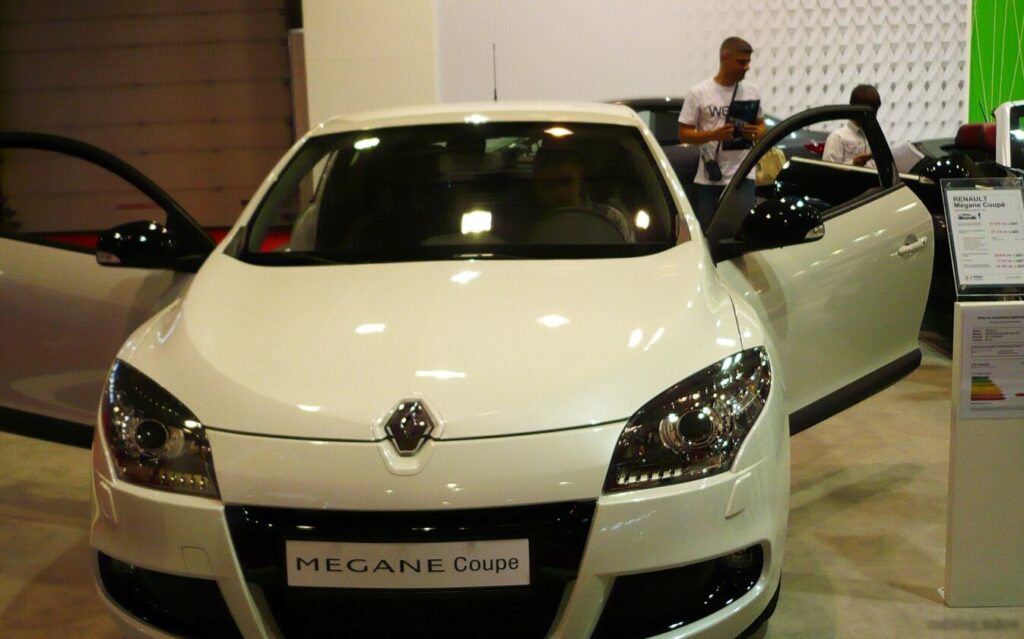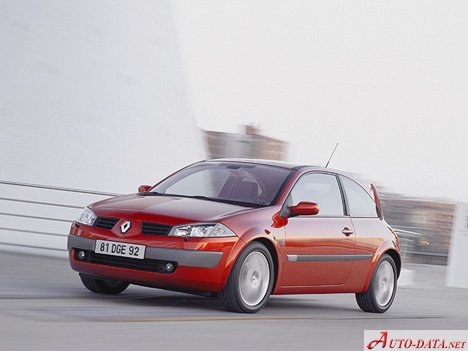
The Renault Megane II Coupe 1.5 dCi (101 Hp) Automatic represents a significant chapter in Renault’s history, showcasing the brand’s commitment to distinctive design, practical engineering, and fuel efficiency in the highly competitive European compact car segment. Produced between 2004 and 2005, this particular iteration of the second-generation Megane Coupe offered a compelling blend of a stylish three-door body, a frugal diesel engine, and the convenience of an automatic transmission. While never officially sold in the United States, the Megane II was a ubiquitous sight on European roads, lauded for its bold styling and its contribution to the compact car market’s evolution. It perfectly embodied the European preference for efficient, small-displacement diesel engines combined with a focus on interior comfort and safety.
The Megane II Coupe: Positioning and Design Philosophy
The Megane II generation, introduced in 2002, was a radical departure from its predecessor, gaining considerable attention for its avant-garde “bustle-back” rear styling, especially on the hatchback and coupe variants. This design philosophy, spearheaded by Renault’s then-design chief Patrick le Quément, aimed to inject more character and modernity into the brand’s lineup. The coupe version, with its sleeker profile and sportier stance, further amplified this design language, positioning it as a more dynamic alternative within the Megane family. The inclusion of the 1.5 dCi engine, a cornerstone of Renault-Nissan’s powertrain strategy, underscored the car’s emphasis on economical operation without entirely sacrificing everyday performance. This variant occupied a mid-range position within the Megane II Coupe lineup, offering a balance between affordability and features, appealing to buyers who prioritized fuel economy and ease of driving over outright performance.
Powertrain & Engine Architecture
At the heart of this particular Renault Megane II Coupe 1.5 dCi (101 Hp) Automatic lies the K9K engine, a 1.5-liter (1461 cm³ or 89.16 cu. in.) inline four-cylinder turbodiesel unit. This engine, renowned for its efficiency and reliability across numerous Renault and Nissan models, delivered a respectable 101 horsepower at 4000 rpm. Its true strength, however, lay in its torque output: 200 Nm (147.51 lb.-ft.) available at a low 1900 rpm. This characteristic low-end torque made the Megane II Coupe feel responsive in urban driving and provided ample pulling power for highway cruising, a common requirement for European motorists.
The engine’s architecture featured a front, transverse layout, driving the front wheels, a standard configuration for compact cars of its era. Fuel delivery was handled by a common rail direct injection system, coupled with a turbocharger and intercooler, ensuring optimal fuel atomization and air density for improved combustion efficiency. With a high compression ratio of 18.8:1 and 2 valves per cylinder, the K9K engine was designed for maximum fuel economy. The K9K engine is known for its robust construction and relatively simple design, contributing to its longevity and ease of maintenance.
Paired with a 4-speed automatic transmission, this powertrain offered a smooth and convenient driving experience, especially in congested city traffic where automatics are increasingly preferred. This transmission, while not the most modern, was known for its durability and relatively smooth shifts. It was a conventional hydraulic automatic, lacking the efficiency of more contemporary continuously variable transmissions (CVTs) or dual-clutch transmissions (DCTs). The gear ratios were optimized for fuel economy and drivability, rather than outright acceleration.
Driving Characteristics
The Renault Megane II Coupe 1.5 dCi (101 Hp) Automatic prioritized fuel efficiency and ease of use over sporty performance. The 101 horsepower and 147.51 lb-ft of torque provided adequate power for everyday driving, but it wasn’t particularly quick. Acceleration from 0 to 60 mph took approximately 14 seconds, and the top speed was around 108 mph. Compared to the higher-output 1.9 dCi or petrol-powered versions of the Megane II Coupe, this variant felt noticeably slower, especially when fully loaded or climbing hills.
The automatic transmission, while convenient, did contribute to some power loss compared to the manual transmission option. The four-speed configuration meant that the engine often operated at higher RPMs during highway cruising, potentially impacting fuel economy. However, the low-end torque of the 1.5 dCi engine helped to mitigate this issue, providing sufficient pulling power even in higher gears. The overall driving experience was comfortable and refined, with a focus on minimizing driver fatigue.
Equipment & Trim Levels
The 1.5 dCi Automatic trim level of the Megane II Coupe typically included standard features such as electric front windows, central locking, power steering, an air conditioning system, and an AM/FM radio with CD player. Safety features included an Anti-lock Braking System (ABS) and front airbags. Interior upholstery was typically cloth, with a dark color scheme. Optional extras available for this trim included alloy wheels, a sunroof, rear parking sensors, and upgraded audio systems. Higher trim levels offered features like leather upholstery, automatic climate control, and a navigation system, but these were not typically found on the base 1.5 dCi Automatic model.
Chassis & Braking
The suspension setup comprised an independent McPherson-type front suspension and a torsion beam rear suspension, a common and effective combination for achieving a balance between ride comfort and handling in front-wheel-drive compacts. This setup provided a comfortable ride on most road surfaces, while still offering reasonable handling characteristics. Braking duties were handled by ventilated discs at the front and solid discs at the rear, providing confident stopping power. The 195/65 R15 tires on 6J x 15 wheel rims contributed to a comfortable ride and predictable handling. The chassis was designed to prioritize stability and safety, rather than outright sportiness.
Market Reception & Comparison
Critics generally viewed the Renault Megane II Coupe 1.5 dCi Automatic favorably, praising its fuel efficiency, comfortable ride, and distinctive styling. However, some reviewers noted that the engine lacked the punch of its larger counterparts and that the automatic transmission could feel sluggish at times. Compared to the 1.9 dCi version, the 1.5 dCi offered significantly lower fuel consumption but also considerably less power. The petrol-powered versions provided more responsive acceleration but at the expense of fuel economy. The 1.5 dCi Automatic appealed to buyers who prioritized practicality and economy over performance, making it a popular choice for city driving and long-distance commuting.
In terms of reliability, the K9K engine proved to be a robust and dependable unit, with relatively few reported issues. The automatic transmission, while not as sophisticated as modern units, was also generally reliable. However, like all cars, regular maintenance was essential to ensure long-term reliability.
Technical Specifications: Renault Megane II Coupe 1.5 dCi (101 Hp) Automatic
| Category | Specification |
| General Information | |
| Brand | Renault |
| Model | Megane |
| Generation | Megane II Coupe |
| Type (Engine) | 1.5 dCi (101 Hp) Automatic |
| Start of Production | 2004 year |
| End of Production | 2005 year |
| Powertrain Architecture | Internal Combustion engine |
| Body type | Coupe |
| Seats | 5 |
| Doors | 3 |
| Performance Specs | |
| Fuel Consumption (Urban) | 7.7 l/100 km (30.5 US mpg) |
| Fuel Consumption (Extra Urban) | 4.7 l/100 km (50 US mpg) |
| Fuel Consumption (Combined) | 5.8 l/100 km (40.6 US mpg) |
| CO2 Emissions | 153 g/km |
| Fuel Type | Diesel |
| Acceleration 0 – 60 mph | 14 seconds (Calculated) |
| Acceleration 0 – 100 km/h | 14.7 seconds |
| Maximum Speed | 108.12 mph (174 km/h) |
| Emission Standard | Euro 3 |
| Weight-to-Power Ratio | 12.4 kg/Hp, 80.8 Hp/tonne |
| Weight-to-Torque Ratio | 6.3 kg/Nm, 160 Nm/tonne |
| Engine Specs | |
| Power | 101 Hp @ 4000 rpm |
| Power per liter | 69.1 Hp/l |
| Torque | 200 Nm (147.51 lb.-ft.) @ 1900 rpm |
| Engine Layout | Front, Transverse |
| Engine Model/Code | K9K |
| Engine Displacement | 1461 cm³ (89.16 cu. in.) |
| Number of Cylinders | 4 |
| Engine Configuration | Inline |
| Cylinder Bore | 76 mm (2.99 in.) |
| Piston Stroke | 80.5 mm (3.17 in.) |
| Compression Ratio | 18.8:1 |
| Number of Valves per Cylinder | 2 |
| Fuel Injection System | Diesel Commonrail |
| Engine Aspiration | Turbocharger, Intercooler |
| Engine Oil Capacity | 4.5 l (4.76 US qt) |
| Engine Oil Specification | Not specified |
| Coolant Capacity | 6.8 l (7.19 US qt) |
| Space, Volume and Weights | |
| Kerb Weight | 1250 kg (2755.78 lbs.) |
| Max. Weight | 1775 kg (3913.21 lbs.) |
| Max Load | 525 kg (1157.43 lbs.) |
| Trunk (Boot) Space – Minimum | 330 l (11.65 cu. ft.) |
| Trunk (Boot) Space – Maximum | 1190 l (42.02 cu. ft.) |
| Fuel Tank Capacity | 60 l (15.85 US gal) |
| Dimensions | |
| Length | 4209 mm (165.71 in.) |
| Width | 1777 mm (69.96 in.) |
| Height | 1458 mm (57.4 in.) |
Legacy
The Renault Megane II, and particularly its distinctive coupe variant, carved out a significant niche in the European compact car market during its production run. Its bold and often polarizing design was a major talking point and helped it stand out in a segment dominated by more conservative designs from rivals like the Volkswagen Golf, Ford Focus, and Opel Astra. The Megane II’s design demonstrated Renault’s willingness to take risks, a strategy that paid off by generating considerable buzz and attracting buyers looking for something different. Today, the Megane II Coupe 1.5 dCi Automatic can be found on the used car market at relatively affordable prices. Its reputation for reliability, particularly the K9K engine, makes it a viable option for budget-conscious buyers seeking an economical and comfortable compact car. However, potential buyers should be aware of the age-related wear and tear that may affect components such as the suspension and braking system. Overall, the Megane II Coupe 1.5 dCi Automatic remains a testament to a period when French automotive design was at its most adventurous and innovative.