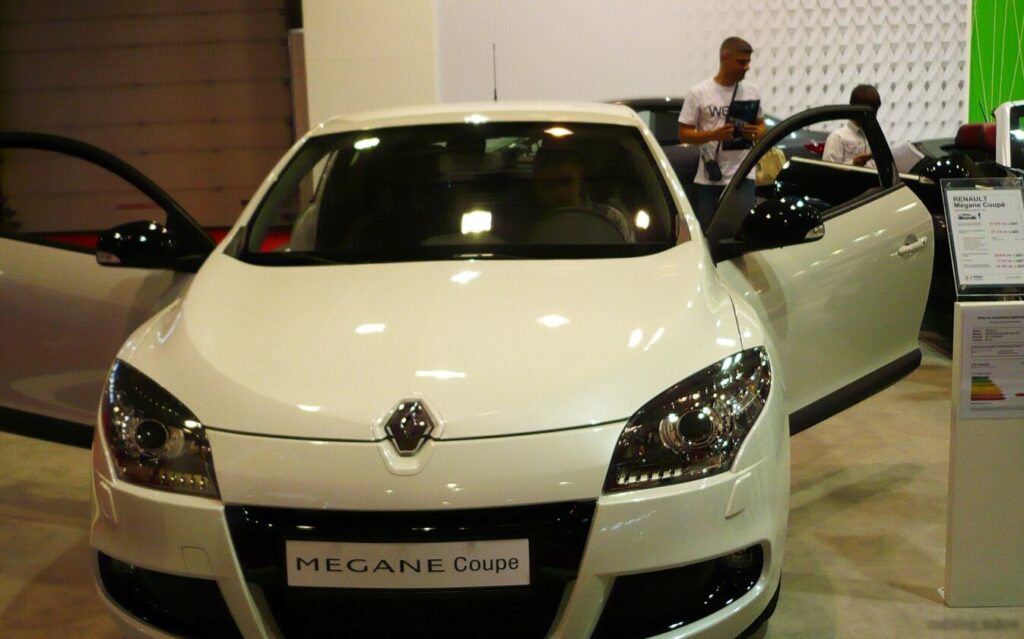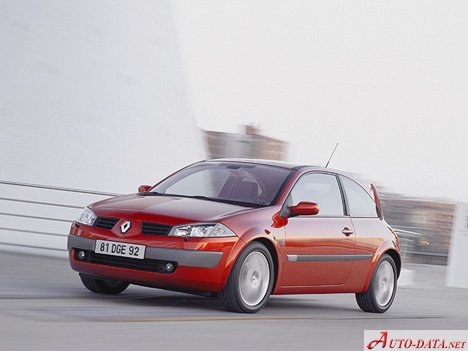
The Renault Megane II Coupe 1.5 dCi (82 Hp) represents a significant chapter in the history of compact European automobiles. Launched in 2002 as part of the second generation of the Renault Megane, this particular variant embodied a bold design philosophy combined with a focus on fuel efficiency, a hallmark of European diesel powertrains. While the Renault Megane II was never officially sold in the United States market, it carved out a substantial niche in Europe and other international markets, becoming a strong contender in the highly competitive C-segment. This 3-door coupe model, produced from 2002 to 2005, stood out with its distinctive styling and practical packaging, offering a compelling blend of economy and everyday usability for its target audience.
The Renault Megane II Coupe: Positioning and Overview
The Megane II generation was celebrated for its radical departure from its predecessor’s more conservative styling, introducing a design language that was both polarizing and influential. The 1.5 dCi (82 Hp) engine variant specifically highlighted Renault’s commitment to accessible diesel technology, providing impressive fuel economy and lower emissions at a time when environmental concerns were gaining increasing prominence in the automotive industry. Within the Megane II lineup, this 1.5 dCi Coupe occupied the entry-level position, appealing to buyers prioritizing fuel economy and affordability. It sat below the more powerful 1.6 16V and 2.0 16V gasoline options, as well as the higher-output 1.9 dCi diesel, offering a more economical alternative without completely sacrificing practicality.
Powertrain & Engine Architecture
At the heart of the Renault Megane II Coupe 1.5 dCi lies the renowned K9K engine, a 1.5-liter (1461 cm3 or 89.16 cu. in.) inline-four diesel unit. This powertrain architecture utilized a common rail direct fuel injection system, coupled with a turbocharger and intercooler, to deliver a balance of power and exceptional efficiency. The engine produced a modest yet capable 82 horsepower at 4000 revolutions per minute (rpm) and a respectable 136.45 lb.-ft. of torque at a low 2000 rpm. This low-end torque was particularly beneficial for city driving and relaxed cruising, making the car feel more responsive than its horsepower figure might suggest. The K9K engine featured a single overhead camshaft (SOHC) valvetrain with two valves per cylinder. The common rail system, supplied by Delphi, operated at a maximum pressure of 1,600 bar, optimizing fuel atomization and combustion efficiency. The turbocharger was a variable geometry turbo (VGT), enhancing low-speed response and overall performance.
Power was delivered to the front wheels via a smooth-shifting 5-speed manual transmission, a common and reliable setup for compact cars of this era. The transmission featured a conventional cable-operated shift mechanism. While an automated manual transmission (Quickshift) was available on other Megane II variants, it was not offered with the 1.5 dCi engine.
Driving Characteristics
In real-world conditions, the Megane II Coupe 1.5 dCi offered a relaxed and economical driving experience. Acceleration was not its strong suit, with 0 to 60 miles per hour taking 13.6 seconds, and a top speed of 105.63 mph (170 km/h). Compared to the 1.6 16V gasoline version, the 1.5 dCi felt slower in outright acceleration, but the significantly higher torque output at lower engine speeds made it more tractable in everyday driving situations. The 5-speed manual transmission was well-matched to the engine’s characteristics, with gear ratios optimized for fuel efficiency. The first gear was relatively short, aiding in quick acceleration from a standstill, while the fifth gear was tall, allowing for comfortable and economical cruising on the highway. Compared to the more powerful 1.9 dCi, the 1.5 dCi lacked the punch for spirited driving, but it offered a smoother and more refined driving experience, particularly at lower speeds.
Equipment & Trim Levels
The Renault Megane II Coupe 1.5 dCi was typically equipped with a reasonable level of standard features for its price point. These included power steering, an anti-lock braking system (ABS), front airbags, and a basic audio system. Interior upholstery was typically cloth, with a dark color scheme. Dashboard configuration was functional and ergonomically designed, with clearly labeled controls. Optional extras available for this trim included air conditioning, alloy wheels, electric windows, and a CD player. Higher trim levels, such as the “Expression” and “Dynamique,” added features like automatic headlights, rain-sensing wipers, and upgraded interior trim. The base trim focused on providing essential features at an affordable price, while the optional extras allowed buyers to customize the car to their specific needs and preferences.
Chassis & Braking
The Megane II Coupe utilized a McPherson strut independent suspension system at the front, providing a good balance of ride comfort and handling. The rear suspension featured a torsion beam, a cost-effective solution common in compact front-wheel-drive vehicles. The torsion beam offered adequate ride quality for everyday driving, although it was not as sophisticated as a fully independent rear suspension. Braking was handled by ventilated discs at the front and solid discs at the rear, ensuring adequate stopping power. The ABS system helped to prevent wheel lockup during hard braking, enhancing safety. The front stabilizer bar thickness was 21mm, contributing to reduced body roll during cornering. The overall chassis setup was tuned for comfort and stability, rather than outright sportiness, reflecting the target audience for this particular variant.
Market Reception & Comparison
Critics generally praised the Renault Megane II Coupe 1.5 dCi for its fuel efficiency, comfortable ride, and distinctive styling. However, some reviewers noted its modest performance and relatively basic interior compared to some of its competitors. Fuel economy was a major selling point, with official combined figures achieving an impressive 52.3 US miles per gallon (4.5 liters per 100 km). Compared to the 1.6 16V gasoline version, the 1.5 dCi offered significantly better fuel economy, but at the expense of performance. The 1.9 dCi diesel provided more power, but it was also more expensive to purchase and maintain. In terms of reliability, the K9K engine proved to be generally robust, although some owners reported issues with the turbocharger and fuel injectors over the long term. Overall, the Megane II Coupe 1.5 dCi offered a compelling value proposition for buyers seeking an economical and stylish compact car.
Technical Specifications: Renault Megane II Coupe 1.5 dCi (82 Hp)
| Category | Specification |
| Brand | Renault |
| Model | Megane II Coupe |
| Type (Engine) | 1.5 dCi (82 Hp) |
| Production Years | 2002 – 2005 |
| Body Type | Coupe, 3 Doors |
| Seating Capacity | 5 |
| Powertrain Architecture | Internal Combustion Engine, Front-Wheel Drive |
| Fuel Consumption (Urban) | 42.8 US mpg (5.5 l/100 km) |
| Fuel Consumption (Extra Urban) | 60.3 US mpg (3.9 l/100 km) |
| Fuel Consumption (Combined) | 52.3 US mpg (4.5 l/100 km) |
| CO2 Emissions | 117 g/km |
| Fuel Type | Diesel |
| Acceleration 0-60 mph | 13.6 seconds |
| Maximum Speed | 105.63 mph (170 km/h) |
| Emission Standard | Euro 3 |
| Weight-to-Power Ratio | 14.3 kg/Hp (69.8 Hp/tonne) |
| Weight-to-Torque Ratio | 6.4 kg/Nm (157.4 Nm/tonne) |
| Power | 82 Hp @ 4000 rpm |
| Power per liter | 56.1 Hp/l |
| Torque | 136.45 lb.-ft. (185 Nm) @ 2000 rpm |
| Engine Layout | Front, Transverse |
| Engine Model/Code | K9K |
| Engine Displacement | 1.5 liters (1461 cm3 / 89.16 cu. in.) |
| Number of Cylinders | 4 |
| Engine Configuration | Inline |
| Cylinder Bore | 2.99 inches (76 mm) |
| Piston Stroke | 3.17 inches (80.5 mm) |
| Compression Ratio | 18.8:1 |
| Valves per Cylinder | 2 |
| Fuel Injection System | Diesel Commonrail |
| Engine Aspiration | Turbocharger, Intercooler |
| Length | 165.71 inches (4209 mm) |
| Width | 69.96 inches (1777 mm) |
| Height | 57.4 inches (1458 mm) |
| Wheelbase | 103.35 inches (2625 mm) |
| Kerb Weight | 2590.43 lbs. (1175 kg) |
Legacy
The Renault Megane II Coupe 1.5 dCi, and the K9K engine it featured, has proven to be a relatively reliable powertrain in the long term. While some components, such as the turbocharger and fuel injectors, can be prone to wear and tear, the engine itself is generally robust and capable of high mileage with proper maintenance. In the used car market today, these models are often sought after by buyers looking for an affordable and economical compact car. Their fuel efficiency and relatively low running costs make them an attractive option, particularly for city driving. However, potential buyers should be aware of the potential for age-related issues and ensure that the car has been well-maintained. The K9K engine continues to be used in various Renault and Nissan models, demonstrating its enduring popularity and proven track record.