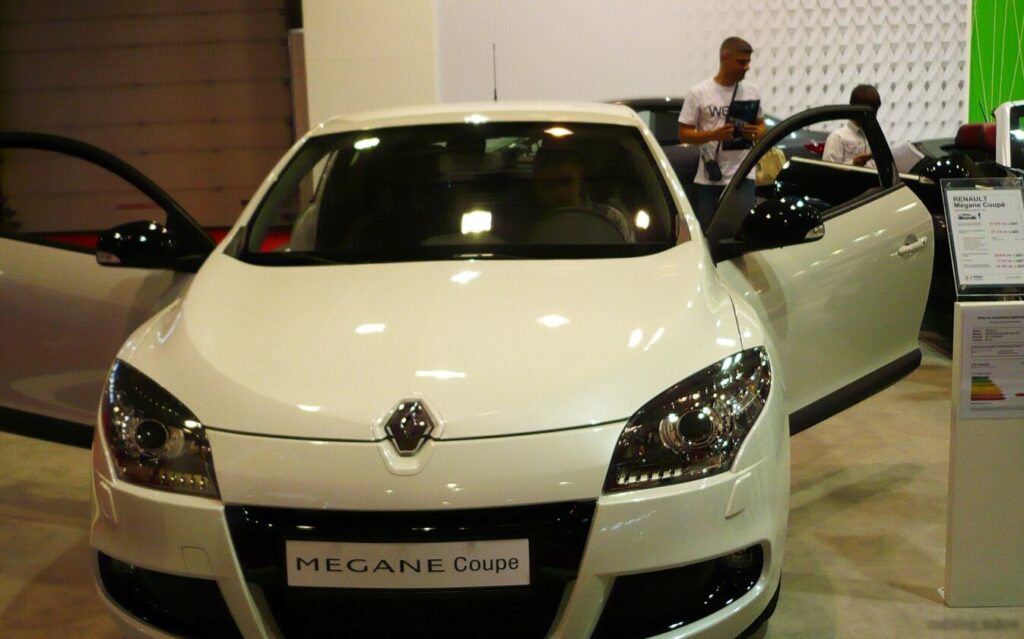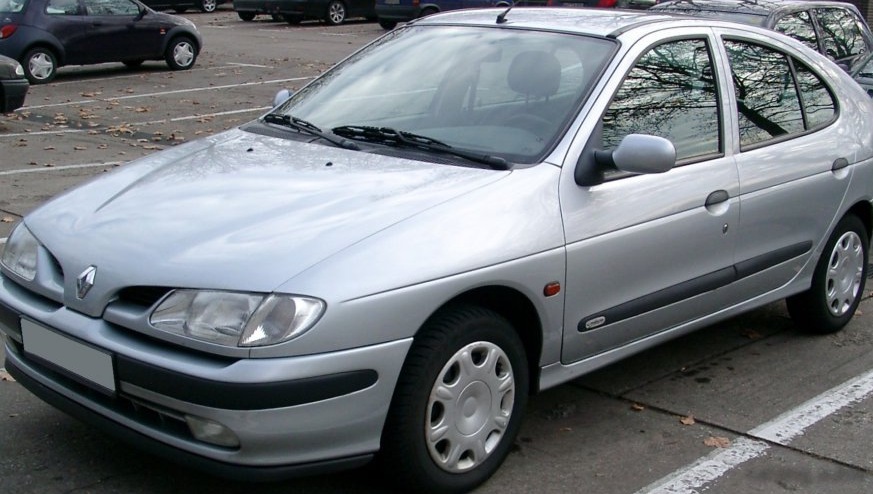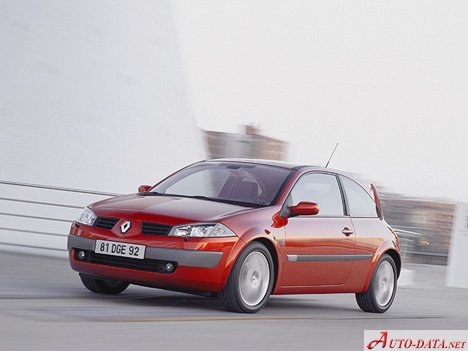
The Renault Megane II Coupe 2.0 16V Turbo (163 Hp) represents a significant chapter in Renault’s design and engineering philosophy during the early 2000s. Introduced in 2004, this particular variant of the second-generation Megane aimed to blend distinctive styling with engaging performance, targeting the European compact car segment. The Megane II, known for its polarizing yet innovative design, stood out from its competitors with its unique “bustle-back” rear end and bold aesthetic choices. While the Megane was a staple in the European market, it was not officially sold in the United States, making it an intriguing example of European automotive trends and engineering for American enthusiasts. This specific 2.0-liter turbocharged coupe model served as a more performance-oriented option within the broader Megane II lineup, offering a compelling package of power, handling, and daily usability.
Powertrain & Engine Architecture
At the heart of the Renault Megane II Coupe 2.0 16V Turbo (163 Hp) lies the F4R engine, a 1998 cubic centimeter (121.93 cubic inch) inline four-cylinder unit. This engine features a Double Overhead Camshaft (DOHC) valvetrain with 4 valves per cylinder, ensuring efficient breathing and performance. The key differentiator for this variant is its forced induction system: a turbocharger complemented by an intercooler. This setup allowed the engine to produce a respectable 163 horsepower at 5000 revolutions per minute, translating to a power output of 81.6 horsepower per liter.
Torque delivery was equally impressive for its class, with 270 Newton-meters (199.14 lb.-ft.) available at a relatively low 3250 rpm. This broad torque band contributed to the car’s responsive nature and flexible driving characteristics, making it adept for both urban commuting and spirited highway cruising. Power was sent to the front wheels via a precise 6-speed manual transmission, offering drivers an engaging and direct connection to the car’s performance. The F4R engine utilized multi-port fuel injection, a common system for the time, providing precise fuel delivery for optimal combustion. The engine’s compression ratio was set at 10:1, a balance between efficiency and performance for a turbocharged application.
Driving Characteristics
The Renault Megane II Coupe 2.0 16V Turbo (163 Hp) offered a noticeably more engaging driving experience compared to lower-powered versions of the Megane II. The turbocharger provided a significant boost in mid-range power, making overtaking maneuvers and highway merging considerably easier. While not a dedicated hot hatch like the Renaultsport models, the 163 hp variant delivered a satisfying level of performance for everyday driving. The 6-speed manual transmission allowed drivers to keep the engine within its optimal power band, maximizing acceleration and responsiveness. Compared to the base 1.6L engine, the 2.0L Turbo offered a substantial increase in both horsepower and torque, resulting in quicker acceleration times and a more confident feel. The gear ratios were well-matched to the engine’s power delivery, providing strong acceleration in each gear. The car’s front-wheel-drive configuration, while common for its class, could exhibit some torque steer under hard acceleration, a characteristic typical of turbocharged front-wheel-drive vehicles.
Equipment & Trim Levels
The Renault Megane II Coupe 2.0 16V Turbo (163 Hp) typically occupied a mid-range position within the Megane II lineup. Standard equipment often included power windows, air conditioning, a quality audio system, and alloy wheels. Safety features were a strong point, with ABS (Anti-lock Braking System) being standard. Interior upholstery was typically cloth, though leather options were available as upgrades. Optional extras included features like automatic climate control, a sunroof, and upgraded audio systems with CD changers. The dashboard configuration was modern for its time, featuring a centrally mounted display for the audio system and climate control. Higher trim levels often added features like rain-sensing wipers, automatic headlights, and parking sensors. The overall interior design prioritized ergonomics and functionality, providing a comfortable and user-friendly environment for both driver and passengers.
Chassis & Braking
The chassis dynamics of the Renault Megane II Coupe were managed by an independent McPherson strut front suspension and a torsion beam rear suspension, a common and effective setup for front-wheel-drive vehicles in this segment. This suspension configuration provided a good balance between ride comfort and handling precision. Braking performance was assured by ventilated discs at the front and solid discs at the rear. The car utilized a rack and pinion steering system with electric power steering, providing a balance of ease of use at low speeds and improved feedback at higher velocities. Standard tire size was 205/55 R16, mounted on 6.5J x 16-inch wheel rims, providing a good balance of grip and ride comfort. The torsion beam rear suspension, while cost-effective, could exhibit some limitations in terms of handling precision compared to a fully independent rear suspension, particularly during aggressive cornering.
Market Reception & Comparison
Critics generally viewed the Renault Megane II Coupe 2.0 16V Turbo (163 Hp) favorably, praising its distinctive styling, engaging performance, and comfortable ride. The turbocharged engine was seen as a significant upgrade over the base engines, providing a more enjoyable driving experience. Fuel economy was considered reasonable for a turbocharged model, with a combined cycle rating of 7.7 liters per 100 kilometers (30.5 US mpg). Reliability was generally good, though some owners reported minor issues with the turbocharger and fuel injection system. Compared to other trims in the same lineup, the 2.0 16V Turbo offered a noticeable performance advantage, but at a slightly higher price point. It competed with models like the Opel Astra GTC and Peugeot 307 CC, offering a unique blend of style, performance, and practicality. The Megane II Coupe’s distinctive design often proved to be a polarizing factor, with some buyers appreciating its boldness while others found it unconventional.
Technical Specifications
| Category | Specification |
| General Information | |
| Brand | Renault |
| Model | Megane |
| Generation | Megane II Coupe |
| Type (Engine) | 2.0 16V Turbo (163 Hp) |
| Start of Production | 2004 year |
| End of Production | 2006 year |
| Powertrain Architecture | Internal Combustion engine |
| Body type | Coupe |
| Seats | 5 |
| Doors | 3 |
| Performance Specs | |
| Fuel consumption (economy) – urban | 10.6 l/100 km (22.2 US mpg) |
| Fuel consumption (economy) – extra urban | 6 l/100 km (39.2 US mpg) |
| Fuel consumption (economy) – combined | 7.7 l/100 km (30.5 US mpg) |
| CO2 emissions | 184 g/km |
| Fuel Type | Petrol (Gasoline) |
| Acceleration 0 – 100 km/h | 8.3 sec |
| Acceleration 0 – 60 mph (Calculated) | 7.9 sec |
| Maximum speed | 220 km/h (136.7 mph) |
| Emission standard | Euro 3 |
| Weight-to-power ratio | 7.7 kg/Hp (129.9 Hp/tonne) |
| Weight-to-torque ratio | 4.6 kg/Nm (215.1 Nm/tonne) |
| Engine Specs | |
| Power | 163 Hp @ 5000 rpm |
| Power per liter | 81.6 Hp/l |
| Torque | 270 Nm @ 3250 rpm (199.14 lb.-ft.) |
| Engine layout | Front, Transverse |
| Engine Model/Code | F4R |
| Engine displacement | 1998 cm3 (121.93 cu. in.) |
| Number of cylinders | 4 |
| Engine configuration | Inline |
| Cylinder Bore | 82.7 mm (3.26 in.) |
| Piston Stroke | 93 mm (3.66 in.) |
| Compression ratio | 10:1 |
| Number of valves per cylinder | 4 |
| Fuel injection system | Multi-port manifold injection |
| Engine aspiration | Turbocharger, Intercooler |
| Valvetrain | DOHC |
| Engine oil capacity | 5.4 l (5.71 US qt) |
| Coolant capacity | 6.5 l (6.87 US qt) |
| Space, Volume and Weights | |
| Kerb Weight | 1255 kg (2766.8 lbs.) |
| Max. weight | 1795 kg (3957.3 lbs.) |
| Max load | 540 kg (1190.5 lbs.) |
| Trunk (boot) space – minimum | 330 l (11.65 cu. ft.) |
| Trunk (boot) space – maximum | 1190 l (42.02 cu. ft.) |
| Fuel tank capacity | 60 l (15.85 US gal) |
| Max. roof load | 80 kg (176.37 lbs.) |
| Permitted trailer load with brakes (12%) | 1300 kg (2866.01 lbs.) |
| Permitted trailer load without brakes | 650 kg (1433 lbs.) |
| Permitted towbar download | 75 kg (165.35 lbs.) |
| Dimensions | |
| Length | 4209 mm (165.71 in.) |
| Width | 1777 mm (69.96 in.) |
| Height | 1458 mm (57.4 in.) |
| Wheelbase | 2625 mm (103.35 in.) |
| Front track | 1518 mm (59.76 in.) |
| Rear (Back) track | 1514 mm (59.61 in.) |
| Drag coefficient (Cd) | 0.35 |
| Minimum turning circle (turning diameter) | 10.5 m (34.45 ft.) |
| Drivetrain, Brakes and Suspension Specs | |
| Drivetrain Architecture | Front-wheel drive, Internal Combustion Engine |
| Drive wheel | Front wheel drive |
| Number of gears and type of gearbox | 6 gears, manual transmission |
| Front suspension | Independent type McPherson |
| Rear suspension | Torsion |
| Front brakes | Ventilated discs |
| Rear brakes | Disc |
| Assisting systems | ABS (Anti-lock braking system) |
| Steering type | Steering rack and pinion |
| Power steering | Electric Steering |
| Tires size | 205/55 R16 |
| Wheel rims size | 6.5J x 16 |
Legacy
The Renault Megane II, and specifically the Renault Megane II Coupe 2.0 16V Turbo (163 Hp), carved out a notable niche in the European compact car market during its production run from 2004 to 2006. The second-generation Megane was a bold statement from Renault, moving away from the more conservative styling of its predecessor. While its design was initially met with mixed reactions, it ultimately proved successful, contributing to strong sales across Europe. The coupe variant, with its more dynamic styling and sportier powertrain, appealed to buyers looking for a blend of practicality and driving excitement, without stepping into the more aggressive hot hatch territory of models like the Megane RS. In the used car market today, the Megane II Coupe 2.0 16V Turbo remains a relatively affordable and appealing option for those seeking a stylish and engaging compact coupe. The F4R engine, while requiring regular maintenance, is generally considered to be a robust and reliable unit. However, potential buyers should be aware of potential issues with the turbocharger and fuel injection system. Overall, the Renault Megane II Coupe 2.0 16V Turbo (163 Hp) stands as a testament to an era when European automakers experimented with bold designs and offered accessible performance to a broad audience, even if it remained an exclusive experience for those outside its primary markets.