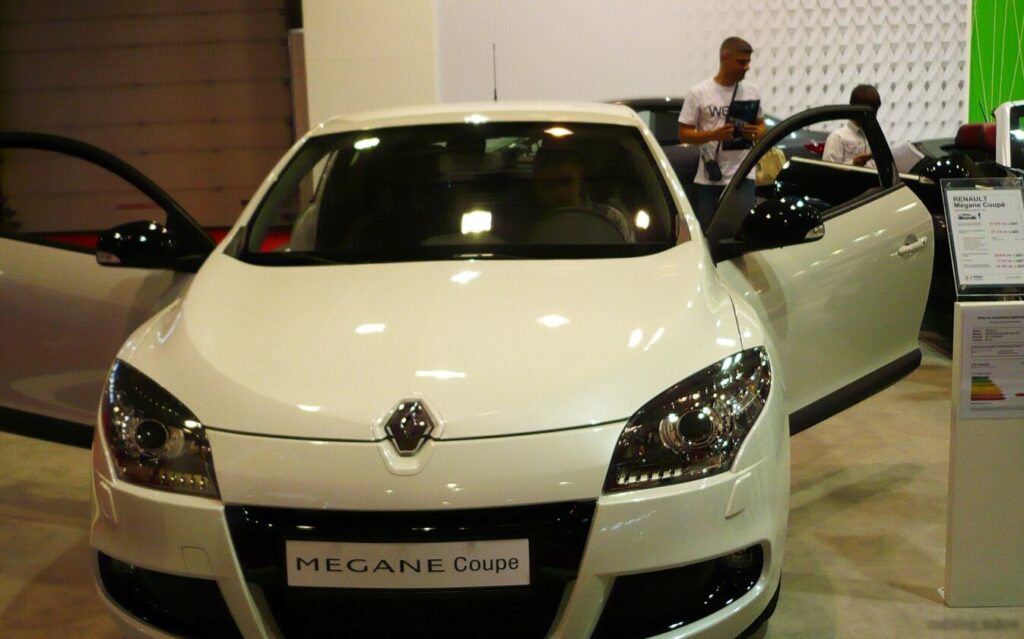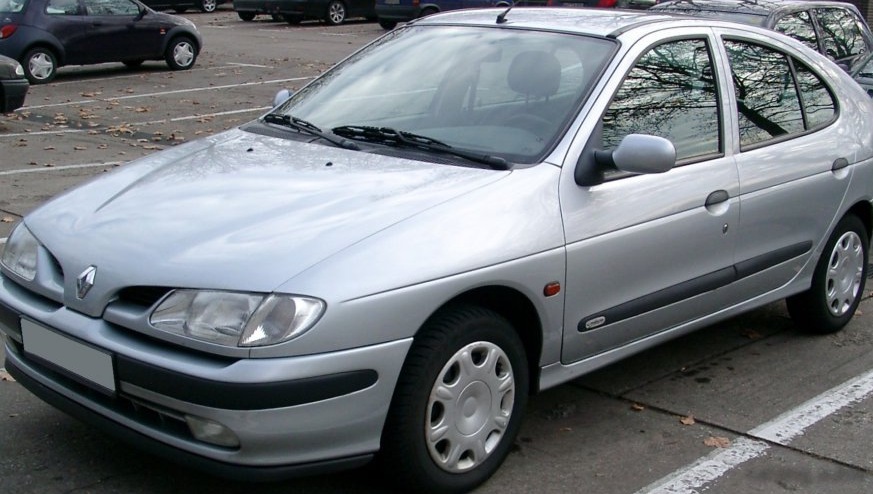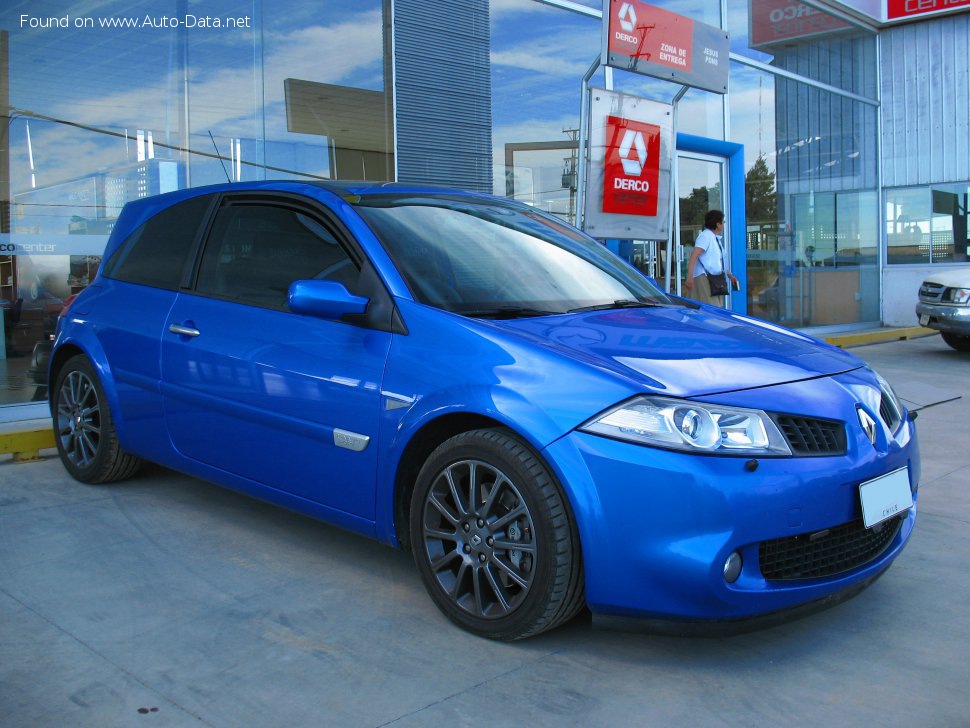
The Renault Megane II Coupe, specifically the Phase II model introduced in 2006, represents a significant chapter in the history of compact European automobiles. As a prominent player in the highly competitive C-segment, the Megane II distinguished itself with a bold, unconventional design that challenged traditional automotive aesthetics. While never officially sold in the United States, this French-engineered compact coupe carved out a strong niche in its primary European and other international markets, offering a blend of distinctive styling, practical packaging, and efficient powertrains. The 2006 Phase II update brought subtle refinements to an already established design, maintaining its avant-garde appeal while enhancing its technological and safety credentials. This particular variant, equipped with the 1.5 dCi (106 Hp) diesel engine, was a testament to Renault’s commitment to fuel efficiency and low emissions, a crucial selling point in European markets where fuel costs and environmental regulations are paramount. The Megane II Coupe, with its three-door configuration and five-seat capacity, aimed to combine the sportier appeal of a coupe with the everyday usability expected of a compact family car, making it a versatile option for a wide array of buyers.
The 1.5 dCi (106 Hp) Engine: Positioning and Role
The 1.5 dCi 106 hp variant of the Renault Megane II Coupe occupied the entry to mid-range position within the model lineup. It served as a more affordable and fuel-efficient alternative to the higher-powered gasoline engines and the more potent diesel options, such as the 1.9 dCi. Renault positioned this trim level towards buyers prioritizing economy and practicality over outright performance. It was a popular choice for city dwellers, commuters, and those seeking a stylish and efficient vehicle for everyday use. Compared to the gasoline-powered versions, the 1.5 dCi offered significantly better fuel economy and lower running costs, while the lower horsepower output resulted in a more relaxed driving experience.
Powertrain & Engine Architecture
At the heart of the Renault Megane II Coupe 1.5 dCi (106 Hp) lies Renault’s acclaimed K9K Turbo diesel engine, a powerplant renowned across Europe for its robust efficiency. This inline four-cylinder engine, with a displacement of 1,461 cubic centimeters (89.16 cubic inches), delivers 106 horsepower at 4000 rpm and 177.01 lb-ft of torque at a low 2000 rpm. The engine features a front, transverse layout, driving the front wheels through a slick-shifting 6-speed manual transmission. This setup was optimized for both performance and fuel economy.
The K9K engine utilizes a diesel common rail fuel injection system, combined with a turbocharger and intercooler, ensuring efficient combustion and a broad powerband. The compression ratio of 18.8:1 is typical for a modern diesel, contributing to its thermal efficiency. The engine employs a single overhead camshaft (SOHC) valvetrain with two valves per cylinder. The turbocharger is a variable geometry turbo (VGT), allowing for optimized boost pressure across a wider range of engine speeds. The fuel injection system operates at very high pressures, ensuring fine atomization of the fuel for cleaner and more complete combustion. The engine block is constructed from cast iron for durability, while the cylinder head is made from aluminum alloy to reduce weight.
Driving Characteristics
The 1.5 dCi 106 hp engine in the Megane II Coupe delivers a driving experience focused on efficiency and usability rather than outright speed. While not a performance-oriented variant, the substantial 177 lb-ft of torque available from 2000 rpm provides ample low-end grunt for responsive city driving and confident highway cruising. The 6-speed manual transmission is well-matched to the engine’s characteristics, allowing drivers to keep the engine in its optimal powerband. Acceleration from 0 to 60 mph takes approximately 10.5 seconds, and the top speed is around 115 mph. Compared to the higher-output 1.9 dCi or gasoline-powered versions, the 1.5 dCi feels less eager to rev and requires more gear changes when accelerating quickly. However, the lower weight of the engine contributes to a more balanced feel in corners. The gear ratios are relatively long, prioritizing fuel economy at cruising speeds. The clutch is light and easy to operate, making it suitable for everyday driving.
Equipment & Trim Levels
The 1.5 dCi variant of the Megane II Coupe typically came equipped with a respectable level of standard features for a vehicle in its class. These included electric front windows, central locking, power steering, an adjustable steering column, and a basic audio system. Safety features such as ABS (Anti-lock Braking System) and front airbags were also standard. Interior upholstery was typically cloth, with a dark color scheme. Optional extras available for this trim level included air conditioning, alloy wheels, rear electric windows, a CD player, and metallic paint. Higher trim levels, such as the Dynamique and Privilege, added features like automatic headlights and rain sensors, cruise control, and upgraded interior trim.
Chassis & Braking
The Megane II Coupe 1.5 dCi utilized an independent McPherson strut suspension at the front, providing a comfortable ride and decent handling. The rear suspension employed a torsion beam setup, which is a cost-effective and space-efficient solution for front-wheel-drive vehicles. Braking was handled by ventilated discs at the front and solid discs at the rear, providing adequate stopping power for everyday driving. The car rode on 195/65 R15 tires mounted on 6J x 15-inch wheel rims. The front stabilizer bar thickness was relatively modest, contributing to a softer ride quality. The steering system was an electric power steering (EPS) system, offering light and easy maneuverability, particularly at low speeds.
Market Reception & Comparison
The Renault Megane II Coupe 1.5 dCi received generally positive reviews from automotive critics, particularly for its fuel efficiency and low running costs. It was praised for its stylish design and comfortable ride. However, some critics noted that the engine lacked the punch of the higher-powered variants. Compared to other trims in the lineup, the 1.5 dCi offered the best fuel economy, achieving a combined rating of 50 US mpg (4.7 l/100 km). Its reliability was generally considered good, although diesel engines can be more susceptible to issues with the fuel injection system and turbocharger over time. In terms of competition, the Megane II Coupe 1.5 dCi faced rivals such as the Opel Astra GTC 1.7 CDTI, Peugeot 307 Coupe Cabriolet HDi, and Volkswagen Golf 1.9 TDI. The Megane II often offered a more distinctive design and a slightly lower price point compared to its competitors.
Technical Specifications
| Category | Specification |
| General Information | |
| Brand | Renault |
| Model | Megane |
| Generation | Megane II Coupe (Phase II, 2006) |
| Engine Type | 1.5 dCi (106 Hp) |
| Production Years | 2006 – 2006 |
| Powertrain Architecture | Internal Combustion Engine (ICE) |
| Body Type | Coupe |
| Seats | 5 |
| Doors | 3 |
| Performance Specs | |
| Fuel Consumption (Urban) | 5.8 l/100 km (40.6 US mpg) |
| Fuel Consumption (Extra Urban) | 4.1 l/100 km (57.4 US mpg) |
| Fuel Consumption (Combined) | 4.7 l/100 km (50 US mpg) |
| CO2 Emissions | 124 g/km |
| Fuel Type | Diesel |
| Acceleration 0-60 mph | 10.5 sec |
| Maximum Speed | 185 km/h (114.95 mph) |
| Emission Standard | Euro 4 |
| Weight-to-Power Ratio | 11.2 kg/Hp (89.1 Hp/tonne) |
| Weight-to-Torque Ratio | 5 kg/Nm (201.7 Nm/tonne) |
| Engine Specs | |
| Power | 106 Hp @ 4000 rpm |
| Power per Liter | 72.6 Hp/l |
| Torque | 240 Nm @ 2000 rpm (177.01 lb.-ft.) |
| Engine Layout | Front, Transverse |
| Engine Model/Code | K9K Turbo |
| Engine Displacement | 1461 cm3 (89.16 cu. in.) |
| Number of Cylinders | 4 |
| Engine Configuration | Inline |
| Cylinder Bore | 76 mm (2.99 in.) |
| Piston Stroke | 80.5 mm (3.17 in.) |
| Compression Ratio | 18.8:1 |
| Valves per Cylinder | 2 |
| Fuel Injection System | Diesel Commonrail |
| Engine Aspiration | Turbocharger, Intercooler |
| Engine Oil Capacity | 4.5 l (4.76 US qt) |
| Coolant Capacity | 7.5 l (7.93 US qt) |
| Space, Volume & Weights | |
| Kerb Weight | 1190 kg (2623.5 lbs) |
| Max. Weight | 1750 kg (3858.09 lbs) |
| Max Load | 560 kg (1234.59 lbs) |
| Trunk (Boot) Space (Min) | 330 l (11.65 cu. ft.) |
| Trunk (Boot) Space (Max) | 1190 l (42.02 cu. ft.) |
| Fuel Tank Capacity | 60 l (15.85 US gal) |
| Max. Roof Load | 80 kg (176.37 lbs) |
| Permitted Trailer Load with Brakes (12%) | 1300 kg (2866.01 lbs) |
| Permitted Trailer Load without Brakes | 650 kg (1433 lbs) |
| Permitted Towbar Download | 75 kg (165.35 lbs) |
| Dimensions | |
| Length | 4209 mm (165.71 in.) |
| Width | 1777 mm (69.96 in.) |
| Width (Including Mirrors) | 2026 mm (79.76 in.) |
| Height | 1458 mm (57.4 in.) |
| Wheelbase | 2625 mm (103.35 in.) |
| Front Track | 1518 mm (59.76 in.) |
| Rear Track | 1514 mm (59.61 in.) |
| Front Overhang | 842 mm (33.15 in.) |
| Rear Overhang | 742 mm (29.21 in.) |
| Drag Coefficient (Cd) | 0.35 |
| Minimum Turning Circle | 10.5 m (34.45 ft.) |
| Drivetrain, Brakes & Suspension | |
| Drivetrain Architecture | Front-wheel drive, Internal Combustion engine |
| Drive Wheel | Front-wheel drive |
| Gearbox | 6 gears, manual transmission |
| Front Suspension | Independent type McPherson |
| Rear Suspension | Torsion |
| Front Brakes | Ventilated discs |
| Rear Brakes | Disc |
| Assisting Systems | ABS (Anti-lock braking system) |
| Steering Type | Steering rack and pinion |
| Power Steering | Electric Steering |
| Tires Size | 195/65 R15 |
| Wheel Rims Size | 6J x 15 |
Legacy
The Renault Megane II Coupe 1.5 dCi has proven to be a relatively reliable powertrain in the long term, provided it has been properly maintained. The K9K engine is known for its durability, but as with any diesel engine, regular oil changes and attention to the fuel injection system are crucial. In the used car market today, these vehicles are often available at affordable prices, making them an attractive option for budget-conscious buyers. However, potential buyers should be aware of the age-related issues that can affect any vehicle of this era, such as wear and tear on suspension components and potential corrosion. The 1.5 dCi engine remains a popular choice for those seeking a fuel-efficient and practical compact coupe, and its legacy as a stylish and economical option in the European automotive landscape endures.