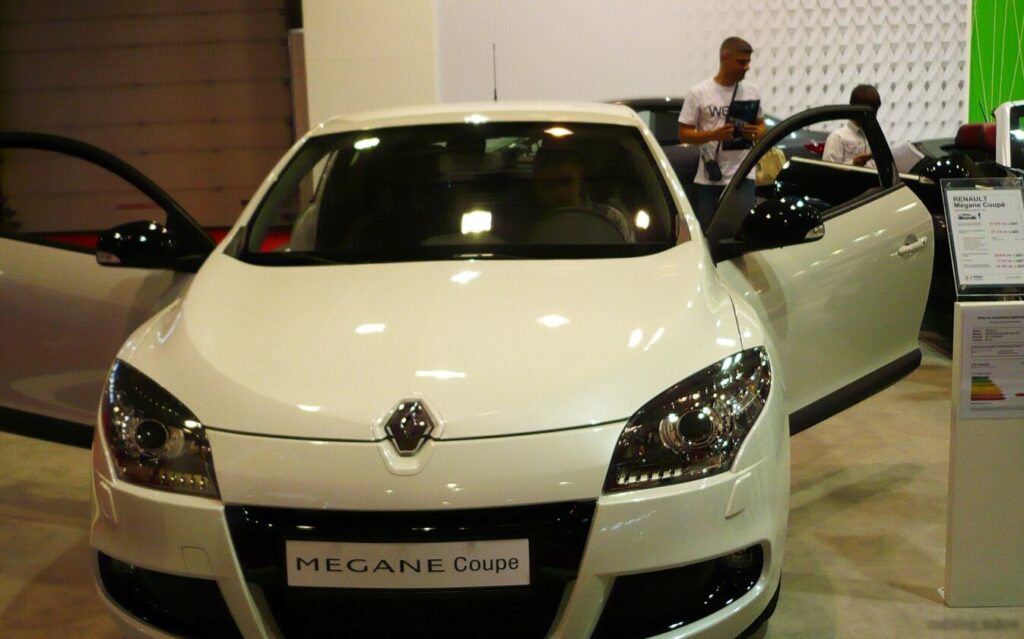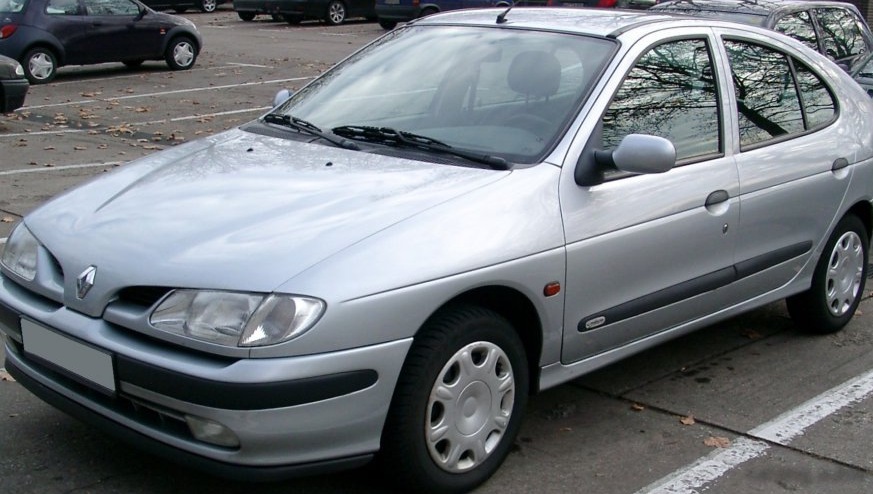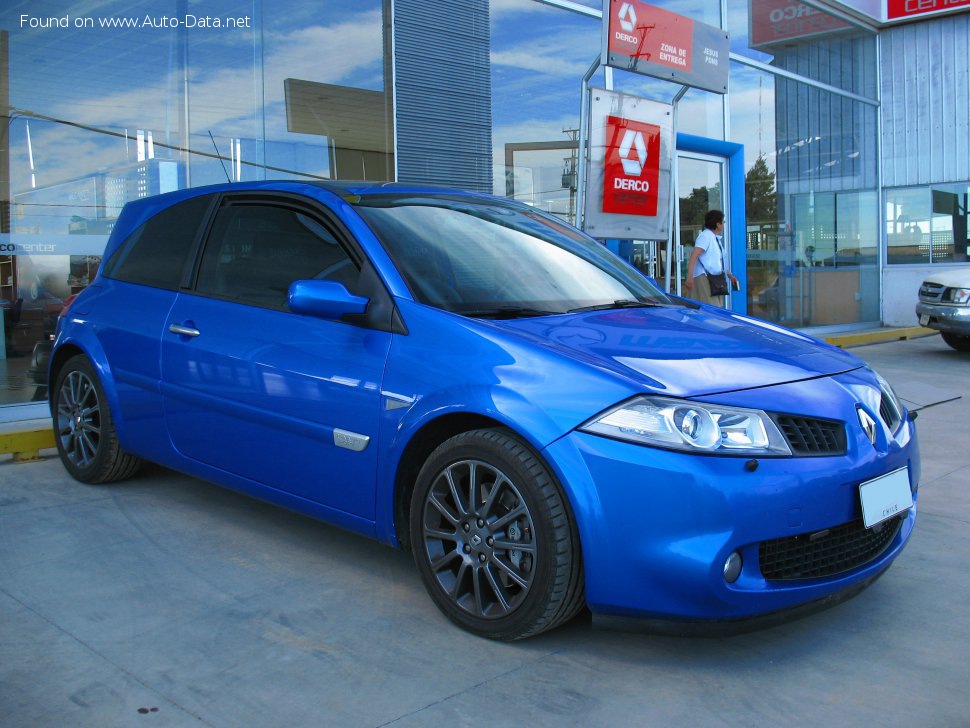
The Renault Megane II Coupe (Phase II, 2006) 2.0 16V (135 Hp) represents a compelling chapter in the history of European compact cars, embodying Renault’s distinctive design philosophy and engineering prowess during the mid-2000s. Launched in 2006 as a refreshed version of the second-generation Megane, the Phase II brought subtle yet significant updates to an already successful model line. While the Megane nameplate is deeply ingrained in the automotive landscape of Europe and other international markets, it was never officially sold in the United States, making it a unique point of interest for American enthusiasts of global automotive trends.
This specific variant, a three-door coupe, carved out a niche for buyers seeking a more stylish and sporty alternative to the conventional five-door hatchback or sedan. Powered by a naturally aspirated 2.0-liter 16-valve engine, it offered a blend of performance and everyday usability that was highly competitive within its segment. The Megane II was particularly recognized for its bold, unconventional styling, which set it apart from its rivals, and its strong emphasis on safety, a hallmark of Renault vehicles during this period. The Phase II updates aimed to refine this package, ensuring its continued relevance in a fiercely contested market.
Powertrain & Engine Architecture
At the heart of the Renault Megane II Coupe (Phase II, 2006) 2.0 16V (135 Hp) lies the venerable F4R engine, a 1998 cm³ (121.93 cu. in.) inline-four powerplant with a long and storied history within the Renault lineup. This naturally aspirated unit, featuring a Double Overhead Camshaft (DOHC) valvetrain with four valves per cylinder, was designed for a balance of smooth power delivery and reasonable efficiency. It generates a respectable 135 horsepower (Hp) at 5500 rpm, providing ample motivation for the compact coupe. Torque output stands at 191 Nm (140.87 lb.-ft.) at 3750 rpm, ensuring a responsive feel in most driving conditions, especially in the mid-range.
The engine’s multi-port manifold injection system ensures precise fuel delivery, contributing to its Euro 4 emission standard compliance. The F4R engine is known for its relatively simple design, making it easier to maintain compared to some of its more technologically advanced competitors. It utilizes a timing chain rather than a belt, reducing maintenance intervals. The engine block is constructed from cast iron, providing durability, while the cylinder head is made of aluminum alloy to reduce weight.
The Megane II Coupe 2.0 16V was typically paired with a six-speed manual transmission, although a four-speed automatic transmission was also available. The manual gearbox offered precise shifts and a more engaging driving experience, while the automatic provided convenience for urban driving. The automatic transmission, while not known for its sportiness, was reliable and well-suited to the engine’s torque characteristics. The final drive ratio varied slightly depending on the transmission chosen, impacting both acceleration and fuel economy.
Driving Characteristics
The 2.0 16V engine in the Megane II Coupe delivered a balanced driving experience. With 135 hp, it wasn’t a particularly fast car, but it offered sufficient power for comfortable highway cruising and spirited driving on winding roads. Acceleration from 0 to 60 mph took approximately 8.7 seconds (calculated by Auto-Data.net), or 0 to 100 km/h in 9.2 seconds. Its top speed was rated at 200 km/h (124.27 mph).
Compared to the base 1.6L engine offered in other Megane II variants, the 2.0L provided a noticeable increase in performance, particularly in terms of mid-range torque. This made overtaking maneuvers easier and provided a more relaxed driving experience on the highway. Compared to the more powerful 2.0 Turbo variants, the 2.0 16V offered a more linear power delivery and a less aggressive driving experience. The six-speed manual transmission allowed drivers to keep the engine in its optimal power band, maximizing performance. The automatic transmission, while convenient, resulted in slightly slower acceleration due to torque converter losses.
The car’s curb weight of 1230 kg (2711.69 lbs) contributed to a weight-to-power ratio of 9.1 kg/Hp (109.8 Hp/tonne), which was competitive for its class. The fuel economy figures were also noteworthy for a naturally aspirated 2.0-liter engine from this era, with a combined cycle rating of 8 l/100 km (29.4 US mpg). This balance of performance and efficiency made it an attractive option for European drivers.
Equipment & Trim Levels
The Renault Megane II Coupe (Phase II, 2006) 2.0 16V was typically offered in several trim levels, each with varying levels of standard equipment. Base models generally included air conditioning, power windows, central locking, and an audio system with CD player. Higher trim levels added features such as alloy wheels, fog lights, automatic headlights and wipers, a multi-function steering wheel, and upgraded interior trim.
Optional extras included a panoramic sunroof, leather upholstery, a navigation system, and a premium sound system. The interior upholstery was typically cloth on base models, with leather options available on higher trims. The dashboard configuration was generally consistent across all trim levels, featuring a clean and functional design. Safety features such as ABS, airbags, and seatbelt pretensioners were standard across the range.
Chassis & Braking
The Megane II Coupe utilized an independent McPherson strut suspension setup at the front and a torsion beam axle at the rear, a common and effective combination for compact cars, providing a balance of ride comfort and handling agility. The suspension was tuned to provide a comfortable ride for everyday driving, while still offering decent handling characteristics. Stabilizer bars were fitted to both the front and rear axles to reduce body roll during cornering.
The braking system consisted of ventilated disc brakes at the front and solid discs at the rear, ensuring confident stopping power. ABS (Anti-lock Braking System) was standard, enhancing braking performance in slippery conditions. The car was equipped with 205/55 R16 tires on 6.5J x 16 wheels, providing adequate grip for most driving situations. The steering system was a rack and pinion type with electric power steering, offering light effort for city driving and more feedback at higher speeds.
Market Reception & Comparison
Critics generally praised the Renault Megane II Coupe for its stylish design, comfortable ride, and strong safety credentials. The 2.0 16V engine was considered a good compromise between performance and fuel economy. However, some critics noted that the interior quality was not quite as high as some of its rivals, such as the Volkswagen Golf.
Compared to the 1.6L engine offered in other Megane II variants, the 2.0L provided a noticeable improvement in performance. Compared to the more powerful 2.0 Turbo variants, the 2.0 16V offered a more affordable price point and a less aggressive driving experience. In terms of fuel economy, the 2.0 16V was comparable to other 2.0L engines in its class. Reliability was generally good, although some owners reported minor issues with the electrics.
Technical Specifications
| Category | Specification |
| General Information | |
| Brand | Renault |
| Model | Megane |
| Generation | Megane II Coupe (Phase II, 2006) |
| Type (Engine) | 2.0 16V (135 Hp) |
| Start of Production | 2006 year |
| End of Production | 2008 year |
| Powertrain Architecture | Internal Combustion engine |
| Body type | Coupe |
| Seats | 5 |
| Doors | 3 |
| Performance Specs | |
| Fuel Consumption (economy) – urban | 10.9 l/100 km (21.6 US mpg) |
| Fuel Consumption (economy) – extra urban | 6.4 l/100 km (36.8 US mpg) |
| Fuel Consumption (economy) – combined | 8 l/100 km (29.4 US mpg) |
| CO2 Emissions | 191 g/km |
| Fuel Type | Petrol (Gasoline) |
| Acceleration 0 – 60 mph | 8.7 sec |
| Acceleration 0 – 100 km/h | 9.2 sec |
| Maximum Speed | 200 km/h (124.27 mph) |
| Emission Standard | Euro 4 |
| Weight-to-power ratio | 9.1 kg/Hp (109.8 Hp/tonne) |
| Weight-to-torque ratio | 6.4 kg/Nm (155.3 Nm/tonne) |
| Engine Specs | |
| Power | 135 Hp @ 5500 rpm |
| Power per liter | 67.6 Hp/l |
| Torque | 191 Nm (140.87 lb.-ft.) @ 3750 rpm |
| Engine Layout | Front, Transverse |
| Engine Model/Code | F4R |
| Engine Displacement | 1998 cm³ (121.93 cu. in.) |
| Number of Cylinders | 4 |
| Engine Configuration | Inline |
| Cylinder Bore | 82.7 mm (3.26 in.) |
| Piston Stroke | 93 mm (3.66 in.) |
| Compression Ratio | 10:1 |
| Number of Valves per Cylinder | 4 |
| Fuel Injection System | Multi-port manifold injection |
| Engine Aspiration | Naturally aspirated engine |
| Valvetrain | DOHC |
| Engine Oil Capacity | 5.4 l (5.71 US qt) |
| Coolant Capacity | 6.5 l (6.87 US qt) |
| Space, Volume and Weights | |
| Kerb Weight | 1230 kg (2711.69 lbs) |
| Max. Weight | 1770 kg (3902.18 lbs) |
| Max Load | 540 kg (1190.5 lbs) |
| Trunk (boot) Space – minimum | 330 l (11.65 cu. ft.) |
| Trunk (boot) Space – maximum | 1190 l (42.02 cu. ft.) |
| Fuel Tank Capacity | 60 l (15.85 US gal) |
| Max. Roof Load | 80 kg (176.37 lbs) |
| Permitted Trailer Load with brakes (12%) | 1300 kg (2866.01 lbs) |
| Permitted Trailer Load without brakes | 650 kg (1433 lbs) |
| Permitted Towbar Download | 75 kg (165.35 lbs) |
| Dimensions | |
| Length | 4209 mm (165.71 in.) |
| Width | 1777 mm (69.96 in.) |
| Width including mirrors | 2026 mm (79.76 in.) |
| Height | 1458 mm (57.4 in.) |
| Wheelbase | 2625 mm (103.35 in.) |
| Front Track | 1518 mm (59.76 in.) |
| Rear (Back) Track | 1514 mm (59.61 in.) |
| Front Overhang | 842 mm (33.15 in.) |
| Rear Overhang | 742 mm (29.21 in.) |
| Drag Coefficient (Cd) | 0.35 |
| Minimum Turning Circle (turning diameter) | 10.5 m (34.45 ft.) |
Legacy
The Renault Megane II, including the Phase II Coupe, left a significant mark on the European automotive landscape. Its audacious design, particularly the distinctive rear styling of the hatchback, was a bold statement that divided opinion but undeniably captured attention. The coupe, while more conventionally proportioned, still benefited from the Megane II’s overall modern aesthetic and sophisticated engineering. It competed in the highly competitive C-segment against formidable rivals such as the Volkswagen Golf, Ford Focus, Opel Astra, and Peugeot 307.
Renault’s commitment to safety, highlighted by the Megane II’s pioneering 5-star Euro NCAP rating, was a major selling point and helped establish a new benchmark for occupant protection in the compact class. This reputation for safety, combined with its comfortable ride, decent performance, and distinctive style, contributed to the Megane II’s strong sales performance across Europe. The 2.0 16V (135 Hp) variant, specifically in its coupe form, appealed to those who desired a more engaging driving experience and a sportier aesthetic without sacrificing too much practicality or overall running costs.
While not known for groundbreaking technological innovations in the way some premium segment cars might be, the Megane II was well-equipped for its time, featuring modern amenities and driver aids like electric power steering and ABS. Its F4R engine was a reliable and proven unit, contributing to the car’s reputation for robustness. Despite its eventual replacement by the Megane III, the second-generation model, especially the Phase II, is remembered for its daring design, strong safety credentials, and its role in cementing Renault’s position as a major player in the European compact car market. For automotive enthusiasts outside of its primary markets, the Renault Megane II Coupe (Phase II, 2006) 2.0 16V (135 Hp) remains an intriguing example of European automotive design and engineering from the mid-2000s, showcasing a brand unafraid to challenge convention.