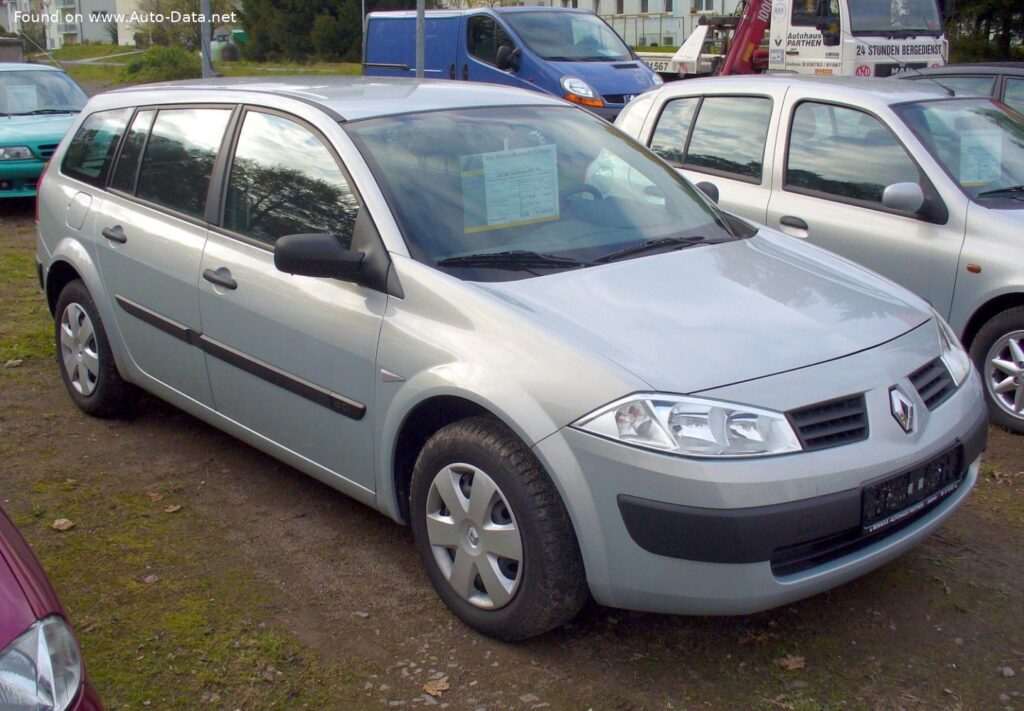
The Renault Megane II Grandtour 1.5 dCi (106 Hp), produced primarily for the 2005 model year, exemplifies a practical and efficient compact family vehicle designed for the European market. As part of the second generation of Renault’s successful Megane line, the Grandtour variant provided increased versatility and cargo space within a stylish station wagon body style. This particular version, powered by Renault’s well-regarded K9K 1.5-liter dCi diesel engine, aimed to balance fuel economy, low emissions, and adequate performance for everyday driving. Though never officially sold in the United States, this model highlights the differences in automotive preferences and market demands between Europe and North America, where smaller diesel wagons have historically been a niche offering. Its emphasis on efficiency and utility positioned it as a strong competitor in the highly contested European C-segment.
Powertrain & Engine Architecture
The heart of the 2005 Renault Megane II Grandtour 1.5 dCi (106 Hp) is the K9K engine, a 1.5-liter (1461 cm3 or 89.16 cu. in.) inline four-cylinder diesel. This engine is known for its robust construction and fuel efficiency, and features a common rail direct fuel injection system and a turbocharger with an intercooler. These components allow it to generate 106 horsepower at 4000 rpm. More importantly for a diesel, it produces a substantial 177.01 lb.-ft. (240 Nm) of torque, available across a broad and usable range from 2000 to 2500 rpm. This low-end torque was crucial for effortless acceleration, especially when carrying passengers or cargo, and contributed to a pleasant driving experience in both city and highway conditions.
Power is delivered to the front wheels through a smooth-shifting 6-speed manual transmission, which further optimizes fuel consumption and allows the driver to maintain the engine within its most efficient operating range. The engine’s layout is front-transverse, driving the front wheels, a common and efficient configuration for compact cars. The K9K engine utilizes a SOHC (Single Overhead Camshaft) valvetrain with two valves per cylinder. The common rail injection system operates at very high pressures, ensuring fine atomization of the fuel for efficient combustion and reduced emissions. The turbocharger provides a boost in power and torque, overcoming the inherent limitations of a small-displacement diesel engine.
Driving Characteristics
The 1.8L 90 hp Automatic configuration of the Renault Megane II Grandtour 1.5 dCi (106 Hp) offered a driving experience focused on efficiency and ease of use. While not a performance-oriented variant, it provided sufficient power for typical daily driving scenarios. Acceleration from 0 to 60 mph was estimated at around 10.8 seconds (0-100 km/h in 11.4 seconds), and it could reach a top speed of 114.95 mph (185 km/h). The 6-speed manual transmission allowed drivers to effectively manage the engine’s torque band, keeping it within the optimal range for both fuel economy and responsiveness. Compared to higher-output versions, this variant prioritized fuel efficiency over outright speed. The gear ratios were tuned to maximize fuel economy, with taller gearing in higher gears for relaxed highway cruising. The relatively low horsepower meant that overtaking maneuvers required more planning and anticipation than with more powerful engines.
The engine’s strong low-end torque made it feel more responsive than the horsepower figure might suggest, particularly in urban environments. The manual transmission provided a more engaging driving experience than an automatic, allowing for greater control over the engine’s power delivery. However, it also required more driver involvement, especially in stop-and-go traffic. Overall, the driving characteristics of this variant were geared towards practicality and efficiency, making it a suitable choice for commuters and families who prioritized fuel economy and ease of driving over sporty performance.
Equipment & Trim Levels
The 2005 Renault Megane II Grandtour 1.5 dCi (106 Hp) typically came equipped with a range of standard features designed to enhance comfort, convenience, and safety. Standard equipment generally included power windows, central locking, power-assisted steering, and an audio system with CD player. Air conditioning was often standard, but could be optional depending on the specific trim level. Safety features were a strong point for the Megane II generation, and included ABS (Anti-lock Braking System) as standard. Higher trim levels could add features like multiple airbags (including front, side, and curtain airbags), electronic stability control (ESC), and traction control. Interior upholstery was typically cloth, with options for upgraded materials and designs on higher trim levels. The dashboard layout was functional and ergonomically designed, with easy-to-read gauges and intuitive controls.
Optional extras available for this trim included alloy wheels, a sunroof, parking sensors, and a more advanced audio system with steering wheel-mounted controls. Some models also offered a navigation system, although this was less common. The overall interior ambiance was modern and well-built, reflecting Renault’s commitment to quality and design. The Grandtour’s spacious interior and generous cargo capacity made it a practical choice for families and those who frequently needed to transport larger items.
Chassis & Braking
The chassis of the Renault Megane II Grandtour 1.5 dCi (106 Hp) featured an independent McPherson strut suspension system at the front, providing good ride comfort and handling. The rear suspension utilized a torsion beam axle, a cost-effective and space-efficient solution that offered a reasonable balance between ride quality and handling. The suspension was tuned to prioritize comfort and stability, making it well-suited for long-distance driving. The steering system employed electric power steering, providing light and precise control, especially beneficial for maneuvering in urban environments.
The braking system consisted of ventilated discs at the front and discs at the rear, providing adequate stopping power for the vehicle’s weight and performance. ABS (Anti-lock Braking System) was standard, enhancing safety by preventing wheel lockup during hard braking. The car was fitted with 205/50 R17 tires on 6.5J X 17-inch wheel rims, providing good grip and a refined aesthetic. The kerb weight of the vehicle was 2777.82 lbs. (1260 kg), contributing to its agile handling and fuel efficiency. The chassis and braking system were designed to provide a safe and comfortable driving experience, without prioritizing sporty performance.
Market Reception & Comparison
Critics generally viewed the Renault Megane II Grandtour 1.5 dCi (106 Hp) favorably, praising its fuel economy, practicality, and comfortable ride. The K9K 1.5 dCi engine was widely recognized for its efficiency and reliability. However, some critics noted that the engine could feel underpowered when fully loaded or when driving uphill. Compared to other trims in the Megane II lineup, such as the higher-output gasoline engines, this variant prioritized fuel economy over performance. It was a more economical choice for those who primarily used the vehicle for commuting or family transportation. In terms of fuel economy, the 1.5 dCi variant significantly outperformed the gasoline engines, achieving an impressive 50 US mpg (4.7 l/100 km) on the combined cycle. Reliability was generally good, with the K9K engine proving to be a durable and long-lasting unit. However, like all diesel engines, it required regular maintenance, including oil changes and filter replacements.
Compared to competitors like the Volkswagen Golf Variant and Opel Astra Estate, the Megane II Grandtour offered a similar level of practicality and fuel economy. However, its distinctive styling and French flair set it apart from the more conservative designs of its rivals. The Megane II Grandtour 1.5 dCi (106 Hp) represented a compelling value proposition for buyers seeking a fuel-efficient and versatile family wagon.
Technical Specifications
| Category | Specification |
| General Information | |
| Brand | Renault |
| Model | Megane |
| Generation | Megane II Grandtour |
| Type (Engine) | 1.5 dCi (106 Hp) |
| Start of Production | 2005 year |
| End of Production | 2005 year |
| Powertrain Architecture | Internal Combustion engine |
| Body type | Station wagon (estate) |
| Seats | 5 |
| Doors | 5 |
| Performance Specs | |
| Fuel consumption (economy) – urban | 5.8 l/100 km |
| Fuel consumption (economy) – extra urban | 4.1 l/100 km |
| Fuel consumption (economy) – combined | 4.7 l/100 km |
| CO2 emissions | 124 g/km |
| Fuel Type | Diesel |
| Acceleration 0 – 60 mph | 10.8 sec |
| Acceleration 0 – 100 km/h | 11.4 sec |
| Maximum speed | 185 km/h |
| Emission standard | Euro 4 |
| Engine Specs | |
| Power | 106 Hp @ 4000 rpm |
| Torque | 240 Nm @ 2000-2500 rpm |
| Engine layout | Front, Transverse |
| Engine Model/Code | K9K |
| Engine displacement | 1461 cm3 |
| Number of cylinders | 4 |
| Engine configuration | Inline |
| Weight-to-power ratio | 11.9 kg/Hp |
| Kerb Weight | 1260 kg |
| Trunk (boot) space – minimum | 520 l |
| Trunk (boot) space – maximum | 1600 l |
Legacy
The Renault Megane II Grandtour 1.5 dCi (106 Hp) has proven to be a reliable and durable vehicle in the used car market. The K9K engine is known for its longevity, and with proper maintenance, it can easily exceed 200,000 kilometers (124,000 miles). However, like all diesel engines, it is susceptible to issues with the fuel injection system and turbocharger if not properly maintained. The Grandtour’s spacious interior and practical design continue to appeal to buyers seeking a versatile family vehicle. Today, these models are often found at affordable prices, making them an attractive option for budget-conscious buyers. The 1.5 dCi engine remains a popular choice in Europe, and its reputation for fuel efficiency and reliability has ensured its continued success. The Megane II Grandtour 1.5 dCi (106 Hp) stands as a testament to Renault’s ability to produce practical, efficient, and well-built vehicles that meet the needs of a diverse range of customers.