The allure of the European compact car has long captivated North American automotive enthusiasts, often offering a blend of efficiency, spirited handling, and distinctive design not always mirrored by domestic offerings. Among these, the Renault Megane III Coupe (Phase II, 2012) 1.5 Energy dCi (110 Hp) stands as a quintessential example of a segment that thrived across the Atlantic, yet remained largely a curiosity for drivers in the USA and Canada. While this specific diesel-powered coupe never officially graced North American showrooms, its existence provides a fascinating window into the diverging automotive philosophies of two major global markets, highlighting Renault’s engineering prowess in efficiency and its strategic presence within its home continent.
Renault Megane III Coupe (Phase II) 1.5 Energy dCi (110 Hp): A Glimpse into European Efficiency
The third-generation Renault Megane, launched in 2008, represented a significant evolution in design and engineering for the French automaker’s popular compact family. The “Phase II” update, introduced in 2012, brought subtle styling revisions and powertrain enhancements, solidifying its position in the highly competitive European C-segment. The Coupe variant, with its sleek, three-door profile, offered a sportier aesthetic compared to its more utilitarian hatchback and wagon siblings, appealing to buyers seeking both practicality and panache.
Crucially, the 1.5 Energy dCi (110 Hp) model epitomized the European market’s embrace of small-displacement, highly efficient diesel engines. While North America largely gravitated towards gasoline power, often with larger displacement, Europe saw diesel as a cornerstone of everyday motoring, particularly in segments where fuel economy and torque were highly valued. This Megane variant was a testament to that philosophy, balancing modest power with remarkable frugality. Its design language, characterized by flowing lines and a dynamic stance, was a departure from previous generations, aiming for a more emotional connection with its drivers. The Megane III Coupe was not merely a three-door version of the hatchback; it featured unique body panels from the A-pillar back, giving it a lower roofline and a more aggressive rear end, reinforcing its sporty intentions.
Engine & Performance
At the core of this particular Megane Coupe was Renault’s renowned K9K 656 1.5-liter (1461 cm³ or 89.16 cu. in.) inline four-cylinder diesel engine. This unit was part of Renault’s “Energy” family of powertrains, signifying a focus on advanced technologies aimed at reducing fuel consumption and emissions. Equipped with a variable geometry turbocharger and an intercooler, and utilizing a sophisticated common rail direct fuel injection system, this powerplant delivered a respectable 110 horsepower at 4000 rpm. Its peak power, while not prodigious, was delivered smoothly and predictably, making for a tractable driving experience.
More significantly for daily driving and relaxed cruising, the engine produced a robust 191.77 lb-ft of torque, available from a remarkably low 1750 rpm. This characteristic torque delivery is a hallmark of modern diesels, providing a feeling of effortless acceleration in urban traffic, strong mid-range pull for overtaking, and relaxed highway cruising without frequent downshifts. The low-end torque meant that the car felt more responsive than its horsepower figure might suggest, contributing to a confident driving experience in diverse conditions. The engine also incorporated features like stop-start technology and a smart alternator, further enhancing its efficiency credentials.
Mated to a precise and smooth-shifting 6-speed manual transmission, the Megane 1.5 Energy dCi was designed for efficiency rather than outright speed. It could accelerate from 0 to 60 mph in a measured 11.5 seconds, with a top speed of 118 mph (190 km/h). These figures, while not setting any performance records, were perfectly adequate for its intended purpose as an economical and enjoyable daily driver. The real triumph lay in its outstanding fuel economy: a combined rating of 67.2 US mpg (equivalent to 3.5 liters per 100 kilometers), making it a highly attractive option for European motorists facing rising fuel costs and stringent emissions regulations. This exceptional efficiency was not achieved at the expense of refinement, as the K9K engine was known for its relatively quiet operation for a diesel.
Design & Features of the Renault Megane III Coupe
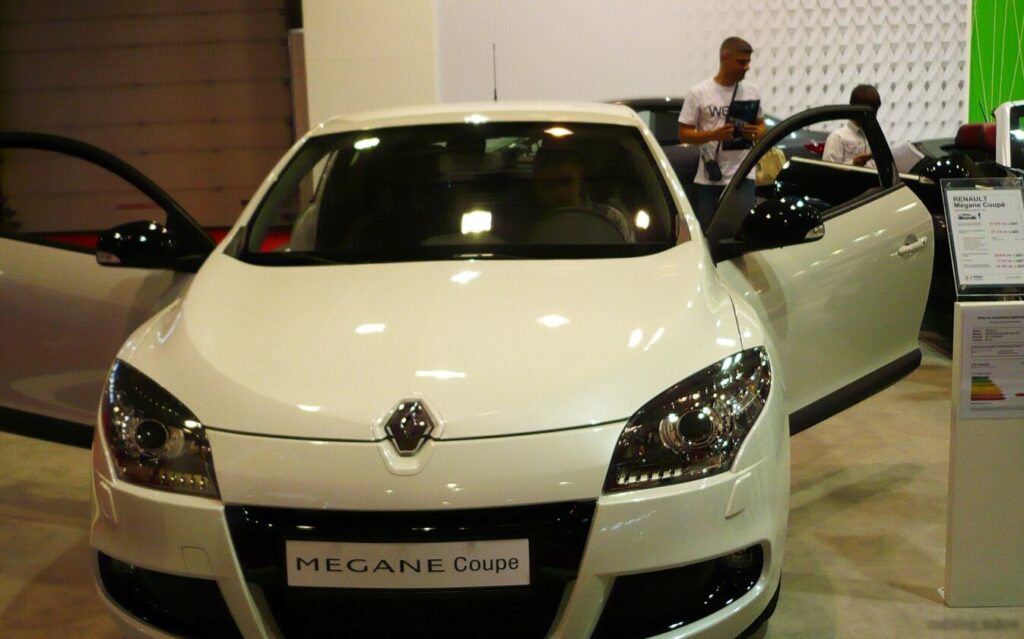
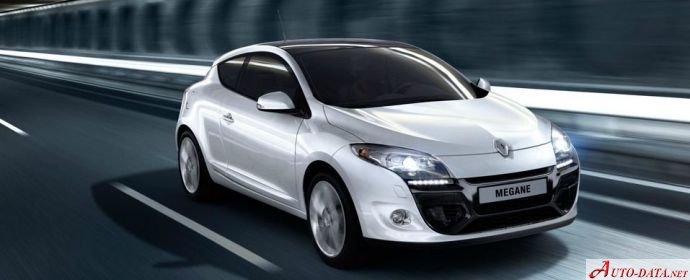
The design of the Renault Megane III Coupe, especially in its Phase II iteration, was a deliberate attempt to inject more emotion and dynamism into the compact segment. The front end featured Renault’s signature large logo and sculpted headlights, giving it a distinctive face. The coupe’s profile was characterized by a sloping roofline, pronounced wheel arches, and a short rear deck, creating a sporty and agile appearance. The Phase II update brought subtle revisions to the headlights, grille, and bumpers, further refining the car’s aesthetics.
Inside, the Megane III Coupe offered a functional and well-appointed cabin. The dashboard was designed with ergonomics in mind, featuring a clear and intuitive layout. Standard equipment included air conditioning, power windows, central locking, and a basic audio system. Higher trim levels offered features such as automatic climate control, a touchscreen infotainment system, navigation, and leather upholstery. Safety features were also a priority, with the Megane III Coupe equipped with ABS brakes, electronic stability control, and multiple airbags as standard. The coupe’s three-door configuration meant that rear seat access was slightly more challenging than in the five-door hatchback, but the rear seats still offered adequate space for passengers.
The Phase II update also brought improvements to the car’s interior quality and refinement. Renault addressed some of the criticisms leveled at the original Megane III by using higher-quality materials and improving the fit and finish of the cabin. The overall effect was a more premium and comfortable driving experience. The Megane III Coupe was positioned as a stylish and practical alternative to more mainstream compact cars, appealing to buyers who wanted a car that was both fun to drive and economical to run.
Technical Specifications
| Engine Type | 1.5L Turbocharged Diesel (K9K 656) |
| Displacement | 1,461 cc (89.16 cu in) |
| Horsepower | 110 hp @ 4000 rpm |
| Torque | 191.77 lb-ft @ 1750 rpm |
| Fuel System | Common Rail Direct Injection |
| Turbocharger | Variable Geometry Turbo |
| Transmission | 6-Speed Manual |
| Drivetrain | Front-Wheel Drive |
| 0-60 mph | 11.5 seconds |
| Top Speed | 118 mph (190 km/h) |
| Fuel Economy (Combined) | 67.2 US mpg (3.5 L/100km) |
| Curb Weight | 2,888 lbs (1,310 kg) |
| Body Style | 3-Door Coupe |
The Renault Megane III Coupe (Phase II) 1.5 Energy dCi (110 Hp) represents a compelling example of European automotive engineering, prioritizing efficiency and practicality. While it never reached American shores, its success in Europe underscores the demand for fuel-conscious and dynamically capable compact cars. It stands as a testament to Renault’s ability to deliver a well-rounded package that appealed to a broad range of drivers in a competitive market.