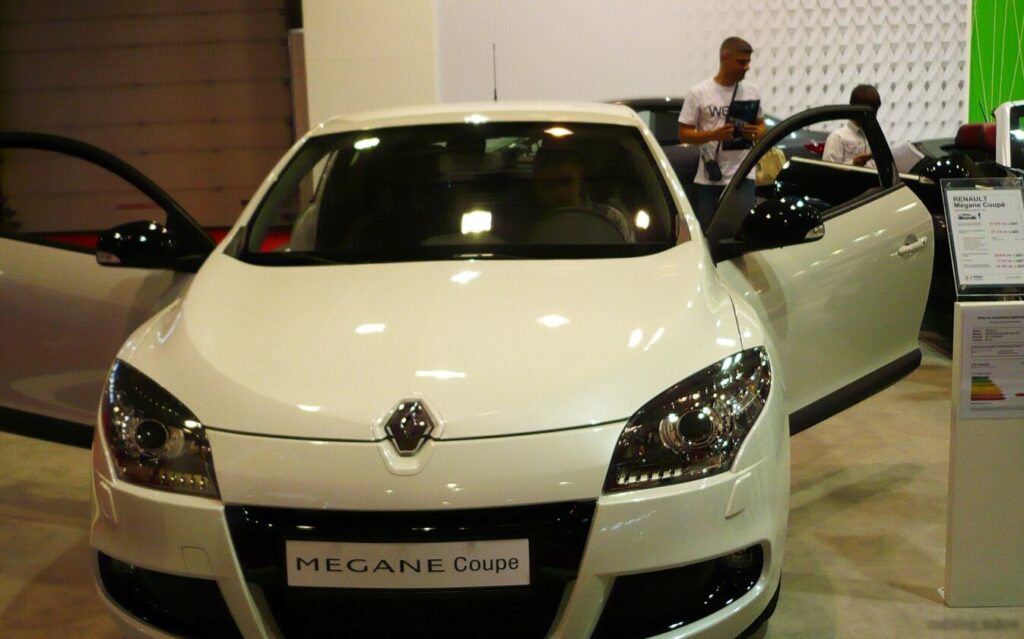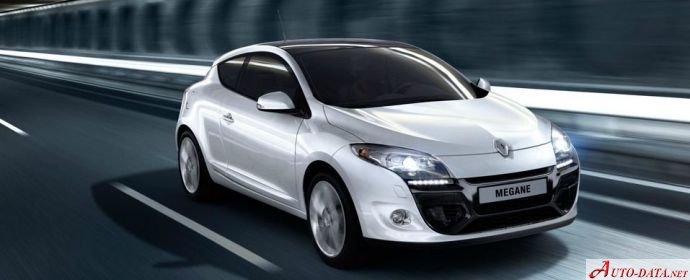
The Renault Megane III Coupe (Phase II, 2012) 2.0 16V (140 Hp) CVT represents a significant iteration of Renault’s popular C-segment offering, specifically targeting the European market with a blend of distinctive styling, practical performance, and modern efficiency. Unveiled as part of the Megane’s mid-cycle refresh in 2012, this particular variant combined a capable 2.0-liter naturally aspirated engine with a Continuously Variable Transmission (CVT), aiming to provide a smooth, comfortable, and fuel-efficient driving experience. As a model primarily designed for and sold within Europe, the Megane Coupe was a testament to Renault’s commitment to offering diverse body styles within its core lineup, catering to consumers seeking a sportier aesthetic than the conventional hatchback or sedan. It offered a compelling package for drivers looking for a compact car with a flair for design and contemporary features, positioned against a strong field of European competitors.
Engine & Performance of the Renault Megane III Coupe (Phase II, 2012)
At the heart of this Renault Megane III Coupe (Phase II, 2012) lies the M4R 711 engine, a 2.0-liter (1998 cm3 or 121.93 cu. in.) naturally aspirated inline-four gasoline unit. This powerplant was engineered to deliver a balance of usable power and respectable fuel economy for daily driving. It produced a peak output of 140 horsepower at 6000 rpm, which, for its class and era, provided a spirited yet accessible performance. Torque figures were equally impressive for a naturally aspirated engine of its size, generating 221.27 lb.-ft. (300 Nm) at a relatively low 2250 rpm. This broad torque band contributed to the car’s responsive feel in urban traffic and on the open road, reducing the need for constant downshifting, especially when paired with the sophisticated transmission.
The power was transmitted to the front wheels via a Continuously Variable Transmission (CVT). While CVTs are sometimes criticized for a disconnected driving feel, Renault’s implementation in the Megane III Coupe was designed to prioritize smoothness, efficiency, and driver comfort. This automatic transmission ensured seamless power delivery and optimized engine speed for various driving conditions, contributing significantly to the car’s fuel efficiency ratings. The Megane III Coupe (Phase II) achieved a combined fuel consumption of 30.9 US mpg (7.6 l/100 km), with urban figures at 23.1 US mpg (10.2 l/100 km) and extra-urban at an impressive 38.6 US mpg (6.1 l/100 km).
Performance metrics for this variant included an acceleration time from 0 to 60 mph in a swift 9.8 seconds, with the 0 to 100 km/h sprint taking 10.3 seconds. The top speed reached 121.17 mph (195 km/h), making it capable of comfortable highway cruising and occasional spirited driving. With a weight-to-power ratio of 9 kg/Hp (110.6 Hp/tonne) and a weight-to-torque ratio of 4.2 kg/Nm (237 Nm/tonne), the car offered a lively character for its segment. The engine adhered to the Euro 5 emission standard, reflecting its compliance with contemporary European environmental regulations.
Design & Features
The Renault Megane III Coupe (Phase II, 2012) stood out with its distinctive and sporty design. As a three-door coupe, it offered a more dynamic profile compared to its five-door hatchback sibling. The Phase II refresh brought subtle but effective aesthetic updates, including revised front fascias, lighting signatures, and interior trims, keeping the car fresh and competitive. Its flowing lines, pronounced wheel arches, and raked rear window gave it a sleek and athletic stance.
Measuring 169.25 inches (4299 mm) in length, 70.28 inches (1785 mm) in width, and 56.02 inches (1423 mm) in height, the Megane Coupe maintained compact dimensions suitable for European city driving while offering a surprisingly spacious interior for a coupe. The wheelbase stretched 103.94 inches (2640 mm), contributing to a stable ride and good handling. Despite its coupe designation, it was configured with five seats, although the rear seats were naturally more suited for occasional use or children due to the tapering roofline.
The vehicle’s unladen weight, or curb weight, was 2791.05 lbs (1266 kg), allowing for agile handling. Cargo capacity was practical, ranging from 13.31 cu. ft. (377 liters) with all seats in place, expanding to a generous 36.16 cu. ft. (1024 liters) with the rear seats folded down. This flexibility made it a viable option for those needing occasional extra cargo room.
Underneath, the Megane Coupe featured a robust chassis. The front suspension utilized an independent McPherson strut setup, known for its balance of comfort and handling precision. The rear suspension employed a torsion beam, a common and cost-effective solution for front-wheel-drive compacts, offering good packaging and predictable dynamics. Braking was handled by ventilated discs at the front and solid discs at the rear, complemented by an Anti-lock Braking System (ABS) for enhanced safety. The electric power steering system, coupled with a rack and pinion setup, provided light and responsive steering, making maneuvering in tight spaces effortless with a minimum turning circle of 35.93 ft (10.95 m). Standard tire size was 195/65 R15 91H, mounted on 6.5J x 15-inch wheel rims.
Technical Specifications
| Category | Feature |
| General Information | Brand |
| Renault | |
| Model | |
| Megane | |
| Generation | |
| Megane III Coupe (Phase II, 2012) | |
| Type (Engine) | |
| 2.0 16V (140 Hp) CVT | |
| Start of Production | |
| 2012 year | |
| End of Production | |
| 2013 year | |
| Body type | |
| Coupe, 3 Doors, 5 Seats | |
| Performance Specs | Fuel consumption (economy) – urban |
| 23.1 US mpg (10.2 l/100 km) | |
| Fuel consumption (economy) – extra urban | |
| 38.6 US mpg (6.1 l/100 km) | |
| Fuel consumption (economy) – combined | |
| 30.9 US mpg (7.6 l/100 km) | |
| CO2 emissions | |
| 175 g/km | |
| Fuel Type | |
| Petrol (Gasoline) | |
| Acceleration 0 – 60 mph | |
| 9.8 sec | |
| Maximum speed | |
| 121.17 mph (195 km/h) | |
| Emission standard | |
| Euro 5 | |
| Engine Specs | Power |
| 140 Hp @ 6000 rpm | |
| Torque | |
| 221.27 lb.-ft. (300 Nm) @ 2250 rpm | |
| Engine layout | |
| Front, Transverse | |
| Engine Model/Code | |
| M4R 711 | |
| Engine displacement | |
| 2.0 liters (1998 cm3 / 121.93 cu. in.) | |
| Number of cylinders | |
| 4, Inline | |
| Compression ratio | |
| 9.3:1 | |
| Number of valves per cylinder | |
| 4 | |
| Fuel injection system | |
| Multi-port manifold injection | |
| Engine aspiration | |
| Naturally aspirated engine | |
| Engine oil capacity | |
| 3.7 US qt (3.5 l) | |
| Coolant | |
| 7.19 US qt (6.8 l) | |
| Space, Volume and Weights | Kerb Weight |
| 2791.05 lbs (1266 kg) | |
| Max. weight | |
| 3999.19 lbs (1814 kg) | |
| Trunk (boot) space – minimum | |
| 13.31 cu. ft. (377 l) | |
| Trunk (boot) space – maximum | |
| 36.16 cu. ft. (1024 l) | |
| Fuel tank capacity | |
| 15.85 US gal (60 l) | |
| Permitted trailer load with brakes (12%) | |
| 2866.01 lbs (1300 kg) | |
| Permitted trailer load without brakes | |
| 1477.1 lbs (670 kg) | |
| Dimensions | Length |
| 169.25 in (4299 mm) | |
| Width | |
| 70.28 in (1785 mm) | |
| Height | |
| 56.02 in (1423 mm) | |
| Wheelbase | |
| 103.94 in (2640 mm) | |
| Front track | |
| 60.87 in (1546 mm) | |
| Rear (Back) track | |
| 60.91 in (1547 mm) | |
| Front overhang | |
| 33.94 in (862 mm) | |
| Rear overhang | |
| 31.38 in (797 mm) | |
| Minimum turning circle (turning diameter) | |
| 35.93 ft (10.95 m) | |
| Drivetrain, Brakes and Suspension Specs | Drivetrain Architecture |
| Front wheel drive, Internal Combustion engine | |
| Drive wheel | |
| Front wheel drive | |
| Number of gears and type of gearbox | |
| 1 gear, automatic transmission CVT | |
| Front suspension | |
| Independent type McPherson | |
| Rear suspension | |
| Torsion | |
| Front brakes | |
| Ventilated discs | |
| Rear brakes | |
| Disc | |
| Assisting systems | |
| ABS (Anti-lock braking system) | |
| Steering type | |
| Steering rack and pinion, Electric Steering | |
| Tires and Wheels | Tires size |
| 195/65 R15 91H | |
| Wheel rims size | |
| 6.5J x 15 |
Legacy and Market Impact
The Renault Megane III Coupe (Phase II, 2012) 2.0 16V (140 Hp) CVT played a crucial role in Renault’s portfolio, particularly in the highly competitive European C-segment. While not offered in the United States, where Renault exited the market decades prior, it was a familiar sight on European roads, representing a stylish and accessible option for buyers seeking something beyond the ubiquitous hatchback. This specific 2.0-liter CVT variant carved out a niche for itself by offering a refined and relaxed driving experience, prioritizing comfort and efficiency over outright raw sportiness, which was often the focus of other coupe variants or hot hatches.
In its primary markets, the Megane Coupe competed with a diverse range of vehicles. Rivals included models like the Volkswagen Scirocco, Opel Astra GTC, and to some extent, premium compact coupes from brands like Audi (A3 3-door) or BMW (1 Series Coupe), though the Megane typically offered a more value-oriented proposition. Renault’s reputation for innovative design, comfortable interiors, and strong safety credentials helped the Megane Coupe maintain its appeal. The Phase II update ensured it remained visually current and technologically relevant during its short production run from 2012 to 2013, before the next-generation Megane emerged.
The choice of a 2.0-liter naturally aspirated engine paired with a CVT was strategic. It catered to a segment of the market that appreciated smooth, linear acceleration and the convenience of an automatic transmission, without the added complexity or cost of turbocharging, which was becoming increasingly prevalent. The engine’s robust torque delivery at low RPMs made it particularly well-suited for urban driving and relaxed highway cruising, characteristics that resonate well with a broad demographic in Europe. Its compliance with Euro 5 emission standards also underscored Renault’s commitment to environmental responsibility at the time.
Ultimately, the Renault Megane III Coupe (Phase II, 2012) 2.0 16V (140 Hp) CVT stands as an example of a well-rounded European compact coupe. It successfully blended distinctive styling, practical performance, and modern efficiency into a package that was both engaging to drive and economical to own. Its legacy is one of a stylish, comfortable, and reliable option within its segment, contributing to the Megane’s enduring popularity and Renault’s strong presence in the European automotive landscape.