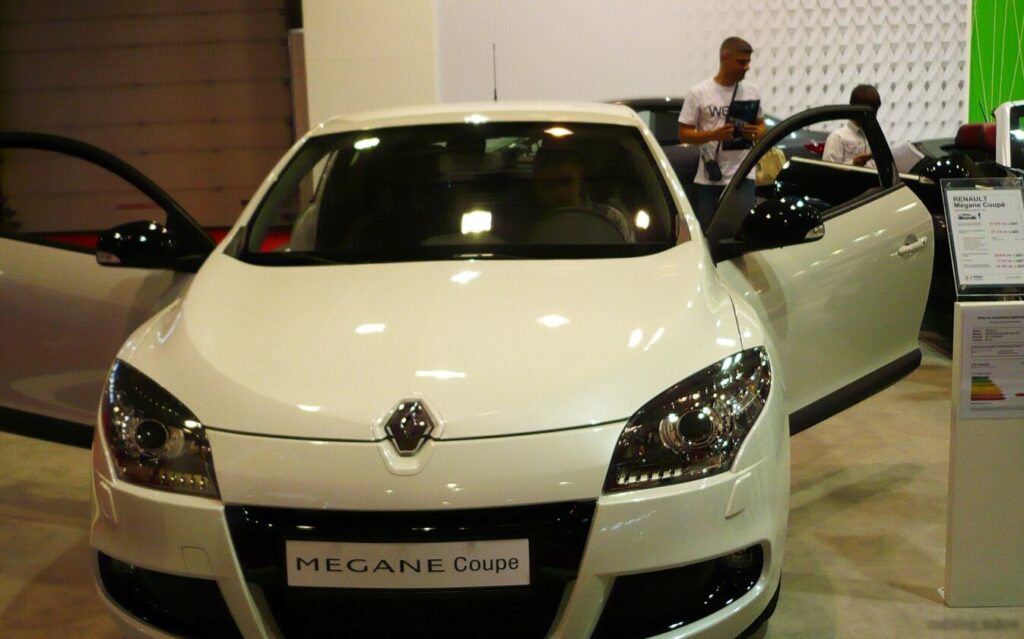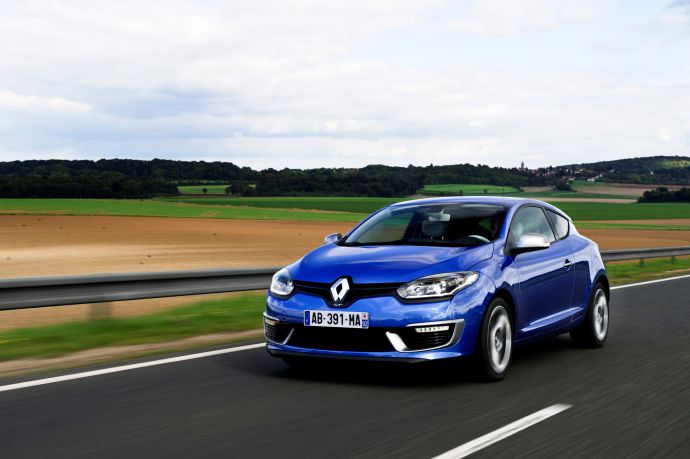
The Renault Megane III Coupe, specifically the Phase III model launched in 2014, represents a significant iteration of Renault’s popular compact car line. While not marketed in the United States, the Megane series has been a cornerstone of the European automotive landscape for decades, competing in the highly contested C-segment. The Phase III update, produced from 2014 to 2016, brought a refreshed design and enhanced powertrain options, aiming to maintain its competitive edge against rivals across the continent. This particular variant, equipped with the 1.2 Energy TCe (132 Hp) engine and Start&Stop technology, epitomized Renault’s commitment to combining spirited performance with impressive fuel efficiency in a stylish, three-door coupe package.
Positioned as a more dynamically styled alternative to the standard Megane hatchback, the Megane III Coupe offered a sportier aesthetic and driving experience. Its primary market was Europe, where compact coupes and three-door hatchbacks have historically enjoyed strong appeal among buyers seeking a blend of practicality, performance, and distinctive design. The introduction of the ‘Energy TCe’ engine family underscored a broader industry trend towards engine downsizing and turbocharging, delivering robust power output from smaller displacements while simultaneously reducing fuel consumption and CO2 emissions, a critical factor in the stringent European regulatory environment.
Renault Megane III Coupe: Engine & Performance
At the heart of this particular Renault Megane III Coupe lies the H5F 412 engine, a 1.2-liter (1197 cm3 or 73.05 cu. in.) inline four-cylinder gasoline unit. This engine is part of Renault’s “Energy TCe” family, denoting its focus on efficiency through advanced technologies such as turbocharging, an intercooler, and a Start&Stop system. The engine is configured with a front, transverse layout, driving the front wheels, a common and efficient setup for compact vehicles. It features four valves per cylinder, optimizing airflow for combustion, and utilizes a multi-port manifold injection system.
Despite its modest displacement, the turbocharger and intercooler allow this engine to produce a respectable 132 horsepower at 5500 rpm, translating to an impressive power output of 110.3 horsepower per liter. More significantly, it delivers a healthy 151.2 lb.-ft. (205 Nm) of torque at a low 2000 rpm. This broad torque band ensures responsive acceleration and flexible driving characteristics, making it well-suited for both city driving and highway cruising.
Performance figures for the Megane III Coupe with this powertrain are competitive for its segment. It accelerates from 0 to 60 mph in a brisk 9.2 seconds (0-100 km/h in 9.7 seconds) and can reach a maximum speed of 118 mph (190 km/h). Power is managed through a precise 6-speed manual transmission, offering driver engagement and further contributing to the vehicle’s efficiency profile. The inclusion of a Start&Stop system is crucial for urban environments, automatically shutting off the engine when the vehicle is stationary to save fuel and reduce emissions.
Fuel economy is a key highlight, with combined consumption rated at 5.4 liters per 100 km, which translates to an excellent 43.6 US mpg (52.3 UK mpg). Urban driving yields 35.1 US mpg (6.7 l/100 km), while extra-urban conditions see an even more impressive 51.1 US mpg (4.6 l/100 km). With CO2 emissions of 124 g/km, the vehicle meets the Euro 5 emission standard, reflecting its environmentally conscious design. The engine requires 4.6 liters (4.86 US quarts) of engine oil and has a coolant capacity of 6.5 liters (6.87 US quarts).
Design & Features
The Renault Megane III Coupe, in its Phase III iteration, stands out with its distinctive and sporty design. As a three-door coupe, it eschews the more conventional hatchback silhouette for a sleeker, more dynamic profile. Measuring 169.25 inches (4299 mm) in length, 70.28 inches (1785 mm) in width, and 56.02 inches (1423 mm) in height, the coupe maintains a compact footprint while projecting an athletic stance. The 103.94-inch (2640 mm) wheelbase contributes to stable handling and a comfortable ride, while the front and rear tracks of 60.87 inches (1546 mm) and 60.91 inches (1547 mm) respectively emphasize its planted road presence.
The Phase III refresh typically included updated front fascia elements, such as a revised grille and headlights, aligning it with Renault’s evolving design language of the time. The fluid lines, pronounced wheel arches, and raked rear window contribute to its coupe identity. Depending on the trim, the vehicle could be fitted with 205/55 R16 or 205/50 R17 tires on 6.5J x 16 or 6.5J x 17 wheel rims, further enhancing its visual appeal and handling characteristics.
Despite its coupe designation, the Megane III Coupe offers a surprisingly practical interior. It is designed to accommodate five occupants, although rear-seat access is naturally more constrained than in a five-door model. The interior combines modern aesthetics with user-friendly ergonomics, characteristic of Renault’s focus on comfort and intuitive controls. The trunk space is quite versatile, offering a minimum of 12.15 cubic feet (344 liters) and expanding to a generous 35 cubic feet (991 liters) with the rear seats folded down, making it capable of handling everyday cargo needs.
Safety features are fundamental in modern European vehicles, and the Megane III Coupe is equipped with essential systems like ABS (Anti-lock Braking System) for enhanced stopping power and stability. The braking system itself comprises ventilated discs at the front and solid discs at the rear, providing reliable deceleration. Steering is handled by a rack and pinion system, offering direct and predictable control. The vehicle’s kerb weight of 2656.57 lbs (1205 kg) contributes to its agile feel, while a maximum permissible weight of 3906.59 lbs (1772 kg) allows for a substantial payload capacity of 1250.02 lbs (567 kg). Additionally, it has a permissible trailer load of 2866.01 lbs (1300 kg) with brakes.
Technical Specifications
| Category | Specification |
| Brand | Renault |
| Model | Megane |
| Generation | Megane III Coupe (Phase III, 2014) |
| Type (Engine) | 1.2 Energy TCe (132 Hp) Start&Stop |
| Start of Production | 2014 year |
| End of Production | 2016 year |
| Powertrain Architecture | Internal Combustion engine |
| Body Type | Coupe |
| Seats | 5 |
| Doors | 3 |
| Fuel Consumption (Urban) | 6.7 l/100 km (35.1 US mpg) |
| Fuel Consumption (Extra Urban) | 4.6 l/100 km (51.1 US mpg) |
| Fuel Consumption (Combined) | 5.4 l/100 km (43.6 US mpg) |
| CO2 Emissions | 124 g/km |
| Fuel Type | Petrol (Gasoline) |
| Acceleration 0 – 60 mph | 9.2 sec |
| Acceleration 0 – 100 km/h | 9.7 sec |
| Maximum Speed | 118.06 mph (190 km/h) |
| Emission Standard | Euro 5 |
| Weight-to-Power Ratio | 9.1 kg/Hp (109.5 Hp/tonne) |
| Weight-to-Torque Ratio | 5.9 kg/Nm (170.1 Nm/tonne) |
| Power | 132 Hp @ 5500 rpm |
| Power per Liter | 110.3 Hp/l |
| Torque | 205 Nm @ 2000 rpm (151.2 lb.-ft. @ 2000 rpm) |
| Engine Layout | Front, Transverse |
| Engine Model/Code | H5F 412 |
| Engine Displacement | 1197 cm3 (1.2 l / 73.05 cu. in.) |
| Number of Cylinders | 4 |
| Engine Configuration | Inline |
| Cylinder Bore | 72.2 mm (2.84 in.) |
| Piston Stroke | 73.2 mm (2.88 in.) |
| Compression Ratio | 9.3:1 |
| Number of Valves per Cylinder | 4 |
| Fuel Injection System | Multi-port manifold injection |
| Engine Aspiration | Turbocharger, Intercooler |
| Engine Oil Capacity | 4.6 l (4.86 US qt) |
| Coolant Capacity | 6.5 l (6.87 US qt) |
| Engine Systems | Start & Stop System |
| Kerb Weight | 1205 kg (2656.57 lbs) |
| Max. Weight | 1772 kg (3906.59 lbs) |
| Max Load | 567 kg (1250.02 lbs) |
| Trunk (Boot) Space – Minimum | 344 l (12.15 cu. ft.) |
| Trunk (Boot) Space – Maximum | 991 l (35 cu. ft.) |
| Fuel Tank Capacity | 60 l (15.85 US gal) |
| Permitted Trailer Load with Brakes (12%) | 1300 kg (2866.01 lbs) |
| Permitted Trailer Load without Brakes | 635 kg (1399.94 lbs) |
| Length | 4299 mm (169.25 in.) |
| Width | 1785 mm (70.28 in.) |
| Height | 1423 mm (56.02 in.) |
| Wheelbase | 2640 mm (103.94 in.) |
| Front Track | 1546 mm (60.87 in.) |
| Rear Track | 1547 mm (60.91 in.) |
| Front Overhang | 862 mm (33.94 in.) |
| Rear Overhang | 797 mm (31.38 in.) |
| Ride Height (Ground Clearance) | 120 mm (4.72 in.) |
| Minimum Turning Circle (Turning Diameter) | 10.95 m (35.93 ft.) |
| Drivetrain Architecture | Front wheel drive (Internal Combustion engine drives front wheels) |
| Drive Wheel | Front wheel drive |
| Number of Gears and Type of Gearbox | 6 gears, manual transmission |
| Front Brakes | Ventilated discs |
| Rear Brakes | Disc |
| Assisting Systems | ABS (Anti-lock braking system) |
| Steering Type | Steering rack and pinion |
| Tires Size | 205/55 R16 91H; 205/50 R17 89V |
| Wheel Rims Size | 6.5J x 16; 6.5J x 17 |
Legacy and Market Impact of the Renault Megane III Coupe
The Renault Megane III Coupe, particularly during its Phase III production run from 2014 to 2016, played a crucial role in Renault’s strategy for the European compact segment. While never officially imported into the United States, its legacy in its home market is one of a stylish, practical, and efficient option for buyers seeking something beyond the conventional hatchback. The Megane Coupe was designed to appeal to a younger demographic or those desiring a sportier aesthetic without sacrificing too much everyday usability.
In Europe, the Megane III Coupe competed in a fiercely competitive class, going head-to-head with established rivals such as the three-door variants of the Volkswagen Golf, Ford Focus, Opel Astra, and Peugeot 308. Each of these offered compelling packages, but the Megane Coupe sought to differentiate itself with its distinctively French design flair and a strong emphasis on comfort and ride quality, hallmarks of the Renault brand. The 1.2 Energy TCe engine, with its blend of 132 horsepower and impressive fuel economy (43.6 US mpg combined), was particularly well-suited to the European market’s preference for downsized, turbocharged engines that offered a balance of performance and low running costs.
The Megane III Coupe’s reputation was built on its engaging driving dynamics, comfortable interior, and its ability to offer a more emotional choice in a segment often dominated by practicality. The Phase III update helped keep its design fresh and its technology current, ensuring it remained relevant against newer competitors. Its Start&Stop system and Euro 5 emission compliance demonstrated Renault’s commitment to environmental responsibility, a growing concern for European consumers and regulators.
Ultimately, the Megane III Coupe contributed to the overall success of the third-generation Megane, reinforcing Renault’s position as a major player in the compact car segment. While the trend for three-door coupes and hatchbacks has diminished somewhat in recent years in favor of more versatile five-door models and SUVs, the Megane III Coupe stands as an example of a period when style and a slightly less conventional body style were highly valued. It showcased Renault’s engineering prowess in developing efficient and powerful small-displacement engines and its ability to blend attractive design with everyday functionality for its core European audience.