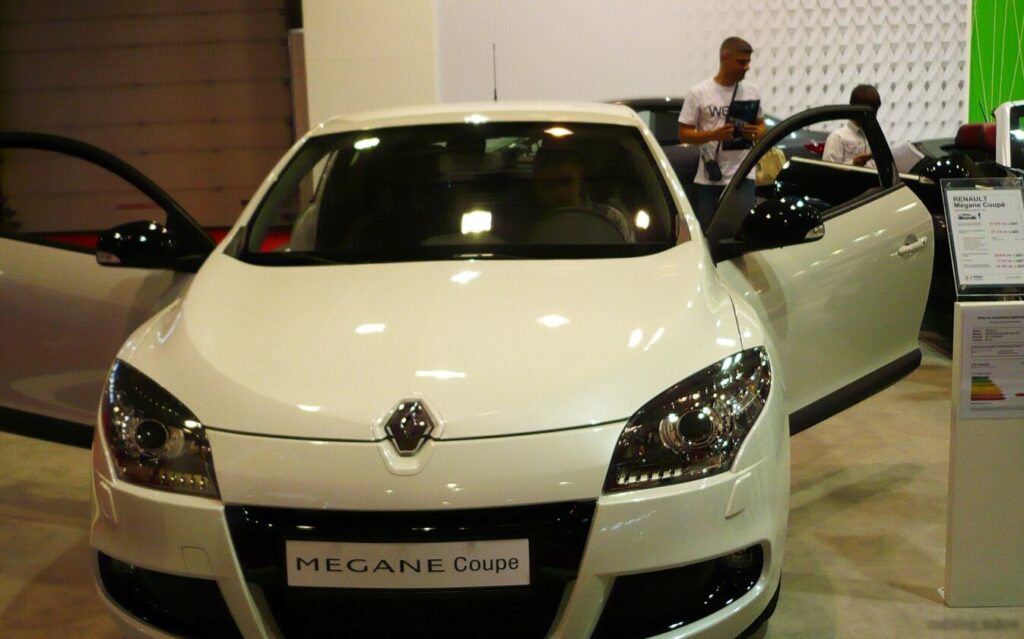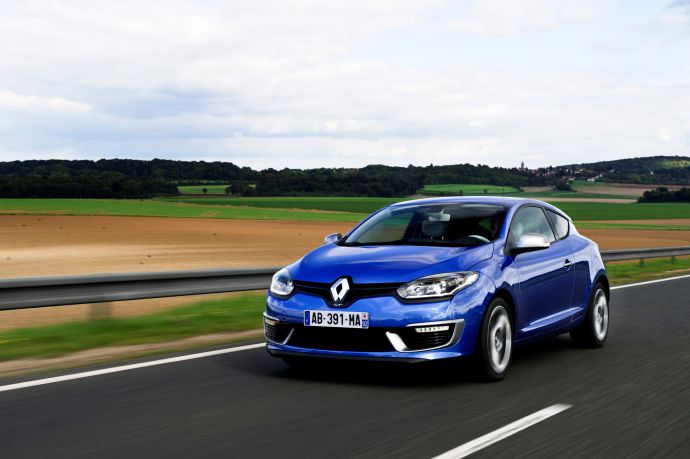
The Renault Megane III Coupe (Phase III, 2014) RS 2.0 (265 Hp) Start&Stop represents a pinnacle of front-wheel-drive performance in the European hot hatch segment. Produced by the French automaker Renault through its renowned Renault Sport division, this particular model, launched in 2014 as part of the third-generation Megane’s Phase III facelift, was engineered for enthusiasts seeking a potent and engaging driving experience. While never officially imported to the United States market, the Megane RS carved out a formidable reputation across Europe and other global markets as a track-focused yet road-legal machine capable of challenging more expensive sports cars.
Renault Megane III Coupe (Phase III, 2014) RS 2.0: A Performance Overview
Positioned as a high-performance variant within the Megane lineup, the RS 2.0 (265 Hp) Start&Stop combined aggressive styling with a highly tuned powertrain and chassis. Its coupe body style, featuring three doors and seating for five, offered a blend of practicality and sporty aesthetics. This iteration of the Megane RS continued the legacy of its predecessors, consistently setting benchmarks for front-wheel-drive dynamics and driver involvement. The inclusion of a Start&Stop system also highlighted Renault’s efforts to balance raw performance with improved fuel efficiency and reduced emissions, aligning with contemporary environmental standards like Euro 5.
Engine & Performance: The Heart of the Machine
At the core of the Renault Megane III Coupe (Phase III, 2014) RS 2.0 (265 Hp) Start&Stop lies a highly capable F4R 874 engine, a 1998 cubic centimeter (approximately 2.0-liter) inline-four cylinder unit. This powerplant is significantly enhanced by a turbocharger and intercooler, ensuring robust power delivery across the rev range. With a compression ratio of 8.6:1 and a multi-port manifold injection system, the engine is optimized for both performance and reliability.
The engine produces an impressive 265 horsepower at 5500 rpm, translating to a power-per-liter output of 132.6 horsepower per liter—a testament to its advanced engineering. Torque figures are equally compelling, with 265.52 lb-ft (360 Nm) available from a relatively low 3000 rpm, providing strong mid-range acceleration. This robust power is channeled to the front wheels via a precise 6-speed manual transmission, a choice that underscores the car’s driver-centric philosophy and commitment to an engaging driving experience.
Performance metrics are thrilling for a front-wheel-drive vehicle: the Megane RS accelerates from 0 to 60 mph in a swift 5.7 seconds, and its top speed reaches 157.83 mph (254 km/h). The car’s weight-to-power ratio stands at a commendable 5.2 kg per horsepower, or 192.2 horsepower per ton, illustrating its effective power management relative to its curb weight of 3040.17 lbs (1379 kg). Despite its performance credentials, the Megane RS 2.0 also incorporates a Start&Stop system, contributing to a combined fuel economy of 31.4 US mpg (7.5 liters per 100 km) and CO2 emissions of 174 g/km, meeting Euro 5 emission standards. This balance of exhilarating performance and relative efficiency was a key selling point in its primary European market.
Design & Features: Aggression and Functionality
The design of the Renault Megane III Coupe (Phase III, 2014) RS is unmistakably aggressive, reflecting its high-performance intent. As a three-door coupe, it boasts a sleek profile, complemented by muscular fender flares, a distinctive front fascia with an integrated blade spoiler, and a prominent rear diffuser housing a central exhaust outlet—all hallmarks of Renault Sport design. The Phase III facelift introduced subtle but effective updates, refining the car’s aesthetic appeal while maintaining its athletic stance.
Measuring 169.25 inches (4299 mm) in length, 72.76 inches (1848 mm) in width (80.2 inches or 2037 mm including mirrors), and 56.5 inches (1435 mm) in height, the Megane RS Coupe possesses compact dimensions that contribute to its agility. A wheelbase of 103.78 inches (2636 mm) helps provide stability at speed and confident handling. The car rides on 18-inch wheels, typically shod with performance tires sized 225/40 R18, which provide ample grip and contribute to its sharp steering response.
Inside, the cabin is driver-focused, featuring supportive sport seats, a unique instrument cluster, and RS badging throughout. While designed for performance, it doesn’t entirely sacrifice practicality, offering seating for five (though the rear seats are tighter in a coupe) and a respectable trunk space ranging from 12.15 cubic feet (344 liters) to 35 cubic feet (991 liters) with the rear seats folded. Safety features include ventilated disc brakes at the front and disc brakes at the rear, coupled with an Anti-lock Braking System (ABS), ensuring powerful and controlled stopping performance. The steering system utilizes a rack and pinion setup, delivering direct and communicative feedback to the driver, crucial for a performance vehicle of this caliber.
Technical Specifications
| Category | Specification |
| Brand | Renault |
| Model | Megane |
| Generation | Megane III Coupe (Phase III, 2014) |
| Type (Engine) | RS 2.0 (265 Hp) Start&Stop |
| Production Start | 2014 year |
| Production End | 2016 year |
| Body type | Coupe |
| Seats | 5 |
| Doors | 3 |
| Fuel Type | Petrol (Gasoline) |
| Fuel Consumption (Urban) | 9.8 l/100 km |
| Fuel Consumption (Extra Urban) | 6.2 l/100 km |
| Fuel Consumption (Combined) | 7.5 l/100 km |
| CO2 Emissions | 174 g/km |
| Acceleration 0-60 mph | 5.7 sec |
| Maximum speed | 254 km/h |
| Emission standard | Euro 5 |
| Power | 265 Hp @ 5500 rpm |
| Torque | 360 Nm @ 3000 rpm |
| Engine displacement | 1998 cm3 |
| Number of cylinders | 4 |
| Engine configuration | Inline |
| Cylinder Bore | 82.7 mm |
| Piston Stroke | 93 mm |
| Compression ratio | 8.6:1 |
| Valves per cylinder | 4 |
| Fuel injection system | Multi-port manifold injection |
| Engine aspiration | Turbocharger, Intercooler |
| Engine oil capacity | 5.4 l |
| Coolant capacity | 6.5 l |
| Kerb Weight | 1379 kg |
| Max. weight | 1887 kg |
| Max load | 508 kg |
| Trunk (boot) space – minimum | 344 l |
| Trunk (boot) space – maximum | 991 l |
| Fuel tank capacity | 60 l |
| Max. roof load | 80 kg |
| Length | 4299 mm |
| Width | 1848 mm |
| Width including mirrors | 2037 mm |
| Height | 1435 mm |
| Wheelbase | 2636 mm |
| Front track | 1588 mm |
| Rear (Back) track | 1545 mm |
| Front overhang | 860 mm |
| Rear overhang | 803 mm |
| Ride height (ground clearance) | 120 mm |
| Minimum turning circle | 11.35 m |
| Drive wheel | Front wheel drive |
| Gearbox type | 6 gears, manual transmission |
| Front brakes | Ventilated discs |
| Rear brakes | Disc |
| Assisting systems | ABS (Anti-lock braking system) |
| Steering type | Steering rack and pinion |
| Tires size | 225/40 R18 |
| Wheel rims size | 18 |
Legacy and Market Impact
The Renault Megane RS series, particularly the third-generation models like the 2014 Phase III Coupe, cemented Renault Sport’s reputation as a purveyor of some of the most engaging and capable front-wheel-drive performance cars in the world. Its legacy is built on a foundation of exceptional chassis tuning, precise steering, and a powertrain that delivers exhilarating performance without overwhelming the front wheels. The Megane RS consistently challenged and often surpassed its direct competitors in terms of track performance and driver feedback.
In the highly competitive European hot hatch market, the Megane RS 2.0 (265 Hp) stood shoulder-to-shoulder with formidable rivals such as the Volkswagen Golf R, Ford Focus ST (and later RS), Honda Civic Type R (though the FK2 generation followed the Megane III RS), and the SEAT Leon Cupra. What often distinguished the Megane RS was its raw, unfiltered driving experience, particularly when equipped with the optional “Cup” chassis. This typically included a limited-slip differential, stiffer suspension, and more track-oriented settings, making it a favorite among track day enthusiasts.
The Megane RS also gained significant prestige by repeatedly setting lap records for front-wheel-drive vehicles at the Nürburgring Nordschleife, a testament to its engineering prowess. These achievements underscored its position as a serious performance machine, often punching above its weight class. While its absence from the North American market meant it remained an enthusiast’s secret in the US, it left an indelible mark on the global automotive landscape, demonstrating that front-wheel drive could be a platform for truly world-class performance. Its impact resonates in how other manufacturers subsequently approached the development of their own high-performance compact cars, often using the Megane RS as a benchmark for dynamic capability and driver engagement. The 2014 Phase III model, with its refined power and efficiency balance, remains a highly sought-after performance car in its native markets.