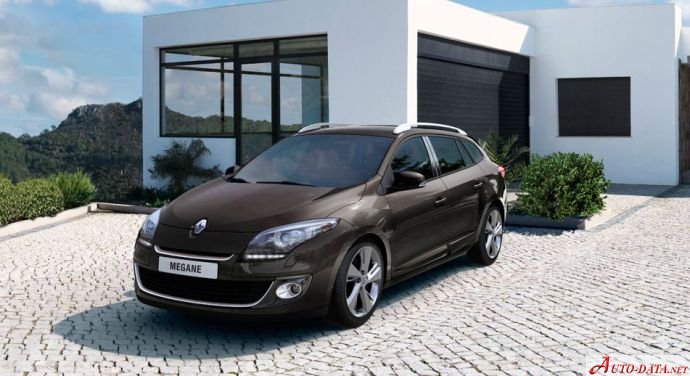
The Renault Megane, a cornerstone of the European compact car segment, has long been a testament to French automotive engineering, blending practicality, comfort, and distinctive styling. The third generation, introduced in 2008, received a significant refresh in 2012, known as Phase II. This particular iteration, the Renault Megane III Grandtour (Phase II, 2012) 1.2 Energy TCe (115 Hp), represents a pivotal point in the model’s evolution, particularly in its focus on efficiency and modern powertrain technology. While the Megane was never officially sold in the United States, it enjoyed immense popularity across Europe, where it competed fiercely in the highly contested C-segment. The Grandtour, or station wagon variant, was especially prized for its enhanced cargo capacity and family-friendly appeal, offering a compelling alternative to traditional sedans and hatchbacks for European consumers.
During its production run from 2012 to 2013, this specific model showcased Renault’s commitment to downsizing engines without sacrificing everyday usability. The 1.2-liter Energy TCe engine, a product of this philosophy, provided a balance of performance suitable for both urban commuting and longer highway journeys, while adhering to increasingly stringent European emission standards. The Megane III Grandtour Phase II continued to build on its predecessors’ reputation for a comfortable ride and a well-appointed interior, solidifying its position as a practical and economical choice for families and individuals alike in its primary European markets.
Engine & Performance: The 1.2 Energy TCe Powerplant
At the heart of the Renault Megane III Grandtour (Phase II, 2012) 1.2 Energy TCe (115 Hp) lies a sophisticated 1.2-liter (1197 cm³ or 73.05 cu. in.) turbocharged inline-four gasoline engine, designated as the H5F 408. This powertrain architecture, featuring a front, transverse layout and front-wheel drive, was a prime example of the industry’s shift towards smaller, more efficient turbocharged units. Despite its modest displacement, the engine delivered a respectable 115 horsepower at 4500 rpm, showcasing Renault’s engineering prowess in extracting significant power per liter (96.1 Hp/l).
More importantly for a family station wagon, the engine produced a healthy 140.14 lb.-ft. (190 Nm) of torque, available at a low 2000 rpm. This broad torque band was crucial for responsive acceleration and flexible driving, reducing the need for frequent gear changes, especially when carrying passengers or cargo. The inclusion of a turbocharger and intercooler was key to achieving this power and torque output, transforming the small engine into a capable performer.
Mated to a precise 6-speed manual transmission, the Megane III Grandtour offered an engaging driving experience. Performance figures were competitive for its class, with an acceleration from 0 to 60 mph in a calculated 10.6 seconds and a top speed of 118.06 mph (190 km/h). These numbers demonstrate that while efficiency was a priority, the car was by no means sluggish. Fuel economy was a major selling point, with a combined rating of 44.4 US mpg (5.3 l/100 km), which was excellent for a vehicle of its size and capability at the time. Its CO2 emissions of 119 g/km and Euro 5 emission standard compliance further underscored its environmental credentials, a critical factor for European buyers. The engine’s compression ratio of 10:1 and multi-port manifold injection system were optimized for efficient combustion, contributing to both performance and fuel savings.
Design & Features: Practicality Meets Refinement
The Renault Megane III Grandtour (Phase II, 2012) 1.2 Energy TCe (115 Hp) adopted the highly practical and versatile station wagon (estate) body type, a popular choice in Europe for its blend of passenger comfort and cargo utility. With five doors and seating for five occupants, it was designed to accommodate the demands of daily family life. The Phase II refresh brought subtle yet effective updates to the Megane’s design, including revised front fascias, new lighting signatures, and updated interior trim options, maintaining its contemporary appeal.
In terms of dimensions, the Grandtour measured 179.49 inches (4559 mm) in length, 69.53 inches (1766 mm) in width, and 57.52 inches (1461 mm) in height, with a generous wheelbase of 106.42 inches (2703 mm). These dimensions contributed to a spacious cabin and a substantial cargo area. The trunk space was a standout feature, offering 18.5 cu. ft. (524 liters) with the rear seats up, expanding to an impressive 56.33 cu. ft. (1595 liters) when the rear seats were folded down. This made the Megane Grandtour an ideal vehicle for everything from weekly grocery runs to extended family vacations, capable of swallowing significant luggage or sports equipment.
Beyond its spaciousness, the Megane III Grandtour incorporated a range of features aimed at enhancing safety, comfort, and driving dynamics. Standard safety equipment included ABS (Anti-lock Braking System), a crucial system for maintaining steering control during emergency braking. The steering system featured an electric power steering rack and pinion setup, providing light and precise steering, especially beneficial in urban environments and for parking maneuvers, with a minimum turning circle of 36.25 ft (11.05 m). The suspension system comprised an independent McPherson type at the front and an elastic beam at the rear, a common and effective setup that offered a comfortable ride quality characteristic of French cars, while maintaining decent handling. Braking duties were handled by ventilated discs at the front and solid discs at the rear, providing reliable stopping power. The car rode on 195/65 R15 91H tires, mounted on 6.5J x 15 wheel rims, a practical choice balancing ride comfort and tire costs.
Renault Megane III Grandtour (Phase II, 2012) 1.2 Energy TCe: Technical Specifications
| General Information | |
| Brand | Renault |
| Model | Megane |
| Generation | Megane III Grandtour (Phase II, 2012) |
| Type (Engine) | 1.2 Energy TCe (115 Hp) |
| Start of Production | 2012 |
| End of Production | 2013 |
| Powertrain Architecture | Internal Combustion engine |
| Body Type | Station wagon (estate) |
| Seats | 5 |
| Doors | 5 |
| Performance Specifications | |
| Fuel Consumption (Urban) | 36.8 US mpg (6.4 l/100 km) |
| Fuel Consumption (Extra Urban) | 51.1 US mpg (4.6 l/100 km) |
| Fuel Consumption (Combined) | 44.4 US mpg (5.3 l/100 km) |
| CO2 Emissions | 119 g/km |
| Fuel Type | Petrol (Gasoline) |
| Acceleration 0 – 60 mph | 10.6 sec |
| Acceleration 0 – 100 km/h | 11.2 sec |
| Maximum Speed | 118.06 mph (190 km/h) |
| Emission Standard | Euro 5 |
| Weight-to-Power Ratio | 11.2 kg/Hp |
| Weight-to-Torque Ratio | 6.8 kg/Nm |
| Engine Specifications | |
| Power | 115 Hp @ 4500 rpm |
| Power per liter | 96.1 Hp/l |
| Torque | 140.14 lb.-ft. (190 Nm) @ 2000 rpm |
| Engine Layout | Front, Transverse |
| Engine Model/Code | H5F 408 |
| Engine Displacement | 1197 cm³ (73.05 cu. in.) |
| Number of Cylinders | 4 |
| Engine Configuration | Inline |
| Cylinder Bore | 2.84 in. (72.2 mm) |
| Piston Stroke | 2.88 in. (73.2 mm) |
| Compression Ratio | 10:1 |
| Number of Valves per Cylinder | 4 |
| Fuel Injection System | Multi-port manifold injection |
| Engine Aspiration | Turbocharger, Intercooler |
| Engine Oil Capacity | 4.86 US qt (4.6 l) |
| Coolant Capacity | 6.87 US qt (6.5 l) |
| Space, Volume, and Weights | |
| Kerb Weight | 2830.74 lbs (1284 kg) |
| Max. Weight | 4045.48 lbs (1835 kg) |
| Max Load | 1214.75 lbs (551 kg) |
| Trunk (boot) Space – Minimum | 18.5 cu. ft. (524 l) |
| Trunk (boot) Space – Maximum | 56.33 cu. ft. (1595 l) |
| Fuel Tank Capacity | 15.85 US gal (60 l) |
| Max. Roof Load | 176.37 lbs (80 kg) |
| Permitted Trailer Load with Brakes (12%) | 3306.93 lbs (1500 kg) |
| Permitted Trailer Load without Brakes | 1488.12 lbs (675 kg) |
| Permitted Towbar Download | 165.35 lbs (75 kg) |
| Dimensions | |
| Length | 179.49 in. (4559 mm) |
| Width | 69.53 in. (1766 mm) |
| Height | 57.52 in. (1461 mm) |
| Wheelbase | 106.42 in. (2703 mm) |
| Front Track | 60.87 in. (1546 mm) |
| Rear (Back) Track | 60.91 in. (1547 mm) |
| Front Overhang | 33.94 in. (862 mm) |
| Rear Overhang | 39.13 in. (994 mm) |
| Minimum Turning Circle (Diameter) | 36.25 ft (11.05 m) |
| Drivetrain, Brakes, and Suspension Specifications | |
| Drivetrain Architecture | The Internal combustion engine (ICE) drives the front wheels of the vehicle. |
| Drive Wheel | Front wheel drive |
| Number of Gears and Type of Gearbox | 6 gears, manual transmission |
| Front Suspension | Independent type McPherson |
| Rear Suspension | Elastic beam |
| Front Brakes | Ventilated discs |
| Rear Brakes | Disc |
| Assisting Systems | ABS (Anti-lock braking system) |
| Steering Type | Steering rack and pinion |
| Power Steering | Electric Steering |
| Tires Size | 195/65 R15 91H |
| Wheel Rims Size | 6.5J x 15 |
The Renault Megane III Grandtour (Phase II, 2012) 1.2 Energy TCe (115 Hp), while not a model recognized in the American market, carved out a significant niche and a strong legacy within the competitive European C-segment. The Megane nameplate itself has been a staple in Renault’s lineup since its introduction in 1995, evolving through generations to meet changing consumer demands and regulatory pressures. The third generation, particularly the Phase II refresh, was instrumental in showcasing Renault’s commitment to modern engine technology and enhanced efficiency.
In its primary European markets, the Megane Grandtour faced formidable rivals, including the Volkswagen Golf Variant, Ford Focus Estate, Opel Astra Sports Tourer, and Peugeot 308 SW. Against these strong competitors, the Megane distinguished itself with its characteristically French blend of ride comfort, distinctive styling, and practical interior design. Its reputation for being a reliable and economical family car was bolstered by the introduction of engines like the 1.2 Energy TCe, which offered a compelling balance of performance and low running costs. This engine was a prime example of the “downsizing” trend, where smaller, turbocharged engines replaced larger naturally aspirated units to improve fuel economy and reduce emissions without sacrificing drivability.
The 2012-2013 model year Megane Grandtour played a crucial role in cementing Renault’s image as an innovator in efficient powertrain technology. Its Euro 5 compliance and low CO2 emissions were particularly important in markets with strict environmental regulations and tax incentives for greener vehicles. The model’s success demonstrated that a compact station wagon could be both practical and enjoyable to drive, appealing to a broad demographic from young families to active seniors. The longevity of the Megane nameplate, continuing into its fourth generation, is a testament to the strong foundation laid by models like the Megane III Grandtour. It remains a symbol of accessible, well-engineered European family transportation, embodying a blend of style, comfort, and efficiency that defines its segment.