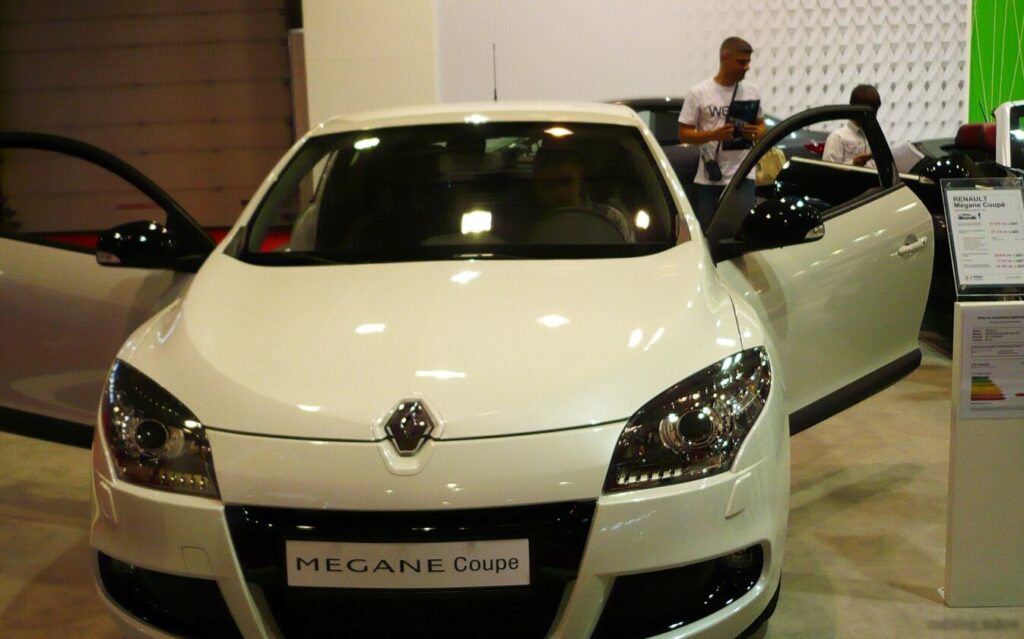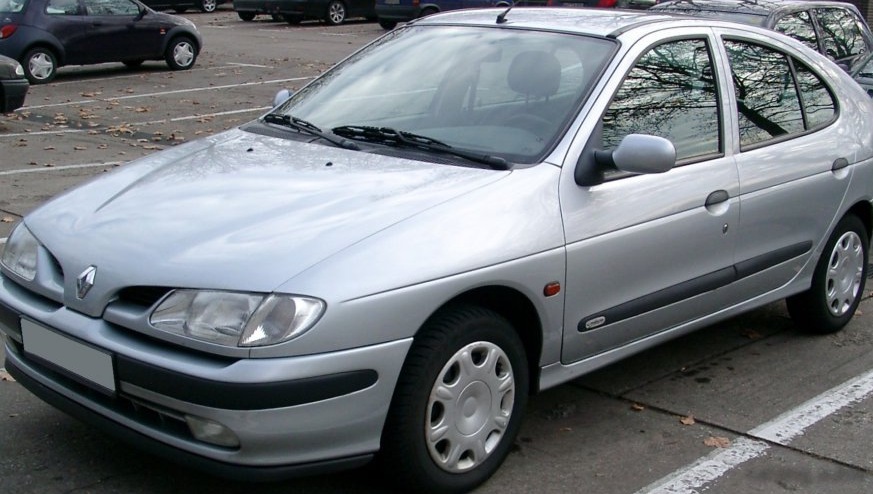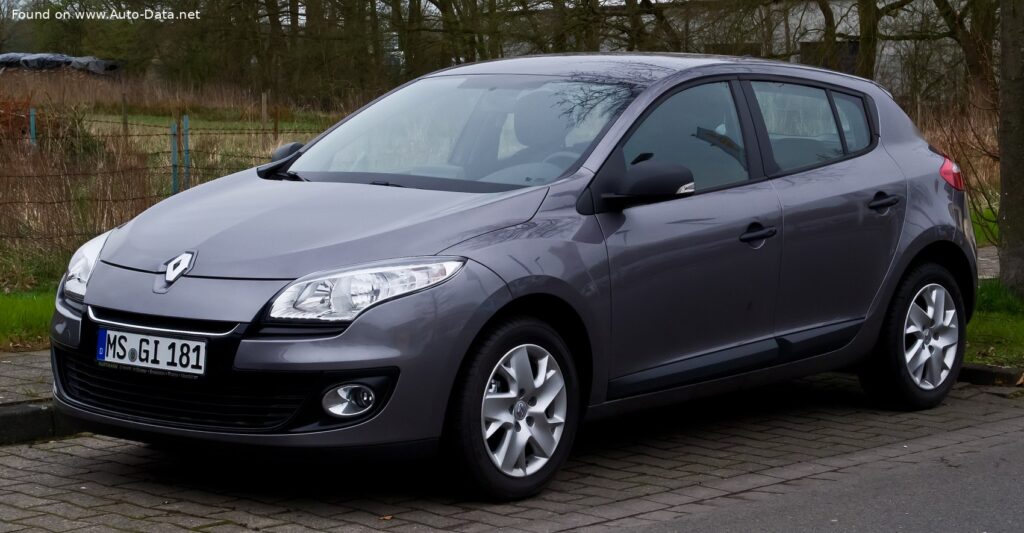
The Renault Megane III (Phase II), produced from 2012 to 2013, represents a significant refresh of the third-generation Megane, a compact family car manufactured by the French automaker Renault. This iteration, particularly the 1.5 Energy dCi (110 Hp) Start&Stop model, was aimed at the European market, where fuel efficiency and reduced emissions were paramount. While not officially sold in the United States, the Megane III competed with vehicles like the Volkswagen Golf, Ford Focus, and Opel Astra, offering a blend of practicality, style, and technology. The Phase II updates included revised styling, improved interior quality, and the introduction of more efficient engine options, including the 1.5 dCi diesel engine detailed here.
Renault Megane III (Phase II): A Detailed Overview
The Megane III, launched in 2008, aimed to elevate Renault’s presence in the competitive C-segment. The Phase II update, introduced in 2012, focused on refining the existing platform and addressing criticisms of the original model. The 1.5 Energy dCi variant was a key component of this strategy, offering a compelling combination of performance and economy. Renault positioned the Megane as a versatile vehicle suitable for both urban commuting and longer journeys, emphasizing its comfort, safety features, and modern design.
Engine & Performance
The heart of the Megane III 1.5 Energy dCi (110 Hp) is a 1.5-liter inline-four cylinder diesel engine, designated K9K 656. This engine produces 110 horsepower at 4000 rpm and 260 Nm (191.77 lb.-ft.) of torque at 1750 rpm. The engine features a turbocharger with an intercooler, enhancing both power and efficiency. A key feature of this engine is its common rail direct fuel injection system, contributing to refined combustion and reduced emissions. The engine’s displacement is 1461 cm³ (89.16 cu. in.), and it boasts a relatively high compression ratio of 15.2:1, typical for diesel engines. The power-to-weight ratio is 11 kg/Hp, and the torque-to-weight ratio is 4.7 kg/Nm. Performance figures include a 0-100 km/h (0-62 mph) acceleration time of 12.1 seconds and a top speed of 190 km/h (118.06 mph). The inclusion of a Start&Stop system further enhances fuel economy by automatically shutting off the engine when the vehicle is stationary.
Design & Features
The Renault Megane III Phase II is a five-door hatchback, offering a practical and versatile body style. Its exterior design features a revised front fascia with a larger Renault logo and updated headlights. The rear of the car also received styling tweaks, including redesigned taillights. Inside, the Phase II model benefited from improved material quality and a more modern dashboard layout. The interior comfortably seats five passengers. Key features included air conditioning, power windows, a CD player with MP3 compatibility, and ABS (Anti-lock Braking System). Safety was a priority, with the Megane III equipped with front and side airbags, as well as electronic stability control. Trunk space is a respectable 405 liters (14.3 cu. ft.) with the rear seats up, expanding to 1162 liters (41.04 cu. ft.) when the seats are folded down. The car’s dimensions are 4295 mm (169.09 in.) in length, 1808 mm (71.18 in.) in width, and 1471 mm (57.91 in.) in height.
Technical Specifications
| Brand | Renault |
| Model | Megane |
| Generation | Megane III (Phase II, 2012) |
| Type (Engine) | 1.5 Energy dCi (110 Hp) Start&Stop |
| Start of production | 2012 |
| End of production | 2013 |
| Powertrain Architecture | Internal Combustion engine |
| Body type | Hatchback |
| Seats | 5 |
| Doors | 5 |
| Fuel consumption (urban) | 3.9 l/100 km (60.3 US mpg, 72.4 UK mpg, 25.6 km/l) |
| Fuel consumption (extra urban) | 3.2 l/100 km (73.5 US mpg, 88.3 UK mpg, 31.3 km/l) |
| Fuel consumption (combined) | 3.5 l/100 km (67.2 US mpg, 80.7 UK mpg, 28.6 km/l) |
| CO2 emissions | 90 g/km |
| Fuel Type | Diesel |
| Acceleration 0 – 100 km/h | 12.1 sec |
| Acceleration 0 – 62 mph | 12.1 sec |
| Acceleration 0 – 60 mph | 11.5 sec |
| Maximum speed | 190 km/h (118.06 mph) |
| Emission standard | Euro 5 |
| Weight-to-power ratio | 11 kg/Hp |
| Weight-to-torque ratio | 4.7 kg/Nm |
| Power | 110 Hp @ 4000 rpm |
| Torque | 260 Nm @ 1750 rpm (191.77 lb.-ft. @ 1750 rpm) |
| Engine layout | Front, Transverse |
| Engine Model/Code | K9K 656 |
| Engine displacement | 1461 cm³ (89.16 cu. in.) |
| Number of cylinders | 4 |
| Engine configuration | Inline |
| Cylinder Bore | 76 mm (2.99 in.) |
| Piston Stroke | 80.5 mm (3.17 in.) |
| Compression ratio | 15.2:1 |
| Number of valves per cylinder | 2 |
| Fuel injection system | Diesel Commonrail |
| Engine aspiration | Turbocharger, Intercooler |
| Engine oil capacity | 4.5 l (4.76 US qt | 3.96 UK qt) |
| Coolant | 6.5 l (6.87 US qt | 5.72 UK qt) |
| Kerb Weight | 1215 kg (2678.62 lbs.) |
| Max. weight | 1813 kg (3996.98 lbs.) |
| Max load | 598 kg (1318.36 lbs.) |
| Trunk (boot) space – minimum | 405 l (14.3 cu. ft.) |
| Trunk (boot) space – maximum | 1162 l (41.04 cu. ft.) |
| Fuel tank capacity | 60 l (15.85 US gal | 13.2 UK gal) |
| Permitted trailer load with brakes (12%) | 1300 kg (2866.01 lbs.) |
| Permitted trailer load without brakes | 640 kg (1410.96 lbs.) |
| Length | 4295 mm (169.09 in.) |
| Width | 1808 mm (71.18 in.) |
| Height | 1471 mm (57.91 in.) |
| Wheelbase | 2641 mm (103.98 in.) |
| Front track | 1546 mm (60.87 in.) |
| Rear track | 1547 mm (60.91 in.) |
| Front overhang | 862 mm (33.94 in.) |
| Rear overhang | 792 mm (31.18 in.) |
| Ride height (ground clearance) | 120 mm (4.72 in.) |
| Minimum turning circle | 10.95 m (35.93 ft.) |
| Drivetrain Architecture | Front wheel drive |
| Number of gears and type of gearbox | 6 gears, manual transmission |
| Front suspension | Independent type McPherson |
| Rear suspension | Torsion |
| Front brakes | Ventilated discs |
| Rear brakes | Disc |
| Assisting systems | ABS (Anti-lock braking system) |
| Steering type | Steering rack and pinion |
| Power steering | Electric Steering |
| Tires size | 195/65 R15 91H |
| Wheel rims size | 6.5J x 15 |
The Renault Megane III Phase II 1.5 Energy dCi (110 Hp) Start&Stop represented a well-rounded package for European drivers seeking a fuel-efficient and practical compact car. Its combination of modern design, comfortable interior, and economical diesel engine made it a popular choice in its segment.