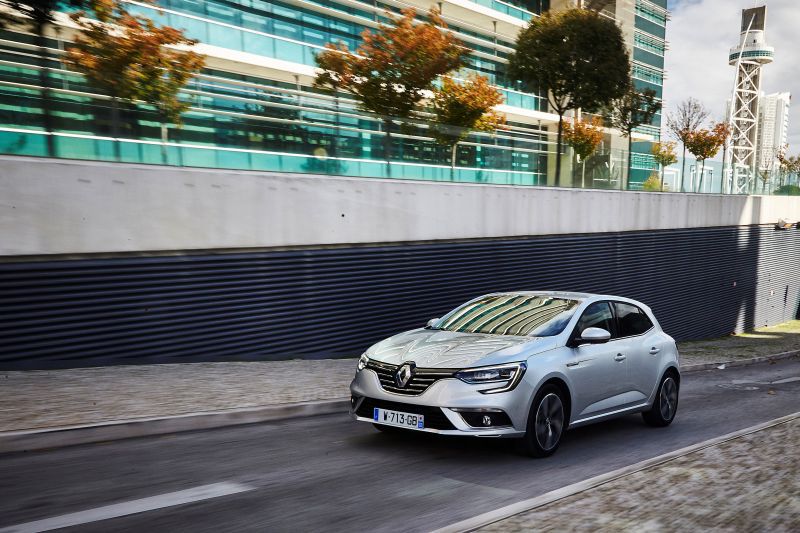
The Renault Megane IV 1.2 Energy TCe (130 Hp) EDC is a compact hatchback that was produced between 2016 and 2018. Representing the fourth generation of Renault’s popular Megane model, this variant was primarily aimed at the European market, where the hatchback body style is highly favored. It offered a blend of fuel efficiency, modern technology, and practicality, competing with vehicles like the Volkswagen Golf, Ford Focus, and Peugeot 308. While not officially sold in the United States, understanding its specifications provides insight into the evolving standards of the European C-segment.
Renault Megane IV 1.2 Energy TCe: An Overview
The Megane IV marked a significant step forward for Renault in terms of design, technology, and overall refinement. The 1.2 Energy TCe variant, equipped with a turbocharged three-cylinder engine and a dual-clutch transmission (EDC – Efficient Dual Clutch), was a popular choice for buyers seeking a balance between performance and economy. This model aimed to deliver a comfortable and engaging driving experience, coupled with the practicality expected of a family hatchback.
Engine & Performance
At the heart of the Megane IV 1.2 Energy TCe lies a 1.2-liter, inline four-cylinder turbocharged gasoline engine, designated H5F. This engine produces 130 horsepower at 5,500 rpm and 205 Nm (151.2 lb.-ft.) of torque at 2,000 rpm. The turbocharger and direct fuel injection system contribute to both power output and fuel efficiency. The engine’s specific output of 108.5 horsepower per liter demonstrates Renault’s focus on downsizing and maximizing performance from smaller displacement engines. Power is delivered to the front wheels via a seven-speed EDC automatic transmission, which provides quick and smooth gear changes. Performance figures include a 0-62 mph (0-100 km/h) acceleration time of 10.3 seconds and a maximum speed of 123.65 mph (199 km/h). A calculated 0-60 mph time is 9.8 seconds. The engine’s transverse mounting and front-wheel-drive configuration are typical for vehicles in this class.
Design & Features
The Renault Megane IV boasts a modern and stylish exterior design, characterized by sculpted lines and a distinctive front fascia. As a five-door hatchback, it offers practical access to the cabin and a relatively spacious interior for passengers. The interior design emphasizes quality materials and a user-friendly layout. Key features included a touchscreen infotainment system, climate control, and a range of driver-assistance systems, depending on the trim level. Safety features, conforming to Euro 6 emission standards, were a priority, with standard equipment including ABS (Anti-lock Braking System) and multiple airbags. The hatchback body style provides a versatile cargo area, offering 384 liters (13.56 cu. ft.) of space with the rear seats up and expanding to 1247 liters (44.04 cu. ft.) when the seats are folded down. The vehicle’s dimensions – 4359 mm (171.61 in.) in length, 1814 mm (71.42 in.) in width, and 1447 mm (56.97 in.) in height – position it squarely within the compact hatchback segment.
Technology and Efficiency
The Megane IV incorporated several technologies aimed at enhancing the driving experience and improving efficiency. The EDC transmission plays a crucial role in optimizing fuel consumption, while the engine’s turbocharging and direct injection contribute to reduced emissions. The vehicle’s suspension system, featuring an independent McPherson strut setup at the front and a semi-independent coil spring arrangement at the rear, provides a comfortable ride and responsive handling. Electric power steering further enhances the driving experience by providing precise and effortless steering control. The vehicle’s Euro 6 compliance demonstrates Renault’s commitment to meeting stringent European emission standards.
Technical Specifications
| Brand | Renault |
| Model | Megane |
| Generation | Megane IV |
| Type (Engine) | 1.2 Energy TCe (130 Hp) EDC |
| Start of production | 2016 |
| End of production | 2018 |
| Powertrain Architecture | Internal Combustion engine |
| Body type | Hatchback |
| Seats | 5 |
| Doors | 5 |
| Fuel Type | Petrol (Gasoline) |
| Acceleration 0 – 100 km/h | 10.3 sec |
| Acceleration 0 – 62 mph | 10.3 sec |
| Acceleration 0 – 60 mph | 9.8 sec |
| Maximum speed | 199 km/h (123.65 mph) |
| Emission standard | Euro 6 |
| Power | 130 Hp @ 5500 rpm |
| Power per litre | 108.5 Hp/l |
| Torque | 205 Nm @ 2000 rpm (151.2 lb.-ft. @ 2000 rpm) |
| Engine layout | Front, Transverse |
| Engine Model/Code | H5F |
| Engine displacement | 1198 cm3 (73.11 cu. in.) |
| Number of cylinders | 4 |
| Engine configuration | Inline |
| Cylinder Bore | 72.2 mm (2.84 in.) |
| Piston Stroke | 73.1 mm (2.88 in.) |
| Number of valves per cylinder | 4 |
| Fuel injection system | Direct injection |
| Engine aspiration | Turbocharger, Intercooler |
| Engine oil capacity | 4.6 l (4.86 US qt | 4.05 UK qt) |
| Coolant | 6.5 l (6.87 US qt | 5.72 UK qt) |
| Trunk (boot) space – minimum | 384 l (13.56 cu. ft.) |
| Trunk (boot) space – maximum | 1247 l (44.04 cu. ft.) |
| Fuel tank capacity | 47 l (12.42 US gal | 10.34 UK gal) |
| Length | 4359 mm (171.61 in.) |
| Width | 1814 mm (71.42 in.) |
| Width including mirrors | 2058 mm (81.02 in.) |
| Height | 1447 mm (56.97 in.) |
| Wheelbase | 2669 mm (105.08 in.) |
| Front track | 1591 mm (62.64 in.) |
| Rear (Back) track | 1586 mm (62.44 in.) |
| Front overhang | 919 mm (36.18 in.) |
| Rear overhang | 771 mm (30.35 in.) |
| Ride height (ground clearance) | 145 mm (5.71 in.) |
| Minimum turning circle (turning diameter) | 11.8 m (38.71 ft.) |
| Drivetrain Architecture | Front wheel drive |
| Number of gears and type of gearbox | 7 gears, automatic transmission EDC |
| Front suspension | Independent type McPherson |
| Rear suspension | Semi-independent, coil spring |
| Front brakes | Ventilated discs |
| Rear brakes | Disc |
| Assisting systems | ABS (Anti-lock braking system) |
| Steering type | Steering rack and pinion |
| Power steering | Electric Steering |
| Tires size | 195/65 R15; 205/55 R16; 205/50 R17; 225/45 R17; 225/40 R18 |
| Wheel rims size | 15; 16; 17; 18 |
The Renault Megane IV 1.2 Energy TCe EDC represents a significant evolution in the compact hatchback segment, offering a compelling combination of efficiency, technology, and practicality. While not available in the US market, it exemplifies the advancements made in European automotive engineering during the mid-2010s.