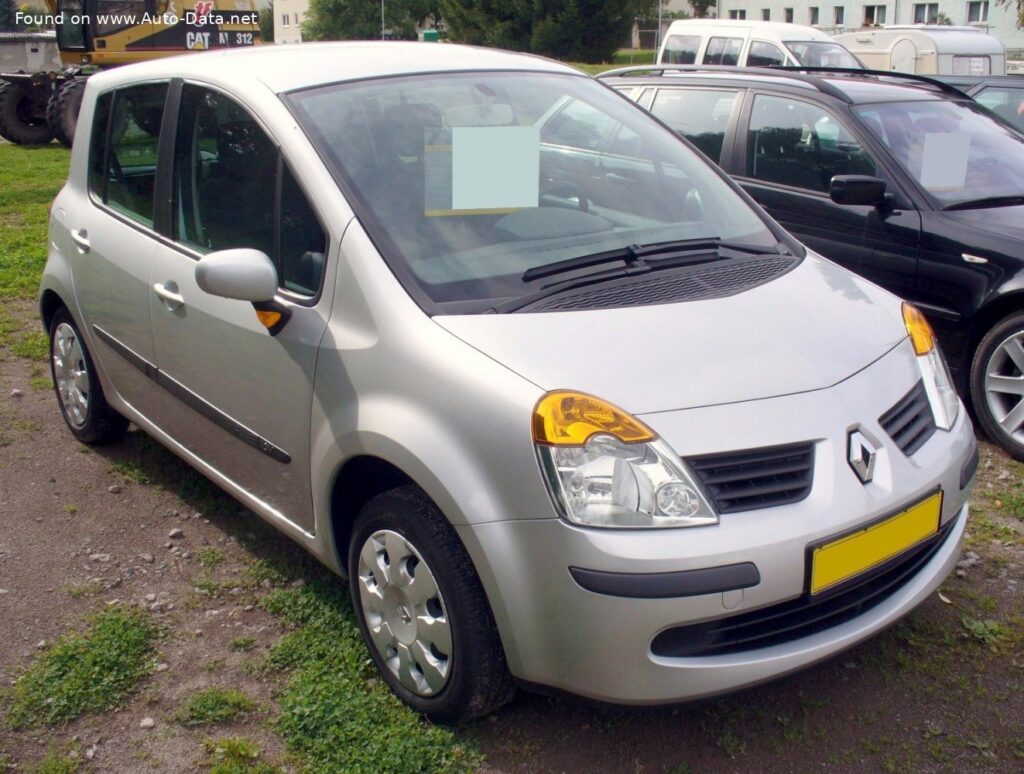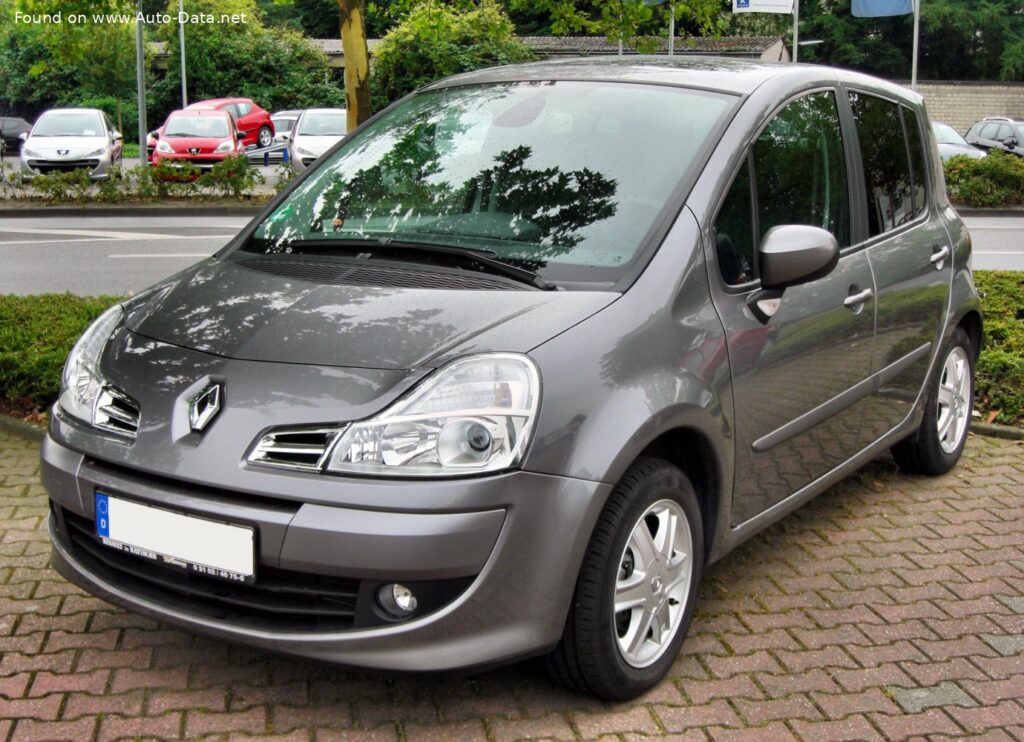
The Renault Modus (Phase II) 1.2 TCe 16V (100 Hp) is a subcompact multi-purpose vehicle (MPV), produced by the French manufacturer Renault from 2008 to 2012. Positioned as a practical and versatile option, the Modus aimed to offer a blend of hatchback convenience with the increased interior space and modularity expected of a small MPV. While not officially sold in the United States, the Modus was a significant model in the European market, competing with vehicles like the Opel Meriva and Fiat Idea. The Phase II update brought styling revisions and, crucially, the introduction of the 1.2 TCe turbocharged engine, enhancing performance and fuel efficiency.
Renault Modus (Phase II): An Overview
The Modus, first introduced in 2004, represented Renault’s attempt to carve out a niche in the growing subcompact MPV segment. The Phase II, launched in 2008, represented a mid-cycle refresh, focusing on improving the vehicle’s appeal through updated aesthetics and, more importantly, a new engine option. The 1.2 TCe 16V engine was a key component of this update, offering a more responsive and economical driving experience compared to the naturally aspirated engines previously available. The Modus prioritized interior flexibility with its modular seating system, allowing for various configurations to maximize passenger and cargo space.
Engine & Performance
The heart of the Modus (Phase II) 1.2 TCe 16V is a 1.2-liter, inline-four cylinder turbocharged gasoline engine. This engine, designated D4F Turbo, produces 100 horsepower at 5500 rpm and 145 Nm (106.95 lb.-ft.) of torque at 3000 rpm. The turbocharger and intercooler significantly improve the engine’s power output and responsiveness, providing a noticeable improvement over older, non-turbocharged Modus models. Power is delivered to the front wheels via a five-speed manual transmission. Performance figures include a 0-100 km/h (0-62 mph) acceleration time of 11.2 seconds and a top speed of 180 km/h (111.85 mph). Fuel economy is rated at 5.9 l/100 km (39.9 US mpg) combined, with urban and extra-urban figures of 7.6 l/100 km (30.9 US mpg) and 5.0 l/100 km (47 US mpg) respectively. The engine’s specific output is 87 hp per liter, demonstrating a relatively efficient design for its time.
Design & Features
The Renault Modus (Phase II) is a five-door hatchback with a distinctive, upright stance characteristic of the MPV segment. The Phase II update included revised front and rear styling, with a more prominent Renault family grille and updated headlight designs. The interior is the Modus’s strongest suit, emphasizing practicality and versatility. A key feature is the “Modulable” rear seat system, which allows the rear bench to slide and fold in various configurations, providing a range of seating and cargo options. Trunk space ranges from a minimum of 217 liters (7.66 cu. ft.) with all seats in place to a maximum of 1302 liters (45.98 cu. ft.) with the rear seats folded. Safety features for the period included ABS (Anti-lock Braking System), though more advanced safety technologies common in modern vehicles were not available. The Modus aimed to provide a comfortable and functional interior, prioritizing space and adaptability over luxurious appointments.
Technical Specifications
| Brand | Renault |
| Model | Modus |
| Generation | Modus (Phase II) |
| Type (Engine) | 1.2 TCe 16V (100 Hp) |
| Start of production | 2008 |
| End of production | 2012 |
| Powertrain Architecture | Internal Combustion engine |
| Body type | Hatchback |
| Seats | 5 |
| Doors | 5 |
| Fuel consumption (urban) | 7.6 l/100 km (30.9 US mpg) |
| Fuel consumption (extra urban) | 5 l/100 km (47 US mpg) |
| Fuel consumption (combined) | 5.9 l/100 km (39.9 US mpg) |
| CO2 emissions | 140 g/km |
| Fuel Type | Petrol (Gasoline) |
| Acceleration 0 – 100 km/h | 11.2 sec |
| Acceleration 0 – 62 mph | 11.2 sec |
| Acceleration 0 – 60 mph | 10.6 sec |
| Maximum speed | 180 km/h (111.85 mph) |
| Emission standard | Euro 4 |
| Weight-to-power ratio | 10.9 kg/Hp |
| Weight-to-torque ratio | 7.5 kg/Nm |
| Power | 100 Hp @ 5500 rpm |
| Torque | 145 Nm @ 3000 rpm (106.95 lb.-ft. @ 3000 rpm) |
| Engine layout | Front, Transverse |
| Engine Model/Code | D4F Turbo |
| Engine displacement | 1149 cm3 (70.12 cu. in.) |
| Number of cylinders | 4 |
| Engine configuration | Inline |
| Cylinder Bore | 69 mm (2.72 in.) |
| Piston Stroke | 76.8 mm (3.02 in.) |
| Compression ratio | 9.8:1 |
| Number of valves per cylinder | 4 |
| Fuel injection system | Multi-port manifold injection |
| Engine aspiration | Turbocharger, Intercooler |
| Engine oil capacity | 4.2 l (4.44 US qt | 3.7 UK qt) |
| Coolant | 5.5 l (5.81 US qt | 4.84 UK qt) |
| Kerb Weight | 1090 kg (2403.04 lbs.) |
| Max. weight | 1620 kg (3571.49 lbs.) |
| Max load | 530 kg (1168.45 lbs.) |
| Trunk (boot) space – minimum | 217 l (7.66 cu. ft.) |
| Trunk (boot) space – maximum | 1302 l (45.98 cu. ft.) |
| Fuel tank capacity | 49 l (12.94 US gal | 10.78 UK gal) |
| Max. roof load | 80 kg (176.37 lbs.) |
| Permitted trailer load with brakes (12%) | 900 kg (1984.16 lbs.) |
| Permitted trailer load without brakes | 550 kg (1212.54 lbs.) |
| Permitted towbar download | 75 kg (165.35 lbs.) |
| Length | 3874 mm (152.52 in.) |
| Width | 1709 mm (67.28 in.) |
| Width including mirrors | 1960 mm (77.17 in.) |
| Height | 1589 mm (62.56 in.) |
| Wheelbase | 2482 mm (97.72 in.) |
| Front track | 1472 mm (57.95 in.) |
| Rear (Back) track | 1450 mm (57.09 in.) |
| Front overhang | 802 mm (31.57 in.) |
| Rear overhang | 590 mm (23.23 in.) |
| Ride height (ground clearance) | 120 mm (4.72 in.) |
| Minimum turning circle (turning diameter) | 10.4 m (34.12 ft.) |
| Drivetrain Architecture | Front wheel drive |
| Number of gears and type of gearbox | 5 gears, manual transmission |
| Front suspension | Independent, type McPherson with coil spring and anti-roll bar |
| Rear suspension | Semi-independent, coil spring |
| Front brakes | Ventilated discs |
| Rear brakes | Drum |
| Assisting systems | ABS (Anti-lock braking system) |
| Steering type | Steering rack and pinion |
| Tires size | 165/65 R15; 185/55 R16 |
| Wheel rims size | 15; 16 |