
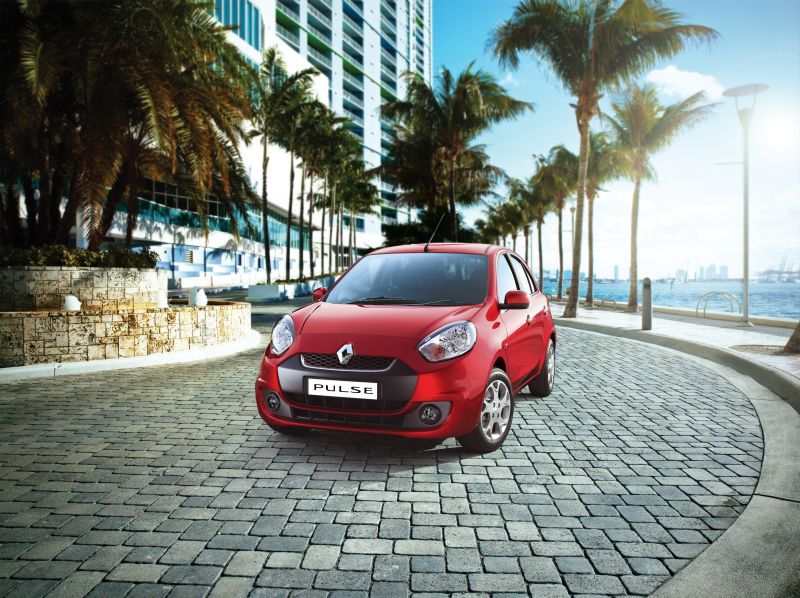
The Renault Pulse 1.2, a subcompact hatchback, was produced from 2012 to 2018. While not officially sold in the United States, the Pulse represents a significant model for Renault, particularly in markets like Brazil and Russia, where it was a popular entry-level vehicle. The Pulse is essentially a rebadged and localized version of the Dacia Sandero, a vehicle known for its affordability and practicality in Europe. This article will detail the specifications and characteristics of the 1.2-liter, 76 horsepower version of the Renault Pulse.
Renault Pulse 1.2: An Overview
The Renault Pulse aimed to provide a cost-effective and efficient transportation solution for emerging markets. It filled a niche for buyers seeking a small, maneuverable car suitable for urban environments. The Pulse competed with other subcompact hatchbacks, offering a blend of practicality, fuel economy, and a relatively modern feature set for its price point. Its design, while sharing roots with the Dacia Sandero, was adapted to appeal to local tastes in its target markets. The 1.2-liter engine variant was a mainstay of the Pulse lineup, prioritizing fuel efficiency over outright performance.
Engine & Performance
The Renault Pulse 1.2 is powered by a 1.2-liter inline three-cylinder gasoline engine, designated the 5XH 401. This engine produces 76 horsepower at 6000 rpm and 104 Nm (76.71 lb.-ft.) of torque at 4000 rpm. The power-to-liter ratio is 63.4 hp/l. While not a powerhouse, the engine is designed for efficiency and responsiveness in everyday driving conditions. The engine utilizes a multi-port manifold fuel injection system and a double overhead camshaft (DOHC) valvetrain. It’s a naturally aspirated engine, meaning it doesn’t rely on turbocharging or supercharging for increased power.
Performance figures reflect the engine’s focus on economy. Acceleration from 0 to 100 km/h (0-62 mph) takes approximately 14 seconds, while 0 to 60 mph is achieved in around 13.3 seconds. The Pulse 1.2 has a maximum speed of 158 km/h (98.18 mph). Fuel consumption is rated at 5.6 liters per 100 kilometers (42 US mpg, 50.4 UK mpg, 17.9 km/l), making it an economical choice for daily commuting.
Design & Features
The Renault Pulse is a five-door hatchback with a relatively compact footprint. It offers seating for five passengers and a trunk capacity of 251 liters (8.86 cu. ft.). The exterior design is characterized by its rounded lines and relatively simple aesthetic. The Pulse’s design was intended to be modern and appealing to a broad range of buyers.
Inside, the Pulse offers a functional and straightforward interior. While not luxurious, it provides essential comfort features for its class. Safety features, while varying by market and trim level, typically included driver and passenger airbags, and potentially anti-lock braking system (ABS). The Pulse’s suspension consists of an independent McPherson strut setup at the front and a semi-independent coil spring arrangement at the rear, providing a reasonable balance between ride comfort and handling. The vehicle utilizes ventilated discs for the front brakes and drum brakes for the rear.
Technical Specifications
| Brand | Renault |
| Model | Pulse |
| Generation | Pulse |
| Type (Engine) | 1.2 (76 Hp) |
| Start of production | January, 2012 |
| End of production | 2018 |
| Powertrain Architecture | Internal Combustion engine |
| Body type | Hatchback |
| Seats | 5 |
| Doors | 5 |
| Fuel consumption (combined) | 5.6 l/100 km |
| Fuel consumption (US mpg) | 42 US mpg |
| Fuel consumption (UK mpg) | 50.4 UK mpg |
| Fuel consumption (km/l) | 17.9 km/l |
| Fuel Type | Petrol (Gasoline) |
| Acceleration 0 – 100 km/h | 14 sec |
| Acceleration 0 – 62 mph | 14 sec |
| Acceleration 0 – 60 mph | 13.3 sec |
| Maximum speed | 158 km/h |
| Maximum speed (mph) | 98.18 mph |
| Power | 76 Hp @ 6000 rpm |
| Power per litre | 63.4 Hp/l |
| Torque | 104 Nm @ 4000 rpm |
| Torque (lb.-ft.) | 76.71 lb.-ft. @ 4000 rpm |
| Engine layout | Front, Transverse |
| Engine Model/Code | 5XH 401 |
| Engine displacement | 1198 cm3 |
| Engine displacement (cu. in.) | 73.11 cu. in. |
| Number of cylinders | 3 |
| Engine configuration | Inline |
| Cylinder Bore | 78 mm |
| Cylinder Bore (in.) | 3.07 in. |
| Piston Stroke | 83.6 mm |
| Piston Stroke (in.) | 3.29 in. |
| Number of valves per cylinder | 4 |
| Fuel injection system | Multi-port manifold injection |
| Engine aspiration | Naturally aspirated engine |
| Valvetrain | DOHC |
| Trunk (boot) space – minimum | 251 l |
| Trunk (boot) space (cu. ft.) | 8.86 cu. ft. |
| Fuel tank capacity | 41 l |
| Fuel tank capacity (US gal) | 10.83 US gal |
| Fuel tank capacity (UK gal) | 9.02 UK gal |
| Length | 3805 mm |
| Length (in.) | 149.8 in. |
| Width | 1665 mm |
| Width (in.) | 65.55 in. |
| Height | 1530 mm |
| Height (in.) | 60.24 in. |
| Wheelbase | 2450 mm |
| Wheelbase (in.) | 96.46 in. |
| Ride height (ground clearance) | 154 mm |
| Ride height (ground clearance) (in.) | 6.06 in. |
| Drivetrain Architecture | The Internal combustion engine (ICE) drives the front wheels of the vehicle. |
| Drive wheel | Front wheel drive |
| Number of gears and type of gearbox | 5 gears, manual transmission |
| Front suspension | Independent type McPherson |
| Rear suspension | Semi-independent, coil spring |
| Front brakes | Ventilated discs |
| Rear brakes | Drum |
| Tires size | 165/70 R14 |
| Wheel rims size | 14 |
In conclusion, the Renault Pulse 1.2 offered a practical and affordable transportation solution in its target markets. While not a performance vehicle, its fuel efficiency and compact size made it well-suited for urban driving. The Pulse’s legacy lies in its role as a budget-friendly option for drivers in emerging economies, demonstrating Renault’s commitment to providing accessible mobility.
