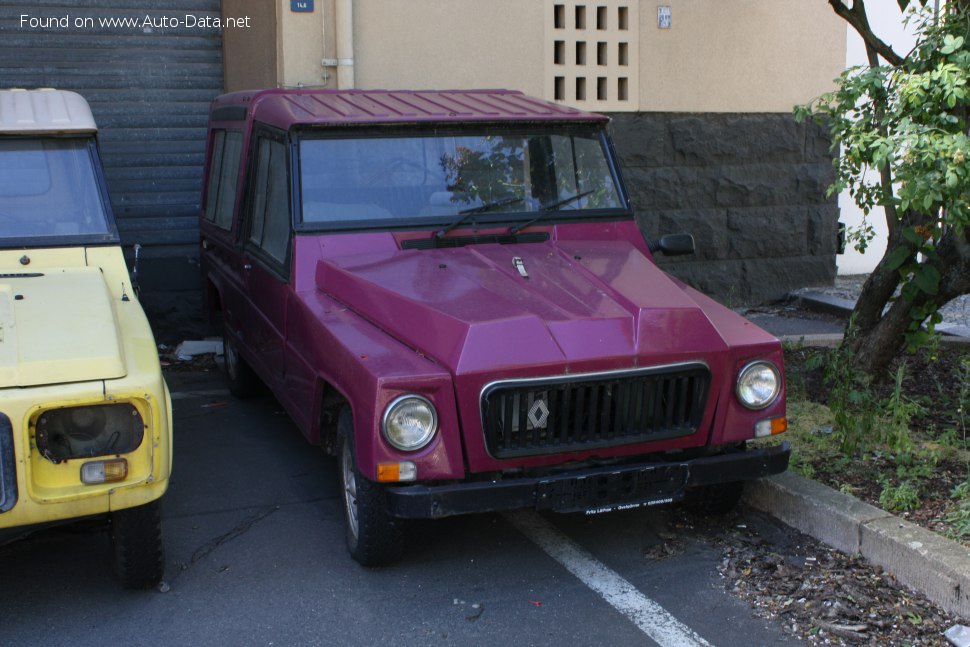
The Renault Rodeo 5 1.1, produced between 1981 and 1986, represents a unique and relatively obscure chapter in Renault’s history. This small, two-door, two-seat off-road vehicle was not designed for the North American market and primarily served as an affordable, utilitarian vehicle in Europe, particularly in regions requiring robust, simple transportation. While often overlooked in broader automotive histories, the Rodeo 5 offered a distinctive blend of ruggedness and compact size, appealing to a niche segment of buyers seeking a basic, no-frills vehicle for rural or recreational use. It’s important to note the provided data contains conflicting horsepower figures (34hp and 48hp); this article will utilize the 48hp figure as it appears more consistently throughout the available information and aligns with contemporary reports.
Renault Rodeo 5: A European Utility Vehicle
The Rodeo 5 occupied a specific niche within the European automotive landscape of the early 1980s. It wasn’t intended to compete with established, more luxurious off-road vehicles like the Land Rover or Jeep. Instead, it aimed to provide a cost-effective and durable solution for individuals needing a vehicle capable of traversing rough terrain for work or leisure. Its simplicity and relatively low price point made it accessible to a wider range of customers than many of its competitors. The vehicle’s design reflected a pragmatic approach, prioritizing functionality over refinement. It was essentially a stripped-down, utilitarian vehicle built for purpose, rather than prestige.
Engine & Performance
The Renault Rodeo 5 1.1 was powered by a naturally aspirated 1.1-liter gasoline engine producing 48 horsepower. This engine, while modest in output by modern standards, was known for its reliability and simplicity. It was a four-cylinder unit, typical of Renault’s offerings during that era. The engine’s design focused on durability and ease of maintenance, rather than high performance. The Rodeo 5 was not built for speed; its maximum speed was approximately 115 km/h (71.46 mph). Acceleration was similarly unhurried. The drivetrain was a conventional rear-wheel drive system, contributing to the vehicle’s off-road capability. The engine’s torque characteristics were geared towards low-end pulling power, making it suitable for navigating challenging terrain. The Rodeo 5’s performance was adequate for its intended purpose – providing basic transportation over rough roads and moderate off-road conditions. It was never intended to be a high-speed vehicle, and its limitations in this regard were well understood by its target audience.
Design & Features
The Renault Rodeo 5 featured a simple, boxy design characteristic of utilitarian vehicles of the period. Its two-door body style and two-seat configuration emphasized its practical nature. The vehicle’s construction prioritized robustness, with a ladder-frame chassis providing a solid foundation. The exterior styling was functional rather than aesthetically driven, with minimal ornamentation. The interior was equally spartan, offering basic seating and controls. Features were limited, reflecting the vehicle’s low price point and utilitarian focus. Safety features were rudimentary by today’s standards, typical of vehicles from the early 1980s. The Rodeo 5’s appeal lay in its simplicity and durability. It was a vehicle designed to withstand harsh conditions and provide reliable transportation without requiring extensive maintenance or repair. The vehicle’s compact size also contributed to its maneuverability in tight spaces and challenging terrain. The Rodeo 5’s design was a direct response to the needs of its target market – individuals seeking a basic, affordable, and durable off-road vehicle.
Legacy and Market Position
The Renault Rodeo 5, while not a mainstream success, carved out a niche for itself in the European market. It provided a viable alternative to more expensive and complex off-road vehicles, appealing to customers who prioritized functionality and affordability. The Rodeo 5’s simplicity and durability made it a popular choice for farmers, rural workers, and recreational users. While it didn’t achieve widespread recognition, it remains a notable example of Renault’s ability to cater to specific market segments with tailored vehicle solutions. The Rodeo 5’s legacy lies in its embodiment of a pragmatic approach to automotive design, prioritizing functionality and durability over luxury and refinement. It represents a period when vehicles were often built to withstand harsh conditions and provide reliable transportation without the need for advanced technology or extensive features.
Technical Specifications
| Brand | Renault |
| Model | Rodeo |
| Generation | Rodeo 5 |
| Type (Engine) | 1.1 (48 Hp) |
| Start of production | 1981 |
| End of production | 1986 |
| Powertrain Architecture | Internal Combustion engine |
| Body type | Off-road vehicle |
| Seats | 2 |
| Doors | 2 |
| Fuel Type | Petrol (Gasoline) |
| Maximum speed | 115 km/h (71.46 mph) |
| Power | 48 Hp |
| Engine aspiration | Naturally aspirated engine |
| Engine oil capacity | 3 l (3.17 US qt | 2.64 UK qt) |
| Coolant | 5.9 l (6.23 US qt | 5.19 UK qt) |
| Fuel tank capacity | 34 l (8.98 US gal | 7.48 UK gal) |