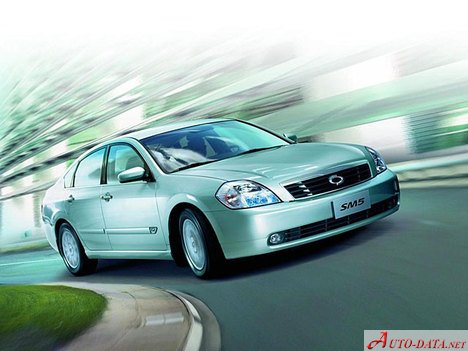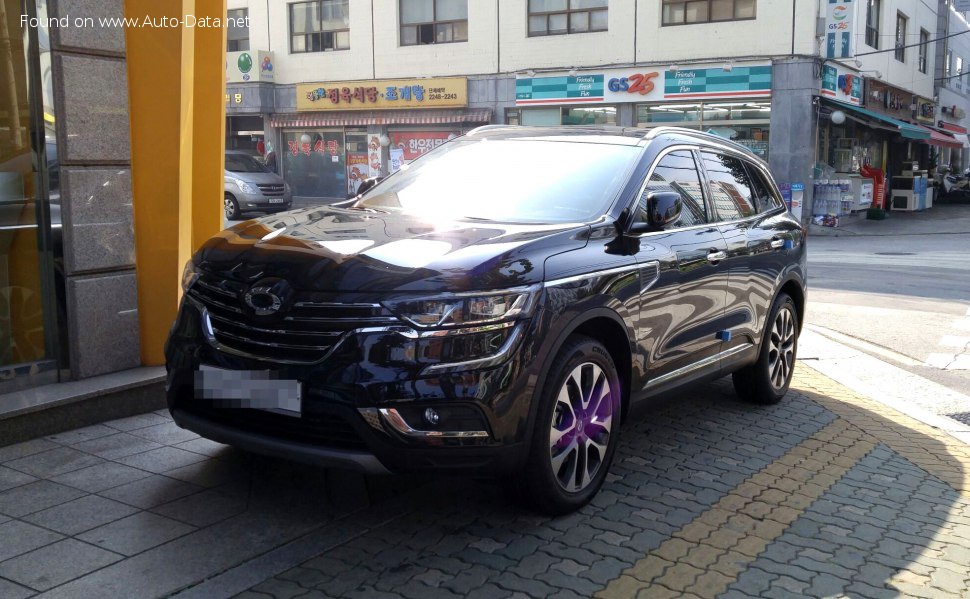
The Renault Samsung QM6 represents a significant offering within the mid-size SUV segment, primarily targeting the South Korean market. Launched in 2016, this generation of the QM6 serves as a rebadged and localized version of the global Renault Koleos, tailored specifically for the preferences and regulatory requirements of its domestic audience. As a product of the strategic alliance between Renault and Samsung Motors, the QM6 embodies a fusion of French design sensibilities and engineering with a strong local manufacturing presence. Positioned as a versatile family vehicle, it offers a compelling blend of contemporary styling, practical interior space, and advanced powertrain options. The specific variant under review, the Renault Samsung QM6 2.0 dCi (177 Hp) 4WD CVT, highlights its commitment to efficient diesel performance combined with the enhanced traction of an all-wheel-drive system and the smooth operation of a continuously variable transmission.
Engine and Performance of the Renault Samsung QM6
At the heart of the Renault Samsung QM6 2.0 dCi (177 Hp) 4WD CVT lies a robust and efficient M9R series diesel engine, a powerplant renowned for its balance of power delivery and fuel economy. This 2.0-liter (1995 cm³ or 121.74 cu. in.) inline four-cylinder engine is transversely mounted at the front, optimizing packaging and weight distribution. It utilizes a sophisticated Diesel Commonrail fuel injection system, which precisely controls fuel delivery to maximize combustion efficiency and minimize emissions. Further enhancing its performance and economy, the engine benefits from both a turbocharger and an intercooler, ensuring a consistent supply of dense, cool air for optimal power generation across the RPM range.
The engine generates a peak output of 177 horsepower at 3750 revolutions per minute (rpm), providing ample power for both urban driving and highway cruising. More critically for an SUV, it produces a substantial 280.27 lb.-ft. (380 Nm) of torque, available across a broad band from 2000 to 2750 rpm. This wide torque plateau is instrumental in providing strong acceleration from a standstill, effortless overtaking, and confident performance when tackling inclines or carrying heavy loads. The power-to-weight ratio stands at a respectable 9.8 kg per horsepower (102 Hp/tonne), while the torque-to-weight ratio is 4.6 kg per Nm (219 Nm/tonne), indicating a well-matched powertrain for its size and intended use.
Power is transmitted to all four wheels via an automatic continuously variable transmission (CVT). This type of gearbox is engineered to provide seamless acceleration and operate the engine at its most efficient RPM, contributing significantly to the vehicle’s smooth driving characteristics and fuel economy. The all-wheel-drive (4×4) system enhances traction and stability, particularly in challenging weather conditions or on unpaved roads, making the QM6 a more versatile option for a wider range of environments.
Fuel efficiency is a strong suit for this diesel variant. The combined fuel consumption is rated at 28 US mpg (8.4 l/100 km), which is competitive within its segment. In urban settings, it achieves 26.7 US mpg (8.8 l/100 km), while extra-urban driving sees an impressive 29.8 US mpg (7.9 l/100 km). These figures underscore the efficiency benefits of the modern common rail diesel engine and CVT combination. With CO2 emissions of 162 g/km, the QM6 also demonstrates a commitment to reducing its environmental footprint.
Design and Features of the Renault Samsung QM6
The design of the Renault Samsung QM6 reflects contemporary SUV aesthetics, blending robust proportions with elegant lines. As a five-door, five-seat SUV, it prioritizes practicality and passenger comfort. Its exterior styling, shared with the global Renault Koleos, features a distinctive front fascia with prominent grille and signature lighting, conveying a sense of sophistication and presence on the road. The body type is unmistakably SUV, offering a commanding driving position and generous ground clearance, which is beneficial for navigating varied road conditions.
Measuring 184.06 inches (4675 mm) in length, 72.64 inches (1845 mm) in width, and 67.32 inches (1710 mm) in height, the QM6 presents a substantial footprint. Its wheelbase of 106.5 inches (2705 mm) contributes to a stable ride and a spacious cabin, ensuring ample legroom for both front and rear passengers. The front track of 62.8 inches (1595 mm) and rear track of 62.6 inches (1590 mm) further enhance the vehicle’s stability and road-holding capabilities. With a curb weight of 3825.02 lbs. (1735 kg), the QM6 feels planted and secure.
The chassis and suspension setup are engineered for a comfortable yet controlled ride. The front suspension employs an independent McPherson strut system, a common and effective design for providing good handling and ride comfort. At the rear, an independent multi-link suspension system further refines the ride quality and improves dynamic stability, especially over uneven surfaces or during spirited driving. This sophisticated suspension arrangement helps to absorb road imperfections effectively, contributing to a smooth and refined driving experience for all occupants.
Safety is a paramount consideration for modern SUVs, and the QM6 is equipped with essential features. The braking system comprises ventilated discs at both the front and rear, ensuring strong and consistent stopping power. These are complemented by an Anti-lock Braking System (ABS), which prevents wheel lock-up during hard braking, allowing the driver to maintain steering control. The steering system utilizes a rack and pinion setup, offering precise and responsive control. The vehicle rides on 18-inch wheel rims, fitted with 225/60 R18 100H tires, which provide a good balance of grip, comfort, and durability, suitable for a wide range of driving conditions and contributing to the vehicle’s overall aesthetic appeal and road presence.
Technical Specifications
| Brand | Renault Samsung |
| Model | QM6 |
| Generation | QM6 |
| Type (Engine) | 2.0 dCi (177 Hp) 4WD CVT |
| Start of production | 2016 year |
| Powertrain Architecture | Internal Combustion engine |
| Body type | SUV |
| Seats | 5 |
| Doors | 5 |
| Fuel consumption (economy) – urban | 26.7 US mpg (8.8 l/100 km) |
| Fuel consumption (economy) – extra urban | 29.8 US mpg (7.9 l/100 km) |
| Fuel consumption (economy) – combined | 28 US mpg (8.4 l/100 km) |
| CO2 emissions | 162 g/km |
| Fuel Type | Diesel |
| Weight-to-power ratio | 9.8 kg/Hp, 102 Hp/tonne |
| Weight-to-torque ratio | 4.6 kg/Nm, 219 Nm/tonne |
| Power | 177 Hp @ 3750 rpm. |
| Power per liter | 88.7 Hp/l |
| Torque | 280.27 lb.-ft. (380 Nm @ 2000-2750 rpm) |
| Engine layout | Front, Transverse |
| Engine Model/Code | M9R |
| Engine displacement | 121.74 cu. in. (1995 cm³) |
| Number of cylinders | 4 |
| Engine configuration | Inline |
| Fuel injection system | Diesel Commonrail |
| Engine aspiration | Turbocharger, Intercooler |
| Engine oil capacity | 7.82 US qt (7.4 l) |
| Kerb Weight | 3825.02 lbs. (1735 kg) |
| Length | 184.06 in. (4675 mm) |
| Width | 72.64 in. (1845 mm) |
| Height | 67.32 in. (1710 mm) |
| Wheelbase | 106.5 in. (2705 mm) |
| Front track | 62.8 in. (1595 mm) |
| Rear (Back) track | 62.6 in. (1590 mm) |
| Drive wheel | All wheel drive (4×4) |
| Number of gears and type of gearbox | automatic transmission CVT |
| Front suspension | Independent type McPherson |
| Rear suspension | Independent multi-link suspension |
| Front brakes | Ventilated discs |
| Rear brakes | Ventilated discs |
| Assisting systems | ABS (Anti-lock braking system) |
| Steering type | Steering rack and pinion |
| Tires size | 225/60 R18 100H |
| Wheel rims size | 18 |