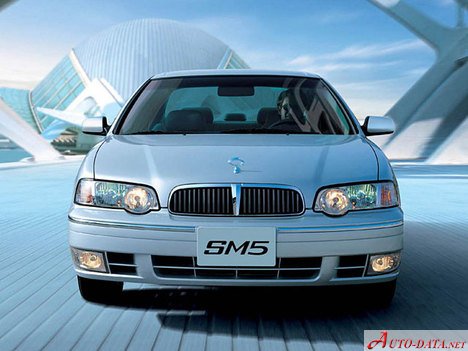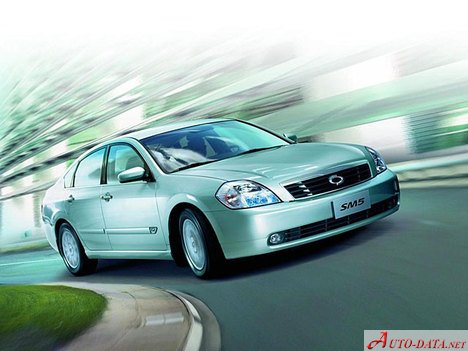
The **Renault Samsung SM5 II 2.0 i 16V (136 Hp)** represents a significant iteration in the lineage of the SM5, a mid-size sedan primarily marketed by Renault Samsung Motors in South Korea. Produced between 2005 and 2010, this second-generation model built upon the foundations laid by its predecessor, which was itself based on the Nissan Maxima/Cefiro platform. The SM5 II, however, transitioned to a platform shared with the Renault Laguna II and Nissan Teana (J31), reflecting the deepening integration within the Renault-Nissan Alliance. Positioned as a strong contender in the competitive South Korean executive sedan segment, the SM5 II aimed to deliver a blend of comfort, reliability, and modern features tailored for the local market. While not officially sold in North America, its engineering and design principles resonate with global automotive trends of its era, emphasizing practicality, efficiency, and a refined driving experience for daily commuting and family use.
The Renault Samsung SM5 II 2.0 i 16V (136 Hp): Engineering and Performance
Powertrain and Dynamics
At the heart of the **Renault Samsung SM5 II 2.0 i 16V (136 Hp)** is a robust and dependable powertrain designed for smooth operation and adequate performance in its class. The vehicle is propelled by an internal combustion engine, specifically an inline-four cylinder, naturally aspirated unit designated with the M4R engine code. This 2.0-liter (1997 cm3 or 121.86 cu. in.) engine features a multi-port manifold injection system, ensuring precise fuel delivery and efficient combustion. With a bore of 84 mm (3.31 in.) and a stroke of 90.1 mm (3.55 in.), combined with a compression ratio of 10:1, the engine is tuned to deliver a balanced output. It generates a peak power of 136 horsepower at 5200 revolutions per minute (rpm), resulting in a power per liter figure of 68.1 Hp/l. Torque output stands at 200 Nm (147.51 lb.-ft.) at a relatively accessible 4400 rpm, providing ample pulling power for urban driving and highway cruising.
Power is transmitted to the front wheels via a conventional 4-speed automatic transmission. While modern vehicles often feature more gears for improved efficiency and performance, a 4-speed automatic was a common and reliable choice for mid-size sedans in the mid-2000s, prioritizing smooth shifts and durability. The engine’s front, transverse layout contributes to efficient packaging, maximizing interior space. The vehicle’s kerb weight of 1480 kg (3262.84 lbs.) results in a weight-to-power ratio of 10.9 kg/Hp (91.9 Hp/tonne) and a weight-to-torque ratio of 7.4 kg/Nm (135.1 Nm/tonne). These figures indicate a performance profile that is competent for its segment, offering sufficient acceleration for everyday driving without being overtly sporty. The 70-liter (18.49 US gal) fuel tank capacity suggests a respectable range, appealing to drivers seeking convenience and fewer fuel stops.
Design, Features, and Market Context
Exterior and Interior Design
The Renault Samsung SM5 II, with its sedan body type, embodies a conservative yet elegant design aesthetic characteristic of the mid-2000s. Its four-door, five-seat configuration emphasizes practicality and passenger comfort, making it a suitable choice for families and business professionals alike. The exterior dimensions—a length of 4770 mm (187.8 in.), a width of 1765 mm (69.49 in.), and a height of 1475 mm (58.07 in.)—place it firmly within the mid-size sedan category. The generous wheelbase of 2775 mm (109.25 in.) is a key contributor to its spacious cabin and stable ride quality. Both the front and rear tracks, measuring 1540 mm (60.63 in.) and 1545 mm (60.83 in.) respectively, further enhance the car’s planted stance and handling characteristics. The design language, while not revolutionary, aimed for timeless appeal, focusing on clean lines and a dignified presence that resonated well with its target demographic in the South Korean market.
Safety and Convenience Features
In terms of chassis and safety, the **Renault Samsung SM5 II 2.0 i 16V (136 Hp)** was equipped with features considered standard and effective for its time. The suspension system utilized a Spring Strut design for both the front and rear axles, a common and cost-effective setup known for providing a reasonable balance between ride comfort and handling stability. Braking performance was managed by ventilated discs at the front and solid discs at the rear, a configuration offering adequate stopping power. Crucially, the vehicle was equipped with an Anti-lock Braking System (ABS), a vital safety feature that prevents wheel lock-up during hard braking, allowing the driver to maintain steering control. Steering was handled by a rack and pinion system, providing direct and predictable feedback to the driver. The car rode on 205/65 R16 tires mounted on 16-inch wheel rims, a combination that offered a good compromise between ride comfort, grip, and aesthetic appeal. These specifications underscored the SM5 II’s positioning as a reliable and safe family sedan, prioritizing occupant protection and ease of driving within its market segment.
Technical Specifications of the Renault Samsung SM5 II 2.0 i 16V (136 Hp)
| Brand | Renault Samsung |
| Model | SM5 |
| Generation | SM5 II |
| Type (Engine) | 2.0 i 16V (136 Hp) |
| Start of production | 2005 year |
| End of production | 2010 year |
| Powertrain Architecture | Internal Combustion engine |
| Body type | Sedan |
| Seats | 5 |
| Doors | 4 |
| Fuel Type | Petrol (Gasoline) |
| Weight-to-power ratio | 10.9 kg/Hp, 91.9 Hp/tonne |
| Weight-to-torque ratio | 7.4 kg/Nm, 135.1 Nm/tonne |
| Power | 136 Hp @ 5200 rpm. |
| Power per litre | 68.1 Hp/l |
| Torque | 200 Nm @ 4400 rpm. (147.51 lb.-ft. @ 4400 rpm.) |
| Engine layout | Front, Transverse |
| Engine Model/Code | M4R |
| Engine displacement | 1997 cm3 (121.86 cu. in.) |
| Number of cylinders | 4 |
| Engine configuration | Inline |
| Cylinder Bore | 84 mm (3.31 in.) |
| Piston Stroke | 90.1 mm (3.55 in.) |
| Compression ratio | 10:1 |
| Number of valves per cylinder | 4 |
| Fuel injection system | Multi-port manifold injection |
| Engine aspiration | Naturally aspirated engine |
| Engine oil capacity | 4.4 l (4.65 US qt | 3.87 UK qt) |
| Engine oil specification | Log in to see. |
| Kerb Weight | 1480 kg (3262.84 lbs.) |
| Fuel tank capacity | 70 l (18.49 US gal | 15.4 UK gal) |
| Length | 4770 mm (187.8 in.) |
| Width | 1765 mm (69.49 in.) |
| Height | 1475 mm (58.07 in.) |
| Wheelbase | 2775 mm (109.25 in.) |
| Front track | 1540 mm (60.63 in.) |
| Rear (Back) track | 1545 mm (60.83 in.) |
| Number of gears and type of gearbox | 4 gears, automatic transmission |
| Front suspension | Spring Strut |
| Rear suspension | Spring Strut |
| Front brakes | Ventilated discs |
| Rear brakes | Disc |
| Assisting systems | ABS (Anti-lock braking system) |
| Steering type | Steering rack and pinion |
| Tires size | 205/65 R16 |
| Wheel rims size | 16 |