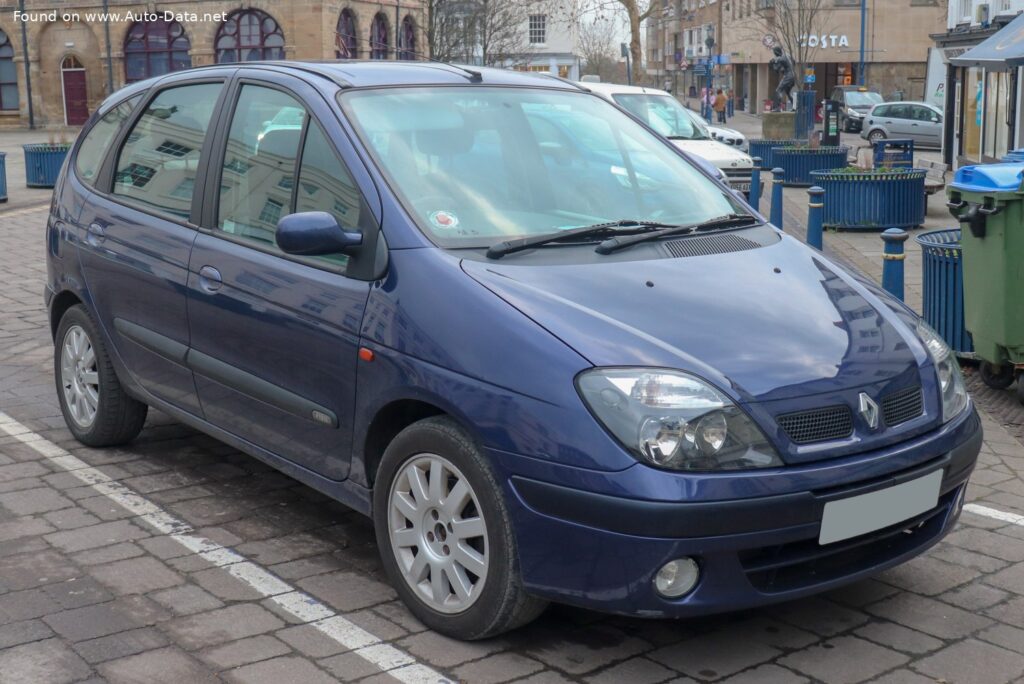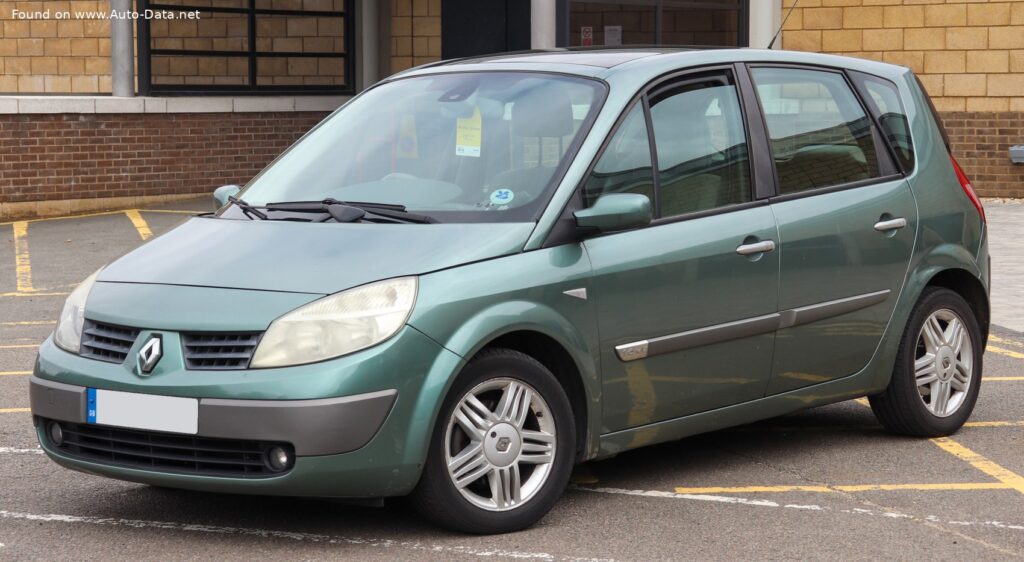
The Renault Scenic II (Phase I) 1.5 dCi, produced from 2005 to 2006, represents a significant evolution in the compact minivan segment. As a successor to the original Scenic, this generation aimed to refine the formula of spaciousness, practicality, and family-focused features. While not initially sold in the United States, the Scenic series has been a popular choice in Europe, known for its innovative design and versatility. The Phase I models, like the 1.5 dCi variant, established the Scenic II as a strong competitor against other European MPVs (Multi-Purpose Vehicles) such as the Citroën Xsara Picasso and Opel Zafira.
Renault Scenic II (Phase I) 1.5 dCi: An Overview
The Scenic II Phase I was designed to appeal to families seeking a comfortable and functional vehicle. It offered a five-seat configuration and a flexible interior layout, prioritizing passenger space and cargo capacity. The 1.5 dCi engine option provided a balance between fuel efficiency and adequate performance for everyday driving. This model was a key part of Renault’s strategy to dominate the European minivan market, offering a modern alternative to traditional station wagons and larger MPVs.
Engine & Performance
The heart of the Scenic II 1.5 dCi is a 1.5-liter inline-four cylinder diesel engine, designated K9K. This engine produces 86 horsepower (Hp) at 3750 rpm and 200 Newton-meters (147.51 lb.-ft.) of torque at 1900 rpm. The engine utilizes a turbocharger with an intercooler to enhance power output and efficiency. A diesel commonrail fuel injection system ensures precise fuel delivery, contributing to improved combustion and reduced emissions. Power is delivered to the front wheels via a five-speed manual transmission. Performance figures include a 0-100 km/h (0-62 mph) acceleration time of 14.6 seconds and a maximum speed of 167 km/h (103.77 mph). While not a performance-oriented vehicle, the 1.5 dCi engine provides sufficient power for typical driving conditions, prioritizing fuel economy. The engine’s power-to-weight ratio is 15.6 kg/Hp, and the torque-to-weight ratio is 6.7 kg/Nm.
Design & Features
The Renault Scenic II Phase I features a distinctive minivan body style, characterized by its tall roofline, large windows, and practical interior layout. The vehicle is a five-door design, offering easy access for passengers and cargo. Key design elements include a rounded front end, integrated headlights, and a relatively compact footprint for a vehicle of its class. Inside, the Scenic II prioritizes space and functionality. The rear seats can be folded down or removed entirely, creating a versatile cargo area. The dashboard is ergonomically designed, with controls logically arranged for ease of use. Safety features for the time included ABS (Anti-lock Braking System) as standard equipment. The interior materials were chosen for durability and practicality, reflecting the vehicle’s family-oriented focus. Trunk space ranges from a minimum of 430 liters (15.19 cu. ft.) to a maximum of 1840 liters (64.98 cu. ft.) with the rear seats folded. The vehicle’s kerb weight is 1340 kg (2954.19 lbs), with a maximum permissible weight of 1920 kg (4232.88 lbs).
Technical Specifications
| Brand | Renault |
| Model | Scenic |
| Generation | Scenic II (Phase I) |
| Type (Engine) | 1.5 dCi (86 Hp) |
| Start of production | 2005 |
| End of production | 2006 |
| Powertrain Architecture | Internal Combustion engine |
| Body type | Minivan |
| Seats | 5 |
| Doors | 5 |
| Fuel consumption (urban) | 6.1 l/100 km (38.6 US mpg, 46.3 UK mpg, 16.4 km/l) |
| Fuel consumption (extra urban) | 4.6 l/100 km (51.1 US mpg, 61.4 UK mpg, 21.7 km/l) |
| Fuel consumption (combined) | 5.1 l/100 km (46.1 US mpg, 55.4 UK mpg, 19.6 km/l) |
| CO2 emissions | 137 g/km |
| Fuel Type | Diesel |
| Acceleration 0 – 100 km/h | 14.6 sec |
| Acceleration 0 – 62 mph | 14.6 sec |
| Acceleration 0 – 60 mph | 13.9 sec |
| Maximum speed | 167 km/h (103.77 mph) |
| Emission standard | Euro 4 |
| Weight-to-power ratio | 15.6 kg/Hp |
| Weight-to-torque ratio | 6.7 kg/Nm |
| Power | 86 Hp @ 3750 rpm |
| Torque | 200 Nm @ 1900 rpm (147.51 lb.-ft. @ 1900 rpm) |
| Engine layout | Front, Transverse |
| Engine Model/Code | K9K |
| Engine displacement | 1461 cm3 (89.16 cu. in.) |
| Number of cylinders | 4 |
| Engine configuration | Inline |
| Cylinder Bore | 76 mm (2.99 in.) |
| Piston Stroke | 80.5 mm (3.17 in.) |
| Compression ratio | 18.8:1 |
| Number of valves per cylinder | 2 |
| Fuel injection system | Diesel Commonrail |
| Engine aspiration | Turbocharger, Intercooler |
| Valvetrain | SOHC |
| Engine oil capacity | 4.5 l (4.76 US qt | 3.96 UK qt) |
| Coolant | 5.3 l (5.6 US qt | 4.66 UK qt) |
| Kerb Weight | 1340 kg (2954.19 lbs.) |
| Max. weight | 1920 kg (4232.88 lbs.) |
| Max load | 580 kg (1278.68 lbs.) |
| Trunk (boot) space – minimum | 430 l (15.19 cu. ft.) |
| Trunk (boot) space – maximum | 1840 l (64.98 cu. ft.) |
| Fuel tank capacity | 60 l (15.85 US gal | 13.2 UK gal) |
| Max. roof load | 80 kg (176.37 lbs.) |
| Permitted trailer load with brakes (12%) | 1300 kg (2866.01 lbs.) |
| Permitted trailer load without brakes | 650 kg (1433 lbs.) |
| Permitted towbar download | 75 kg (165.35 lbs.) |
| Length | 4259 mm (167.68 in.) |
| Width | 1810 mm (71.26 in.) |
| Width including mirrors | 2087 mm (82.17 in.) |
| Height | 1620 mm (63.78 in.) |
| Wheelbase | 2685 mm (105.71 in.) |
| Front track | 1514 mm (59.61 in.) |
| Rear (Back) track | 1514 mm (59.61 in.) |
| Front overhang | 851 mm (33.5 in.) |
| Rear overhang | 723 mm (28.46 in.) |
| Ride height (ground clearance) | 130 mm (5.12 in.) |
| Minimum turning circle (turning diameter) | 10.7 m (35.1 ft.) |
| Drivetrain Architecture | Front wheel drive |
| Number of gears and type of gearbox | 5 gears, manual transmission |
| Front suspension | Independent type McPherson |
| Rear suspension | Elastic beam |
| Front brakes | Ventilated discs, 280 mm |
| Rear brakes | Disc, 270 mm |
| Assisting systems | ABS (Anti-lock braking system) |
| Steering type | Steering rack and pinion |
| Power steering | Electric Steering |
| Tires size | 195/65 R15 |
| Wheel rims size | 15 |
The Renault Scenic II Phase I 1.5 dCi remains a noteworthy vehicle in the history of compact minivans, particularly for its success in the European market. Its blend of practicality, fuel efficiency, and family-friendly features made it a popular choice for buyers seeking a versatile and affordable vehicle.